
Selecting the right stickers for primary school students in Singapore requires matching the sticker’s physical design and adhesive properties to a child’s developmental stage and school requirements. For lower primary students (Primary 1 to Primary 3), the best choices are large, easy-to-peel paper stickers that support fine motor skill development and serve as simple motivational rewards. For upper primary students (Primary 4 to Primary 6), the focus shifts toward functional, writeable, and repositionable stickers that assist with notebook organization, subject indexing, and personal scheduling. By evaluating factors like adhesive strength, material durability, and safety markings, parents can curate a practical back-to-school stationery kit that supports learning without damaging school property.
Understanding Sticker Needs Across Primary School Stages
During the early years of primary school, specifically Primary 1 to Primary 3, children are refining their fine motor skills and adapting to a structured classroom environment. Stickers at this stage serve primarily as positive reinforcement tools and tactile learning aids. Large, thick stickers with clear borders are ideal because they are easy for small fingers to grasp and peel independently. Simple, bright designs such as stars, smiley faces, or basic shapes help build confidence when used on homework logs or spelling charts.
As students transition into upper primary (Primary 4 to Primary 6), their academic workload increases, requiring greater self-management and organization. The utility of stickers shifts from simple rewards to functional study aids. Older students benefit from color-coded dot stickers, index tabs, and planner stickers that help them track homework deadlines, exam dates, and co-curricular activities (CCAs). At this stage, personal aesthetic expression also becomes more prominent, with students using stickers to personalize their pencil cases, notebooks, and files.
Products mentioned in this guide
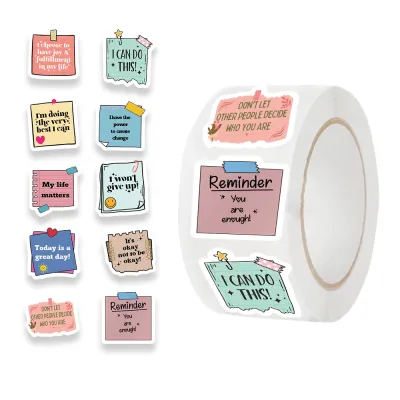
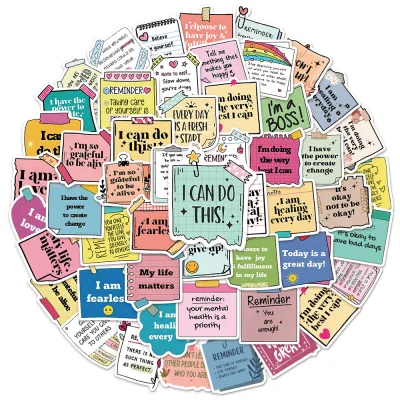
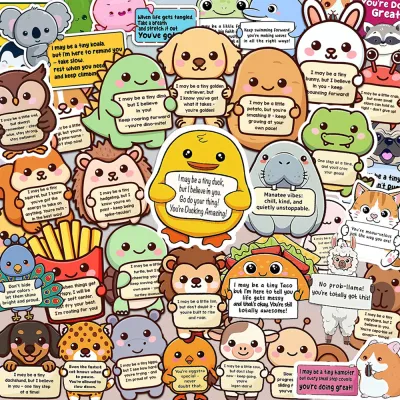
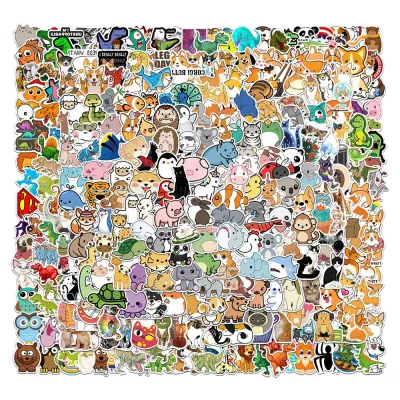
Prices are valid at publication and may change. Please refer to the product page for the latest price.
Managing this transition involves gradually adjusting the complexity and themes of the stickers you purchase. While a Primary 1 student might delight in large, colorful cartoon characters, a Primary 6 student will likely prefer minimalist designs, functional labels, or customizable blank stickers. Parents should observe how their child interacts with stationery over the school year to determine when to phase out simple reward sheets in favor of organizational and journaling formats.
Key Factors to Evaluate When Buying Stickers for School
Before purchasing stickers for the school year, it is essential to evaluate their adhesive properties. Adhesives generally fall into three categories: permanent, removable, and repositionable. Permanent stickers are excellent for labeling school water bottles or lunch boxes where water resistance and durability are required, but they should be kept away from school-issued textbooks. Removable and repositionable adhesives are much safer for school folders and notebooks, allowing students to adjust placement without tearing the paper underneath.

The material and finish of the sticker dictate its durability and writeability. Paper stickers are highly cost-effective and easy to write on with standard gel pens or pencils, making them perfect for labeling subject files or writing names. However, they tear easily and are not water-resistant. Vinyl and plastic-based stickers offer excellent durability and resist moisture, making them suitable for external surfaces, though they usually require a permanent marker to write on. Specialty finishes, such as matte or textured paper, offer a premium feel and excellent ink absorption without smudging.
Size and peelability are critical physical attributes, especially for younger children. When browsing stationery shops or online marketplaces, look for sticker sheets that feature pre-cut backing paper or extended edges. These design elements make it much easier to lift the sticker without bending or tearing the corners. For younger students, stickers should ideally be at least two to three centimeters in diameter to prevent frustration during use.
Matching Sticker Formats to Common School Scenarios
In Singapore primary schools, stickers are frequently used for behavior and reward tracking, both in the classroom and at home. For daily spelling practice or homework completion charts, simple, high-contrast designs work best. A sheet of small, shiny gold stars or colorful checkmarks provides immediate visual feedback and positive reinforcement. These stickers should be compact enough to fit within the small grid squares of standard progress charts or student diaries.
Notebook organization and indexing represent a major use case for upper primary students. As subjects split into specialized components like science practicals, social studies, and mother tongue languages, keeping files organized becomes paramount. Color-coded dot stickers can be applied to the spines of exercise books to identify subjects at a glance (for example, green for science and blue for mathematics). Index tabs that adhere to the edges of textbook chapters allow students to quickly flip to key reference pages during revision sessions.
Creative journaling, project work, and art classes call for a different category of stickers. For these activities, decorative stickers that allow for writing, drawing, or layering are highly beneficial. Matte paper stickers are particularly useful here, as students can write captions, dates, or notes directly on them using standard school pens. Using stickers with varied textures, such as kraft paper or fabric-like finishes, can also enhance school project presentations and personal journals without requiring messy liquid glues.
Safety, Durability, and Practical Checks Before Purchasing
Safety should always be a primary consideration when selecting stationery for children. Parents should verify non-toxic material claims by checking the product packaging for recognized safety markings, such as the CE mark or ASTM D-4236 certification, which indicate the materials have been evaluated for safety. This is particularly important for stickers that children will handle frequently, as low-quality adhesives or plastics can sometimes contain harmful chemical residues.
Another practical safety check involves assessing potential choking hazards, especially if there are younger siblings in the household. Avoid buying extremely small, 3D, or epoxy dome stickers for lower primary students. These raised or textured stickers can easily peel off or be picked apart by curious fingers, presenting a hazard if swallowed. Flat, paper-based sticker sheets are generally the safest option for households with toddlers or preschool-aged children.
Finally, always perform a quick adhesive test before allowing your child to apply stickers to school property, such as plastic folders, desk organizers, or textbook covers. Apply a single sticker to a hidden, inconspicuous area of the item and leave it for twenty-four hours. Peel it off slowly to check if it leaves a sticky residue or damages the surface material. If the sticker tears the surface or leaves a stubborn, gummy residue, it is best reserved for personal scrapbooks rather than school-issued materials.
Frequently Asked Questions (FAQ)
Can stickers damage textbook covers or school folders?
Yes, stickers with permanent adhesives can cause significant damage to paper textbook covers and plastic school folders. When peeled, permanent adhesives often tear the underlying paper or leave a sticky, dirt-attracting residue on plastic surfaces. To prevent this, choose stickers labeled as removable or repositionable for school materials. If you must remove a stubborn sticker, gently warming it with a hairdryer on a low setting can help soften the adhesive, or you can apply a small amount of eucalyptus oil to dissolve the residue on plastic surfaces, making sure to wipe it clean afterward.
Are there specific sticker materials that are easier for young children to peel?
Thicker materials, such as heavy-weight paper, felt, or puffy foam stickers, are significantly easier for young children to peel because they do not curl or cling to fingers as easily as thin vinyl. Additionally, look for sticker sheets that have the waste matrix (the excess sticker paper around the shapes) removed. Removing this outer layer leaves only the individual stickers on the backing sheet, exposing the edges and making it much simpler for small hands to grip and lift them without tearing.
How can parents organize a large collection of stickers for daily school use?
To keep a sticker collection organized and in good condition, store them in a dedicated sticker book or a small binder equipped with clear plastic sleeves. Categorizing the sheets by use—such as reward stickers, indexing tabs, and decorative elements—makes it easy for students to find what they need quickly. Keep the storage binder in a cool, dry place away from direct sunlight and high humidity, as Singapore’s warm climate can cause sticker adhesives to degrade, melt, or bleed through the backing paper over time.
Community discussion
Share your experience or ask a question. Comments are reviewed before publication.