
Selecting the right stationery organizer requires matching its physical design to your daily movement and workspace constraints. If you are a student commuting daily, your priority is a secure, impact-resistant, and compact case that protects your writing tools inside a crowded backpack. Conversely, if you are an office professional working from a dedicated desk or a hot-desking setup, you need a stable, high-density desktop system that keeps your tools visible and within arm’s reach.
Understanding how your environment dictates your storage needs prevents the frustration of cluttered workspaces or damaged pens. By evaluating key features like closure security, material durability, and compartment layouts, you can find an organizer that fits both your workflow and your physical desk space.
Core Differences Between Mobile and Fixed Desk Needs
The fundamental difference between mobile and fixed stationery storage lies in how they handle movement and space. A student’s organizer is constantly in transit, subjected to the bumps, drops, and compression of a daily commute on busy trains or buses. For these mobile scenarios, weight, structural rigidity, and secure closures are the primary decision metrics. The organizer must act as a protective shield for delicate mechanical pencil tips, fountain pens, and rulers.
Products mentioned in this guide
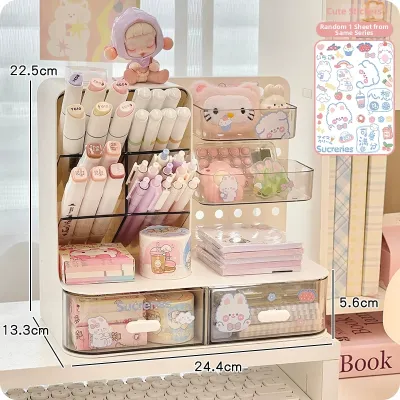
1 Lazada user ratings
i beg eh he eh eh whine sg few y rnuneyb they af at teveyburnu beybwnarbwt ey eh ye wt ybby unsure veg eg.
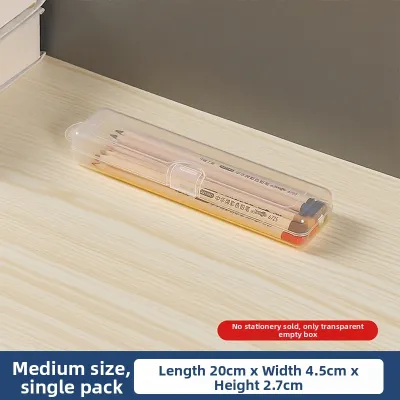
23 Lazada user ratings
It's pretty good, convenient for storage, but some shorter colored pens aren't suitable for this storage.
Bought it late, but it's super useful for holding all kinds of art supplies for my kid's drawings.
I bought this to store my stationery, and it fits everything perfectly. I'm really happy with it.
Very useful! It would be even better if the dividers were more sturdy and stayed in place.
The pen holder works really well, keeping all my stationery organized without any mess.
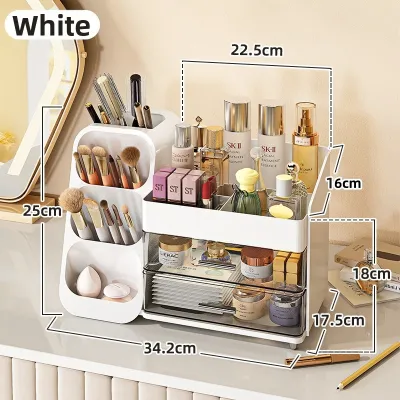
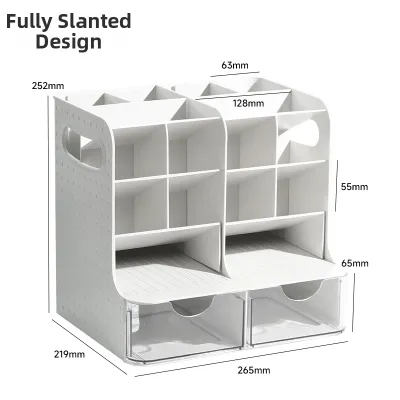
139 Lazada user ratings
The kids really love it. It's quite good, feels nice in the hand, and is pretty sturdy. It's not that super thin material. They say it's rea…Read full reviewShow less
The kids really love it. It's quite good, feels nice in the hand, and is pretty sturdy. It's not that super thin material. They say it's really good.
These pen holders are so beautiful and the quality is great! I bought three, one in each color, and they are very cute.
It arrived really well, no damage, and the quality is great, five-star rating!
It has a large capacity, the quality is great, and there's no smell at all.
It's beautiful and practical, I love it.
15 Lazada user ratings
It feels pretty sturdy after I got it, and it hasn't warped after a week of use.
My child was so happy to receive this and absolutely loves it.
The quality is really good, and it looks great to use.
It's definitely worth it and a great deal!
Prices are valid at publication and may change. Please refer to the product page for the latest price.
In contrast, a fixed workstation—whether in a corporate office or a compact home study corner—presents a different set of challenges. Here, the primary constraint is desk footprint. An office professional needs to maximize vertical space to keep the immediate work area clear for keyboards, documents, and monitors. Because the organizer remains stationary, weight becomes an advantage rather than a burden, providing the stability needed to grab tools with one hand without tipping the unit over.
Furthermore, daily transit dictates how you access your tools. A mobile organizer requires a closure that completely seals the contents, such as heavy-duty zippers or secure magnetic flaps, to prevent items from spilling into your bag. A desktop organizer, however, prioritizes open-access compartments, shallow trays, and pull-out drawers that allow you to locate and retrieve paperclips, sticky notes, or highlighters instantly.
Essential Features for Students and Mobile Use
For students and professionals on the move, the closure mechanism is the first line of defense. Zippered closures are generally the most reliable option for backpacks, as they completely enclose the compartment and prevent small items like eraser refills or lead cases from slipping out. If you prefer magnetic or snap closures, verify that the fasteners are strong enough to remain closed when the case is compressed by heavy textbooks or a laptop.

Impact resistance is equally critical for protecting fragile stationery. Look for organizers made from padded fabrics, silicone, or semi-rigid materials like molded EVA plastic. These materials absorb external shocks, preventing plastic pen barrels from cracking and keeping fine metal tips from bending during transit. Internal padding also dampens the noise of rattling pens, which can be distracting in quiet lecture halls or libraries.
To keep your supplies organized and prevent them from scratching one another, prioritize cases with internal elastic loops or dedicated slots. Securing your primary writing instruments in individual loops ensures they stay in place, while separate mesh pockets can hold loose items like correction tape, USB drives, or small calculators. This internal structure makes it easy to see at a glance if you have left a pen behind after class.
Finally, consider the physical profile of the organizer. A slim, rectangular design slides easily into the narrow gaps of a backpack, while a standing pen pouch can be zipped open and folded down to act as a temporary pen cup on tiny lecture hall desks. This dual-purpose design saves valuable workspace when desk room is limited.
Key Design Priorities for Office Professionals
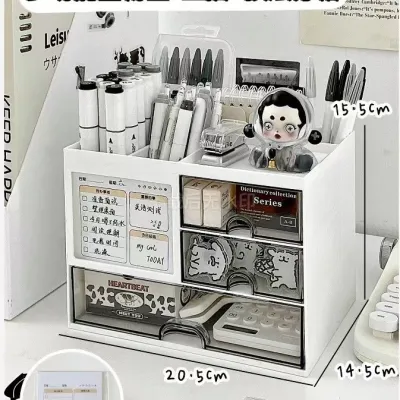
Office professionals require a desktop system that supports multitasking and maintains a clean, professional aesthetic. Multi-tiered or modular compartments are essential for separating different types of office supplies. Look for designs that offer a mix of deep vertical slots for pens and scissors, shallow trays for sticky notes and business cards, and small drawers to conceal loose items like binder clips, staples, and tape refills.
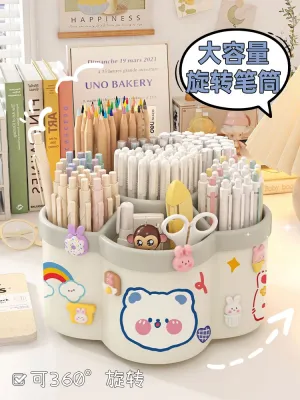
To keep your desk uncluttered, evaluate how the organizer utilizes vertical space. A tiered design or a rotating carousel caddy allows you to store dozens of items within a very small desktop footprint. This vertical orientation ensures that everything remains visible and accessible without taking up the flat desk space needed for your keyboard, mouse, and documents.
Modern office work also requires integration with digital tools. Many contemporary desk organizers feature specialized slots or trays designed to hold active styluses, USB flash drives, reading glasses, or even an integrated smartphone stand. Choosing an organizer that accommodates both traditional stationery and digital accessories helps streamline your workflow and keeps your essential devices within your line of sight.
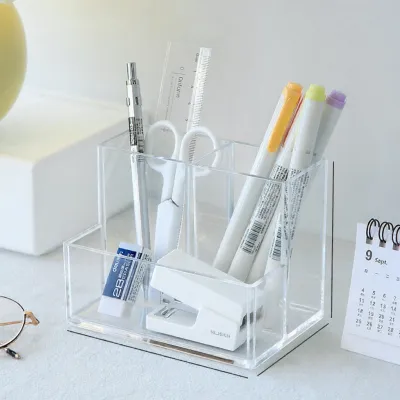
Material weight and base stability are crucial for seamless daily use. A lightweight plastic organizer can easily slide or tip over when you try to pull out a pen with one hand. Prioritize organizers made from heavier materials like solid wood, thick acrylic, or powder-coated metal, or look for models equipped with non-slip rubber feet. This added weight ensures the organizer remains firmly in place, allowing for quick, one-handed access during busy workdays.
Material, Size, and Compatibility Checks
Before purchasing any stationery organizer, it is essential to perform a few practical compatibility checks. First, measure the longest items you plan to store, such as unsharpened wooden pencils, dual-tip brush markers, or a 15cm metal ruler. Compare these measurements against the internal dimensions of the organizer to ensure these longer tools can lie completely flat without bending or preventing the case from closing.
Next, evaluate the material properties based on your daily habits. For mobile cases, look for water-resistant polyester or nylon interiors that can be easily wiped clean in the event of an accidental ink leak. For desktop organizers, check that the base is non-abrasive to protect your desk surface from scratches. If you use heavy marker pens or wide correction tapes, verify that the compartments are wide and deep enough to accommodate these bulkier items without jamming.
The durability of moving parts is another critical factor. Inspect the quality of zippers, hinges, and seams. Metal zippers with large, smooth-gliding teeth generally last longer than fine plastic coils, which can easily catch on fabric. For plastic desktop drawers, check that they slide smoothly without sticking or pulling the entire organizer forward. Investing a little time in verifying these physical details ensures your organizer will withstand years of daily use.
Can One Organizer Work for Both Scenarios?
If your routine involves split-site working—such as splitting time between a corporate office and a home workspace—you might wonder if a single hybrid organizer can meet all your needs. Hybrid designs do exist, often taking the form of roll-up canvas wraps, folding book-style cases, or zippered pouches that transform into standing desk cups. These designs offer the portability of a pencil case with the open visibility of a desktop caddy.
However, combining mobile durability with desktop capacity always involves trade-offs. A hybrid organizer large enough to hold a complete set of office supplies can become incredibly bulky and heavy to carry in a backpack. Conversely, a slim, highly portable pouch may not offer enough compartments or stability to serve as an efficient desktop system when you are working at your desk for long hours.
In many cases, purchasing two specialized, task-specific organizers is more practical and cost-effective than trying to find a single perfect hybrid. You can use a small, durable pouch to carry your essential daily writers, a stylus, and a USB drive between locations, while keeping a larger, high-capacity caddy permanently on your desk to manage your full collection of highlighters, sticky notes, and accessories. This approach keeps your mobile load light while ensuring your primary workspace remains perfectly organized.
Frequently Asked Questions (FAQ)
How do I clean ink stains from the inside of a stationery organizer?
To clean ink stains safely, always check the manufacturer’s care label or material instructions first. For fabric or nylon interiors, gently dab the stain with a damp microfiber cloth and a small drop of mild liquid soap, taking care not to saturate the material. Avoid using harsh solvents, alcohol, or abrasive scrubbers on plastic or synthetic leather, as these can cause permanent discoloration, cracking, or surface degradation.
What is the best way to organize a very large collection of colored pens?
For high-volume pen collections, standard enclosed pencil cases or small desk caddies are rarely sufficient. Instead, use tiered, expandable, or modular desktop racks that allow you to store pens horizontally or at an angle. Grouping your pens by color family, tip size, or ink type makes visual retrieval much faster and helps you monitor your inventory easily during creative or professional projects.
Community discussion
Share your experience or ask a question. Comments are reviewed before publication.