
To choose the right smartpack courier bag size for your products, you must measure the three-dimensional dimensions of your item—length, width, and height—and apply a practical mathematical formula that converts these measurements into the flat, two-dimensional dimensions of a shipping bag. Selecting the correct bag size ensures that your items are securely packed, minimizes material waste, and prevents shipping surcharges. By calculating the ideal dimensions before purchasing your packaging supplies, you can streamline your fulfillment process and protect your goods during transit.
In Singapore’s fast-paced e-commerce market, shipping efficiency directly impacts your bottom line. Using a smartpack mailer that is too large can lead to unnecessary volumetric weight charges from local logistics providers, while a bag that is too small risks bursting at the seams during automated sorting. Achieving the perfect fit requires understanding how the physical dimensions of your products interact with the flexible poly material of the mailer.
Why Correct Sizing Matters for SmartPak Courier Bags
Fulfillment costs can quickly erode profit margins if packaging is not optimized. When you use a smartpack courier bag that is significantly larger than your product, you are essentially paying to ship trapped air. Many courier services in Singapore calculate shipping fees based on volumetric weight rather than actual weight if the package volume is high. An oversized bag that folds over or balloons during transit can trigger these higher pricing tiers, increasing your domestic and international shipping expenses.
Products mentioned in this guide
![*FREE SHIPPING* [CHOOSE OPTION] Singapore Post Smartpac Small Smartpac Medium Mini Lite 600g 1kg Singpost Smart pac Sing Post PolyM Poly M](https://img.lazcdn.com/g/p/ca35df7d5aaeef118422794879cc317a.jpg_400x400q80.jpg_.webp)
![[1/2/3/4 pcs] SingPost Smartpac Medium size - for using within Singapore only - Prepaid Packaging with Tracking](https://img.lazcdn.com/g/p/8f2c3c3994c2d6fb1e87feebed85f10b.jpg_400x400q80.jpg_.webp)
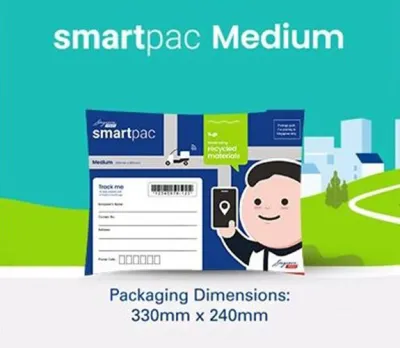
Prices are valid at publication and may change. Please refer to the product page for the latest price.
In addition to financial considerations, physical protection is a primary concern. An oversized bag allows the product to slide and shift internally, creating friction that can damage delicate surfaces or wear down product packaging. Loose, excess material on a bag also creates flaps that are prone to snagging on automated sorting conveyor belts at logistics hubs. Conversely, forcing a product into an undersized bag stretches the polymer material to its limit, stressing the heat-sealed seams and leaving the package vulnerable to bursting open under the weight of other parcels.
Finally, the presentation of your parcel serves as a physical touchpoint for your brand. A neatly fitted, professional package signals to the customer that their order was handled with care. A wrinkled, over-taped, or bulging bag looks unprofessional and can damage the unboxing experience. By matching your product to the right bag size, you ensure a clean, sleek presentation that reinforces customer trust from the moment the delivery driver hands over the package.
How to Measure Your Products Accurately
Before you can select a flat courier bag, you must obtain precise measurements of your product in its three-dimensional form. This process requires a few basic tools to ensure accuracy. A flexible measuring tape is highly useful for measuring irregular shapes, while a rigid metal ruler or calipers can provide highly precise readings for smaller, solid items. Avoid guessing or relying on manufacturer-stated product dimensions, as these often exclude external retail packaging or protective sleeves.

To begin, place your product on a flat surface. Measure the maximum length, width, and height (or thickness) of the item at its widest points. Always measure the product as it will be shipped; if the item is housed in a retail box, measure the box itself rather than the loose product inside. For irregular, non-rectangular items such as soft toys, cosmetics, or apparel, lay the item flat and use your ruler or tape to capture the outermost boundaries of the object.
Accounting for irregular shapes requires a conservative approach. If an item has protruding parts, such as handles, decorative elements, or thick labels, these must be included in your primary measurements. Treating a bulbous or T-shaped item as a simple flat rectangle will inevitably result in a bag that is too tight to seal.
Furthermore, you must account for any protective padding or presentation materials you plan to add. If you wrap your item in bubble wrap, tissue paper, or place it inside a cardboard sleeve, measure the product after these materials have been applied. A single layer of standard bubble wrap can add 10mm to 20mm to both the width and thickness of an item, which can easily push your product into a larger bag category.
The Formula for Calculating Ideal Bag Dimensions
Because courier bags are manufactured and sold as flat, two-dimensional sheets, you must use a specific mathematical formula to determine which flat bag dimensions will accommodate your three-dimensional product. When a flat bag is filled, its sides pull inward to wrap around the product’s thickness, which reduces both the usable width and length of the bag.
To find the minimum required width of your flat bag, use the following calculation:
Required Bag Width = Product Width + Product Thickness + Allowance
The “allowance” is a safety margin that ensures the product can be inserted into the bag easily without catching or tearing the edges. For most standard items, an allowance of 15mm to 20mm is recommended. If your product is highly rigid or has sharp corners, increasing this allowance to 25mm will prevent friction damage during insertion.
To find the minimum required length of your flat bag, use this calculation:
Required Bag Length = Product Length + Product Thickness + Sealing Flap Allowance
The sealing flap allowance is the length of the adhesive strip portion at the top of the bag. This flap must fold over the opening and bond securely to the flat back of the bag. Generally, a sealing flap allowance of 40mm to 50mm is necessary to ensure a secure, tamper-evident seal.
Because the ultimate water resistance and seal strength of a smartpack bag depend on the exact material combination of the poly film and the adhesive, it is wise to perform a simple trial. Seal a sample bag containing dummy items, apply a few water droplets to the seams to verify moisture resistance in Singapore’s humid climate, and attempt to peel the flap after 10 minutes to verify the adhesive bond.
Let us look at a practical example. Suppose you are shipping a rectangular board game with the following measurements:
- Length: 250 mm
- Width: 180 mm
- Thickness: 40 mm
First, calculate the required width: 180 mm (Width) + 40 mm (Thickness) + 20 mm (Allowance) = 240 mm
Next, calculate the required length: 250 mm (Length) + 40 mm (Thickness) + 50 mm (Flap Allowance) = 340 mm
Based on these calculations, you would need a smartpack bag with flat dimensions of at least 240 mm in width and 340 mm in length. If the closest standard bag size is slightly larger, always round up to the next available size to ensure a comfortable fit.
Sizing Strategies for Different Product Categories
Different types of merchandise behave differently when packed inside a flexible poly mailer. Understanding these characteristics allows you to select sizes more strategically.
Apparel and Soft Goods
Apparel, fabrics, and other soft goods are highly compressible, making them some of the easiest products to pack in a smartpack mailer. To optimize space, fold each clothing item neatly to minimize its overall volume and create a uniform thickness across the entire package. This prevents bulges and ensures the package lays flat during transit.
While soft goods can compress, you should avoid overstuffing the bag. Forcing too much fabric into a small mailer creates a rounded, ball-like shape that is difficult to stack and increases the risk of the bag bursting if it is compressed under heavier parcels. Conversely, leaving too much empty space can cause the fabric to shift, resulting in a wrinkled presentation upon arrival. Aim for a snug fit where the bag holds the folded item securely without tension on the seams.
Books, Documents, and Rigid Items
Unlike apparel, rigid items such as books, framed prints, or office stationery do not compress. This means your measurements must be highly precise, as there is no flexibility in the product itself. When packing rigid items, a slight allowance is critical; if the bag is too tight, the sharp corners of the book or document folder can easily puncture the poly material during handling.
If you use cardboard stiffeners or plastic edge protectors to prevent the corners of your books from bending, remember to include these protectors in your measurements. The addition of a 2mm cardboard backing sheet increases the overall thickness and length of the item. Ensuring a snug but un-stretched fit prevents the rigid item from sliding around inside the bag, which protects both the item’s corners and the integrity of the mailer.
Fragile or Bulky Items Requiring Padding
Fragile items, such as glassware, small electronics, or cosmetics, require protective cushioning before they are placed in a courier bag. Bubble wrap, foam inserts, and crumpled paper all add significant volume to your shipment. You must wrap the product completely in its protective layers first, and then measure the outer dimensions of the padded bundle to calculate your bag size.
Never stretch a poly mailer over a bulky, heavily padded item. When a bag is stretched to its physical limit, its resistance to tearing drops significantly, and the heat-sealed seams are compromised. If an item is exceptionally bulky, heavy, or highly fragile, a standard courier bag may not offer sufficient structural protection. In these cases, it is safer to transition to a cardboard shipping box, which can then be placed inside a larger mailer if water resistance is required.
Common Sizing Mistakes and How to Avoid Them
One of the most frequent errors when choosing shipping bags is forgetting to account for the sealing flap. Many sellers measure the body of the bag but forget that the adhesive flap must fold over the opening to seal the package. If your product takes up the entire length of the bag, you will not have enough material left to fold the flap over, leaving the adhesive exposed or forcing you to tape the bag closed haphazardly.
Another common mistake is treating three-dimensional items as flat, two-dimensional objects. It is easy to assume that a product with a width of 150mm will fit easily into a bag with a width of 150mm. However, as soon as the item has any thickness, the front and back walls of the bag are pulled together, reducing the usable width. Always use the formula to add the product’s thickness to both the width and length calculations.
Underestimating the space required for protective wrapping also leads to packaging failures. Trying to save money by purchasing smaller bags often backfires when you realize your bubble-wrapped items cannot fit inside. This results in wasted bags, slower fulfillment times, and potential product damage if you decide to skimp on padding to make the item fit.
On the other end of the spectrum, choosing an excessively large bag to “play it safe” is an inefficient practice. Oversized bags look unprofessional, waste material, and increase your shipping costs due to volumetric weight calculations. Additionally, loose, flapping material is highly susceptible to catching on automated sorting machinery, which can rip the bag open and separate your product from its shipping label.
Frequently Asked Questions (FAQ)
Can I use a larger bag and fold the excess material?
Using a larger bag and folding the excess material is possible, but it carries operational risks. Loose, folded flaps can easily catch on the automated sorting conveyor belts used by logistics providers in Singapore, which can tear the package or jam the machinery. It also results in a bulky, untidy parcel that looks unprofessional to your customers. If you must use a larger bag, fold the excess material tightly against the body of the product and secure it completely with high-quality packaging tape so there are no loose edges or flaps.
Do poly courier bags stretch to fit slightly larger items?
Standard poly mailers and SmartPak bags have very limited elasticity. While the polymer material has some flexibility to resist punctures, it is not designed to stretch over oversized items. Relying on the bag’s stretch to accommodate a product puts intense pressure on the heat-sealed side seams, leading to micro-tears and seam failures during transit. It also thins the material, reducing its puncture resistance and compromising its ability to keep out moisture. Always maintain a calculated safety margin of 15mm to 20mm rather than relying on material stretch.
Community discussion
Share your experience or ask a question. Comments are reviewed before publication.