
Selecting the correct SmartPac size requires matching your item’s maximum length, width, thickness, and weight against the official specifications of Singapore’s prepaid postal tiers, while always factoring in a safety margin for the sealing flap and three-dimensional expansion. Choosing a mailer that is too small risks torn seams and rejected deliveries, while selecting an oversized one leads to unnecessary shipping costs. By systematically measuring your goods and understanding how flat packaging behaves when filled, you can ensure a seamless delivery process directly to your recipient’s letterbox.
Using a prepaid shipping service offers incredible convenience, but it also demands a structured approach to packaging. Unlike standard parcel services where shipping costs are calculated at the counter, prepaid mailers require you to make the correct sizing decision before you purchase the packaging. This guide provides the practical steps and geometric principles needed to select the ideal mailer size for any item.
Understanding SmartPac Size Tiers and Specifications
SmartPac is a popular prepaid postage service in Singapore, designed primarily to simplify the shipping process for individuals and small businesses. These prepaid mailers are sold in standardized size tiers—typically ranging from small envelopes to larger boxes—each with a predetermined price that includes local postage. Because these packages are designed to fit directly into standard residential letterboxes, understanding their physical boundaries is essential before purchasing.
Products mentioned in this guide
![[SINGPOST] MEDIUM smartpac - A postage-paid packaging for local delivery. Trackable via the SingPost mobile app.](https://img.lazcdn.com/g/p/3360d819ebee92c4900de5d10f98c2e8.png_400x400q80.png_.webp)
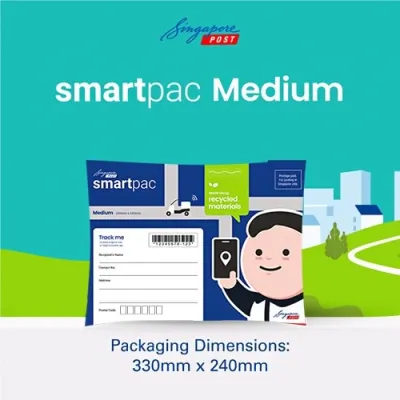
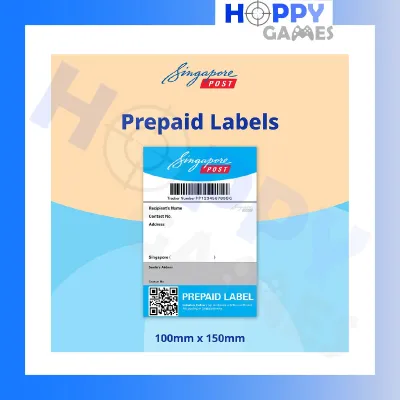
Prices are valid at publication and may change. Please refer to the product page for the latest price.
While the general categories of Small, Medium, and Large or Box remain relatively consistent, the exact dimensions and weight limits are subject to change by the postal service. It is always wise to verify the current specifications on the official SingPost website or check the physical printing on the packaging before preparing a shipment. Relying on outdated specifications can lead to unexpected surcharges or returned items if the postal guidelines have been updated.
A crucial distinction that shippers often overlook is the difference between a bag’s flat dimensions and its usable three-dimensional capacity. A flat plastic mailer has a specific length and width when empty, but as soon as you insert a thick object, the sides pull inward, significantly reducing the available length and width. Additionally, the sealing flap at the top of the bag requires several centimeters of clearance to fold over and adhere securely, further limiting the usable internal space.
How to Measure Your Item for Shipping
Accurately measuring your item before purchasing a prepaid mailer is the most effective way to prevent shipping delays and packaging failures. To begin, place your item on a flat surface and use a reliable ruler or measuring tape to record its maximum length, width, and height. Always measure at the absolute widest and thickest points of the item, including any protruding parts, buttons, or decorative elements.

The measurement strategy differs significantly depending on whether your item is rigid or flexible. Rigid items, such as books, framed prints, or boxed electronics, cannot deform to fit the packaging, meaning their measurements are absolute. If you plan to wrap a rigid item in protective bubble wrap or place it inside an inner box, you must measure the item after this protective packaging has been applied, as cushioning can easily add several centimeters to every dimension.
For flexible items like apparel, soft toys, or fabrics, you have more control over the final dimensions because the goods can be folded, rolled, or compressed. When preparing these items, fold them tightly and uniformly to create a flat, stable shape rather than a bulky, irregular bundle. Once folded, measure the package while applying light downward pressure to simulate how it will sit inside the shipping bag, ensuring the thickness is consistent throughout.
After securing the physical dimensions, the final step in the measurement process is to weigh the fully prepared package. Use a calibrated digital scale, such as a kitchen scale or a dedicated postal scale, to weigh the item along with all its internal wrapping, tape, and labels. Because prepaid shipping tiers enforce strict weight limits, knowing the exact weight down to the gram is just as important as knowing its physical size.
Matching Your Item to the Correct Bag Capacity
Once you have recorded the precise dimensions and weight of your packaged item, you can begin the process of mapping these figures to the appropriate SmartPac size tier. To do this successfully, you must calculate the required internal space by adding a safety margin to your item’s length and width. As a general rule, add at least two to three centimeters of clearance to both dimensions to accommodate the seams and ensure the item can slide in easily.
Handling the thickness of the item requires a bit of practical geometry, especially when using flat poly-style mailers. When a flat bag expands to accommodate a three-dimensional object, the thickness of the object consumes a portion of the bag’s flat width and length. A helpful rule of thumb is to deduct the thickness of your item from both the flat width and flat length of the bag to estimate the true usable space. For example, if a bag has flat dimensions of 30 cm by 20 cm and your item is 5 cm thick, the usable flat area of that bag effectively shrinks to approximately 25 cm by 15 cm.
If you are shipping flexible items, you can use creative folding strategies to optimize space and fit the goods into a smaller, more economical SmartPac tier. For instance, rolling a t-shirt tightly can sometimes result in a more compact, cylindrical shape that fits better into a smaller mailer than a traditional square fold. Experiment with different folding configurations, always keeping in mind that the final package must remain flat enough to comply with the maximum thickness limit of the chosen tier.
Regardless of how tightly you package your items, you must ensure that the goods do not press too tightly against the outer seams of the SmartPac bag. When an item is forced into a bag that is too small, the constant outward pressure strains the heat-sealed edges, making them highly susceptible to bursting during transit. A properly sized mailer should allow the item to sit comfortably inside without stretching the plastic or cardboard outer shell.
Balancing Weight Limits and Shipping Costs
In the world of prepaid shipping, physical dimensions are only half of the equation; weight limits are equally critical and strictly enforced. Each SmartPac tier is bound by a maximum weight allowance, which is independent of how much physical volume the bag can hold. For example, a larger bag might physically accommodate a heavy stack of metal tools, but the weight of those tools may easily exceed the maximum limit designated for that specific postage tier.
Exceeding the weight limit of your chosen SmartPac bag can lead to several complications that delay your shipment and increase your overall costs. If a parcel is flagged as overweight during sorting, the postal service may reject the item outright and return it to the sender, requiring you to purchase new packaging and postage. In other cases, the recipient might be required to pay a surcharge at the post office before they can collect the item, which can damage your reputation if you are running an online business.
Optimizing your shipping costs requires finding the sweet spot where your item fits comfortably within both the physical dimensions and the weight limits of the lowest possible tier. Choosing an oversized SmartPac tier simply because you are unsure of the measurements results in cumulative overpayment, which directly impacts your profitability or personal budget. Conversely, attempting to save money by squeezing a heavy item into a lower-tier bag risks structural failure, resulting in lost or damaged goods that cost far more to replace than the price of the correct postage.
To achieve the best balance, always cross-reference your measured dimensions and weight against the official SmartPac specifications before making a purchase. If your item is lightweight but bulky, physical dimensions will dictate your choice; if your item is small but dense, the weight limit will be the deciding factor. By analyzing both constraints simultaneously, you can select the most cost-effective option without compromising the safety or compliance of your shipment.
Common Sizing Mistakes and How to Avoid Them
Avoiding common shipping errors can save you time, money, and the frustration of dealing with lost or returned packages. By understanding where others frequently go wrong, you can take preventative steps to ensure your parcels arrive safely at their destinations.
Ignoring the Sealing Flap Many shippers fill a SmartPac bag all the way to the very top edge, forgetting that the adhesive sealing flap must fold over completely to close the package. When there is insufficient space at the top, the flap cannot make full contact with the designated adhesive area, resulting in a weak seal that can easily peel open during transit. Always leave at least three to four centimeters of empty space at the top of the bag to ensure a secure, permanent closure.
Treating 3D Items as 2D It is common to assume that if an item’s length and width are smaller than the bag’s flat dimensions, it will fit perfectly. However, neglecting to account for the item’s thickness causes the bag to stretch outward, pulling the sides inward and shortening the overall length. This geometric distortion often prevents the bag from sealing or causes it to exceed the maximum thickness allowed for letterbox delivery.
Overstuffing the Mailer Forcing a large or bulky item into a smaller SmartPac tier to save on postage costs is a major risk. Overstuffing puts immense pressure on the seams and the adhesive seal, which can cause the bag to burst open when subjected to the rough handling of automated sorting machines. Furthermore, overstretching the material can compromise its water-resistant properties, exposing your items to moisture during delivery.
Misjudging Package Weight Relying on a visual estimate or a hand-test to guess the weight of your package is a recipe for delivery failure. Items that feel relatively light can easily exceed the strict weight limits of smaller SmartPac tiers once you factor in the weight of protective bubble wrap, tape, and the mailer itself. Always use a digital scale to verify the final weight of the fully packaged item before dropping it into a posting box.
Frequently Asked Questions (FAQ)
Can I fold or trim a SmartPac bag if it is too large for my item?
Altering the physical structure of a SmartPac bag by cutting, trimming, or folding it excessively is highly discouraged and may violate postal regulations. The prepaid postage, tracking barcodes, and address fields must remain fully visible, flat, and intact for automated sorting machines to process them. Modifying the bag can render these barcodes unreadable, leading to severe delivery delays, manual handling surcharges, or the package being rejected and returned to you.
What should I do if my item fits dimensionally but slightly exceeds the weight limit?
Because prepaid shipping bags are subject to strict weight limits, you must not ship an item that exceeds the designated weight of your chosen tier, even by a few grams. If your package is overweight, you should attempt to reduce its weight by using lighter internal packaging materials, such as replacing heavy cardboard dividers with lightweight air pillows or tissue paper. If the weight cannot be reduced, you must upgrade to a larger SmartPac tier that offers a higher weight allowance to ensure compliance with postal regulations.
Are SmartPac bags suitable for shipping fragile items?
SmartPac bags are primarily designed for non-fragile, flexible, or pre-protected goods, as the soft outer material offers minimal resistance against crushing or bending. If you need to ship a fragile item, you must first secure it inside a rigid, protective box filled with adequate cushioning materials like bubble wrap or packing peanuts. Once the fragile item is safely boxed, you must measure the outer dimensions of that protective box and select a SmartPac size that can easily accommodate the entire box without stretching.
Community discussion
Share your experience or ask a question. Comments are reviewed before publication.