
Mailing items locally in Singapore requires a balance of cost, convenience, and security. Utilizing a prepaid poly mailer like the smart pack singpost system simplifies this process by combining postage and packaging into a single purchase. However, selecting the wrong bag size can lead to transit delays, damaged goods, or unexpected surcharges at the post office. To ensure your items arrive safely, you must understand how to measure your products, account for protective packaging, and match them to the correct prepaid tier.
This practical guide outlines how to determine the ideal size for your specific items, whether you are shipping lightweight apparel, delicate accessories, or bulky documents. By following a systematic approach to measuring and packing, you can confidently navigate Singapore’s domestic shipping requirements and avoid common mailing mistakes.
Check Current Smart Pack SingPost Size and Weight Limits
Prepaid poly mailers, widely known as Smart Packs, are designed to streamline domestic shipping within Singapore. These bags come with pre-printed postage, allowing senders to drop their parcels directly into posting boxes or automated lockers without standing in queue at a post office. Because the postage is built into the cost of the bag, SingPost enforces strict physical boundaries on what each size tier can accommodate.
Products mentioned in this guide
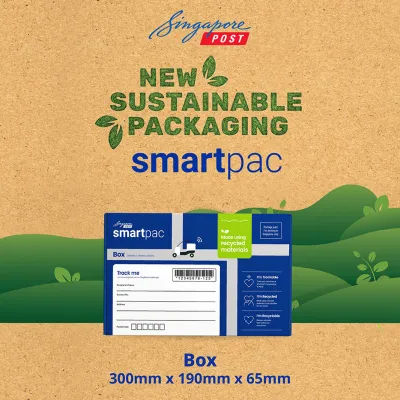
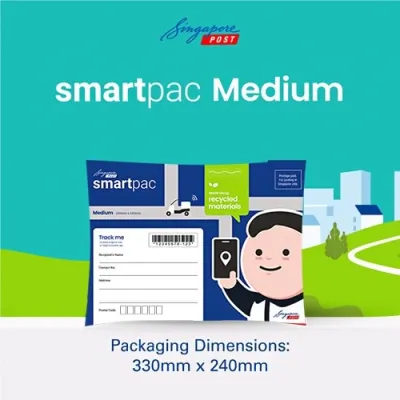
![[SINGPOST] MEDIUM smartpac - A postage-paid packaging for local delivery. Trackable via the SingPost mobile app.](https://img.lazcdn.com/g/p/3360d819ebee92c4900de5d10f98c2e8.png_400x400q80.png_.webp)
Prices are valid at publication and may change. Please refer to the product page for the latest price.
The dimensions and maximum weight allowances of these bags are subject to updates, meaning you should always verify the current specifications printed directly on the packaging or listed on the official SingPost website before purchasing in bulk. Typically, these options are categorized into distinct tiers—ranging from small, flat envelopes for documents to larger, thicker mailers designed for bulkier items.
Each tier has a designated weight limit, often ranging from several hundred grams up to a few kilograms. It is a common misconception that if an item physically fits inside the bag, it is eligible for mailing. SingPost utilizes automated sorting machines and manual checks; if a parcel exceeds the weight limit for its specific tier, it may be rejected at the drop-off point or held until the sender pays a surcharge.
Exceeding the physical dimensions or weight caps can also result in the parcel being returned to your return address, causing significant shipping delays. For business owners and casual sellers alike, verifying these limits beforehand prevents friction with customers and avoids the loss of prepaid postage fees.
Measure Your Items and Packaging for a Secure Fit
To choose the correct bag size, you must obtain precise measurements of the items you intend to mail. This process requires a few basic tools: a flexible measuring tape for dimensions and a reliable digital scale to check the final weight. Never estimate these figures, as even a minor discrepancy can prevent the bag’s self-adhesive flap from sealing securely.

Always measure your items after they have been wrapped in their immediate protective packaging. If you plan to wrap a delicate item in bubble wrap, place it inside a corrugated mailer box, or wrap it in decorative tissue paper, perform your measurements on the fully prepared bundle. Protective layers can easily add several centimeters to the length, width, and height of your shipment.
Because poly mailers are manufactured as flat bags, they do not possess built-in depth. When you insert a three-dimensional object into a flat plastic bag, the sides of the bag pull inward, reducing the available width and length. To compensate for this thickness factor, you must apply a reliable formula when calculating the required mailer size.
A practical rule of thumb is to calculate the minimum required bag dimensions as follows:
- Required Bag Width = Item Width + Item Thickness + 20mm (safety margin)
- Required Bag Length = Item Length + Item Thickness + 40mm (flap and sealing margin)
If your item is highly irregular in shape or features sharp corners, add an extra margin to prevent the plastic from stretching to its breaking point. If the calculated dimensions fall close to the maximum limit of a specific bag size, it is always safer to step up to the next available size tier.
Match Your Items to the Correct Smart Pack Size
Different types of merchandise require different handling and space allocations. Understanding how common retail goods and personal items map to various size categories helps you streamline your packaging inventory. The following sections outline how to categorize your items to find the most compatible size tier.
Documents, Apparel, and Flat Goods
Flat, flexible items are the easiest to match with smaller or medium prepaid mailers. Printed materials, softcovers, and single garments like t-shirts, light dresses, or socks do not add significant depth to the packaging. This lack of bulk allows the poly mailer to remain relatively flat, maximizing the usable surface area of the bag.
When packing clothing, fold the items tightly and press out excess air before measuring. Keeping the profile as slim as possible ensures the parcel remains within the lower thickness limits defined by standard postal services. For valuable documents or certificates, consider adding a rigid cardboard backing inside the bag to prevent bending, remembering to include the cardboard’s weight and thickness in your final calculations.
Small Retail Products and Fragile Accessories
Small consumer goods, cosmetics, jewelry, and electronic accessories generally require medium to large size tiers, even if the product itself is tiny. This is because fragile items require robust protective layers to survive the automated sorting process. A delicate pair of earrings or a glass cosmetic bottle must be heavily wrapped in bubble wrap or placed inside a sturdy cardboard box before entering the mailer.
When selecting a bag for these items, prioritize the outer dimensions of the protective box rather than the product itself. A small item housed in a protective 3D box will require a much wider bag to accommodate the box’s height. Ensure the bag can close naturally over the box without putting tension on the seams, as tight seams are highly susceptible to bursting during transit.
Bulky Items or Multiple Product Bundles
When shipping multiple items in a single order—such as a bundle of books, winter wear, or a combination of household goods—you will need to utilize the largest available prepaid tiers. These larger bags offer the physical volume necessary to hold multiple objects, but they also introduce a significant risk: rapid weight accumulation.
Before sealing a multi-item bundle, place all items and packaging materials on your digital scale. It is incredibly easy to exceed the maximum weight limit of a large bag before you fill its physical volume. If your bundle is too heavy for the largest prepaid tier, you must split the shipment into multiple smaller bags or transition to a standard weight-based parcel service.
Pack, Seal, and Verify Before Mailing
Once you have selected the appropriate bag size, the packing process must be executed carefully to ensure the parcel meets all postal acceptance criteria. Begin by sliding your prepared item gently into the bag, placing it centrally to distribute the weight evenly. Avoid forcing a large item into a small bag, as this can weaken the side seals before the package even leaves your hands.
Before sealing, gently press down on the poly mailer to expel as much trapped air as possible. Excess air creates a balloon effect, making the parcel appear thicker than it actually is and increasing the risk of the bag bursting under pressure during transit. Once the air is removed, fold the adhesive flap over smoothly, ensuring there are no wrinkles or folds along the sealing line.
Activating the self-adhesive strip requires firm pressure. Press along the entire length of the adhesive line to ensure a complete, tamper-evident bond. Most high-quality poly mailers use permanent adhesives that become stronger over the first few minutes of application, so allow the seal to set briefly before handling the parcel extensively.
Perform a final verification check before heading to a drop-off point:
- Weight Check: Place the fully sealed parcel on your digital scale to confirm it remains strictly under the weight limit printed on the bag.
- Dimension Check: Use your tape measure to verify that the thickness and overall dimensions do not exceed the maximum allowable limits.
- Label Check: Ensure the delivery address, return address, and prepaid tracking barcode are completely flat, visible, and unwrinkled.
Once verified, you can drop your parcel off at any designated SingPost collection point. This includes traditional post office counters, automated POPStation lockers, or standard street posting boxes, depending on the specific service tier of your prepaid bag.
Common Sizing and Mailing Mistakes to Avoid
Even experienced senders occasionally make errors that lead to delivery issues. One of the most frequent mistakes is overstuffing the poly mailer. Pushing the material to its physical limit stretches the plastic, making it highly vulnerable to punctures from external contact or sharp objects inside the mailer.
Another common pitfall is ignoring the weight of packaging materials. Bubble wrap, crumpled paper, and cardboard boxes may feel light individually, but their combined weight can easily push a borderline package over the strict weight threshold of your prepaid bag. Always weigh the entire completed assembly, not just the raw product.
Improper sealing also accounts for a large percentage of shipping mishaps. If the adhesive strip is folded carelessly, leaving gaps or exposed adhesive, the bag can stick to other mailpieces during sorting, leading to tears or lost items. Ensure the flap is folded straight and adheres only to the designated plastic surface.
Finally, remember that prepaid bags are strictly single-use products. Attempting to reuse a previously mailed bag by taping over old labels, or cutting down a larger bag to fit a smaller item, is not permitted. Modifying the physical structure of the bag can damage the built-in barcode, rendering the prepaid postage invalid and resulting in the parcel being rejected by postal staff.
Frequently Asked Questions (FAQ)
Can I cut down a larger Smart Pack bag to fit a very small item?
Modifying or cutting a prepaid bag is highly discouraged and can invalidate your postage. SingPost relies on automated scanning systems to process prepaid mailers, and altering the bag’s shape or size can distort or damage the printed barcode and tracking elements. If you have excess space in a larger bag, fold the empty material flat against the item and secure it neatly with clear packing tape, ensuring the barcode remains completely flat and unobstructed.
What happens if my sealed Smart Pack exceeds the weight limit at the post office?
If your parcel is found to exceed the designated weight limit during processing, it will not be delivered under the standard prepaid terms. SingPost may require the sender to pay a surcharge to cover the excess weight, or the parcel may be returned directly to the sender’s address. To avoid shipping delays and additional fees, always use a digital scale to verify the total weight of your sealed package before dropping it off.
Are Smart Pack bags fully waterproof for shipping sensitive items?
While the poly material used in these bags offers excellent water resistance against light rain, humidity, and minor splashes during transit, they are not completely hermetically sealed or waterproof. Water can still penetrate through the seams or the edges of the adhesive flap under heavy exposure. For highly sensitive items like legal documents, electronics, or photographs, place the items inside a sealed plastic zip-top bag before inserting them into the mailer.
Community discussion
Share your experience or ask a question. Comments are reviewed before publication.