
Selecting the correct Singer sewing needle is the most critical step for achieving clean stitches and preventing fabric damage. While beginners often default to a standard universal needle, different fabrics require specific needle points and sizes to handle their unique weave, stretch, and weight. To choose the right needle, you must identify whether your fabric is woven, knit, or heavy, and then select a needle size that matches the fabric’s thickness. Using the wrong combination can lead to skipped stitches, broken threads, or permanent holes in your material.
Understanding how to read needle packaging and recognizing the physical differences between needle types will save you hours of frustration. This guide breaks down the anatomy of a sewing needle, explains the dual sizing system, matches needle types to common fabrics, and provides a step-by-step installation and troubleshooting framework to keep your sewing projects running smoothly.
Understanding Singer Sewing Needle Anatomy and Sizing
To make informed decisions at the sewing machine, you must first understand how a sewing needle is constructed and how its dimensions interact with your fabric and thread.
Products mentioned in this guide
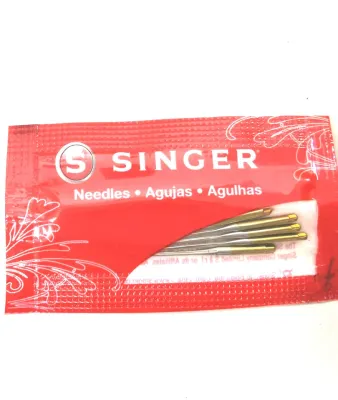
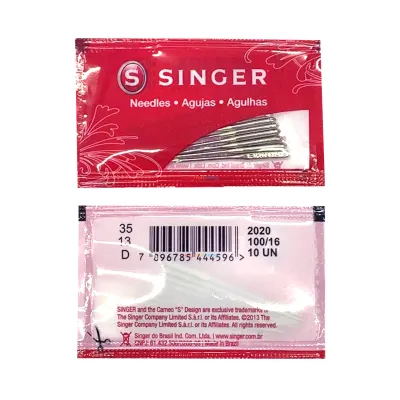
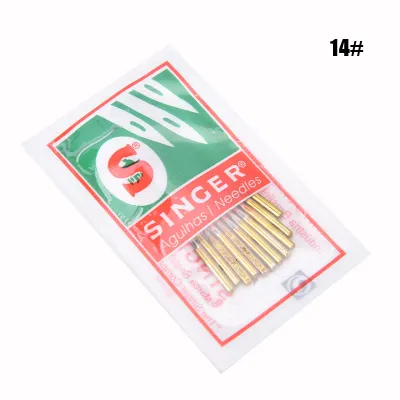
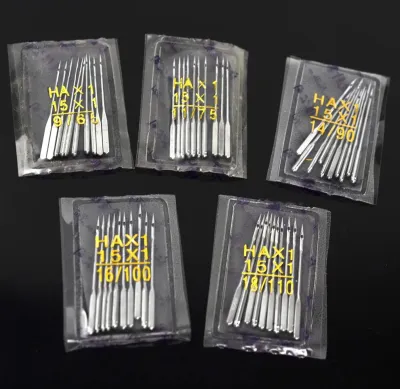
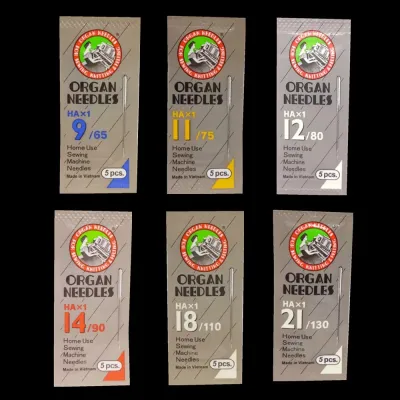
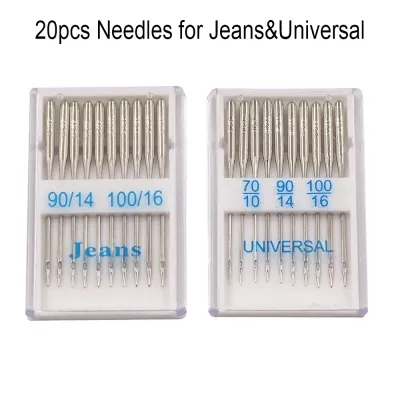
Prices are valid at publication and may change. Please refer to the product page for the latest price.
The shank is the thick top portion that inserts into the needle bar, featuring a flat back and rounded front to ensure correct installation. Below the shank is the shaft, which determines the needle’s thickness. The long groove running down the front of the shaft cradles the thread to reduce friction during stitching.
Near the tip is the eye, which holds the thread, and directly above it on the back is the scarf. This precise indentation allows the bobbin hook to pass close enough to catch the thread loop and form a stitch. The point at the bottom is shaped specifically to pierce or slide through different fabric structures.
Singer needles use a dual sizing system, written as two numbers separated by a slash, such as 80/12 or 90/14. The first number is the European metric size, representing the shaft diameter in hundredths of a millimeter (an 80 metric needle is 0.8 mm thick). The second number is the American size, an arbitrary scale where lower numbers represent thinner needles.
The core rule of needle sizing is straightforward: finer needles are designed for lightweight fabrics, while thicker needles are required for heavy materials. Using a needle that is too thick for a delicate fabric leaves permanent holes and causes puckering. Conversely, using a needle that is too thin for a heavy fabric causes the needle to bend, deflect, or snap.
Matching Needle Types to Common Fabric Categories
Matching your needle point to the fabric’s structure is essential for maintaining material integrity and ensuring consistent stitch quality.

Woven Fabrics
Woven fabrics like cotton, linen, and poplin are made by interlacing threads at right angles. Universal needles feature a slightly rounded point that is sharp enough to pierce standard wovens while remaining versatile enough for general sewing. For tightly woven or synthetic fabrics like microfiber or polyester, a Microtex needle is highly effective, using an exceptionally slim, acute point to create precise stitches without snagging.
Stretchy and Knit Fabrics
Knit fabrics, including jersey and rib knit, are constructed from interlocking loops of yarn. A sharp needle will cut these individual fibers, leading to small holes that eventually unravel into runs. To prevent this, knit fabrics require rounded points. Ballpoint needles feature a rounded tip that gently pushes loops aside rather than cutting them. For highly elastic fabrics containing spandex or Lycra, a Stretch needle is the appropriate choice, featuring a specially designed scarf and eye to prevent skipped stitches as the fabric flexes.
Heavyweight Fabrics
Heavyweight materials like denim and canvas present a physical barrier that standard needles cannot easily penetrate. For these projects, use a Denim or Jeans needle. These are engineered with a reinforced, thicker shaft that resists bending when striking dense layers, alongside a very sharp, sturdy point that pierces multiple layers without breaking.
Delicate Fabrics
Fragile, lightweight fabrics such as silk and chiffon require extreme care. Select a very fine needle, typically size 60/8 or 70/10, with a sharp point. The fine shaft ensures the needle leaves the smallest possible footprint in the delicate weave, preventing permanent puncture marks or unsightly snags.
Step-by-Step Guide to Selecting and Installing Your Needle
Once you have identified the correct needle type and size, installing it correctly is vital for safety and machine performance.
First, verify your fabric’s requirements and perform a test stitch on a scrap piece of the exact same fabric. This trial allows you to observe stitch quality, check for skipped stitches, and ensure the needle size matches the fabric weight.
Second, completely power off your sewing machine to prevent accidental injury if the foot pedal is bumped while your fingers are near the needle bar.
Third, loosen the needle clamp screw counter-clockwise using your fingers or a small screwdriver. Hold the old needle securely with your other hand to prevent it from falling into the bobbin area, then pull it straight down and out.
Fourth, identify the correct orientation of the new needle. For most modern home machines, the flat side of the shank must face the back, while the rounded side faces the front. Insert the needle into the clamp, pushing it upward as far as it will go to prevent timing misalignments or needle strikes.
Fifth, tighten the needle clamp screw securely clockwise. Manually turn the handwheel toward you slowly for one full rotation to ensure the needle moves smoothly through the throat plate and clears the bobbin mechanism without interference.
Troubleshooting Common Beginner Needle Mistakes
Even with careful preparation, minor sewing issues can occur. Most problems can be quickly diagnosed by examining the needle’s condition and installation.
Skipped Stitches
If your machine is skipping stitches, the most common culprit is using the wrong needle type. For example, using a sharp needle on a highly elastic knit fabric prevents the needle from forming a proper thread loop for the bobbin hook to catch. Switching to a Stretch or Ballpoint needle usually resolves this. Skipped stitches can also occur if the needle is slightly bent, dull, or not pushed fully up into the clamp.
Thread Breaking or Fraying
When the upper thread repeatedly breaks or frays, the needle eye may be too small for the thread thickness. If the thread is constricted, friction will quickly shred the fibers. To fix this, switch to a thinner thread or use a larger needle size. Additionally, inspect the needle for tiny burrs in the eye or along the groove that can snag the thread.
Fabric Puckering or Runs
Fabric puckering along the seam line typically happens when the needle is too thick for the fabric weight, causing the woven threads to displace and bunch up. Switching to a smaller needle size reduces this tension. If you notice runs in knit fabrics, you are likely using a sharp needle instead of a ballpoint, or the needle tip has become dull and is snagging the loops.
Audible Warning Signs
A distinct clicking or popping sound as the needle penetrates the fabric is an immediate warning sign that the needle point is dull, bent, or damaged. This forces the needle through the fabric rather than piercing it cleanly. Stop sewing immediately, discard the damaged needle, and install a fresh one to prevent fabric damage or motor strain.
Frequently Asked Questions (FAQ)
How often should I change my Singer sewing needle?
A sewing needle’s lifespan depends on fabric density and usage rather than a strict hourly rule. While a needle often lasts 6 to 8 hours of active sewing, you should rely on observable triggers. If you hear a popping sound, notice skipped stitches, or experience thread fraying, the needle is dull or slightly bent and needs immediate replacement. It is highly recommended to start every major new project with a fresh needle, especially when switching fabric types.
Can I use a Universal needle for all my sewing projects?
While the Universal needle is a convenient compromise for many projects, it is not a universal solution. Universal needles have a slightly rounded point suitable for basic wovens and stable, low-stretch knits. However, using them on highly elastic fabrics like spandex frequently causes skipped stitches, and dense fabrics like denim can lead to needle deflection or breakage. For reliable results, always switch to specialized needles like Stretch, Ballpoint, or Denim when working outside of basic woven cottons.
Do Singer needles fit other sewing machine brands?
Yes, most modern domestic sewing machines use a standardized needle system known as 130/705 H, which features a flat-sided shank. Singer home sewing needles follow this standard, making them compatible with most other major domestic brands. Always consult your specific machine’s user manual to confirm the required needle system before purchasing. Note that industrial machines, sergers, and specialty embroidery machines often require entirely different needle systems with round shanks or different lengths.
Community discussion
Share your experience or ask a question. Comments are reviewed before publication.