
Selecting a schedule planner is a highly personal decision that directly impacts your daily productivity and mental clarity. In Singapore’s fast-paced professional and academic environments, a planner serves as more than just a calendar; it is a central hub for task management, goal tracking, and creative expression. To find the best planner brand for your specific needs, you must evaluate how your cognitive habits align with different layout designs, while also considering how physical stationery specifications perform under local environmental conditions.
How to Match Your Planning Style to a Planner Layout
Assessing your daily task volume against your long-term goal tracking needs is the first step in narrowing down your choices. If your day is packed with hourly meetings, client calls, and granular to-do lists, a macro-level overview will quickly become cluttered and unreadable. Conversely, if your work revolves around long-term project milestones, weekly deliverables, or high-level strategic planning, a detailed daily page might leave you with vast expanses of wasted, empty paper.
Identifying your preference for structured time-blocking versus flexible freeform journaling will further refine your layout choice. Time-blocking requires a rigid, vertical timeline where you allocate specific hours to dedicated tasks, which is highly effective for individuals who thrive on strict schedules and need to visualize their day’s boundaries. On the other hand, if you prefer to capture thoughts, sketch diagrams, or write reflective journal entries alongside your tasks, a flexible, unlined, or dot-grid layout offers the freedom your mind needs to process information without feeling constrained by pre-printed lines.
Products mentioned in this guide
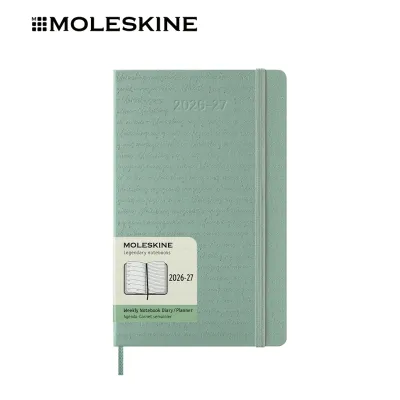
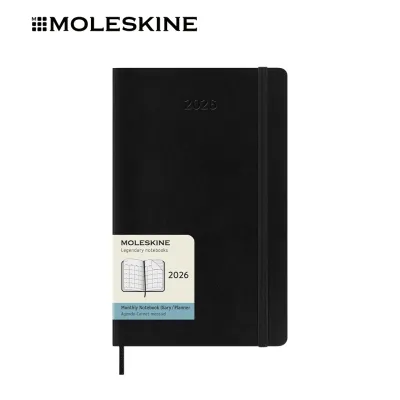
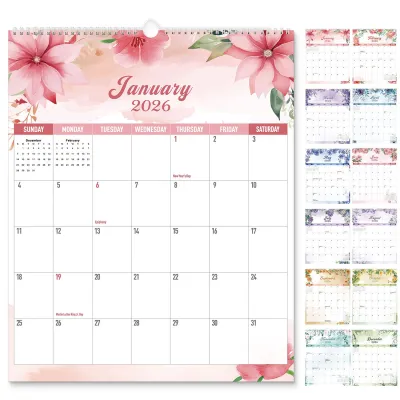
Prices are valid at publication and may change. Please refer to the product page for the latest price.
Finally, determine your portability requirements versus desk-bound comprehensive planning. Consider your daily routine and transit habits; if you commute regularly via the MRT or bus, carrying a heavy, thick planner in your bag can lead to physical fatigue. For those who plan on the go, a compact, lightweight format that slips easily into a small tote or backpack is essential. However, if your planner is destined to remain open on your office desk or home study table, a larger, more substantial book provides a generous canvas that encourages comprehensive, detailed mapping of your life.
Essential Stationery Specifications to Evaluate
Paper weight and texture are critical to prevent ink bleed-through and ghosting with your preferred writing instruments. The weight of paper is measured in grams per square meter (GSM), with standard office paper typically sitting around 80 GSM. For a premium writing experience with gel pens, rollerballs, or fountain pens, look for brands offering paper weights between 100 GSM and 120 GSM, or specialized high-density, lightweight papers (such as 52 GSM to 68 GSM coated papers) that are engineered to resist ink penetration despite their thinness. Texture also matters: smooth, coated papers allow pens to glide effortlessly but require longer drying times, whereas toothy, uncoated papers absorb ink rapidly but may cause slight feathering.

Binding types dictate a planner’s lay-flat capability and overall longevity. A planner that refuses to stay open on its own is a constant source of frustration during daily use. Thread-bound or stitched bindings are the gold standard for lay-flat performance, as they allow the book to open completely flat across the center seam without damaging the spine. Spiral or wire-o bindings also lay flat and allow you to fold the planner in half to save desk space, though the metal coils can sometimes interfere with your hand while writing near the margins. Disc-bound and ring-bound systems offer unparalleled flexibility, allowing you to insert, remove, or rearrange pages at will, but they tend to be bulkier and require specialized hole punches.
Choosing the right standard size format ensures your planner integrates seamlessly into your daily carry and bag compatibility. The A5 format (148mm x 210mm) is widely regarded as the most versatile size, offering ample writing space while remaining highly portable. If you prefer a slimmer profile, the B6 format (125mm x 176mm) provides a comfortable middle ground that fits easily into medium-sized bags. For minimalists who only need to jot down quick reminders and appointments, the pocket-sized A6 format (105mm x 148mm) or a slim “personal” size is highly convenient, though it limits your ability to write detailed daily schedules.
Singapore’s tropical climate, characterized by high relative humidity, poses unique challenges for paper products. Unprotected cardboard or soft paper covers can absorb moisture from the air, causing them to warp, soften, or develop mold over time. To ensure your planner survives a full year of daily use, look for brands that utilize durable cover materials. Hardcovers wrapped in bookcloth or water-resistant bookbinding paper offer excellent structural integrity. Alternatively, flexible plastic (polypropylene) covers or planners equipped with protective PVC zip-pockets shield the inner pages from humidity, sweaty hands, and accidental spills.
Selecting Brand Features by Layout Preference
Different planner brands design their layouts around distinct organizational philosophies. By matching your primary layout preference with the specific structural features offered by these brands, you can find a tool that naturally complements your cognitive workflow.
Daily Planners for Detailed Task Management
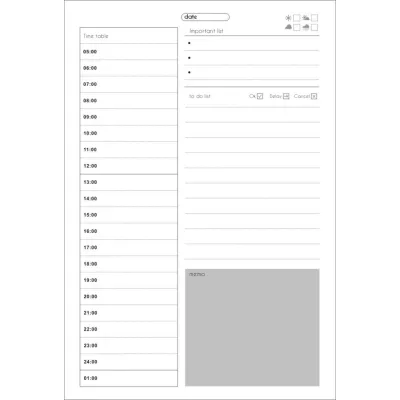
Look for daily layouts that feature structured hourly timelines alongside dedicated spaces for priorities and notes. A well-designed daily page should help you separate your time-bound appointments from your flexible tasks. Look for brands that incorporate subtle habit trackers, water intake logs, or gratitude prompts directly into the daily spread to support holistic lifestyle management.
Pay close attention to page thickness and paper density when choosing a daily planner. Because a daily planner requires 365 individual pages plus monthly overviews, the book can easily become incredibly thick and heavy. To mitigate this, some premium brands utilize ultra-thin, high-density coated papers that keep the overall profile of the book remarkably slim despite the high page count. Alternatively, look for brands that split the calendar year into two separate six-month volumes, allowing you to carry only half the year at a time.
Consider the benefits of undated daily planners if your schedule fluctuates wildly. When some days are packed with tasks and others require no planning at all, a dated planner can lead to a significant number of blank, wasted pages. Undated daily planners allow you to write in the date only when you need to use a page, ensuring that every single sheet of paper is utilized efficiently, regardless of how often you plan.
Weekly Planners for Balanced Overviews
When evaluating weekly layouts, compare vertical columns against horizontal blocks. Vertical weekly layouts are designed for time-blocking, with each day represented by a column divided into hourly increments, making them ideal for visualizing open time slots and managing back-to-back appointments. Horizontal weekly layouts, which present each day as a wide horizontal box, are better suited for task-oriented planners who prefer writing lists or keeping a brief daily journal.
Ensure the layout provides adequate margin space or blank pages for miscellaneous notes. Many popular weekly formats feature a “weekly notebook” style, where the left page displays the seven days of the week and the right page is a blank grid or lined sheet. This hybrid design gives you the structure of a weekly calendar alongside the freedom of a notebook for brainstorming, sketching, or tracking weekly goals.
Verify that the weekly planner includes integrated monthly overview pages. A good weekly planner should not isolate you in a seven-day bubble; it needs to provide macro-level context. Look for brands that place a two-page monthly calendar spread at the beginning of each month, or group all monthly calendars together at the front of the book, allowing you to easily cross-reference long-term deadlines while planning your week.
Monthly Planners for High-Level Goal Tracking
For those who focus on high-level project management, event coordination, or editorial calendars, a monthly planner is the ultimate tool. The primary feature to evaluate is the size of the daily grid boxes. Ensure the boxes are large enough to accommodate multiple lines of text or color-coded stickers without becoming a cramped, illegible mess. Look for layouts that include a generous sidebar for monthly goals, action items, and key performance indicators.
Look for supplementary pages designed for deep-dive planning. A robust monthly planner should go beyond simple calendar grids by offering dedicated sections for project breakdowns, budget tracking, habit tracking, and vision boarding. These pages allow you to translate your high-level monthly goals into actionable steps before the month even begins.
Confirm the inclusion of comprehensive yearly reference calendars and future planning sections. A dedicated future log—typically structured as a vertical overview of the upcoming 12 to 24 months—is essential for tracking long-term commitments, travel plans, and recurring annual expenses, ensuring you are never caught off guard by future deadlines.
Where to Shop and Verify Planner Quality in Singapore
To truly understand how a planner feels in your hand, visit local brick-and-mortar stationery stores and specialty boutiques. Physically handling the planners allows you to test the smoothness of the paper, assess the flexibility of the binding, and determine if the size and weight are comfortable for your daily carry. Many local retailers display open sample books specifically for customers to touch and examine.
When shopping online, navigate to official brand stores or authorized retailers on major e-commerce platforms to guarantee you are purchasing authentic products. Counterfeit planners with inferior paper quality and weak bindings are common on unauthorized listings. Buying from official channels ensures you receive genuine paper stock that performs as advertised.
Before making a purchase, carefully review customer feedback and check the retailer’s return policies. Look for reviews that specifically mention how the paper handles different ink types, whether there are issues with ghosting, and how well the planner is packaged for delivery. Proper packaging is crucial, as poorly protected planners can easily suffer bent corners or damaged spines during transit.
Frequently Asked Questions (FAQ)
Can I use fountain pen ink in any schedule planner?
Not all planner paper is suitable for fountain pens. To prevent ink from bleeding through to the other side of the page or feathering (spreading out along the paper fibers), you must look for paper with a high density or a specialized surface coating (sizing). While a higher GSM often helps, some thin, highly engineered papers perform exceptionally well with fountain pens because their surface treatment resists rapid ink absorption.
To avoid ruining your new planner, always perform a discreet ink test before writing on the main pages. Use the blank memo pages, index pages, or the very last sheet of the book to test your favorite fountain pen and ink combinations. Write a few lines, let the ink dry completely, and inspect both sides of the page for any signs of bleeding, feathering, or excessive ghosting.
Should I choose a dated or undated schedule planner?
The choice between a dated and undated planner depends entirely on your planning consistency. Dated planners offer the ultimate convenience, as they are pre-printed with the correct days, dates, and months, allowing you to start planning immediately. However, if you take extended breaks from planning—such as during holidays or quiet work periods—a dated planner will result in empty, wasted pages that can feel discouraging.
Undated planners offer complete flexibility, allowing you to pause and resume your planning whenever you like without wasting a single page. This makes them highly cost-effective for irregular planners. The trade-off is the upfront time and effort required to manually write in the dates, numbers, and months, which can become tedious if you prefer a quick, ready-to-use setup.
Community discussion
Share your experience or ask a question. Comments are reviewed before publication.