
Selecting the right protective packaging is essential for preventing damage during transit, especially when dealing with circular or delicate items. Round bubble sheets offer a pre-cut, highly efficient solution designed specifically to cushion curved objects like plates, cosmetics, jars, and optical lenses. By choosing a circular format, you eliminate the excess bulk and folded corners associated with square sheets, resulting in a cleaner presentation and more consistent protection. To find the ideal match for your packaging workflow, you must evaluate your item’s physical vulnerabilities, determine the correct bubble profile, calculate the necessary sheet diameter, and verify any specialized material treatments required for your specific environment.
Assess Your Item's Fragility and Weight
Before purchasing packaging materials, analyze the physical properties of the items you intend to ship or store. Fragility is not uniform; a ceramic plate behaves differently under stress than a glass jar or a delicate cosmetic compact. Ceramics and glassware are highly susceptible to shock and vibration, requiring a cushioning layer that can absorb sudden impacts. On the other hand, items with polished, painted, or lacquered surfaces are highly vulnerable to abrasions and scratches, meaning the packaging material must have a smooth, non-abrasive surface contact layer.
Weight is another critical factor that dictates the required load-bearing capacity of your bubble sheets. Heavy items, such as stoneware or metal parts, exert significant localized pressure on the air bubbles. If the bubble sheet is too thin or the bubbles are too soft, the weight of the item will deflate or compress the bubbles completely, leaving the item vulnerable to bottoming out against the outer box. Conversely, lightweight items do not require heavy-duty, rigid bubbles; instead, they benefit from highly flexible, low-density sheets that easily wrap around delicate contours without springing open.
Products mentioned in this guide
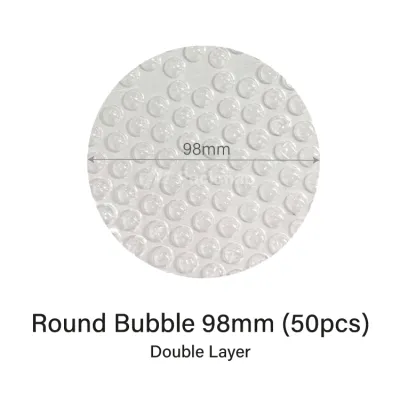
Prices are valid at publication and may change. Please refer to the product page for the latest price.
Additionally, consider any sharp edges, protrusions, or lids that could puncture the plastic film. If your item has sharp metallic borders or rough ceramic bases, standard single-layer bubble sheets may tear easily. In these scenarios, look for sheets made from co-extruded or multi-layered polyethylene, which offer enhanced puncture resistance and prevent the air pockets from popping under localized stress. In warm and humid climates like Singapore, trapping moisture between plastic and polished surfaces can also cause damage, making a snug but breathable wrap essential.
Match Bubble Size and Thickness to Shock Absorption Needs
The protective capability of a round bubble sheet depends heavily on the size of its air pockets and the thickness of the plastic film. Bubble sizes generally fall into two main categories: small-profile bubbles and large-profile bubbles. Small-profile bubbles, typically featuring a lower height and smaller diameter, are engineered primarily for surface protection and light cushioning. They conform exceptionally well to intricate shapes, making them ideal for wrapping delicate jewelry, small cosmetic jars, or individual ceramic saucers. Because they pack tightly against the item, they prevent shifting and minimize surface scratches.

Large-profile bubbles, which feature a taller height and wider diameter, are designed for heavy-duty shock absorption and void filling. These larger air pockets act as robust shock absorbers, cushioning heavier items against severe drops and vibrations during transit. If you are shipping heavy ceramic bowls, large glass platters, or delicate electronic equipment, large-profile bubble sheets provide the necessary clearance and impact resistance to keep the item isolated from the outer walls of the shipping container.
Beyond bubble size, pay close attention to the sheet’s thickness and layer configuration. Standard bubble sheets feature a single layer of bubbles bonded to a flat backing film. For more demanding applications, double-sided bubble sheets sandwich the air bubbles between two flat layers of plastic. This configuration prevents the bubbles from catching on sharp corners and significantly increases the overall puncture resistance. When sourcing your materials, review the manufacturer’s product specifications for indicators of film thickness, such as gauge or micron ratings, to ensure the material meets your durability requirements.
Calculate the Right Diameter for Full Item Coverage
Choosing the correct diameter for your round bubble sheets is crucial to ensure complete coverage and eliminate vulnerable exposed edges. To determine the correct size, start by measuring the maximum dimensions of your item, including any lids, handles, or decorative protrusions. The packaging strategy you choose—whether it is full wrapping, top-and-bottom capping, or interleaving—will dictate the sheet diameter you need.
For flat items like dinner plates, picture frames, or vinyl records, the calculation is straightforward. If you are using the sheets for interleaving—placing a single sheet between stacked items to prevent scratching—the sheet’s diameter should match or slightly exceed the diameter of the item. This ensures that the edges of the stacked items do not rub against each other during transport.
If your goal is to fully wrap a three-dimensional circular object, such as a deep bowl or a cylindrical jar, you must account for the item’s height. A reliable formula to calculate the minimum sheet diameter is to take the item’s diameter and add twice its height, plus an additional margin of at least three to five centimeters for securing the edges. For example, if you are wrapping a bowl with a diameter of 15 centimeters and a height of 5 centimeters, you will need a round bubble sheet with a minimum diameter of 28 to 30 centimeters. This extra margin allows the sheet to curve naturally over the sides and fold neatly over the top, where it can be secured with packaging tape or stretch wrap without leaving any gaps.
Evaluate Specialized Material Features for Your Environment
Standard polyethylene bubble sheets are highly effective for general packaging, but certain items and shipping environments require specialized material treatments. If you are packaging sensitive electronic components, circular circuit boards, or optical sensors, static electricity is a major hazard. Standard plastic films easily generate electrostatic discharge through friction, which can permanently damage sensitive electronics. In these cases, select anti-static round bubble sheets, which are typically tinted pink and treated with additives that dissipate static charges safely.
Environmental sustainability is another important consideration for modern packaging workflows. Many manufacturers now offer eco-friendly round bubble sheets made from recycled low-density polyethylene (LDPE) or biodegradable materials. These options help reduce plastic waste and align with green business practices. When selecting sustainable packaging, check the product labels for recycling codes (such as LDPE 4) to verify that the material can be easily processed by local recycling facilities.
If your packaging needs involve direct contact with consumables, cosmetics, or tableware, material safety is paramount. Ensure that the bubble sheets are manufactured from virgin, non-toxic materials that are certified food-safe. This prevents any chemical residues, slip agents, or industrial odors from transferring onto the surfaces of plates, cups, or cosmetic containers. In humid climates, choosing high-quality, chemically stable materials also prevents the plastic from sticking to or reacting with delicate surface finishes during prolonged storage in non-air-conditioned spaces.
Finalize Your Round Bubble Sheet Selection
To make your final purchase decision, systematically cross-reference your item’s vulnerability profile with the bubble specifications and sheet diameters you have calculated. Create a checklist that matches each item type in your inventory to a specific sheet size and bubble profile. This structured approach prevents over-packaging, which increases shipping costs, and under-packaging, which leads to costly product damage.
When browsing suppliers on online marketplaces or specialty packaging sites, carefully read the product descriptions to verify the quantity per pack, material composition, and any certified treatments. Avoid relying solely on product photos, as bubble sizes and sheet thicknesses can be difficult to gauge visually.
Before committing to a large bulk order, it is highly recommended to purchase a small-batch sample or a single pack for testing. Conduct a practical trial by wrapping your target items with the sample sheets. Observe how easily the material folds around the curves, check if the adhesive tape adheres securely to the backing film, and perform a gentle shake test inside your standard shipping box. This hands-on verification ensures that the selected round bubble sheets perform reliably under real-world handling conditions.
Frequently Asked Questions (FAQ)
Can I use round bubble sheets for square or irregularly shaped items?
While round bubble sheets are optimized for circular items, they can still be used for square or irregular objects if necessary. However, wrapping an angular item with a circular sheet can leave the corners exposed or create uneven bulk. To protect square items effectively, place the object in the center of the sheet and fold the curved edges upward, tucking the excess material tightly around the corners before securing it with tape. Alternatively, you can use round sheets as top-and-bottom protective caps inside a square box, filling the remaining side gaps with crumpled paper or loose-fill packaging.
How should I store unused round bubble sheets to maintain their integrity?
To prevent premature deflation and material degradation, store your unused round bubble sheets in a cool, dry place away from direct sunlight. Ultraviolet rays can break down the polyethylene film over time, making the bubbles brittle and prone to popping. Keep the sheets away from extreme heat sources, which can cause the air inside the bubbles to expand and rupture the seals. Store the sheets flat in their original packaging or loosely rolled in a storage bin to avoid permanent creasing, which can weaken the structural integrity of the air pockets.
Community discussion
Share your experience or ask a question. Comments are reviewed before publication.