
Selecting the perfect rope string for a knitting project is the foundation of structural and aesthetic success. Unlike traditional fine yarns, rope strings provide the physical density, weight, and rigidity needed for structural home decor, durable accessories, and sculptural art. Making the wrong choice can result in a floppy basket that collapses under its own weight, or a market bag that stretches uncontrollably when loaded. To select the ideal rope string, you must align your project’s functional needs with the fiber’s inherent properties, choose a thickness that matches your tools, and evaluate the rope’s construction to ensure a smooth crafting experience.
Define Your Knitting Project Requirements
Before purchasing any materials, clearly define what your finished item needs to do. Knitting with rope string generally falls into three main categories: structural items, wearable or functional accessories, and decorative home goods. Structural items, such as storage baskets, pet beds, and heavy floor poufs, require a rope string with high stiffness and minimal stretch. These items must hold their shape independently, meaning the material must resist compression and sagging over time. For functional accessories like market bags, tote bags, or summer hats, the primary requirements are durability, weight-bearing capacity, and a comfortable hand-feel. A bag handle made of a rough, heavy fiber can quickly become uncomfortable to carry. Decorative items, such as wall hangings, plant hangers, and rugs, prioritize visual texture, stitch definition, and drape.
In Singapore’s tropical, highly humid climate, environmental factors play a major role in material selection. High relative humidity means that natural, untreated fibers can act like sponges, absorbing moisture from the air. If a heavy cotton basket is placed in a poorly ventilated corner of an HDB flat, it can easily become a breeding ground for mold and mildew. Therefore, when planning projects for local use, you must consider how the item will be cleaned, where it will be stored, and whether synthetic or treated fibers might offer better long-term durability.
Products mentioned in this guide
![[SG] [FREE SHIP] 10m 30m Brown Art Kraft String Hemp Twine Jute Gift Wrap Tag Holders Hanger Card Making Flower Rope Thread](https://img.lazcdn.com/g/ff/kf/Sfc13e548c643419e925a463a3f6a21bdX.jpg_400x400q80.jpg_.webp)
Prices are valid at publication and may change. Please refer to the product page for the latest price.
Match the Rope String Material to Your Project
The fiber composition of your rope string dictates its strength, weight, texture, and care requirements. Understanding the differences between natural and synthetic options prevents project failure and ensures your knitted piece stands the test of time.

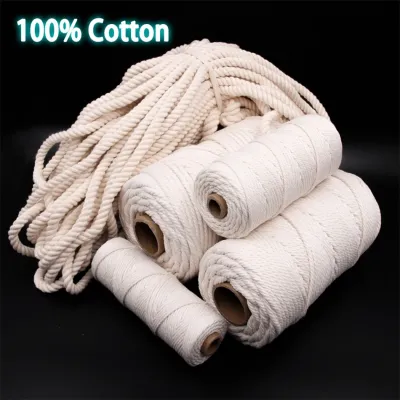
- Cotton (recycled, combed, or mercerized): Cotton is the most popular choice for rope knitting due to its softness, excellent stitch definition, and wide availability. Recycled cotton rope string is highly eco-friendly and offers a matte, rustic finish, while combed or mercerized cotton provides a smoother, slightly lustrous surface that is gentle on the hands. Cotton has a beautiful, natural drape, making it ideal for market bags, plant hangers, and soft home decor. However, cotton is highly absorbent. If it gets wet, it becomes incredibly heavy and takes a long time to dry in humid environments, which can lead to musty odors if not dried thoroughly.
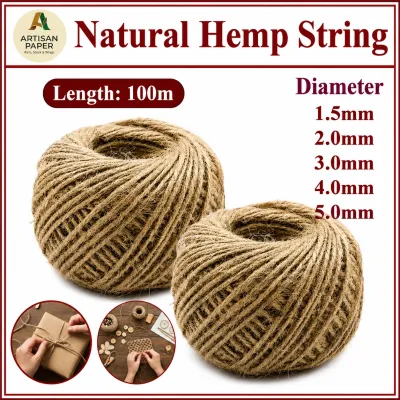
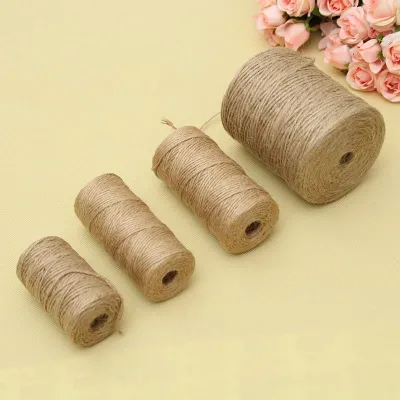
- Jute and Hemp: If your project requires maximum stiffness, durability, and a rustic aesthetic, jute and hemp are unmatched. These natural bast fibers are incredibly strong and stretch-resistant, making them perfect for heavy-duty storage baskets, doormats, and structural plant hangers. However, they come with trade-offs. Jute and hemp are rough on the hands during knitting, often requiring crafters to wear protective gloves or finger wraps to prevent friction burns. They also tend to shed tiny fibers during the knitting process, creating a dusty work area, and they cannot be easily machine-washed.
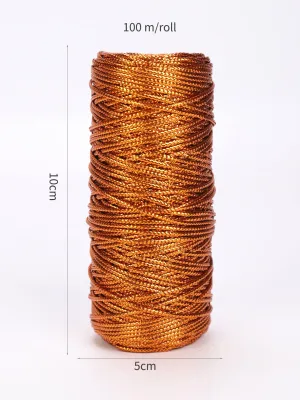
- Synthetic (Nylon, Polyester, Acrylic): Synthetic rope strings are engineered for durability, water resistance, and colorfastness. Polyester and nylon cords are highly resistant to mold, mildew, and rot, making them the superior choice for outdoor items like patio cushions, plant hangers on balconies, or high-wear beach bags. Synthetics are also incredibly easy to clean, as they can typically be machine-washed and dry much faster than cotton. The main disadvantage is that they can have a synthetic sheen and lack the organic, cozy aesthetic of natural fibers.
- Paper Cord and Raffia: For lightweight, summer-themed accessories, paper cord and raffia offer a unique, crisp texture. These materials are surprisingly strong when knitted, yet they weigh a fraction of what cotton or jute ropes weigh. They are the premier choice for summer sun hats, visors, and lightweight decorative clutches. However, they have virtually no elasticity, which can make knitting them tough on the wrists, and they must be kept dry, as soaking them can ruin their structural integrity.
| Material | Drape | Durability | Hand-Feel | Care Requirements | Best Project Types |
|---|---|---|---|---|---|
| Cotton | High | Medium | Soft | Machine or hand wash, dry flat | Bags, soft decor, garments |
| Jute & Hemp | Low | Very High | Rough / Scratchy | Spot clean only, avoid soaking | Baskets, rugs, plant hangers |
| Synthetic | Medium to High | High | Smooth | Machine wash, quick dry | Outdoor items, high-wear bags |
| Paper & Raffia | Low | Low to Medium | Crisp / Papery | Wipe with damp cloth, do not soak | Summer hats, light tote bags |
Determine the Ideal Rope String Thickness
Rope string thickness is measured differently than standard knitting yarns, and selecting the wrong size can lead to hand strain or a fabric that is either too dense or too loose.
Most rope strings are labeled by their diameter in millimeters (mm), typically ranging from 1mm to 12mm or more. You may also see ply counts (e.g., 3-ply, 5-ply), but because the thickness of individual plies varies, the millimeter measurement is always the most reliable indicator of actual thickness. In standard yarn weight systems, rope strings usually fall into Bulky (Category 5), Super Bulky (Category 6), or Jumbo (Category 7) classifications.
Matching the rope thickness to your knitting needles or crochet hooks is critical for achieving the correct gauge and stitch clarity. If you use needles that are too small for a thick rope, the resulting fabric will be stiff as a board, and the physical effort required to manipulate the stitches can cause severe hand and wrist fatigue. Conversely, using needles that are too large will create a loose, floppy fabric with large gaps, which is unsuitable for baskets or bags. As a general rule:
- 1mm to 3mm rope strings: Use 4mm to 6mm needles. Excellent for intricate market bags, lightweight garments, and detailed decorative work.
- 4mm to 6mm rope strings: Use 8mm to 12mm needles. Ideal for sturdy tote bags, small storage bins, and table runners.
- 8mm to 10mm+ rope strings: Use 15mm to 25mm jumbo needles (or even arm-knitting techniques). Best for large floor baskets, pet beds, and thick statement rugs.
Always check the manufacturer’s label for recommended tool sizes, but be prepared to adjust based on your personal knitting tension and the desired stiffness of the project. High-quality cotton and synthetic rope strings generally range from S$10 to S$30 per skein depending on thickness and length, making them an accessible material for home decor projects.
Keep in mind that thickness directly impacts the final weight and yardage requirements of your project. A 100-meter skein of 5mm cotton rope will weigh significantly more—often around 500 to 700 grams—than a 100-meter skein of 2mm rope. If you are knitting a large item, calculate the total weight beforehand to ensure the finished piece will not be too heavy to use or hang safely.
Evaluate Texture, Ply, and Rope Construction
The way a rope string is constructed plays a massive role in how it behaves on your needles and how the finished stitches look. There are three primary constructions to choose from: single-strand twisted, multi-ply twisted, and braided.
Single-Strand (Twisted) Ropes: These consist of a single bundle of fibers twisted together. They are incredibly soft and yield a smooth, uniform stitch definition. Single-strand ropes are highly favored for projects where you want to brush out the ends into a soft, fluffy fringe, such as in macrame-knit hybrid wall hangings. However, because they are only lightly twisted, they split very easily. If your knitting needle tip catches the middle of the strand, it can disrupt the stitch and cause unsightly fraying.
Multi-Ply (Twisted) Ropes: Typically 3-ply or 4-ply, these are made by twisting multiple individual strands together. This construction is incredibly strong and provides the classic, spiral “rope” aesthetic. The tight twist makes them highly durable and resistant to splitting compared to single-strand options. However, if you need to undo your work (known as “frogging”), a multi-ply rope can twist back on itself and tangle easily if not handled carefully.
Braided (Tubular) Cords: Braided cords feature a woven outer sheath, sometimes surrounding a polyester inner core. This is the most stable construction for knitting. Braided cords do not split, do not fray during knitting, and offer exceptional stitch definition. They are highly recommended for beginners because they glide smoothly over needles and maintain a perfectly consistent thickness throughout the skein.
When selecting a rope, run your fingers along the skein to check for consistency. Avoid ropes with frequent slubs, thin spots, or loose twists unless you are intentionally aiming for a highly irregular, rustic texture. Consistent thickness ensures your stitches remain uniform and your tension stays even.
Step-by-Step Guide to Testing and Finalizing Your Choice
To avoid wasting time and money on a project that does not turn out as expected, follow these practical steps to verify your rope string choice.
- Step 1: Read the Label: Carefully inspect the manufacturer's label. Verify the exact fiber content, weight, and yardage. Ensure you purchase enough skeins from the same dye lot to avoid subtle color variations, which are highly visible in large-scale rope projects.
- Step 2: Knit a Gauge Swatch: Cast on a small square, ideally at least 12cm by 12cm, using your chosen rope and needles. Pay close attention to how the material feels in your hands. If your wrists start to ache after a few rows, your needles may be too small, or the rope may be too stiff. Examine the swatch: does it hold its shape, or is it too floppy?
- Step 3: Wash and Block: Wash your swatch following the care instructions on the label. This step is crucial for natural fibers like cotton and jute, which can shrink significantly. In Singapore's humid climate, observe how long the swatch takes to air-dry completely. If it takes more than 24 hours to dry indoors, you may want to choose a synthetic fiber or ensure your finished items are dried in a highly ventilated area or under direct sunlight.
- Step 4: Calculate Yardage: Weigh your dry, blocked swatch on a precise kitchen scale. Measure its surface area. By comparing the weight of your swatch to the total surface area of your planned project, you can accurately calculate how many grams (and therefore how many skeins) of rope string you need to purchase. Always add a 10% buffer to account for tension variances.
Frequently Asked Questions (FAQ)
Can I mix different rope string materials in one knitting project?
Mixing different materials is generally not recommended for functional or structural items. Different fibers have vastly different shrinkage rates, elasticity, and care requirements. For example, if you mix a cotton rope string with a synthetic polyester cord, the cotton will shrink and soften when washed, while the polyester will retain its original shape and stiffness. This mismatch will cause the knitted fabric to warp, puckering unevenly and ruining the project’s shape. Additionally, mixing heavy natural fibers with lightweight synthetics can create unbalanced weight distribution, causing bags or wall hangings to sag lopsidedly. If you must mix fibers, limit it to purely decorative, non-washable wall art where structural tension is not critical.
How do I prevent natural fiber rope strings from fraying while knitting?
Natural fiber ropes, especially single-strand and multi-ply twisted cotton or jute, are highly prone to fraying at the cut ends. To prevent this, wrap a small piece of masking tape or painter’s tape tightly around the rope before making a cut, then cut directly through the middle of the taped section. This keeps the ends perfectly bound while you work. Alternatively, you can apply a tiny drop of fabric glue or clear nail polish to the cut end and let it dry before knitting. To minimize fraying along the body of the rope, avoid pulling the working yarn forcefully from the center of the skein, as this friction can untwist the fibers. Instead, feed the rope from the outside of the ball or use a yarn bowl to keep the twist intact.
Community discussion
Share your experience or ask a question. Comments are reviewed before publication.