
Finding the right ring binder size is essential for keeping your documents organized, secure, and undamaged. If you choose a binder that is too small, you risk tearing your pages and jamming the ring mechanism. Conversely, selecting an oversized binder wastes valuable shelf space and allows your documents to sag, which can warp the paper over time.
To make the right choice, you must understand how ring binder measurements work and how they translate to actual page capacity. The key lies in matching the height of your paper stack to the internal ring diameter rather than the external spine. By taking a few quick measurements of your documents and considering how you plan to use the binder, you can easily find the perfect fit for your school, home, or office needs.
Understanding Ring Binder Dimensions: Ring Diameter vs. Spine Width
When shopping for a ring binder at a local stationery shop or an online marketplace, it is easy to confuse ring diameter with spine width. The ring diameter refers to the actual measurement across the inside of the metal rings. This internal dimension is the only accurate metric for determining how many sheets of paper the binder can safely hold.
Products mentioned in this guide
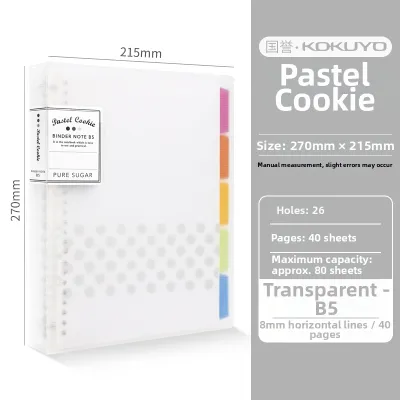
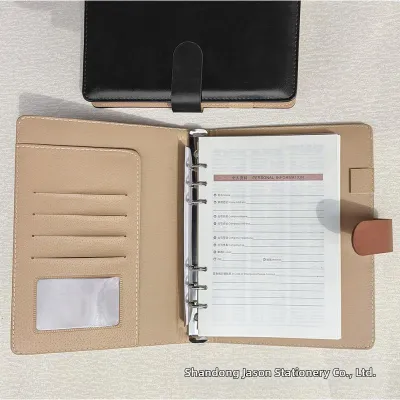
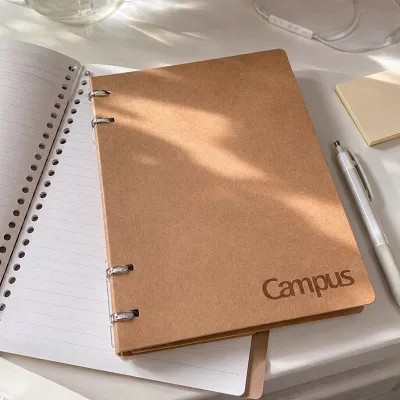
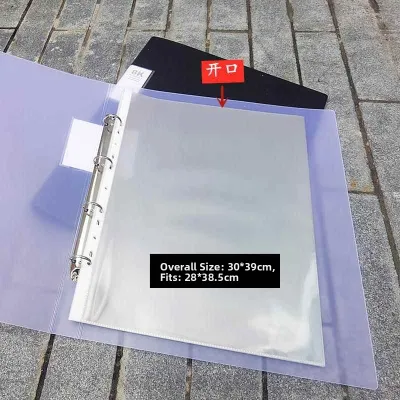
Prices are valid at publication and may change. Please refer to the product page for the latest price.
In contrast, the spine width is the external measurement of the binder’s outer edge. The spine width is always larger than the ring diameter. This extra space is necessary to accommodate the thickness of the front and back covers, the metal ring mechanism, and the clearance needed for the rings to open and close smoothly. For example, a binder with a 25mm ring diameter might have an external spine width of 35mm or more.
Relying solely on the external spine measurement often leads to purchasing a binder that is too small for your documents. To avoid this mistake, always check the product specifications for the explicit “ring size” or “ring capacity” rather than estimating based on the physical width of the spine on a shelf.
Estimating Page Capacity: Matching Ring Size to Document Volume
To determine the ring size you need, you must first estimate the volume of your documents. Page capacity is not a universal number because paper thickness varies significantly. Standard office copier paper typically has a weight of 80 gsm (grams per square meter). If you are binding standard 80 gsm paper, you can rely on standard capacity estimates. However, if you are using heavier 100 gsm presentation paper, thick cardstock, or plastic sheet protectors, the actual number of pages you can fit will decrease dramatically.

A practical way to estimate your required size is to physically measure your document stack. Gather the papers you plan to store and compress them gently. Use a ruler to measure the height of the stack in millimeters. This measurement gives you the absolute minimum ring diameter required. For instance, if your stack of documents measures 30mm, a binder with a 25mm ring diameter will be too small, and you will need to step up to a larger size.
When choosing your binder, always leave a small margin of safety. Aim to fill the binder to no more than 85% of its maximum capacity. Leaving this extra space ensures that the pages can turn freely without catching on the rings or tearing at the punched holes. It also prevents the ring mechanism from being forced open, which can cause misalignment and ruin the binder over time.
Common Ring Diameters and Their Practical Applications
Ring binders come in several standard sizes to suit different organizational tasks. Understanding these common diameters helps you match the binder to your specific daily routine.
Smaller ring diameters, such as 25mm (approximately 1 inch), typically hold between 150 and 200 sheets of standard paper. These slim binders are ideal for active, daily use. They fit easily into a backpack or briefcase, making them perfect for individual school subjects, active project files, or client presentations that require frequent updates.
Medium ring diameters, around 50mm (approximately 2 inches), generally accommodate 350 to 400 sheets of paper. This size is highly versatile and serves well for semester-long course materials, training manuals, or quarterly financial reports. They offer a balance between high storage capacity and portability.
Larger ring diameters, measuring 75mm (approximately 3 inches) or more, can hold 500 to 600 sheets or more. These bulky binders are best reserved for archival storage, comprehensive reference manuals, or multi-year document archives. Because of their weight and size, they are typically kept on office shelves rather than carried around daily.
Keep in mind that these capacities are general guidelines. The exact page count will vary depending on the manufacturer, the specific ring shape, and the paper type you use. Always verify the manufacturer’s stated capacity on the product label before making a final decision.
Final Selection Checklist: Beyond Just Ring Diameter
Selecting the right binder involves more than just finding the correct ring size. To ensure your binder is fully functional, keep these key factors in mind:
- Paper Size and Hole Alignment: Ensure the binder matches your paper format. In Singapore, A4 is the standard paper size, which typically requires a 2-ring, 3-ring, or 4-ring binder. Ensure your paper punch matches the ring configuration of the binder.
- Ring Mechanism Shape: Round rings (O-rings) are traditional but cause pages to ride up the curve, which can wear out the punched holes. D-ring binders allow pages to lie completely flat against the straight side of the ring, maximizing capacity and keeping documents aligned.
- Cover Material: For binders that travel frequently in a bag, choose durable, flexible polypropylene or heavy-duty vinyl covers. For archival storage on a shelf, standard paperboard covers are cost-effective and sufficient.
- Spine Inserts and Pockets: If you manage multiple binders, look for models with clear spine pockets for easy labeling, as well as internal cover pockets for loose sheets.
Frequently Asked Questions (FAQ)
Can I use a ring binder with a larger ring size for fewer pages?
While you can physically place a small stack of papers into a large binder, it is generally not recommended. When a binder is significantly underfilled, the pages have too much room to shift. This movement causes the paper to slide around during transport, which can easily tear the punched holes. Additionally, oversized binders take up unnecessary space on your desk, shelf, or in your bag, making storage inefficient.
Do D-ring binders hold more pages than round-ring binders of the same size?
Yes, D-ring binders typically hold up to 20% to 30% more pages than traditional round-ring binders of the same rated size. Because the straight edge of the D-ring is mounted to the back cover rather than the spine, the paper stack sits flat and flush. This design eliminates the wasted space caused by the curve of a round ring, allowing you to store more documents without increasing the binder’s overall thickness.
Community discussion
Share your experience or ask a question. Comments are reviewed before publication.