
Choosing the right plastic wrapping roll in Singapore requires matching the material’s physical properties to your specific task, whether you are securing palletized goods for shipping, bundling stationery items, or preserving food. Selecting the wrong type of wrap can lead to damaged goods, compromised hygiene, or wasted material. By understanding the differences between cling wrap, stretch film, and shrink wrap, you can make an informed decision that protects your items and fits your operational budget.
Understanding the Core Types of Plastic Wrapping Rolls
Plastic wrapping rolls are not identical; they are engineered from different polymers to achieve specific mechanical behaviors. The three primary categories found in Singaporean offices, warehouses, and kitchens are cling wrap, stretch film, and shrink wrap. Each serves a distinct function based on its elasticity, surface adhesion, and reaction to heat.
Cling wrap is a thin, highly flexible plastic film characterized by its high surface adhesion and low stretch capacity. It is designed to cling tightly to smooth surfaces, such as glass, ceramic, and itself, without the need for adhesives. This makes it ideal for sealing containers or wrapping individual food items to prevent exposure to air and moisture. Because it has minimal structural strength, it is not suitable for securing heavy loads or bundling rigid items.
Products mentioned in this guide
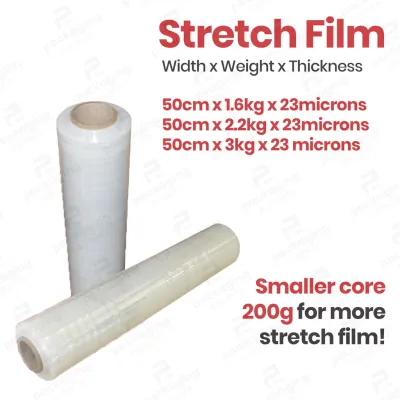
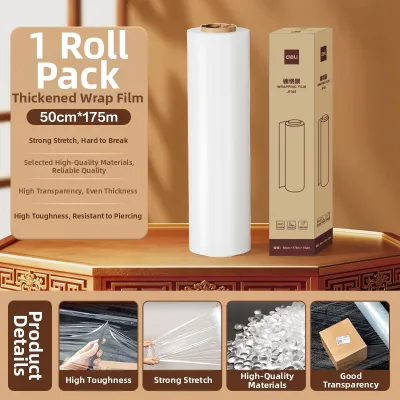
![[Min Purchase 2] Stretch Film Roll (1.7kg/2.25kg/2.9kg)](https://img.lazcdn.com/g/p/e15d654393b1fff820cb5c811ccccfd6.png_400x400q80.png_.webp)
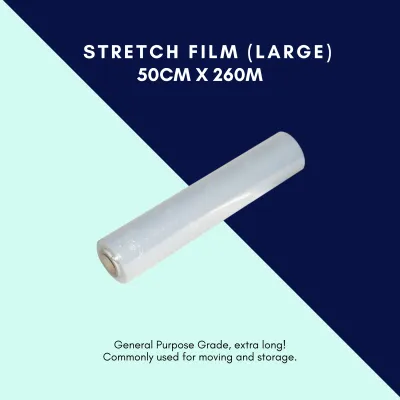
![[SG Stock] Stretch Film | Heavy Duty Shrink Wrap Packaging | Pallet Wrap | Cling Wrap | Furniture Wrap | 2.5/3kg](https://img.lazcdn.com/g/p/7c4636ed40f09d680825c6d01a74b8f8.png_400x400q80.png_.webp)
![91m/20m/10m BubbLest™ [FREE PENKNIFE] Bubble Packaging Material Direct Singapore Manufacturer | Clingwrap | Plasticwrap | Cling Wrap | Plastic Wrap | Bubble Roll |](https://img.lazcdn.com/g/p/118908581c7285d2410f3d4422311ca0.png_400x400q80.png_.webp)
Prices are valid at publication and may change. Please refer to the product page for the latest price.
Stretch film, also known as stretch wrap, is engineered for high elasticity, load retention, and puncture resistance. When pulled tightly around an object or a group of items, the film attempts to return to its original size, creating a constant constrictive force that holds the load secure. It is commonly used in logistics, warehousing, and moving services to stabilize pallet loads or bundle large boxes. Stretch film does not require heat to adhere; instead, it clings to itself when wrapped under tension.
Shrink wrap operates on a completely different physical principle, relying on heat-activated contraction. This film is wrapped loosely around an item or a bundle of products and then exposed to a heat source, such as a handheld heat gun or an automated shrink tunnel. The heat causes the plastic to shrink tightly and uniformly around the contours of the item, creating a rigid, tamper-evident, and highly protective seal. It is widely used in retail packaging, book bundling, and protecting high-value goods from dust and moisture.
Matching the Wrap to Your Specific Application
Selecting the correct plastic wrapping roll involves evaluating the primary goal of your task and the environmental conditions the wrapped items will encounter. Whether your priority is preservation, structural stabilization, or aesthetic presentation, each application demands specific material characteristics.

Environmental factors in Singapore, such as high ambient humidity and temperatures that regularly hover around 30°C, can affect the performance of plastic wraps. For instance, high humidity can impact the static cling of certain films, while extreme temperature fluctuations in cold storage facilities require specialized cold-resistant formulations to prevent the plastic from becoming brittle and cracking.
Food Storage and Kitchen Use
When wrapping consumables, safety and chemical stability are the primary concerns. You must verify that the plastic wrapping roll is explicitly rated as food-safe by checking the product packaging for recognized food-safe symbols or manufacturer declarations. Food-grade cling wraps are manufactured under strict sanitary conditions and are free from harmful additives that could migrate into food.
It is also essential to check the manufacturer’s specifications for temperature suitability. Not all food-grade wraps are safe for use in microwave ovens or freezers. Some films can melt or release chemical compounds when subjected to high temperatures, while others may lose their seal and crack in sub-zero freezer environments. Always verify the recommended temperature range on the product label before application.
The material composition of the wrap plays a critical role in food safety. Polyethylene (PE) is the most common material for household cling wrap because it is naturally flexible and does not require the addition of plasticizers. If you are wrapping high-fat foods, ensure the product is certified for such use, as certain plasticizers used in older PVC formulations can dissolve in fats and oils, leading to chemical migration.
Pallet Wrapping and Heavy-Duty Shipping
For logistics, warehousing, and shipping operations in Singapore, the primary goal of a plastic wrapping roll is to ensure load stability and protect goods from transit damage. When selecting a stretch film for these heavy-duty tasks, you must review the manufacturer’s specifications for stretch percentage and load retention. High-performance films can stretch up to 200% or 300% of their original length, which maximizes material efficiency and reduces overall packaging costs.
Puncture resistance is another critical factor, especially when wrapping cargo with sharp corners, wooden pallet edges, or irregular shapes. A film with low puncture resistance will tear easily under tension, compromising the structural integrity of the entire pallet. You can verify puncture resistance by checking the film’s micron thickness and testing a sample roll on your typical cargo configurations to observe how it handles sharp protrusions.
You must also determine whether your operations require manual application rolls or machine-grade rolls. Hand rolls are typically shorter, lighter, and wound on cores designed for comfortable manual handling or use with simple hand dispensers. Machine rolls are much larger and heavier, designed to withstand the high tension and speed of automated wrapping machines without snapping. Using a hand roll on a machine, or vice versa, can lead to equipment damage or material failure.
Item Protection and Retail Packaging
For retail businesses, e-commerce fulfillment centers, and stationery shops, plastic wrapping rolls are used to bundle items, protect surfaces from scratches, and present products professionally. Choosing between shrink wrap and stretch wrap for these tasks depends on the desired aesthetic and the level of protection required.
Shrink wrap is generally preferred for retail presentation because it conforms perfectly to the shape of the product, providing a glossy, crystal-clear finish that enhances visual appeal while keeping out dust and moisture. It also provides an excellent tamper-evident seal, as any attempt to open the package will visibly tear the shrunk film. Stretch wrap, while less aesthetically refined, is highly efficient for quick bundling of books, documents, or office supplies during local transit.
When wrapping delicate surfaces, such as varnished wood, painted metal, or high-gloss paper covers, you must verify that the wrap will not cause surface damage. Opt for films that rely entirely on static cling or tension rather than adhesive backings. Adhesives can react with surface coatings over time, especially in Singapore’s warm and humid climate, leaving behind sticky residues that are difficult to remove without damaging the underlying product.
Key Specifications to Verify Before Purchasing
To ensure you purchase the correct plastic wrapping roll, you should compile a checklist of technical specifications to verify on the product label or manufacturer datasheet. These specifications directly influence the film’s durability, compatibility, and cost-effectiveness.
Film thickness is typically measured in microns (µm) or gauge. Thinner films (8 to 12 microns) are suitable for light-duty applications, such as wrapping lightweight boxes or office stationery. Medium-duty tasks, including standard shipping cartons, generally require films between 15 and 20 microns. For heavy, irregular, or sharp-edged pallet loads, look for heavy-duty films of 23 microns or thicker to ensure adequate puncture resistance and load containment.
Roll dimensions, specifically width and total length, must be matched to your application to ensure cost efficiency. Standard hand stretch rolls often come in widths of 450mm or 500mm, which provide broad coverage for quick wrapping. Narrower rolls (100mm to 250mm), sometimes called bundling rolls, are excellent for securing small packages or grouping loose items together without wasting material. Always calculate the cost per meter rather than just the price per roll to evaluate true value.
Core diameter and material are critical for dispenser compatibility. Most manual dispensers and automated wrapping machines are designed to fit specific core sizes, typically 1.5 inches, 2 inches, or 3 inches. Purchasing a roll with an incompatible core size will prevent it from mounting correctly on your equipment. Additionally, ensure the core material (usually heavy-duty cardboard) is sturdy enough to resist crushing during shipping and storage.
Material composition determines the chemical and physical properties of the film. Polyethylene (PE), including Low-Density Polyethylene (LDPE) and Linear Low-Density Polyethylene (LLDPE), is highly recyclable, flexible, and widely used for both food-safe cling wraps and industrial stretch films. Polyvinyl Chloride (PVC) offers excellent clarity and cling but is less environmentally friendly and requires careful handling. Polyvinylidene Chloride (PVDC) provides an exceptional barrier against oxygen and moisture, making it suitable for specialized food preservation, though it is less common due to recycling limitations.
Sourcing and Verifying Your Purchase
In Singapore, plastic wrapping rolls can be sourced from office supply stores, industrial packaging distributors, and online marketplaces. For small-scale office use or household needs, local stationery and office supply retailers offer convenient purchasing options. For high-volume logistics or retail operations, sourcing directly from industrial packaging distributors allows you to negotiate bulk pricing and secure consistent material specifications.
Upon receiving your delivery, it is important to inspect the manufacturer labels to confirm that the delivered product matches your ordered specifications. Verify the roll width, length, thickness, and material composition. Check the physical condition of the rolls; look for signs of telescoping (where the inner layers of the roll slide outward), crushed cardboard cores, or nicked edges, as these defects can cause the film to tear repeatedly during dispensing.
If you purchase plastic wrapping rolls in bulk to save on costs, you must store them properly to prevent material degradation. Store the rolls horizontally in a cool, dry warehouse away from direct sunlight and heat sources. Prolonged exposure to high temperatures and UV light can cause the plastic layers to fuse together, rendering the roll unusable, or degrade the adhesive properties of stretch films.
Frequently Asked Questions (FAQ)
Can I use stretch film for food storage?
No, you should not use industrial stretch film for food storage. Industrial stretch films are manufactured to different sanitary standards than food-grade cling wraps and may contain chemical additives, tackifiers, or plasticizers that are not safe for ingestion. These chemicals can migrate into food products, especially when in direct contact with fatty or acidic foods. Always look for explicit food-safe certifications and symbols on the packaging before using any plastic wrap for food preservation.
How do I know if a roll will fit my existing dispenser?
To determine if a replacement plastic wrapping roll will fit your existing dispenser, you must measure two key dimensions: the internal core diameter of the roll and the maximum width capacity of the dispenser. Use a ruler or caliper to measure the inner diameter of the cardboard core on your current roll, and check the distance between the dispenser’s mounting brackets. Cross-reference these measurements with the manufacturer’s specification sheet of the replacement roll to ensure a precise fit.
Community discussion
Share your experience or ask a question. Comments are reviewed before publication.