
Selecting the correct plastic packaging dimensions and thickness requires measuring your product’s three-dimensional profile and anticipating physical stress during transit. This guide breaks down the essential specifications to help you balance adequate protection with material efficiency for your e-commerce shipments. Choosing the wrong size can lead to ruptured seams, damaged goods, or unnecessary shipping costs, while selecting the wrong thickness might result in tears during handling. By understanding how flat dimensions translate to three-dimensional space, you can streamline your packaging process and ensure your items arrive safely.
Understanding Shipping Bag Dimensions (Width and Length)
When you look at a flat plastic shipping bag, its nominal width and length do not represent the maximum size of the product it can hold. As soon as you insert an item with any three-dimensional volume, the bag must stretch around the depth of the product, which pulls the sides inward and reduces the effective width and length. Relying solely on the flat dimensions of the bag often results in a packaging envelope that is too tight to seal or completely impossible to close.
To calculate the minimum required flat width of your shipping bag, you must add the thickness of your product to its flat width, along with a small safety margin. For example, if you are shipping a stack of notebooks, the formula involves taking the width of the stack, adding the total height of the stack, and adding an extra buffer of at least 15 to 20 millimeters to allow the material to slide in easily.
Products mentioned in this guide
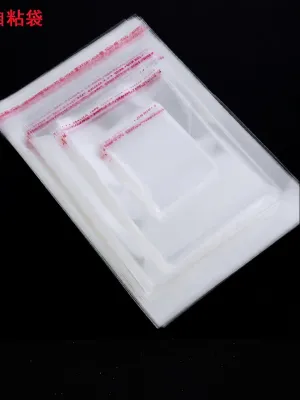
Prices are valid at publication and may change. Please refer to the product page for the latest price.
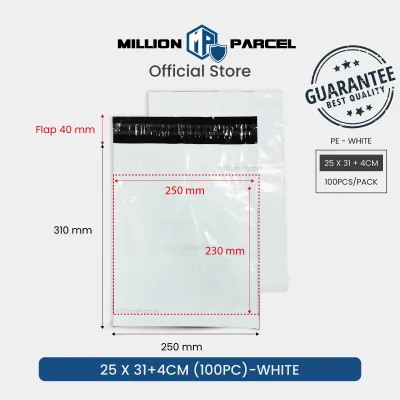
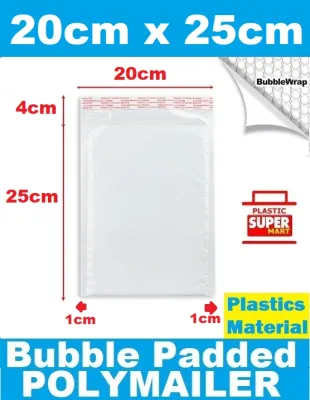
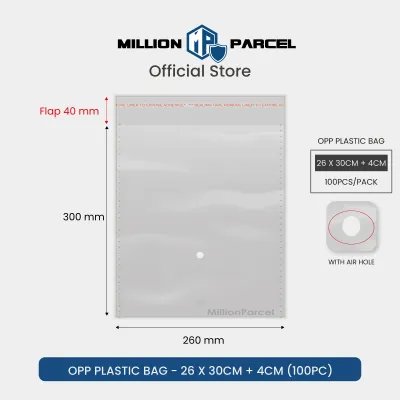
A similar calculation applies to the length. You must add the product’s thickness to its length, but you must also account for the sealing mechanism. Most self-sealing plastic mailers feature a fold-over flap with an adhesive strip. This flap is not part of the usable inner length of the bag. When calculating your required length, always measure from the bottom of the bag up to the opening line just below the adhesive strip, rather than to the very edge of the extended flap.
Decoding Thickness and Material Specs
The durability of plastic packaging depends heavily on its thickness, which is typically measured in mils (thousandths of an inch) or microns (micrometers). Understanding these units is essential when sourcing packaging materials from different suppliers, as some use metric specifications while others rely on imperial measurements. A higher thickness generally indicates a denser material structure, which directly influences how well the bag resists punctures, tears, and stretching under load.

While thicker bags offer greater physical protection, they also add weight and cost. Standard-thickness bags are highly efficient for lightweight, non-abrasive items because they provide adequate dust and moisture protection without adding unnecessary bulk. However, as the weight of the product increases, the physical stress on the seams and the plastic film during sorting and transit also rises, making a thicker material necessary to prevent blowout failures.
When selecting a thickness, evaluate the physical characteristics of your inventory. Items with sharp corners, rigid edges, or high density require a thicker film to prevent the product from piercing the plastic during handling. Conversely, soft, flexible goods can safely utilize standard, thinner films, as they do not exert concentrated pressure on specific points of the packaging material.
Matching Bag Specs to Your Product Types
Different product categories require distinct packaging strategies to balance protection and cost. Soft and compressible items, such as clothing, textiles, and plush toys, are highly forgiving when it comes to sizing. Because these items can deform and compress, they easily fit into standard-thickness bags even if the dimensions are slightly tight. For these products, standard utility mailers provide excellent moisture protection and dust resistance while keeping shipping weights to a minimum.
Rigid or fragile items, such as hardcover books, heavy stationery cases, or framed prints, demand a much more precise approach. These items do not compress, meaning your dimensional calculations must be exact to avoid split seams. Furthermore, rigid corners exert continuous pressure on the edges of the plastic packaging. For these products, you should look for bags with reinforced side seams and a higher thickness rating, or consider wrapping the items in protective cushioning before placing them in the bag. If the item is highly fragile, transitioning to a rigid corrugated box is often a safer choice than a flexible plastic bag.
Irregularly shaped items present a unique measurement challenge. To find the correct bag size, place the item on a flat surface and measure its maximum width, length, and height at the absolute widest points. Use these maximum dimensions in your calculations, and add a generous safety buffer to accommodate the irregular protrusions. This ensures the bag can wrap around the entire object without stretching the plastic to its breaking point.
Common Sizing Mistakes and How to Avoid Them
One of the most frequent errors in selecting plastic packaging is overlooking the dimensions of the sealing flap. If you purchase a bag based on its total external length, you may find that the usable space is too short once you fold the flap over to seal the package. Always verify whether the manufacturer’s listed dimensions refer to the total length including the flap or the usable length below the seal.
Another common mistake is over-packaging by choosing excessively large bags for small items. While a larger bag ensures the product fits, the excess plastic can fold over itself, creating a messy appearance and potentially increasing volumetric shipping costs. Many logistics providers calculate shipping fees based on the dimensional weight of the package, meaning oversized, loose packaging can lead to unnecessary expenses, adding up to several S$ per shipment over time.
Additionally, environmental factors can affect how plastic packaging performs. In warm, humid climates like Singapore, high temperatures can soften certain plastics and affect the tackiness of self-adhesive strips. If your packages are stored in non-air-conditioned warehouses or transit vehicles, choosing a slightly thicker bag with a high-quality, heat-resistant adhesive strip helps ensure the package remains securely sealed and intact throughout its journey.
Frequently Asked Questions (FAQ)
Can I use standard plastic shipping bags for heavy or sharp items?
Standard plastic shipping bags are generally not recommended for heavy or sharp items because they lack the puncture resistance required to withstand concentrated pressure. Sharp edges can easily pierce standard films, leading to torn packages and lost contents during transit. For heavy or sharp products, always check the manufacturer’s specific weight limits and puncture ratings. It is highly advisable to use additional inner protection, such as bubble wrap or cardboard corner guards, or to switch to rigid corrugated boxes to ensure safe delivery.
How do I measure the usable length of a self-sealing shipping bag?
To determine the usable length of a self-sealing shipping bag, you must subtract the dimensions of the adhesive strip and the fold-over flap from the total outer length. Lay the bag flat and measure from the bottom seam up to the opening line where the fold occurs. This line is typically marked by a perforation or is situated just below the release liner of the adhesive strip. Using this inner measurement ensures your product will fit entirely inside the bag with enough room for the flap to fold over and seal securely.
Community discussion
Share your experience or ask a question. Comments are reviewed before publication.