
Selecting the correct plastic mailer involves measuring your product’s dimensions, accounting for packaging bulk, and matching the material thickness to the item’s weight and fragility. Using a shipping bag that is too small can cause seams to burst during transit, while an oversized mailer leads to excess material, higher shipping costs, and a sloppy presentation. By understanding how to calculate the exact dimensions and thickness required, you can protect your items, streamline your packing workflow, and optimize your shipping budget.
Understanding Plastic Mailer Dimensions and Measurements
When purchasing a plastic mailer, the dimensions are typically listed as width by length (W x L). For example, a standard mailer might be labeled as 250 mm x 350 mm. It is crucial to understand how manufacturers measure these bags to ensure your products fit comfortably inside.
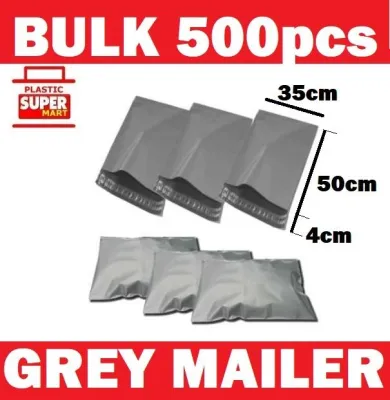
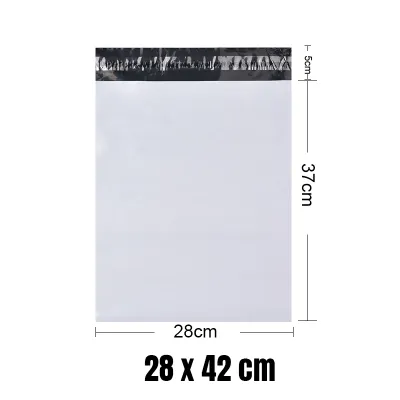
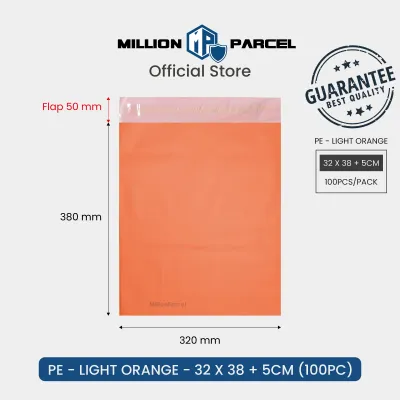
The width refers to the horizontal opening, while the length represents the vertical depth. Usually, the listed length refers to the usable body of the mailer and excludes the adhesive sealing flap. This flap, which typically extends an additional 40 mm to 50 mm, folds over to seal the package. Because some suppliers include the flap in their total length specification, always verify whether the dimensions represent the total material length or the usable inner length before ordering.
Products mentioned in this guide
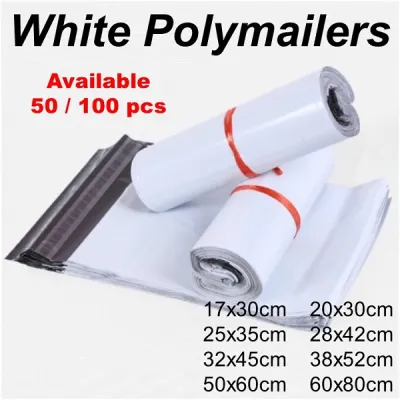
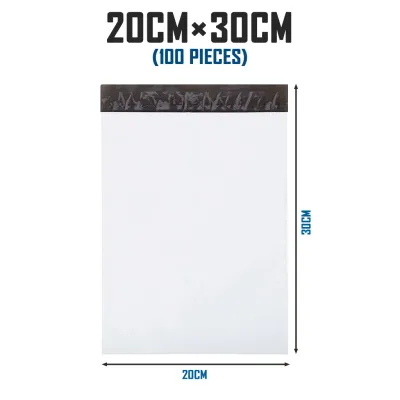
Prices are valid at publication and may change. Please refer to the product page for the latest price.
Another critical distinction is the difference between outer dimensions and usable inner space. The outer dimensions are measured from edge to edge when the mailer is completely flat. Once you insert a three-dimensional product, the sides of the mailer pull inward, reducing both the effective width and length. Seam welds on the sides also consume a few millimeters of space, meaning the actual usable interior is always slightly smaller than the flat outer measurements.
Matching Mailer Sizes to Common Product Types
To choose the right plastic mailer size, categorize your products by their physical profile. Flat items like documents, catalogs, sticker sheets, or flat-packed stationery require minimal adjustments. For these, calculate the required mailer size by adding a small margin to the product’s width and length. Adding at least 20 mm to the width and 30 mm to the length allows the item to slide in easily without tearing the edges.

For bulky, rigid, or three-dimensional objects like books, boxed items, or folded apparel, you must account for the product’s height. A flat mailer stretches around the item’s volume, pulling the sides inward. To calculate the minimum mailer width, add the product’s width to its height, plus a 20 mm margin. For the mailer length, add the product’s length to its height, plus a 30 mm margin to ensure the adhesive flap folds over and seals securely.
For example, if you are shipping a rectangular box that is 150 mm wide, 200 mm long, and 50 mm high, your minimum mailer width should be 150 mm + 50 mm + 20 mm = 220 mm. The minimum mailer length should be 200 mm + 50 mm + 30 mm = 280 mm. Using this formula prevents the plastic from overstretching, which can weaken the seams and expose your items to moisture or dirt during transit.
Selecting the Right Thickness and Material Grade
Mailer thickness directly impacts puncture resistance, tear strength, and durability. This is commonly measured in microns (µm) or mils (one-thousandth of an inch). Standard lightweight mailers typically range from 40 to 50 microns (1.5 to 2 mils), which is suitable for soft, non-fragile goods like clothing or plush toys that lack sharp edges.
For heavier items, rigid goods, or products with sharp corners—such as hardcover books, metal stationery clips, or boxed items—opt for medium to heavy-duty mailers. These typically range from 60 to 75 microns (2.4 to 3 mils) or thicker. This extra thickness prevents the corners of the product from puncturing the plastic when the package is stacked or handled roughly by courier services.
When evaluating material grades, look for co-extruded polyethylene mailers. These are manufactured by layering multiple sheets of plastic together, often with a dark interior layer and a light exterior layer. This design provides excellent opacity, ensuring the contents remain private, while enhancing tear resistance and water protection. Always check the manufacturer’s specifications for tear and water resistance ratings to ensure the material meets your shipping standards.
Practical Sizing Checklist Before Bulk Ordering
Before committing to a bulk purchase of plastic mailers, conduct a physical mock test. Order a small sample pack containing various sizes and thicknesses. Place your actual products inside the sample mailers to observe how they fit, how much the seams stretch, and how easy it is to seal the flap. A mailer that is too tight risks bursting, while one that is too loose looks untidy and may get caught in automated sorting machines.
Consider the size and weight restrictions of your local couriers and online marketplaces. Many shipping providers calculate postage based on volumetric weight rather than actual weight. If your plastic mailer has too much excess material, it can fold over and create bulk, potentially pushing your package into a higher pricing tier. Ensuring a snug, neat fit helps keep your shipping costs predictable.
Finally, evaluate the operational efficiency of your packaging inventory. Managing too many mailer sizes complicates your packing workflow and increases storage needs. Instead, identify two or three versatile sizes that accommodate the majority of your product range. For smaller items sent in larger mailers, fold the excess plastic over and tape it down securely, balancing material efficiency with operational simplicity.
Frequently Asked Questions (FAQ)
Should I include the adhesive flap in the mailer length?
No, you should not rely on the adhesive flap to cover the body of your product. The adhesive flap is designed solely to fold over the opening and seal against the back of the mailer. When calculating the usable space, always use the length measurement that excludes the flap. If a supplier’s product listing is unclear, contact them to confirm whether the stated length represents the total flat material length or the usable inner length from the bottom seam to the opening.
How do I measure a bulky item for a flat plastic mailer?
To measure a bulky or three-dimensional item for a flat mailer, you must factor in the item’s height. Use the following formulas to determine the minimum mailer dimensions:
- Minimum Mailer Width = Product Width + Product Height + 20 mm
- Minimum Mailer Length = Product Length + Product Height + 30 mm
These calculations ensure that the flat plastic has enough material to wrap around the depth of the object without putting excessive tension on the side seams or preventing the adhesive flap from sealing flat.
Community discussion
Share your experience or ask a question. Comments are reviewed before publication.