
Finding the perfect plastic bag for clothes is the difference between a pristine delivery and a damaged return. Whether you are running an online fashion boutique, shipping orders locally, or packing away seasonal garments to protect them from tropical humidity, selecting the correct bag dimensions is essential. Using a bag that is too small leads to split seams, stretched plastic, and crushed fabrics. Conversely, oversized packaging increases shipping volume, leading to unnecessary courier charges and a sloppy presentation.
To get the right fit, you must look beyond the flat measurements of a garment. The key is to match the folded, three-dimensional volume of your clothing to the usable space of the packaging. Understanding how manufacturers measure these bags and how different fabrics behave under compression will help you streamline your packaging workflow and protect your items.
Decoding Plastic Bag Dimensions and Usable Space
When shopping for a plastic bag for clothes, you will typically see sizes listed in a standard Width x Length (W x L) format. However, these numbers represent the external dimensions of the bag when laid completely flat. They do not represent the actual volume of clothing the bag can hold.
Products mentioned in this guide
![[SG SELLER] Self Adhesive Clear OPP Transparent Packaging Poly Plastic Bag Retailer Clothes Sealing Wrap Plastic Storage](https://img.lazcdn.com/g/p/22be75670b3840eb6258305648fc2f8f.png_400x400q80.png_.webp)
Prices are valid at publication and may change. Please refer to the product page for the latest price.
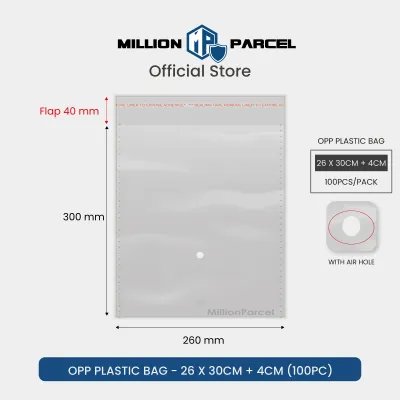
The most critical distinction to make is between the total length of the bag and its usable length. Many shipping bags, such as self-adhesive poly mailers, feature a fold-over flap or adhesive lip. This flap is included in the manufacturer’s total length measurement but cannot be used to hold the garment. For example, a bag listed as 30 x 40 cm might only have a usable length of 35 cm once the 5 cm flap is folded and sealed. Always check the product specifications for the “usable dimensions” rather than relying solely on the nominal size.
Furthermore, clothing is three-dimensional. When you place a folded shirt or a thick jacket inside a flat plastic bag, the garment’s thickness pulls the sides of the bag inward. This reduces both the effective width and length of the packaging. For this reason, your bag selection must always be based on the folded dimensions and total volume of the item, rather than its flat, unfolded state.
Estimating Bag Sizes for Different Clothing Categories
Different types of apparel require distinct packaging strategies. To avoid wasting material and money, it is helpful to categorize your inventory by weight and bulk.

Lightweight and Standard Items (T-shirts, Blouses, Activewear)
Lightweight garments like t-shirts, tank tops, summer blouses, and activewear are highly compressible and require minimal physical space. Because these items have very little thickness when folded, they do not consume much of the bag’s lateral space.
To find the correct size, fold the garment into your preferred presentation shape. Measure the folded length and width, then add a standard margin of 1 to 2 inches (approximately 2.5 to 5 cm) to both dimensions. This extra space allows you to slide the garment into the bag smoothly and seal it without stretching or tearing the plastic. For standard t-shirts, a flat poly mailer or a simple plastic bag measuring 25 x 35 cm is usually highly efficient and keeps shipping profiles slim.
Bulky and Thick Items (Sweaters, Jeans, Jackets)
Heavy knits, denim jeans, hoodies, and winter coats present a different challenge. These items are thick and resilient, meaning they resist compression and occupy significant physical volume.
When a thick garment is placed inside a flat plastic bag, it triggers what packaging professionals call the “gusset effect.” The thickness of the item pulls the front and back sheets of the bag together, rapidly shrinking the available width and length. To accommodate this bulk, you must add a much larger margin to your measurements. For a pair of heavy jeans or a thick sweater, add at least 3 to 4 inches (7.5 to 10 cm) to both the folded width and length. Attempting to force bulky items into tight bags puts immense pressure on the side seals, often causing them to burst during transit or when handled by local couriers.
Long or Delicate Items (Dresses, Formal Wear, Coats)
Dresses, evening wear, and structured coats require careful handling to prevent permanent creasing or structural damage. Before choosing a bag, you must decide whether the item will be folded or shipped hanging.
If you choose to fold the garment to save on dimensional shipping weight, use a longer standard bag with a wide opening. This allows you to fold the item gently with fewer creases. Always check the garment’s manufacturer care label to verify if the fabric is prone to creasing or if it can tolerate folding. For delicate formal wear or structured coats that cannot be folded, specialized hanging garment bags are necessary. Look for bags designed with pre-cut hanger holes at the top and sufficient length to cover the entire hem of the dress or coat, protecting it from dust, moisture, and friction.
Critical Specs Beyond Size: Thickness and Seal Types
While selecting the correct dimensions is a major step, the physical properties of the plastic bag are just as vital for protecting your clothing. You must evaluate the material thickness and the closure mechanism to ensure your packaging performs well under real-world conditions.
The thickness of a plastic bag for clothes is typically measured in mils (thousandths of an inch) or microns. This specification directly determines the bag’s puncture and tear resistance. For lightweight, soft garments without sharp details, a thickness of 1.5 mils (approx. 38 microns) is generally sufficient. However, if you are packaging items with hard elements like metal zippers, heavy buttons, rivets, or buckles, you should upgrade to a bag with a thickness of 2.0 to 3.0 mils (50 to 75 microns). Checking these specifications on the manufacturer’s label prevents accidental punctures during shipping.
The seal type you choose should align with your specific workflow and presentation goals:
- Self-adhesive strips: These feature a peel-and-reveal tape that creates a permanent, tamper-evident seal. They are the industry standard for high-volume ecommerce shipping because they are fast to pack and highly secure.
- Ziplocks and slider seals: These allow the bag to be opened and closed repeatedly without damaging the plastic. They are ideal for retail displays, organizing home storage, or facilitating easy customer returns.
- Heat seals: This method uses a specialized heating element to melt and fuse the plastic edges together. It provides an airtight, completely tamper-proof seal, though it requires an initial investment in sealing equipment.
A Practical Workflow for Measuring and Testing
To avoid ordering thousands of incorrect bags, establish a reliable testing workflow before committing to a bulk purchase. This simple verification process saves time, reduces material waste, and protects your business margins.
First, select the bulkiest or heaviest item in a specific clothing category to serve as your test subject. Fold it exactly as you would for a customer or for storage, and measure its length, width, and height. Add your calculated safety margins to determine your target bag size.
Next, purchase a small sample pack of bags in that target size. Perform a physical test by packing the garment into the sample bag and sealing it. Once sealed, apply light, even pressure to the center of the package to simulate the stacking that occurs in courier trucks or storage bins. You can also perform a simple drop test from waist height onto a clean surface. Observe the seams and the seal: if the plastic stretches excessively, the seams begin to pull apart, or the adhesive lifts, you must adjust your calculations and select a larger size or a thicker material before placing a bulk order.
Frequently Asked Questions (FAQ)
Can I use the same plastic bag size for both shipping and long-term storage?
Shipping bags perform best when they fit snugly around the garment, as this minimizes internal movement and reduces the overall dimensional weight used to calculate courier fees. For long-term storage, however, a slightly looser fit is preferred. A looser bag prevents continuous tension on the plastic seams and allows the fabric to rest naturally without excessive compression, which can trap moisture or cause deep creases over time.
How do I prevent sharp clothing details from tearing the plastic bag?
To protect your bags from internal punctures, fold your garments so that hard elements like zippers, metal buttons, and belt buckles are tucked deep inside the fabric folds rather than resting against the outer plastic. Alternatively, you can wrap the folded garment in a protective layer of tissue paper to act as a buffer, or upgrade to a heavier-gauge plastic bag with a higher thickness specification.
Community discussion
Share your experience or ask a question. Comments are reviewed before publication.