
Choosing your first Mont Marte acrylic paint set is an exciting step, but the wide variety of options can make the decision challenging. To find the right set, you need to look beyond the number of colors on the box and evaluate how the paint fits your specific creative goals, your preferred painting surfaces, and your budget. By understanding the differences between product lines and packaging styles, you can select a starter kit that helps you build your skills without unnecessary waste.
A Quick Framework for Choosing Your First Mont Marte Set
Many beginners are drawn to large paint sets containing dozens of colors, assuming that more variety offers better value. However, these sets often feature very small tubes that run out quickly, especially when mixing large background washes or practicing basic techniques. A smaller set of 6 to 12 colors with larger tube volumes is often far more practical, as it forces you to learn color mixing while giving you enough paint to complete several projects.
Before comparing box sizes, identify which specific Mont Marte acrylic line you are looking at. The brand produces several distinct formulations, ranging from standard student-grade paints to specialized water-soluble options and heavier-bodied formulas. Mixing up these lines can lead to unexpected results on your canvas, so checking the exact product name on the packaging is your first line of defense.
Products mentioned in this guide
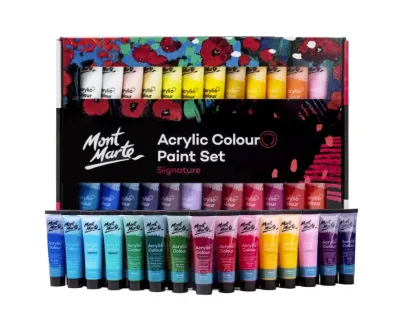
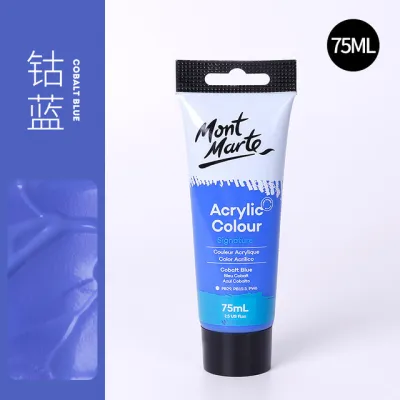
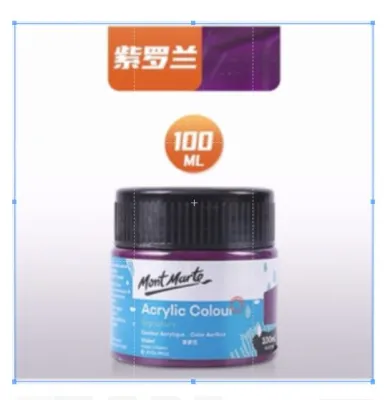
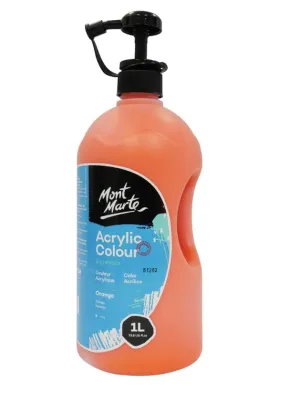
Prices are valid at publication and may change. Please refer to the product page for the latest price.
As a beginner-grade paint, Mont Marte student acrylics are designed to be accessible and affordable, which means they have different characteristics than professional-grade artist paints. You should expect a lower pigment load and higher binder content, which can result in a more translucent finish and some color shifting as the paint dries. Understanding these limitations beforehand helps you adjust your painting technique, such as applying multiple thin layers rather than expecting single-coat opacity.
Understanding the Different Mont Marte Acrylic Lines
The most common entry point is the standard student-grade acrylic line, often labeled as “Studio” or “Intro” acrylics. These paints are formulated for general use on paper, canvas, wood, and cardboard, offering a medium viscosity that is easy to spread with a brush or palette knife. They dry to a semi-matte or satin finish within 10 to 30 minutes, depending on layer thickness and local humidity, and clean up easily with soap and water while still wet.

Another option you might encounter is the water-soluble acrylic line, such as the H2O series. These paints are specifically engineered to behave similarly to traditional oil paints or gouache in terms of blendability, but they can be thinned and cleaned up entirely with water. When thinned, they maintain a stable binder structure better than standard acrylics, which can break down and lose adhesion if over-diluted with water. This makes them highly suitable for artists transitioning from watercolors or those working in confined spaces where solvent-free cleanup is a priority.
If you are interested in creating textured, expressive brushstrokes or palette knife marks, you may want to look for heavy-body or premium acrylic variants. These paints have a much thicker, buttery consistency that holds its shape on the canvas, allowing you to practice impasto techniques without the paint slumping or flattening as it dries. For a beginner, starting with a standard fluid or medium-viscosity paint is usually easier for learning basic brush control, but having a few tubes of heavy-body paint can be a valuable addition once you begin experimenting with texture.
Because product lines and packaging designs can vary significantly across different regions and online retailers, you must carefully read the labels on the box. A set sold under one name in one market might have slightly different branding elsewhere, even if the underlying paint formulation is identical. Always verify the exact line name, viscosity description, and cleanup instructions printed on the packaging to ensure you are getting the specific type of paint you intend to buy.
Key Specifications to Check Before Buying
When evaluating a starter set, look closely at the color palette provided. A well-designed beginner set should focus on primary colors (a warm and cool version of red, blue, and yellow), along with essential mixing colors like titanium white and carbon black. This minimalist approach encourages you to master color theory by mixing your own secondary shades, which ultimately builds stronger artistic skills than relying on pre-mixed, synthetic-looking colors from a massive set.
The physical container of the paint plays a major role in your daily workflow and paint preservation. Tubes, typically made of plastic or soft metal, are excellent for squeezing out precise amounts of paint onto a palette while keeping the remaining paint sealed away from air exposure. Jars, on the other hand, allow you to dip brushes or palette knives directly into the paint, which is convenient for large-scale projects but increases the risk of cross-contamination and rapid drying if the lid is left off during a painting session.
Many beginner kits are sold as bundles that include brushes, plastic palettes, small canvases, or even miniature easels. While these bundles seem like a great value, the included accessories are often of lower quality than standalone items. The brushes may shed bristles onto your wet paint, and the plastic palettes can be difficult to clean once the acrylic dries. It is often more cost-effective to buy a paint-only set and purchase a few decent-quality synthetic brushes and a tear-off paper palette separately.
Before finalizing your purchase, examine the product specifications for key indicators of quality and safety. Look for lightfastness ratings, which indicate how resistant the paint is to fading when exposed to light over time (usually marked with asterisks or ASTM codes). Additionally, check for safety certifications, such as the AP (Approved Product) seal from the Art and Creative Materials Institute (ACMI), which ensures the paint is non-toxic and safe for prolonged skin contact during normal use.
Matching the Set to Your Beginner Goals
If your primary goal is to decorate wooden crafts, paint terracotta pots, or work on mixed-media scrapbooking, you do not need to worry as much about high pigment loads or precise color mixing. For these casual applications, a basic, budget-friendly Mont Marte set with a wide variety of pre-mixed colors is highly suitable. These paints adhere well to porous surfaces and dry quickly, allowing you to complete craft projects rapidly without investing in expensive mixing pigments.
If you are serious about learning fine art painting, portraiture, or landscape art, your priority should be color mixing accuracy and paint behavior. In this case, choose a set that features larger tubes of high-quality primary colors, titanium white, and burnt umber or black. This setup allows you to practice creating a wide range of values and hues, helping you understand how pigments interact without running out of your base colors after just a few practice sessions.
For those who want to paint outdoors or carry their supplies to art classes, portability is the most important factor. Look for compact sets that come in a sturdy, lockable carrying case that keeps the tubes organized and prevents them from getting punctured in your bag. A travel-friendly set should also feature secure screw caps rather than flip-tops, which can easily pop open under pressure and cause a messy spill inside your kit.
To get the most value for your money, calculate the cost per milliliter of paint rather than just looking at the total price of the set. Larger tubes almost always offer a lower cost per unit of volume, making them much cheaper in the long run if you plan to paint regularly. If you are on a tight budget, a smart strategy is to buy a small, high-quality starter set and then purchase individual, larger replacement tubes for the colors you use most frequently, such as white and blue.
Verifying Quality and Authenticity When Buying Online
When shopping on online marketplaces or ecommerce platforms, it is crucial to buy from authorized dealers, official brand storefronts, or well-known local art supply retailers. This minimizes the risk of purchasing counterfeit products or old stock that has been sitting in a hot warehouse for years. Look for seller badges, official brand logos, and high seller ratings to verify the legitimacy of the merchant before adding the set to your cart.
User reviews can provide valuable clues about the condition of the paint you will receive. Scan the reviews specifically for complaints about dried-out paint, cracked caps, broken seals, or missing items in the starter kits. If multiple recent reviews mention that the paint arrived thick, rubbery, or completely cured inside the tubes, it is a strong sign of poor storage conditions or expired stock, and you should look for a different seller.
Before completing your purchase, familiarize yourself with the platform’s return policy and any warranty conditions offered for defective art supplies. Because acrylic paint can occasionally suffer from manufacturing defects or damage during transit, you want to ensure you can easily return or exchange the set if it arrives in an unusable condition. Keep your digital receipt and take photos of any damaged packaging as proof for your claim.
Once your paint set arrives, perform a thorough physical inspection before the return window closes. Check the crimped ends of the tubes for any signs of leakage, ensure the plastic caps are intact and screw on tightly, and verify that the foil seals under the caps are unbroken. You can also gently squeeze each tube to feel if the paint inside is soft and pliable; if a tube feels rock-hard or completely stiff, the paint has likely cured inside and the tube should be replaced.
Frequently Asked Questions (FAQ)
Can I mix water-soluble acrylics with standard student acrylics?
While it is technically possible to mix water-soluble acrylics with standard student-grade acrylics, doing so can alter the unique properties of both paint lines. Standard acrylics rely on a traditional polymer binder that can become unstable if mixed with too much water, whereas water-soluble lines are designed to handle higher dilution rates. When you combine them, you may notice changes in drying time, paint flow, and the overall matte or glossy finish of the dried layer.
To avoid ruining a large painting, always test your custom mixture on a scrap piece of paper or canvas board first. Observe how the blended paint flows from your brush, how quickly it dries, and whether it maintains its adhesion once fully cured. Keep in mind that mixing standard acrylics into a water-soluble set will reduce the water-cleanup benefits of the water-soluble paint, meaning you may need to use more soap and effort to clean your brushes.
Do I need to buy extra mediums with a beginner set?
For your very first painting sessions, you do not need to buy extra mediums; using clean water to thin the paint and clean your brushes is perfectly sufficient. However, as you progress, you might encounter common beginner frustrations, such as the paint drying too quickly on your palette or losing its vibrant color when thinned with too much water. This is when investing in a few basic mediums can significantly improve your painting experience.
A slow-drying medium is highly useful if you want to blend colors smoothly on the canvas without the paint drying mid-stroke. If you want to thin your paint for glazes or washes without weakening the acrylic binder, a gloss or matte acrylic medium is a much better choice than water. Always check the manufacturer’s recommendations on the bottle to ensure the medium is compatible with student-grade acrylics, as mixing incompatible brands can sometimes cause the paint to clump or peel.
How should I store my acrylic paint set to prevent it from drying out?
Proper storage is key to extending the shelf life of your Mont Marte acrylic paint set and preventing the tubes from drying out prematurely. After every painting session, take a damp cloth and wipe away any excess paint from the tube threads and the inside of the cap before screwing it back on. Dried paint in the threads prevents a tight seal, allowing air to slowly seep into the tube and cure the remaining paint over time.
Store your paint tubes in a cool, dry place away from direct sunlight, radiators, or extreme temperature fluctuations, which can cause the binder to separate from the pigment. Storing your tubes upside down in a container can also help keep the paint near the nozzle moist and ready for use. If you find a tube where the paint has become slightly stiff but not fully cured, you can sometimes work a drop of acrylic medium into the nozzle to rehydrate it, but fully cured, rubbery paint cannot be restored and must be discarded.
Community discussion
Share your experience or ask a question. Comments are reviewed before publication.