
To successfully track auspicious dates, traditional Chinese festivals, and daily schedules in Singapore, you need a planner that balances traditional almanac data with modern organizational layouts. The ideal planner must integrate the lunar calendar (Nongli) with the Gregorian calendar while accounting for local public holidays and regional cultural observances. By focusing on layout usability, paper durability under local humid conditions, and data accuracy, you can find a reliable tool that keeps your cultural practices and professional commitments perfectly aligned.
Essential Features for Tracking Auspicious Dates and Festivals
A functional lunar calendar planner must do more than simply list the days of the month; it needs to serve as a bridge between two distinct timekeeping systems. At its core, the planner should clearly map lunar dates alongside standard Gregorian dates on every page. This dual-dating system allows you to track traditional Chinese festivals, such as the Lunar New Year, Mid-Autumn Festival, and Qingming Festival, without constantly cross-referencing external digital apps or traditional wall calendars.
Beyond basic date tracking, look for the inclusion of the 24 Solar Terms (Jieqi). These terms reflect astronomical and agricultural changes that remain culturally significant for timing specific rituals and seasonal observances. A comprehensive planner will clearly label these transitions, helping you maintain a deeper connection to traditional seasonal rhythms throughout the year.
Products mentioned in this guide
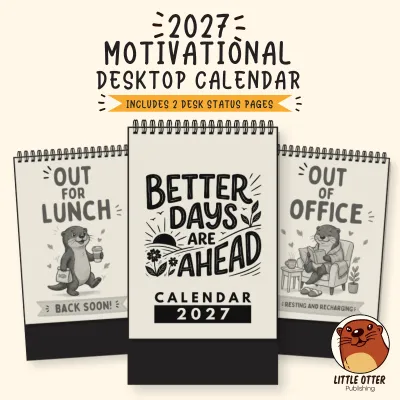
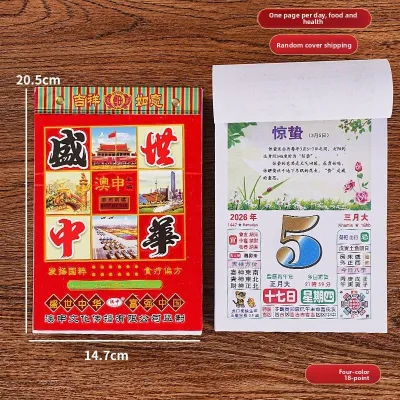
Prices are valid at publication and may change. Please refer to the product page for the latest price.
For those who use the lunar calendar to guide major life events, daily auspicious and inauspicious indicators are invaluable. Traditional Chinese almanacs (Tong Shu) categorize days based on their suitability for activities like moving house, starting a business, or hosting a wedding. A well-designed planner translates these complex calculations into clear, accessible symbols or brief notes, allowing you to perform quick checks during your daily planning sessions.
In Singapore’s multicultural landscape, local relevance is critical. Ensure the planner integrates Singapore’s official public holidays alongside traditional Chinese observances. This integration prevents scheduling conflicts, ensuring you do not accidentally plan a major family gathering or business launch on a day when local services, offices, or transport networks are operating on holiday schedules.
Choosing the Right Layout for Your Planning Style
Selecting the right layout depends heavily on how you balance daily task management with long-term cultural tracking. A monthly overview layout is highly effective for a broad perspective. This format allows you to see upcoming lunar phases, major festivals, and key auspicious dates at a single glance, making it easier to coordinate family dinners, temple visits, or fasting days well in advance.

If your daily routine involves detailed task lists and meeting schedules, a weekly or daily spread is more appropriate. These layouts provide ample writing space to log professional deadlines alongside specific cultural rituals, family gatherings, or preparation steps for upcoming festivals. Look for designs that place the lunar date and daily auspicious guides in a consistent, non-intrusive corner of each daily block, keeping your workspace clean and organized.
Additionally, consider the availability of dedicated note-taking sections and yearly overview pages. A yearly planner page is ideal for recording recurring lunar birthdays, ancestral death anniversaries, and personal milestones that follow the lunar cycle. Having extra blank or dotted pages at the back of the planner also allows you to write down specific family recipes, ritual checklists, or notes on traditional customs passed down through generations.
Evaluating Paper Quality and Binding for Year-Long Use
Because a planner is an everyday tool meant to last an entire year, its physical construction requires careful evaluation. Singapore’s high relative humidity can soften paper fibers over time, making low-quality sheets more prone to ink feathering and bleed-through. To ensure a clean writing experience, look for planners featuring high-opacity paper with a weight of at least 80 gsm (grams per square meter), or ideally 100 gsm if you prefer using gel pens, fountain pens, or vibrant highlighters to color-code auspicious dates.
The binding method directly impacts how easily you can write in your planner daily. Thread-sewn binding is highly recommended because it allows the book to lay completely flat on a desk, ensuring you can write comfortably near the center margin without holding the pages down. Alternatively, a sturdy wire-o or spiral binding offers excellent lay-flat capability and allows you to fold the planner back on itself, which is highly convenient when space is limited during daily commutes.
Finally, evaluate the cover material for its protective qualities. A durable hardcover or a water-resistant synthetic cover protects the inner pages from wear and tear inside a bag. Since you may carry your planner between home, work, and family gatherings, a robust cover ensures that the edges do not fray and the pages remain dry and pristine regardless of the weather.
Verifying Cultural Accuracy and Local Relevance
The utility of a lunar planner relies entirely on the accuracy of its cultural data. Before purchasing, verify if the publisher specializes in regional almanacs or collaborates with recognized cultural authorities to calculate auspicious dates. Because lunar calculations can vary slightly depending on the time zones and regional astronomical observations used, choosing a publisher with a proven track record in Southeast Asia ensures the dates align with local practices.
You can perform a quick manual check by examining sample pages or product previews online. Cross-reference a few key dates—such as the first day of the Lunar New Year or the Mid-Autumn Festival for the upcoming year—against a trusted official calendar. This simple verification step ensures that the printed lunar dates align correctly with the Gregorian calendar and that you are not purchasing an outdated edition or a generic template with misaligned dates.
Additionally, consider whether you require localized details that cater specifically to the Singaporean context. Some regional planners include specific temple events, local festival variations, or terminology common in local dialects. If your family observes specific regional customs, finding a planner that reflects these nuances will make your cultural tracking much more meaningful and practical.
Frequently Asked Questions (FAQ)
What is the difference between a standard planner and a lunar calendar planner?
Standard planners focus primarily on the Gregorian calendar, secular holidays, and standard business scheduling layouts. In contrast, a lunar calendar planner integrates the traditional Chinese lunar calendar, marking lunar months, days, solar terms, and traditional festivals alongside the Gregorian dates. Many also include traditional almanac data, such as daily auspicious and inauspicious activities, to help users align their schedules with cultural practices.
Do lunar planners automatically include Singapore public holidays?
Not all lunar planners include Singapore public holidays automatically. Planners designed and published specifically for the local or regional market typically integrate these holidays, but generic international editions or those imported from other regions may omit them or feature holidays from their country of origin. It is important to check the product specifications or sample pages before buying, or be prepared to write in Singapore’s public holidays manually.
Community discussion
Share your experience or ask a question. Comments are reviewed before publication.