
Selecting the right drawing board for your child is more than just finding an engaging toy; it is about matching the physical properties of the board to your child’s rapidly developing motor skills, cognitive abilities, and safety needs. A board that is too complex can lead to frustration, while one that is too simple will fail to challenge their growing mind. By understanding how different drawing surfaces, stylus designs, and safety features align with specific age groups, you can select a tool that fosters creativity, supports early writing skills, and ensures a safe play environment.
Identify Your Child's Current Motor Skills and Readiness
Before browsing online marketplaces or local stationery shops, take a few days to observe how your child interacts with objects during daily play. Pay close attention to their grip style. Younger toddlers typically use a palmar grasp, wrapping their entire fist around a crayon or stylus, which requires a thick, chunky tool that they can easily control. As children approach preschool age, they transition toward a pincer grasp, using their thumb and index finger to hold writing instruments, which makes them ready for thinner, more realistic styluses.
Physical behavior also dictates the safest material choices for your household. If your child is still in the developmental phase of mouthing objects to explore them, or if they frequently throw toys when frustrated, you must avoid boards with small, detachable parts or fragile screens. A heavy wooden easel or a delicate electronic tablet can quickly become a hazard in the hands of an active toddler who prefers physical, high-impact play.
Products mentioned in this guide
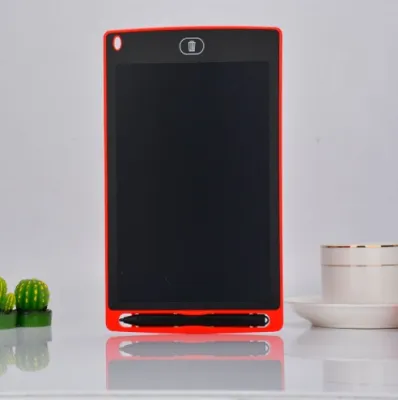
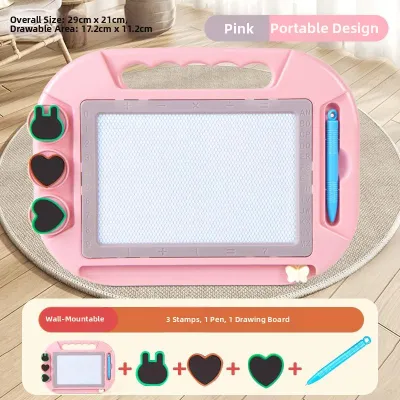
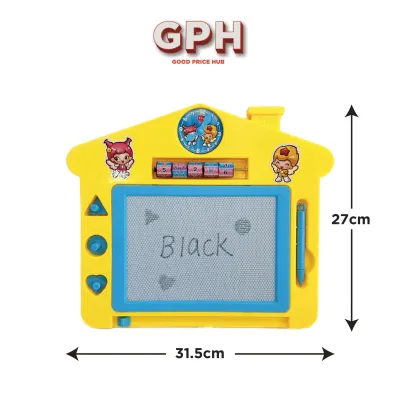
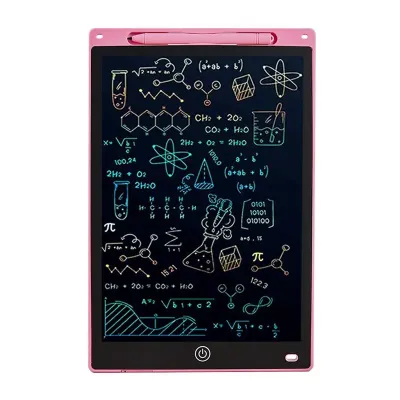
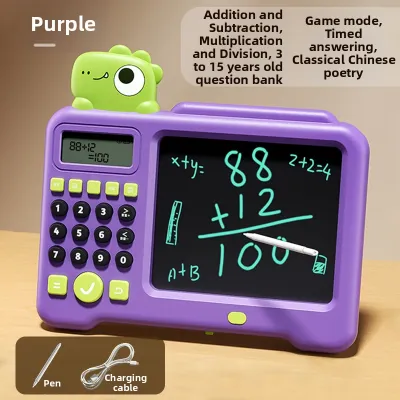
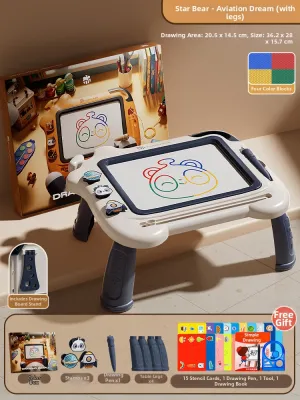
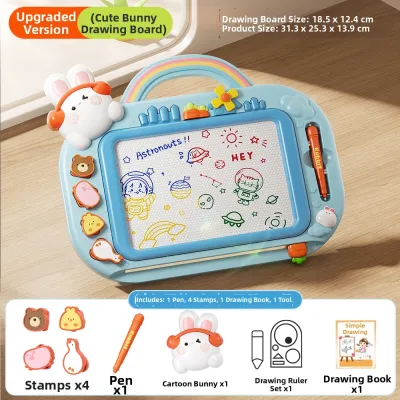
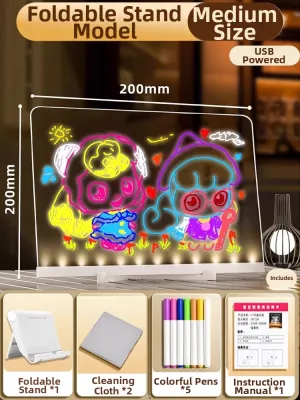
Prices are valid at publication and may change. Please refer to the product page for the latest price.
Finally, consider your child’s attention span and sensory preferences. Some children are highly motivated by immediate, high-contrast visual feedback, such as the bright lines of an LCD screen. Others find satisfaction in the tactile resistance of a magnetic slider or the physical action of placing pegs into a board. Matching the board’s feedback mechanism to your child’s sensory style ensures the toy remains a source of engagement rather than a brief distraction.
Match Drawing Board Mechanisms to Age Groups
Different drawing boards offer varying levels of surface resistance and stylus thickness, both of which directly impact how hard a child’s hand muscles must work. While paper provides natural friction, synthetic surfaces like plastic magnetic screens or glass-smooth LCD panels behave differently under a child’s hand. When evaluating options, look past generic marketing claims about developmental benefits and focus on the physical specifications, age grading, and structural design of each board type.

Toddlers (Ages 1–3): Sensory Exploration and Basic Grip
For toddlers, the primary goal of drawing is sensory exploration and the discovery of cause and effect. At this stage, children are learning that their physical movements can create marks on a surface. To support this, look for drawing boards that feature very thick, rounded styluses that fit comfortably inside a closed fist. Finger-drawing surfaces, such as water-reveal mats or classic magnetic boards with large, easy-to-grip magnetic stamps, are also excellent choices that do not require advanced coordination.
Safety is the primary priority for this age group, meaning you must choose completely sealed units. Ensure that any magnetic board you select has a fully enclosed screen so that the internal magnetic powder or liquid cannot leak out, even if the board is dropped or stepped on. Avoid any models that include small, detachable pens or loose magnets that could easily fit into a child’s mouth and pose a choking hazard.
If you choose an LCD writing tablet for a toddler, look for a model that features a dedicated screen-lock button. Toddlers can easily become frustrated if they accidentally press the erase button mid-drawing and wipe away their creation. A lock switch allows them to carry their drawing around and show it to family members without the risk of accidental deletion, preserving their sense of accomplishment.
Preschoolers (Ages 3–5): Fine Motor Practice and Creativity
As children enter the preschool years, their drawing transitions from random scribbles to intentional shapes, letters, and early representational art. This is the ideal time to introduce drawing boards that offer slight physical resistance or varied line widths, which help build the hand strength necessary for future handwriting. Boards with medium-thickness styluses help guide their hand transition from a fist grip to a proper pencil grip.
This age group also benefits from boards that incorporate structured play elements, such as built-in stencils, tracing guides, or geometric shape stamps. These tools encourage shape recognition and help children practice drawing straight lines and curves in a guided format. Look for boards where the stencils clip securely onto the frame so they do not slide around while the child is trying to trace.
If your child has completely outgrown the stage of putting toys in their mouth, you can introduce magnetic peg boards or mosaic boards. These boards use a magnetic pen to lift small, colorful beads behind a sealed plastic cover, allowing children to arrange them into patterns. This activity provides excellent fine motor practice, requiring precise hand-eye coordination and patience as they guide each bead into its designated slot.
Primary School (Ages 5+): Complex Sketching and Writing
By the time children reach primary school, their drawing and writing needs become much more sophisticated. They require tools that allow for detailed sketching, shading, and writing out full sentences or mathematical equations. High-quality LCD writing tablets with advanced pressure sensitivity are highly suitable for this age group, as they mimic the feel of pen on paper by producing thicker or thinner lines based on how hard the child presses.
The physical size of the drawing surface becomes a major consideration for older children. A small, travel-sized board will quickly frustrate a child who is trying to write out spelling words or sketch a detailed landscape. Look for boards with a diagonal screen size of at least 10 to 12 inches, providing ample space for multi-step math problems, cursive writing practice, or complex artistic compositions.
Durability remains important, but the focus shifts from impact resistance to surface longevity. Older children apply more concentrated pressure with the stylus, which can scratch low-quality plastic screens over time. Verify that the drawing surface is rated for thousands of write-erase cycles and that the stylus tip is made of a smooth, non-abrasive material that will not gouge the screen during enthusiastic sketching sessions.
Evaluate Safety Labels, Size, and Ergonomics
When finalizing your choice, always verify the manufacturer’s age grading on the packaging. These labels are not merely suggestions; they are legally mandated indicators of safety, particularly regarding choking hazards for children under three years old. If a board is labeled “3+”, inspect it closely to identify why, which is often due to small magnetic stamps, loose styluses, or small parts that could detach during rough play.
Ergonomics play a vital role in how comfortable your child will be using the board for extended periods. Measure the overall dimensions of the board against your child’s arm span and lap size. A board that is too wide or heavy will be difficult for a young child to hold steady, leading to poor posture as they hunch over to reach the center of the screen. For tabletop use, look for boards with slight inclines or foldable legs that position the drawing surface at a comfortable angle, reducing neck strain.
Inspect the physical construction of the board for potential pinch points, sharp plastic seams, or exposed screws. If the stylus is attached to the board by a cord, ensure the tether is short enough that it cannot wrap around a child’s neck, yet long enough to allow them to reach all four corners of the drawing area comfortably. For left-handed children, check if the tether can be attached to either side of the board to prevent the cord from crossing over their writing hand.
For any electronic or LCD drawing boards, pay close attention to the battery compartment. These devices typically run on small button cell batteries, which are highly dangerous if swallowed. The battery compartment must be securely locked behind a panel that requires a screwdriver to open, preventing curious children from accessing the battery. Never purchase an electronic toy where the battery compartment can be slid open with a simple plastic tab.
Signs It Is Time to Upgrade or Replace the Board
Like any well-loved toy, drawing boards eventually wear out or are outgrown. Physical signs of wear are the most obvious indicators that it is time for a replacement. On magnetic boards, the internal fluid can dry out or the magnetic particles can lose their charge, resulting in faded, blurry lines that are difficult to see. On LCD screens, deep scratches from heavy stylus use can create permanent marks that interfere with new drawings, while worn-out erase buttons may leave ghost images on the screen.
Behavioral changes in your child are equally important signals. If you notice your child becoming frustrated because they run out of space to finish a drawing, or if they lose interest in a board they once loved, they may have outgrown its capabilities. A child who has mastered basic shapes will quickly grow bored of simple magnetic stamps and will require a board that supports finer lines and more detailed work.
Finally, recognize when it is time to transition from sensory drawing boards to traditional paper or digital art mediums. While reusable boards are excellent for practice, travel, and homework drafting, they do not allow children to save their creations permanently. When your child begins expressing a strong desire to keep their drawings, display them on the refrigerator, or gift them to family members, it is time to introduce sketchbooks, high-quality colored pencils, or entry-level digital drawing tablets.
Frequently Asked Questions (FAQ)
How do I clean and maintain a magnetic or LCD drawing board?
To prolong the lifespan of your child’s drawing board, always consult the manufacturer’s care instructions first. For LCD writing tablets, never spray water, glass cleaner, or any liquid solvents directly onto the screen, as moisture can easily seep into the edges and damage the internal circuitry. Instead, use a soft, dry microfiber cloth to gently wipe away fingerprints and dust. For magnetic boards, a slightly damp cloth can be used to clean the plastic frame and screen, but ensure the entire unit is completely dry before storing it in a toy box or drawer.
Are LCD drawing tablets safe for young children's eyes?
Standard LCD writing tablets are generally safe for children’s eyes because they do not emit their own light like smartphones or computer screens. Instead, they rely on reflective liquid crystal technology, meaning they reflect the ambient light already present in the room. However, because these screens do not have a backlight, drawing on them in a dimly lit room can cause significant eye strain due to low contrast. Always ensure your child uses the tablet in a well-lit area, and encourage them to take regular breaks every twenty minutes to rest their eyes, regardless of the type of drawing surface they are using.
Community discussion
Share your experience or ask a question. Comments are reviewed before publication.