
Finding the right jeans extender in Singapore involves matching your specific physical comfort requirements with the structural design of your trousers. Whether you are navigating the stages of pregnancy, managing temporary post-meal bloating after dining out, or transitioning between sizes, a well-chosen haberdashery accessory can save you from purchasing an entirely new wardrobe. The key is understanding how different materials—such as rigid denim, flexible elastics, and adjustable silicone—interact with your garment’s existing waistband. By focusing on the mechanics of these small but essential tools, you can maintain your style and comfort without compromising the integrity of your favorite denim.
In Singapore’s warm and humid climate, comfort is paramount. Heavy, rigid denim can feel restrictive when the temperature rises, and any added tightness around the waist only exacerbates the discomfort. A jeans extender offers a practical, cost-effective solution to ease waistband tension. However, selecting the wrong type can lead to slipping buttons, torn buttonholes, or an awkward silhouette under lightweight clothing. To make an informed decision, you must evaluate your daily movement patterns, the specific cut of your trousers, and how long you expect to need the adjustment.
Understanding Your Waist Adjustment Needs
Before browsing online marketplaces or visiting a local craft store, it is essential to analyze why you need a waistband adjustment and how long that need will persist. Waistline changes are rarely uniform, and different scenarios demand different mechanical solutions. For instance, temporary fluctuations—such as the natural expansion of the abdomen after a large meal or during long periods of sitting at an office desk—require a highly flexible, low-profile solution. These situations are common for professionals who spend hours seated in meetings and need a subtle release that can be easily removed before standing up.
Products mentioned in this guide
Prices are valid at publication and may change. Please refer to the product page for the latest price.
In contrast, long-term physical changes require a more robust and progressive approach. During pregnancy, the abdominal area undergoes continuous, predictable growth over several months. A simple, single-setting button loop will quickly become obsolete as the trimesters progress. Pregnant individuals require extenders that can scale alongside their changing bodies, often transitioning from simple elastic bands to wide, multi-hole fabric panels that bridge the gap of an unzipped fly. Similarly, those undergoing gradual weight fluctuations need an adjustable system that allows them to tighten or loosen the waistband incrementally, ensuring their clothes fit properly throughout their journey.
Another critical factor is the level of visual discretion your wardrobe demands. If you frequently wear tucked-in shirts, cropped tops, or fitted blouses, the extender will be highly visible unless it matches your denim perfectly or is exceptionally compact. Conversely, if your style leans toward loose linen shirts, oversized t-shirts, or tunics—which are highly popular in Singapore’s casual fashion scene—you have more flexibility to choose larger, more supportive extenders without worrying about them showing. Assessing these lifestyle and wardrobe factors first will prevent you from buying an accessory that sits unused in your drawer.
Comparing Jeans Extender Types by Mechanism
Jeans extenders are engineered using various mechanical designs, each offering a distinct balance of stretch, security, and aesthetic integration. Understanding how these mechanisms function under tension is key to choosing a product that will not fail during daily wear. The three primary categories available to consumers are button-and-loop extenders, elastic band extenders, and multi-hole adjustable panels. Each type serves a specific purpose within the realm of haberdashery and garment alteration.

Button and Loop Extenders
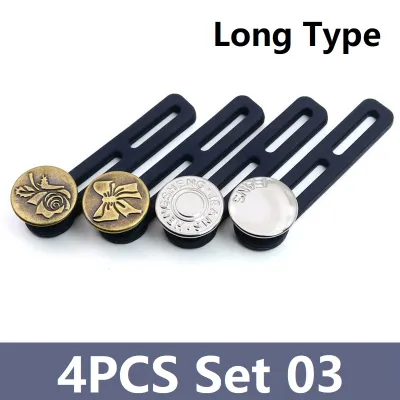
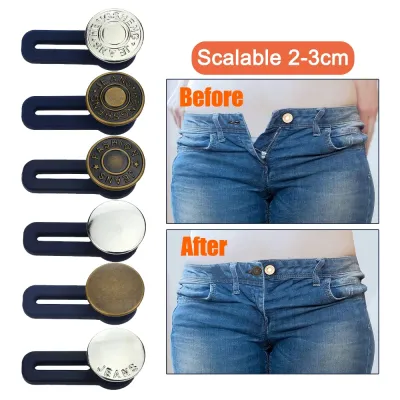
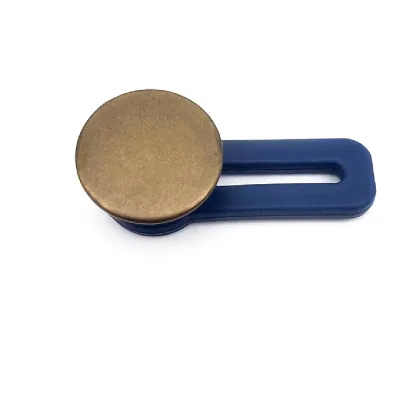
Button and loop extenders are the most straightforward and compact options available. Their design typically consists of a replacement button—made of metal, plastic, or resin—anchored to a small loop. This loop is made from a semi-flexible material such as silicone, spring steel, or a tight fabric cord. To install it, you simply slip the loop over the existing shank button of your jeans, and then use the extender’s button to secure the opposite side of the waistband.
This mechanism is highly effective for minor, fixed adjustments, typically adding between 1.5 to 2.5 centimeters to the waistband. Because they are so small, button and loop extenders are incredibly discreet and can easily be hidden under a belt or a slightly draped shirt hem. They are particularly well-suited for standard denim jeans that feature a classic metal shank button, as the loop can grip the shank securely without slipping.
However, these extenders have notable limitations. Because the loop material is often rigid or only minimally stretchy, they do not provide dynamic relief when you sit down or bend over. If your jeans are already very tight, a rigid loop extender can transfer all the tension directly to the original button, risking damage to the fabric. Additionally, you must ensure the loop is compatible with your specific button size; standard jeans buttons are usually 17 millimeters in diameter, but fashion denim may feature larger or smaller buttons that will not fit standard loops.
Elastic Band Extenders
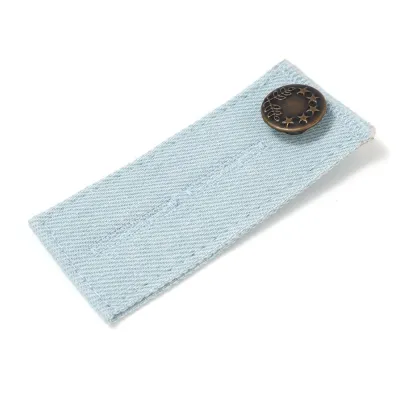
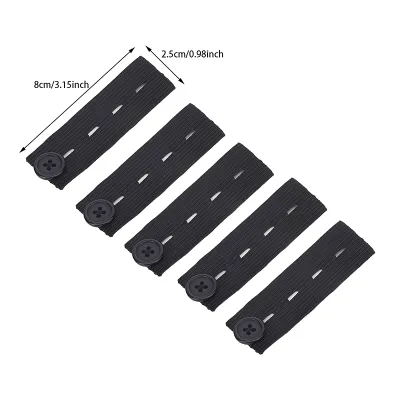
Elastic band extenders utilize a stretchable fabric strip to bridge the gap in your waistband. These accessories feature a button sewn onto one end of a woven elastic band and one or more pre-cut buttonholes on the other. By inserting your jeans’ button into one of the elastic’s slots, you can customize the level of tension and stretch.
The primary advantage of this design is its dynamic flexibility. Unlike rigid loops, elastic bands expand and contract in response to your body’s movements. This makes them exceptionally comfortable for activities that involve frequent transitions between sitting and standing, as well as for managing post-meal bloating. The elastic absorbs the physical strain, reducing the pressure on your abdomen and preventing the waistband from digging into your skin.
Despite their comfort, elastic extenders come with trade-offs regarding durability and aesthetics. Over time, exposure to body heat, sweat, and laundry detergents will cause the elastomeric fibers within the band to degrade, leading to a loss of elasticity and a wavy, stretched-out appearance. Furthermore, because elastic bands must stretch to function, they can cause the front fly of your jeans to gape open, exposing your undergarments unless covered by a long top or a specialized belly band.
Multi-Hole and Adjustable Extenders
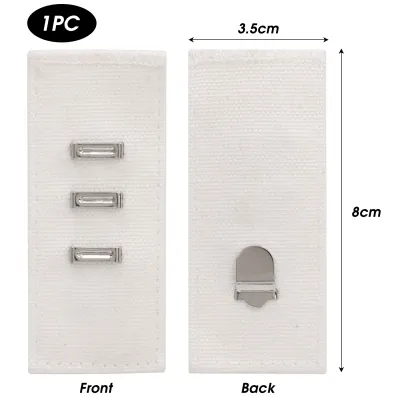
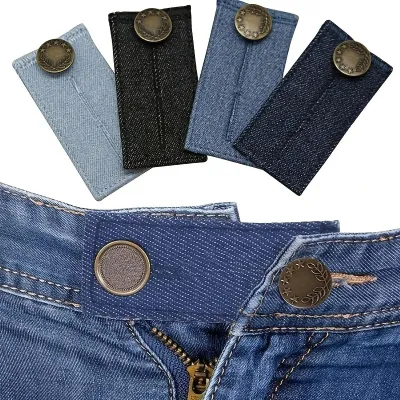
Multi-hole and adjustable extenders are designed for progressive, long-term waistline changes. These products often consist of a wider fabric panel—frequently made of cotton canvas, denim, or heavy twill—that features a row of multiple buttonholes spaced at regular intervals. Some modern variations use a sliding plastic or metal buckle mechanism similar to a backpack strap, allowing for micro-adjustments.
These extenders are highly valued for their versatility. They allow the user to gradually increase the waistband clearance as needed, making them a staple for different stages of pregnancy or during body composition transitions. Because the main body of the extender is made of non-stretch fabric, it provides excellent structural support, keeping the waistband aligned and preventing the zipper area from sagging excessively.
When comparing these to pure elastic options, multi-hole fabric extenders offer superior durability and a more cohesive look, as the fabric panel can be selected to match the color of your jeans. However, they are inherently bulkier than simple loops or thin elastic bands. This added bulk can create a noticeable bump under fitted clothing, meaning they are best paired with layered outfits, tunics, or loose-fitting blouses.
Key Features to Check Before Buying
When shopping for a jeans extender, it is easy to assume that all products perform equally. However, subtle differences in manufacturing quality and material specifications can greatly affect the accessory’s longevity and the safety of your garments. To ensure you select a reliable product, keep the following checklist in mind during your search.
First, examine the material composition and construction quality. If you are choosing a fabric-based extender, look for reinforced stitching around the buttonholes, as these areas experience the highest amount of friction and tension. For extenders with metal buttons or spring loops, verify that the hardware is made of rust-resistant materials like brass, stainless steel, or coated aluminum. This is particularly important in Singapore’s humid climate, where moisture and perspiration can quickly cause cheap metals to corrode, potentially staining your denim with rust marks.
Second, verify size and compatibility. Measure the diameter of your jeans’ button before purchasing. While most standard jeans use a 17-millimeter button, some brands use smaller 15-millimeter buttons on lightweight denim or larger 20-millimeter buttons on heavy-duty styles. A loop that is too large will slip off constantly, while a loop that is too small will be nearly impossible to secure and may tear the buttonhole.
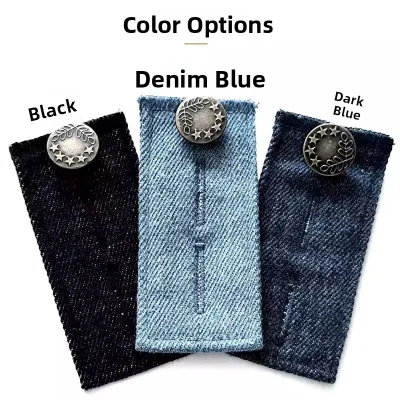
Third, consider color matching and discretion. If you want the extender to remain unnoticed, try to match the fabric panel or button color to your jeans’ wash. Dark indigo denim pairs best with navy or black extenders, while light-wash jeans require pale blue or grey options. If a perfect match is unavailable, neutral tones like beige or black are highly versatile.
Finally, check the washability instructions. Some extenders are designed to be left on the garment and thrown directly into the washing machine, while others must be removed beforehand. Elastic and silicone components degrade much faster when exposed to the high heat of dryers or the aggressive agitation of washing machines. Opting for removable extenders is generally the safest way to prolong the lifespan of both the accessory and your trousers.
Matching Extenders to Specific Situations
Selecting the ideal jeans extender is not a one-size-fits-all decision; it requires matching the mechanical properties of the accessory to your specific physical circumstances. By applying conditional logic to your daily needs, you can identify the most comfortable and secure option.
For pregnancy, the primary goals are comfort, skin safety, and adaptability. During the first trimester, a simple elastic band extender may suffice to ease minor tightness. However, as you enter the second and third trimesters, a multi-hole fabric panel or a specialized maternity belly band system becomes essential. These systems not only extend the waistband by several inches but also provide a fabric shield to cover the exposed zipper and lower abdomen, ensuring you can continue wearing your favorite pre-pregnancy jeans comfortably.
For those experiencing weight fluctuations, adaptability and value are key. A multi-hole adjustable extender is the most practical choice here. Instead of buying multiple single-size extenders as your body changes, a single adjustable panel allows you to customize the fit day by day. This prevents the frustration of clothes feeling too loose one week and too tight the next, providing a stable bridge during lifestyle transitions.
If your main concern is everyday comfort or occasional bloating, a low-profile silicone button-loop extender is highly recommended. These are incredibly compact, inexpensive, and easy to slip into a pocket or handbag. They provide just enough breathing room—typically around 2 centimeters—to make sitting at a desk or enjoying a large meal comfortable, without altering the overall fit or silhouette of your trousers. With budget-friendly options costing under S$5 to premium multi-pack sets priced around S$15, these accessories are a highly economical alternative to buying new trousers.
For heavy-duty or thick denim, such as raw denim or heavy workwear jeans, you must prioritize structural strength. Lightweight silicone loops or thin elastic bands will quickly snap or stretch out under the tension of heavy fabric. Instead, look for extenders made of thick cotton canvas or reinforced denim, featuring heavy-duty metal shank buttons and double-stitched buttonholes. This ensures the extender can withstand the high pulling forces exerted by stiff, unyielding waistbands.
Installation and Care Guidelines
Proper installation and regular maintenance are crucial to ensuring your jeans extender functions safely and lasts for a long time. Incorrect usage can not only cause the extender to fail but can also permanently damage your favorite pair of jeans.
To install the extender correctly, begin by holding the accessory against your waistband to align the mechanisms. Slip the loop or buttonhole of the extender over the original button of your jeans, ensuring it sits snugly against the metal shank. Once secured, take the button on the extender and pass it through the original buttonhole of your jeans. Before heading out, test the tension by sitting down, standing up, and bending over. The waistband should feel comfortably secure without pulling excessively on either the original button or the extender’s joints.
Never force a mismatched button size through a buttonhole. If the extender’s button is too large, forcing it through will stretch and tear the threads of your jeans’ buttonhole, leading to costly repairs. Conversely, if the button is too small, it may slip out unexpectedly, causing an embarrassing wardrobe malfunction.
Perform routine checks on your extenders before each wear. Inspect the fabric for fraying threads, check the elastic for signs of dry rot or loss of stretch, and ensure metal rivets are firmly attached. If you notice any structural weakness, stop using the extender immediately and replace it. Investing in a new haberdashery accessory is far more economical than repairing a torn waistband or replacing a ruined pair of jeans.
Frequently Asked Questions (FAQ)
Can I use a jeans extender on pants with a hidden button or clasp?
Most standard jeans extenders are designed specifically for trousers that feature a prominent shank button. If your pants use a flat, sew-through button, a slide clasp, or a hook-and-eye closure—which are common on formal trousers and some fashion jeans—standard loop extenders will not secure properly. Attempting to force a loop over a flat button can cause it to slip off easily. For these garments, you should look for specialized clasp-compatible extenders or consult the manufacturer’s compatibility notes to find an accessory designed for formal waistbands.
Will a jeans extender damage my denim over time?
A jeans extender can cause damage if it is used to force a fit that is far too small. When an extender is under excessive tension, it pulls hard on the original buttonhole and the metal rivet of the original button. Over time, this constant pulling can stretch out the buttonhole fabric, fray the threads, or even pull the metal rivet completely out of the denim. To prevent this, ensure that the extender you choose allows the waistband to close naturally without requiring you to stretch the fabric to its absolute limit.
Are there DIY alternatives to commercial jeans extenders?
In an emergency, many people use a common household item like a sturdy hair elastic or a rubber band, looping it through the buttonhole and back over the button. While this can provide temporary relief for a few hours, it is not a reliable long-term solution. Household elastics lack the structural security of purpose-built haberdashery items, are highly prone to snapping unexpectedly, and do not offer any fabric coverage for the open zipper. Investing in a proper commercial extender ensures safety, durability, and a much cleaner aesthetic.
Community discussion
Share your experience or ask a question. Comments are reviewed before publication.