
Selecting a hole puncher for school is not a one-size-fits-all decision. The ideal sheet capacity scale spans from 10 sheets for lower primary students up to 65+ sheets for secondary and pre-university students. Matching the tool to the student’s grade level ensures they can easily organize their schoolwork without facing jammed mechanisms, misaligned pages, or hand strain.
Choosing the wrong capacity can lead to daily frustration. A puncher with too little capacity forces students to split thick handouts into multiple smaller stacks, which often results in misaligned holes and messy binders. Conversely, a high-capacity model can be too heavy and physically demanding for younger children to operate safely. Finding the right balance involves looking at the child’s age, hand strength, and the volume of paper they handle daily.
Understanding Sheet Capacity and Physical Effort
Sheet capacity is a standardized metric that indicates how many sheets of paper a hole puncher can cut through in a single press. Manufacturers calculate this capacity based on standard 80gsm (grams per square meter) copier paper. If a student attempts to punch thicker paper, such as cardstock, drawing paper, or construction paper, the actual sheet capacity drops significantly.
Products mentioned in this guide
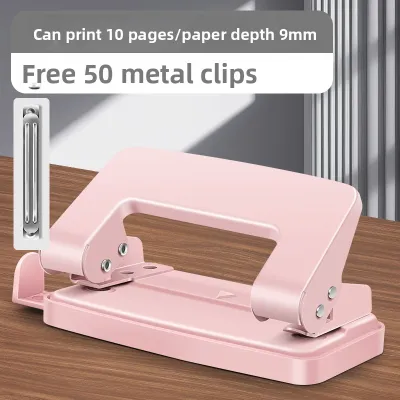
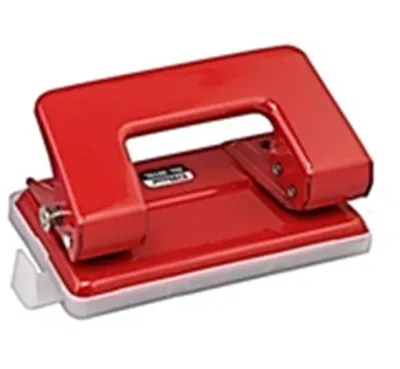
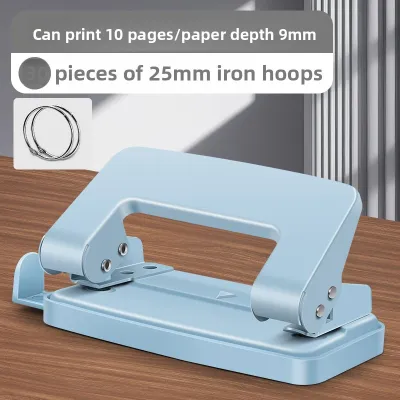
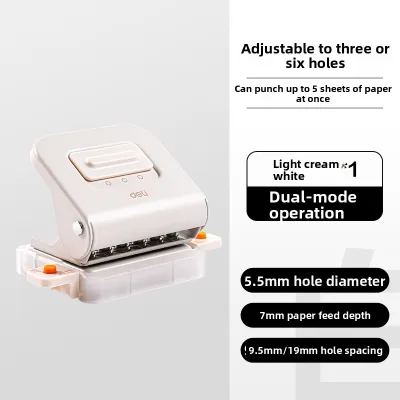
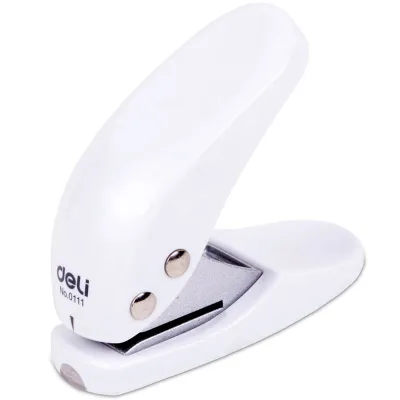
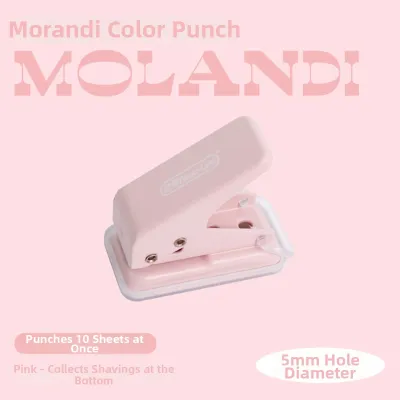
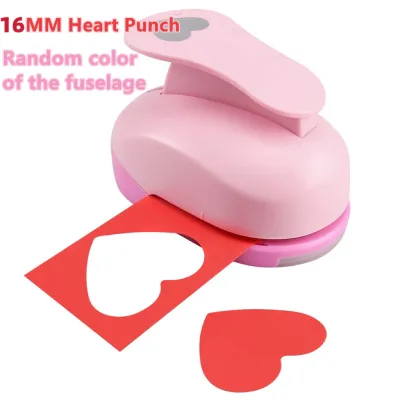
Prices are valid at publication and may change. Please refer to the product page for the latest price.
The process of punching holes relies on mechanical advantage. To cut through paper, solid steel pins must shear through compressed paper fibers. The physical force required to complete this action increases exponentially with every sheet added to the stack. Manufacturers design the lever handle length and internal spring tension to match the rated capacity of the tool, ensuring the user can apply enough downward pressure to complete the cut.
Overloading a hole puncher beyond its rated capacity causes immediate operational issues. The paper stack compresses tightly inside the throat, preventing the cutting pins from retracting. This leads to stubborn paper jams, torn page edges, and potential damage to the internal return springs. Over time, repeated overloading can permanently bend or misalign the steel pins, rendering the tool useless.
When selecting a model, compatibility with the student’s filing system is also crucial. In Singapore, standard school ring files typically use a 2-hole configuration with an 80mm spacing. Ensuring the puncher matches this standard is critical for neat filing. Some specialized formats may require 3-hole or 4-hole configurations, so it is always wise to check the binder rings before purchasing.
Lower Primary (Grades 1–3): Low Capacity and Easy-Press Designs
Primary 1 to Primary 3 students handle a relatively light volume of loose paper. Their schoolwork mostly consists of single worksheets, spelling lists, and basic drawing papers. Because their daily filing needs are minimal, they do not require heavy-duty office equipment.

For this age group, a hole puncher with a capacity of 10 to 20 sheets is ideal. This range easily accommodates daily handouts and school notices without adding unnecessary bulk to their study desks or school bags. Lightweight, compact models are highly portable and easy to store when not in use. Some students may also benefit from ultra-compact pocket-sized punchers that fold flat to fit inside a pencil case, though these typically have a very limited capacity of 1 to 5 sheets and are best reserved for quick, on-the-go school use.
At this developmental stage, young children are still building their hand strength and coordination. Standard desktop punchers can require significant downward force, which can frustrate a young child. Parents should look for “easy-press” or “reduced-effort” designs. These models feature internal gearing systems that reduce the required physical force by up to 50 percent compared to traditional punchers, allowing younger children to punch their papers independently.
Safety is another critical factor for lower primary students. Look for models with enclosed punch mechanisms where the cutting pins are fully shielded inside a plastic housing. This design prevents small fingers from accidentally slipping under the cutting edge. Additionally, choosing a model with a clear waste tray allows children to see when the paper chips are full, encouraging them to maintain their own stationery and keep their study spaces clean.
Upper Primary (Grades 4–6): Medium Capacity for Growing Workloads
As students progress to Primary 4, Primary 5, and Primary 6, their academic workload increases substantially. They begin managing multi-page science practical reports, comprehensive mathematics worksheets, and thick subject dividers for different exam topics. The simple, low-capacity punchers used in early primary years may no longer be efficient.
At this stage, students frequently bring home large packets of worksheets that need to be filed into subject-specific binders (such as English, Mathematics, Science, and Mother Tongue). A medium-capacity hole puncher rated for 20 to 40 sheets is recommended for this stage. This capacity allows students to punch entire weekly worksheets or multi-page project drafts in a single press, saving valuable time during busy homework and exam preparation periods.
Upper primary students are ready to transition to standard desktop models. Look for punchers with die-cast metal bodies and contoured, rubberised grip handles. The metal construction provides the stability needed for heavier stacks, while the rubber grip prevents hands from slipping during use, ensuring a clean and safe punching motion.
A critical feature to verify at this stage is the paper guide. An adjustable paper guide with clear markings for standard paper sizes (such as A4, A5, and Letter) ensures that holes are punched in the exact center of every sheet. This prevents misaligned pages that stick out of ring files, which are easily crumpled or torn when the binder is zipped or carried in a school bag.
Secondary and Pre-University: High Capacity for Heavy Binders
Secondary school, O-Level, A-Level, and Integrated Programme (IP) students face a massive influx of printed materials. They regularly deal with thick lecture notes, past-year exam papers (such as the Ten-Year Series), and comprehensive subject modules.
For these older students, a high-capacity hole puncher rated for 40 to 65+ sheets is highly appropriate. Attempting to organize a 60-page biology module or a complete practice exam paper with a standard 10-sheet puncher is incredibly tedious. It requires dividing the document into multiple small stacks, which often leads to unevenly aligned sections within their binders.
These heavy-duty models feature robust all-metal construction and extended lever handles. The longer handle provides the mechanical advantage needed to slice through thick stacks of paper with minimal physical effort. They also feature extra-large paper chip trays to accommodate the high volume of waste generated, reducing the frequency of emptying during intense study sessions.
Some secondary schools and junior colleges utilize 4-ring binders for archival storage of notes. In these cases, a 4-hole puncher or a model with adjustable punch heads is highly beneficial. This allows students to punch all four holes simultaneously, ensuring perfect alignment with their archival files and preventing the pages from tearing at the corners over time.
Cross-Grade Compatibility: Can One Puncher Last Through School?
It is tempting to purchase a heavy-duty, 50-sheet puncher during a child’s early primary years with the hope that it will last their entire school journey. While high-quality metal punchers are highly durable, this approach has distinct drawbacks.
A heavy-duty puncher is physically large, heavy, and requires a wide hand span to operate. A Primary 1 student will struggle to fit their hand around the extended lever handle and may lack the physical leverage needed to press it down, leading to frustration and poorly punched papers. Additionally, these large tools occupy significant desk space, which is often at a premium in a child’s study area.
The ideal tipping point for an upgrade usually occurs around Primary 4 or Secondary 1. At these transitions, the sudden jump in paper volume and the student’s physical growth align perfectly with the transition to a larger, higher-capacity tool.
If you want a single tool that bridges the gap, look for compact, reduced-effort desktop models rated for 20 to 25 sheets. These offer a middle ground: they are small enough for primary school hands to operate safely, yet possess enough capacity to handle the moderate workloads of early secondary school.
Practical Maintenance Tips for School Hole Punchers
To ensure a hole puncher provides clean, crisp cuts throughout the academic year, regular maintenance is essential. The most common cause of puncher failure is a neglected paper chip tray. When the tray becomes overfilled, the compressed paper chips back up into the die holes, blocking the pins and causing the mechanism to jam. Empty the tray at least once a month to keep the cutting mechanism clear.
Always check the manufacturer’s guidelines before attempting to punch non-standard materials. Standard school punchers are designed exclusively for paper. Punching through thick cardboard, plastic folder covers, laminated sheets, or sheets with staples still attached can dull the cutting edges or permanently bend the steel pins.
If the puncher begins to stick, squeak, or require more effort than usual, a simple maintenance routine can restore its performance. First, clear any accumulated paper dust from the cutting area. You can lubricate the pins by punching through a sheet of wax paper several times; the wax coats the pins and reduces friction. For persistent stiffness, check the manufacturer’s instructions, then apply a single drop of light sewing machine oil or silicone lubricant directly to the moving joints and pins, punching several scrap sheets afterward to absorb any excess oil.
Frequently Asked Questions (FAQ)
What is the standard hole spacing for school binders?
In Singapore, the standard spacing for 2-hole binders is 80mm from the center of one hole to the center of the other. For 4-hole binders, the standard spacing is typically 80mm between each adjacent hole (80-80-80mm configuration). Always check your child’s ring files before purchasing a puncher to ensure the hole spacing matches the binder rings.
Can a standard school hole puncher punch through laminated paper or cardstock?
Standard school hole punchers are rated based on standard 80gsm paper. Laminated sheets and heavy cardstock (typically 160gsm or higher) are much denser and tougher than standard paper. Punching these materials with a standard school puncher requires excessive force and can easily bend the steel cutting pins or misalign the mechanism. For laminates or thick craft materials, use a specialized heavy-duty puncher or a single-hole craft punch designed for heavy media.
Why does my hole puncher keep getting stuck halfway down?
A hole puncher usually gets stuck due to three common issues: overloading beyond its rated sheet capacity, a completely full paper chip tray backing up into the mechanism, or adhesive residue on the pins from punching sticky notes or taped pages. To resolve a jam safely, empty the chip tray first. If the pins are stuck in the paper, gently rock the handle upward or tap the base on a flat surface. Never use a metal screwdriver or hammer to force the handle, as this can permanently warp the metal frame.
Community discussion
Share your experience or ask a question. Comments are reviewed before publication.