
Quick Answer: Finding Your Ideal Gaahleri Airbrush
Selecting the right gaahleri airbrush depends on three core variables: your specific craft, the required detail level, and your comfort level with dual-control tools. Because different hobbies require different paint thicknesses and spray patterns, matching the tool to your medium is the most critical step for achieving a smooth, professional finish.
For miniature painting, scale models, and fine illustration, a double-action gravity-feed model equipped with a fine nozzle (such as 0.2 mm or 0.38 mm) offers the precision needed for shading and tight lines. These models allow you to control both air and paint flow dynamically, which is essential for detailed acrylic work.
For cake decorating, cosmetics, and large-scale textile work, a larger-capacity gravity-feed or siphon-feed model with a 0.5 mm or larger nozzle is highly recommended. These configurations accommodate thicker fluids and cover broader surface areas without frequent clogging or refilling.
Products mentioned in this guide
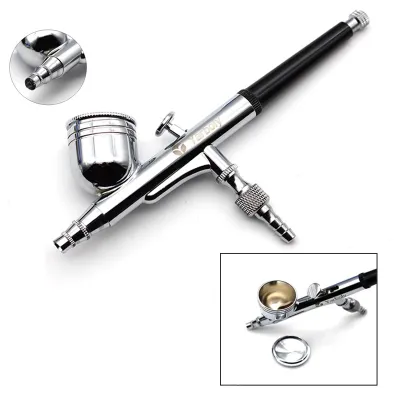
![[Ready stock] KIPRUN 0.3mm Gravity Feed Dual Action Air-brush Air-Brush Paint SprayGun Kit Tattoo Nail Tool Spray Pen Set Beauty Inkjet Car Repair](https://img.lazcdn.com/g/p/5845e288661f35ddb53b2df6b22c3926.jpg_400x400q80.jpg_.webp)
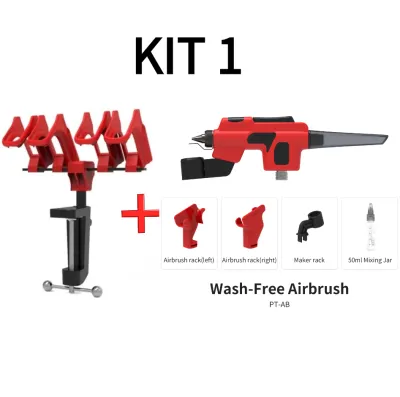
![[LOCAL SELLER] Air Brush/Car Painting/Makeup/Arts&Craft/Portable/Wireless Electric Air Brush/Airbrush/ Good Quality](https://img.lazcdn.com/g/ff/kf/S27646c7a82084126b3bc67e1b3c30273E.jpg_400x400q80.jpg_.webp)
Prices are valid at publication and may change. Please refer to the product page for the latest price.
Before finalizing your choice, verify that your air source can support the required operating pressure and that the airbrush nozzle size matches the viscosity of your preferred paint. Examining these technical specifications beforehand will prevent performance issues and ensure a seamless crafting experience.
Core Specifications That Define Airbrush Performance
Needle and Nozzle Sizes
The internal diameter of the nozzle and needle determines the maximum spray width and the volume of paint that can pass through the airbrush. Smaller sizes, ranging from 0.2 mm to 0.3 mm, are engineered for high-precision tasks where thin paints and tight control are paramount. These fine tips are ideal for rendering micro-details but are highly susceptible to clogging if the paint is not thinned to an ink-like consistency.

Conversely, larger sizes of 0.5 mm and above are designed to handle thicker mediums, such as heavy-body acrylics, primers, varnishes, and food-grade colorings. These larger passages allow for rapid coverage of broad surfaces and are more forgiving when working with pigment-heavy paints. However, they lack the control required for ultra-fine lines or soft, microscopic gradients.
Actual performance is heavily dependent on the viscosity of your paint and the thinning ratio you employ. Even a large nozzle can clog if the paint contains undispersed pigments, while a fine nozzle can perform beautifully with thicker paints if they are prepared with the correct flow improver or reducer. Always consult the paint manufacturer’s technical guidelines to ensure compatibility with your chosen nozzle size.
Paint Feed Type
Gravity-feed airbrushes feature a paint cup mounted directly on top of the body, allowing gravity to draw the fluid down into the atomization chamber. This design requires very little air pressure to operate, making it exceptionally efficient and capable of spraying single drops of paint. It is the most versatile option for detailed work and is remarkably easy to clean because the paint well is fully visible and accessible.
Siphon-feed models utilize a bottle or cup attached to the bottom of the airbrush, drawing paint upward through a tube using the Venturi effect. This setup is ideal for large-volume projects, such as base-coating large props or spraying continuous batches of edible color on cakes. The trade-off is that siphon-feed models require higher operating pressures to draw the paint upward and are more tedious to clean due to the internal suction tube.
Side-feed models offer a middle ground by mounting the paint cup to the side of the body, often allowing the cup to rotate. This configuration provides a clear line of sight directly over the top of the airbrush, which is highly beneficial for close-up detail work. However, side-feed systems feature more complex internal channels that require meticulous cleaning to prevent paint buildup.
Action Type
Single-action airbrushes operate much like a standard spray can: pressing down on the trigger releases a fixed volume of air and paint simultaneously. The ratio of air to paint is pre-set using a dial, typically located at the rear of the handle. This makes single-action models highly accessible for beginners, as they do not require complex finger coordination, making them excellent for base coats, stenciling, and flat fills.
Double-action airbrushes require you to press the trigger down for air and pull it back to release paint. This independent control allows you to dynamically adjust the line width and paint volume on the fly, enabling advanced techniques like pre-shading, soft gradients, and fine freehand lines. While double-action tools offer superior creative control, they require a significant amount of practice to master the muscle memory.
For most crafting and hobby applications, investing the time to learn a double-action system is highly beneficial. The ability to control paint flow mid-stroke prevents pooling and allows for more natural transitions. Gaahleri models primarily utilize double-action mechanisms, reflecting their focus on precision and control.
Build Materials & Seals
The durability and chemical resistance of an airbrush are determined by its construction materials and internal seals. High-quality airbrushes typically feature brass or aluminum bodies with a polished chrome plating that resists wear and corrosion. The weight and balance of the tool in your hand are directly influenced by these metal choices, with brass offering a reassuring heft and aluminum providing a lightweight feel for long painting sessions.
Internal seals, particularly the needle packing seal, must withstand constant exposure to paints and cleaning solvents. Many premium models utilize Teflon (PTFE) seals, which are highly resistant to aggressive solvents like lacquer thinners and acetone. If you plan to use solvent-based paints, verifying that the airbrush features solvent-resistant seals is critical to prevent premature seal failure.
Always check the product documentation to confirm which cleaning agents are safe for the internal components. Avoid submerging the entire airbrush in harsh solvents, as this can degrade non-Teflon O-rings located in the air valve assembly. Proper material maintenance ensures the tool remains airtight and performs consistently over its lifespan.
Matching Gaahleri Airbrush Models to Your Crafting Application
Cake Decorating & Food Applications
Airbrushing in culinary arts requires strict adherence to hygiene standards and a tool that can handle specialized food colorings. When selecting a gaahleri airbrush for cake decorating, prioritize models that allow for complete disassembly and easy sanitization. Liquid food dyes and luster dusts have unique viscosities and particle sizes that can easily clog fine-detail nozzles.
For food applications, a gravity-feed model with a larger nozzle size (0.5 mm) is generally preferred to accommodate thicker edible metallic paints and gel-based colors. Siphon-feed models are also highly effective when decorating multiple cakes, as they allow you to swap pre-filled bottles of different colors quickly. This keeps your workflow efficient and minimizes downtime.
Before using any airbrush for food preparation, verify that all wetted parts—including the needle, nozzle, and fluid cup—are brand new and dedicated exclusively to food-safe mediums. Never use an airbrush for food after it has been used with toxic hobby paints or solvents, even if it has been thoroughly cleaned. Cross-contamination presents severe health risks.
Miniature Painting & Model Kits
Miniature painting and scale modeling demand extreme precision, consistent atomization, and the ability to spray highly thinned acrylic paints. For these applications, a double-action gravity-feed airbrush with a nozzle size between 0.2 mm and 0.38 mm is the industry standard. This configuration allows you to apply smooth base coats, execute zenithal highlighting, and paint intricate details on small figurines.
Gaahleri models designed for miniatures often feature self-centering drop-in nozzles, which simplify maintenance and protect the delicate tip from damage during assembly. The smooth trigger response of these models allows for precise control over the air-to-paint ratio, which is essential when applying thin glazes or working on tiny surfaces. This control helps prevent spider-webbing and paint runs.
When working on model kits, it is highly recommended to test your spray pattern on scrap plastic or cardboard before applying paint to the model. Adjust your compressor pressure in tandem with your paint thinning ratio to find the sweet spot for atomization. Proper preparation reduces the risk of obscuring fine molded details on your miniatures.
T-Shirts, Textiles & Large Surfaces
Painting on fabrics requires specialized textile paints that are significantly thicker than standard model acrylics. To spray these heavy-pigment mediums successfully, you need an airbrush with a larger fluid passage, typically 0.5 mm or wider. A larger nozzle prevents the thick binders in fabric paint from drying prematurely on the needle tip, a common issue known as tip dry.
For large-scale textile projects like custom t-shirts or canvas banners, a siphon-feed or side-feed model with a high-capacity cup is highly advantageous. These designs allow you to work continuously without stopping to refill the paint reservoir every few minutes. The higher volume of paint delivered by these setups is essential for achieving saturated, even coverage on porous fabric fibers.
Proper textile painting also relies heavily on surface preparation and post-paint treatment. Ensure the fabric is washed to remove sizing agents before painting, and follow the paint manufacturer’s instructions for heat-setting the design once dry. This process ensures the paint bonds permanently with the fibers and survives subsequent wash cycles.
General DIY, Greeting Cards & Mixed Media
If your crafting projects span a wide variety of mediums, from paper crafts and stenciling to mixed-media canvases, a versatile mid-range gravity-feed airbrush is the most practical choice. A model equipped with a 0.35 mm to 0.38 mm nozzle strikes an excellent balance between detail capability and coverage speed. This allows you to switch between fine freehand writing and broad background washes with ease.
These mid-range models are highly forgiving and work well with a wide array of craft paints, inks, and liquid watercolors. They are ideal for crafters who utilize stencils, as the controlled airflow prevents paint from bleeding under the stencil edges. The ease of cleaning associated with gravity-feed cups makes color changes quick and straightforward during multi-colored projects.
When working with paper-based crafts, control your working distance and air pressure carefully to prevent warping the medium. Applying multiple light, dry coats is far more effective than spraying a single heavy, wet coat. This technique preserves the integrity of the paper and ensures crisp, clean lines.
Decision Framework
To simplify your selection process, evaluate your crafting priorities against this conditional framework. Your choice should align with your primary application, skill level, and budget:
- Prioritize Detail Over Coverage: Choose a double-action gravity-feed model with a 0.2 mm to 0.35 mm nozzle. This setup is optimized for miniatures, fine illustration, and precision shading.
- Prioritize Volume and Broad Coverage: Select a siphon-feed or large-capacity gravity-feed model with a 0.5 mm or larger nozzle. This is ideal for textiles, large props, base-coating, and cake decorating.
- Prioritize Versatility and Ease of Use: Opt for a mid-range double-action gravity-feed model with a 0.38 mm nozzle. This provides a balanced platform for general crafting, stenciling, and mixed media.
- Prioritize Budget and Learning Curve: Start with an entry-level double-action kit that includes interchangeable nozzles (e.g., both 0.35 mm and 0.5 mm). This allows you to experiment with different setups as your skills develop without buying multiple tools.
Pre-Purchase Checklist: Compressor, Accessories, and Maintenance
Compressor Compatibility
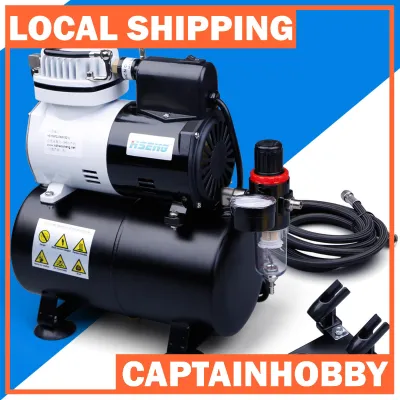
An airbrush is only as good as the air supply powering it. When purchasing a gaahleri airbrush, ensure your compressor features a standard 1/8-inch BSP male outlet, which is the industry standard for airbrush hoses. If your compressor uses a different fitting size or a proprietary quick-connect system, you will need to purchase appropriate adapters to ensure an airtight seal.
In Singapore’s humid climate, a moisture trap is an absolute necessity. High humidity causes water vapor to condense inside the compressor tank and hose; without a trap, this moisture will travel down the line and spit out of the airbrush tip, ruining your paint job. Look for a compressor equipped with an adjustable pressure regulator and an integrated moisture filter to maintain a clean, dry, and consistent air supply.
Ensure the compressor can deliver a stable working pressure of at least 15 to 30 PSI (pounds per square inch) under continuous use. Smaller, battery-powered portable compressors are convenient for light, mobile tasks but often struggle to maintain consistent pressure with thicker paints or larger nozzle sizes. A dedicated tabletop compressor with a small air tank is highly recommended for serious hobbyists.
Essential Accessories
To maintain a productive workflow, several supporting accessories should be acquired alongside your airbrush. A dedicated airbrush cleaning pot is highly recommended; it serves as a safe receptacle to spray dirty water or solvent into during color changes, preventing paint mist from filling your workspace. Soft-bristle cleaning brushes and micro-needles are also essential for gently clearing paint residue from the nozzle and cap.
Using high-quality paint thinners, flow improvers, and airbrush cleaners formulated for your specific paint type is critical. While water can thin some acrylics, dedicated thinners contain acrylic binders and drying retarders that prevent the paint from drying on the needle tip and improve atomization. Avoid using aggressive hardware-store solvents unless your airbrush manual explicitly states the internal seals can handle them.
For safety, especially when spraying solvent-based paints or fine acrylic mists, always work in a well-ventilated area. Using a portable spray booth with an active exhaust fan and carbon filter helps capture overspray and fumes. Wearing a properly fitted respirator mask rated for organic vapors and particulates is also highly recommended to protect your respiratory health.
Cleaning & Maintenance Protocol
Establishing a disciplined cleaning routine is the single most effective way to prevent airbrush malfunctions. Immediately after every painting session, flush the remaining paint out of the cup and rinse it with water or appropriate cleaner. Fill the cup with clean water, block the nozzle cap with a gloved finger, and gently depress the trigger to back-flush air through the paint channel, bubbling away stubborn residue.
Once the fluid runs clear, carefully remove the needle by loosening the chucking nut at the rear of the airbrush and pulling the needle straight out through the front. Wipe the needle clean with a lint-free cloth moistened with airbrush cleaner, moving from the blunt end to the sharp tip to avoid bending it. Inspect the needle tip under magnification to ensure it remains perfectly straight.
Deep disassembly, such as removing the tiny nozzle with a wrench or using ultrasonic cleaning baths, should only be performed when troubleshooting a severe clog. Frequent disassembly of delicate threaded parts increases the risk of stripping threads or snapping the nozzle tip. Always refer to your Gaahleri instruction manual for approved maintenance steps to avoid damaging the tool or voiding your warranty.
Budget & Value Assessment
When evaluating the cost of a gaahleri airbrush setup, consider the long-term value of the components rather than just the initial price tag. In the Singapore market, entry-level airbrush bodies typically range from S$50 to S$100, while more advanced kits with multiple nozzle sizes and premium finishes can cost between S$120 and S$200. Investing in a model that offers readily available replacement parts is highly beneficial.
Higher-priced models often feature more refined internal machining tolerances, smoother trigger actions, and innovative nozzle designs that simplify cleaning. However, a premium tool will not automatically yield better results without proper technique and maintenance. Prioritize a model that matches your current skill level and offers the specific features required for your primary craft.
To ensure you receive genuine products, reliable customer support, and access to authentic replacement needles and nozzles, purchase your airbrush from authorized hobby retailers or official online storefronts. This guarantees that you can easily source replacement parts if a needle is accidentally bent or a nozzle is damaged during cleaning, preserving your investment for years to come.
Frequently Asked Questions (FAQ)
Can I use a Gaahleri airbrush for both cakes and model painting?
Sharing a single airbrush between food decoration and industrial model painting is highly discouraged due to severe cross-contamination risks. Model paints, primers, and chemical cleaning solvents contain toxic compounds that can leave microscopic residues inside the airbrush body, even after thorough cleaning. If these residues mix with edible food colorings, they can contaminate the food and pose serious health hazards. To ensure absolute safety and compliance with hygiene standards, always dedicate separate, clearly marked airbrushes to food-safe projects and non-food crafting hobbies.
What air compressor pressure should I use with Gaahleri airbrushes?
The optimal operating pressure varies significantly depending on the nozzle size, the viscosity of your paint, and the specific technique you are executing. As a general guideline, highly thinned detail paints sprayed through a 0.2 mm nozzle perform best at lower pressures, typically between 10 and 15 PSI. Thicker paints, primers, or food colorings sprayed through a 0.5 mm nozzle require higher pressures, ranging from 20 to 30 PSI, to achieve proper atomization. Always start at the lower end of the manufacturer’s recommended range, test the spray pattern on scrap material, and adjust the pressure gradually to achieve the desired finish.
Community discussion
Share your experience or ask a question. Comments are reviewed before publication.