
Selecting the right extension buckle for your skirt waistband is the simplest way to restore comfort and utility to garments that have become slightly too snug. Rather than committing to costly tailoring or retiring a favorite piece, a well-chosen extender temporarily expands the waistline while preserving the skirt’s original structure. To achieve a secure fit that remains completely hidden from view, you must carefully match the extender to your skirt’s specific closure type, waistband dimensions, and fabric weight.
An ill-fitting extender can cause the waistband to bunch, sag, or pull unevenly, which compromises both the drape of the skirt and your comfort throughout the day. By taking a few precise measurements and evaluating the physical properties of your garment, you can easily identify the exact style of extension buckle that will provide a seamless, reliable hold.
Assess Your Skirt Waistband and Closure Requirements
Before browsing online marketplaces or visiting a local haberdashery, you must analyze the physical construction of your skirt’s waistband. The first step is to measure the exact width of the waistband using a flexible sewing tape measure. The extension buckle you select must sit entirely within these boundaries; an extender that is wider than the waistband will protrude past the top or bottom edges, causing the fabric to roll, fold, or dig into your skin. Additionally, note the thickness of the waistband fabric. Stiff, multi-layered waistbands like those found on structured denim or heavy wool skirts require an extender with a wider clearance space, whereas thin, delicate waistbands need a low-profile option that will not create an unsightly bulge.
Products mentioned in this guide
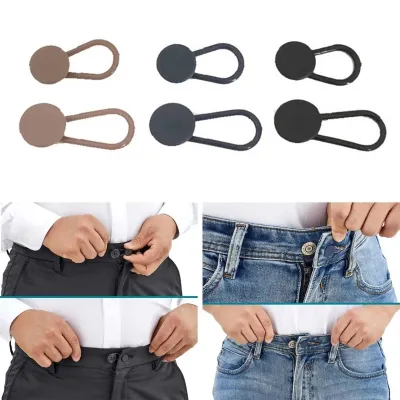
Prices are valid at publication and may change. Please refer to the product page for the latest price.
Next, identify the existing closure mechanism on your skirt. Skirts utilize a wide variety of fasteners, ranging from standard flat plastic buttons and metal shank buttons to hook-and-eye clasps and hidden side zippers. An extension buckle designed for a buttonhole will not function on a skirt that secures with a hook and eye, and attempting to force a mismatch will likely damage both the extender and the garment. Take a close look at how the original fastener is attached. For instance, a shank button—which sits on a small metal or plastic stem—requires a slightly looser, more flexible extender loop than a flat button that is sewn flush against the fabric.
Finally, evaluate the weight and drape of the skirt fabric. Stiff, heavy materials like denim, corduroy, or thick tweed can easily support heavier metal extension buckles without losing their shape. Conversely, lightweight or fluid fabrics such as chiffon, silk, satin, and fine linen are highly sensitive to weight. Attaching a heavy zinc alloy or stainless steel extender to a delicate silk skirt will drag the waistband downward, distorting the silhouette and potentially tearing the fine threads. For these lighter garments, look for lightweight plastic, resin, or fabric-covered extenders that distribute tension evenly without adding unnecessary bulk.
Compare Extension Buckle Types for Different Skirt Closures
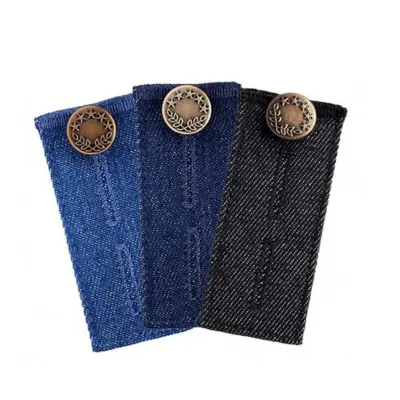
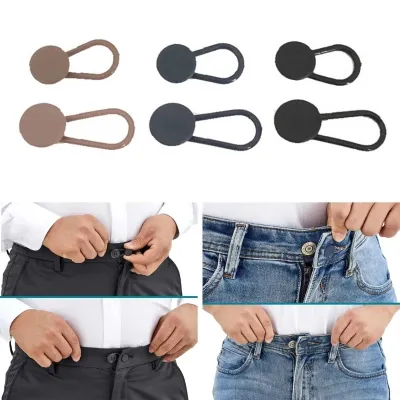
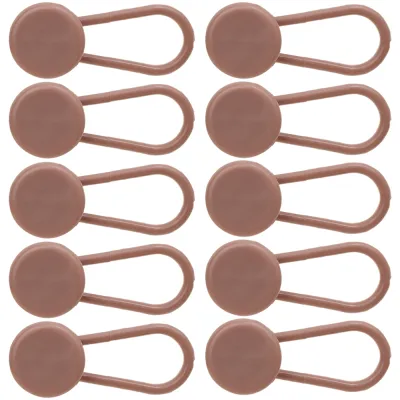
Buttonhole extenders are the most common variety and are generally divided into no-sew loops and sew-on tabs. No-sew loop extenders typically feature a button attached to a flexible loop made of elastic, silicone, or spring metal. You simply slip the loop over your skirt’s existing button and insert the extender’s button into the skirt’s original buttonhole. Elastic and silicone loops offer excellent flexibility, expanding slightly as you sit or bend, which makes them highly comfortable for all-day wear. However, if you prefer a completely rigid, non-stretch hold that mimics the original waistband structure, a sew-on fabric tab extender is a superior choice. These tabs feature multiple buttonholes spaced at regular intervals, allowing you to sew a matching button onto the tab for a permanent, highly secure adjustment.

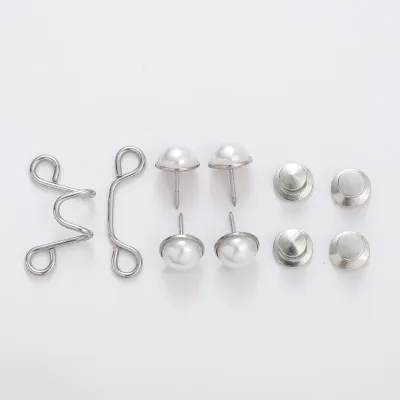
For tailored skirts, pencil skirts, and uniform wear, hook-and-eye extenders are often the most appropriate choice. These closures are common on skirts with clean, buttonless waistbands or side-zipper entries where a visible button would disrupt the clean lines of the garment. Hook-and-eye extenders consist of a small metal bar or hook that attaches to a corresponding eyelet. Many commercial options feature an adjustable track with multiple slots, allowing you to slide the hook into the perfect position for a custom fit. Because these extenders are flat and made of thin metal, they lie completely flush against the waistband, making them virtually invisible under tucked-in blouses or lightweight knitwear.
When dealing with skirts that secure solely with a zipper and have no top button or hook, standard extenders will not work. In these cases, you must look for zipper extension tabs or fabric inserts. A zipper extender typically consists of a small fabric wedge with zipper teeth on either side that zips directly into the existing zipper track, effectively widening the entire upper portion of the skirt. Alternatively, some specialized tabs attach directly to the zipper slider to relieve tension at the very top of the seam. These solutions are highly specialized, so you must verify that the tooth size and zipper type (such as nylon coil vs. metal) match your skirt’s zipper exactly before purchasing.
Evaluate Materials and Comfort for All-Day Wear
Because an extension buckle sits directly against your waistline, material selection is critical for ensuring comfort during prolonged wear. Metal alloys, such as stainless steel or zinc alloy, offer exceptional durability and are virtually impossible to bend or break under normal tension. They are ideal for heavy-duty skirts that experience significant stress at the waist. However, if you have sensitive skin or metal allergies, bare metal hardware can cause irritation or redness. In such cases, look for hypoallergenic materials, plastic resins, or metal extenders that are fully encased in soft fabric or silicone sleeves.
When evaluating any extension buckle, perform a close physical inspection of the hardware’s edges and corners. High-quality extenders feature rounded, polished edges that feel smooth to the touch. Avoid products with sharp, stamped metal edges or rough plastic molding seams. These imperfections can scratch your skin, snag delicate hosiery, or wear down the fabric fibers of your skirt over time through friction. A smooth, well-finished buckle ensures that your clothes remain undamaged and your skin remains comfortable, even during active movement.
Visual discretion is another key factor, especially if you prefer to wear your tops tucked in. If the extender is exposed, it should blend seamlessly with your outfit. Many manufacturers offer multi-packs containing a variety of neutral colors, such as matte black, navy, beige, silver, and transparent options. Fabric-covered extenders are particularly excellent for formal or professional settings, as they mimic the texture of the waistband. If you cannot find an exact color match, choosing a transparent silicone loop or a shade that matches your belt is a reliable way to keep the modification unnoticed.
Build Your Shortlist: Pre-Purchase Fit and Security Checks
Before finalizing your purchase, create a shortlist of potential extension buckles and run them through a series of compatibility checks. First, determine the exact amount of extra space you need. Put on the skirt and measure the gap between the button and the buttonhole, or the two sides of the hook closure, while sitting down comfortably. Most standard extenders provide an additional 2 to 5 centimeters of room. Verify that the extender you are considering offers the precise spacing required; choosing an extender that is too long will cause the waistband to sag and slide down your hips, while one that is too short will fail to relieve the constriction.
Next, assess the tension rating and structural integrity of the attachment mechanism. If you are opting for an elastic or silicone loop, check the thickness of the band. Thin, flimsy elastic loops will quickly stretch out, lose their recovery strength, or snap under the pressure of sitting, bending, or eating. For heavier skirts, look for reinforced elastic or rigid fabric tabs that offer minimal stretch but maximum security. If you are choosing a metal hook-and-eye style, ensure the metal gauge is thick enough to resist bending when tension is applied.
Finally, review the package contents and the seller’s return policy. Because finding the perfect fit often requires a bit of trial and error, spending a few S$ on a multi-pack containing various sizes, colors, and flexibility levels is highly practical. This allows you to test different options across multiple skirts in your wardrobe. Ensure the retailer offers a straightforward return or exchange policy in case the extender’s button size or hook spacing does not align with your garment’s original hardware, saving you from wasting money on unusable accessories.
Frequently Asked Questions (FAQ)
Can I use a pants waistband extender for my skirt?
While the fastening mechanisms on pants and skirt extenders are often identical, you must exercise caution when swapping them. Pants extenders are frequently designed for heavy denim or thick chino fabrics, meaning they are often wider, heavier, and stiffer than what is appropriate for a skirt. Before using a pants extender, measure its base width against your skirt’s waistband. If the extender protrudes past the edges of the skirt’s waistband, it can cause the fabric to distort, buckle, or fold over, which looks untidy and can cause physical discomfort. For lightweight or tailored skirts, it is always best to use an extender specifically designed for delicate haberdashery.
How do I prevent a no-sew button extender from slipping off?
To prevent a no-sew button extender from slipping out of place, you must ensure a proper match between the original button’s diameter and the extender’s loop or buttonhole. If the loop is too large, the button will easily slide out under low tension. When installing the extender, make sure the original button is pushed completely through the loop and sits entirely flat against the fabric to maximize friction. If the loop still feels loose, you can secure it by sliding a small, clear silicone washer or a tiny rubber band over the button after the loop is attached, which acts as a stopper and prevents the loop from sliding off during movement.
Community discussion
Share your experience or ask a question. Comments are reviewed before publication.