
Selecting the correct drawstring cord stopper requires balancing the physical dimensions of your cord with the weight and structure of your fabric. A stopper that is too heavy can drag down lightweight garments, while an undersized toggle will fail to hold thick cords under tension. By matching the mechanical grip of the stopper to your specific project requirements, you ensure both functional reliability and a polished, professional finish.
Assess Your Cord and Fabric Requirements
To achieve a secure hold, begin by measuring the exact diameter of your drawstring cord. Lay the cord flat on a hard surface without stretching it, and use a pair of calipers or a precise ruler to measure the width from edge to edge. If you are using a highly textured or braided cord, measure both the compressed and uncompressed states, as some materials compress significantly when squeezed inside a stopper channel.
Next, evaluate the weight, thickness, and drape of your fabric. Heavyweight fabrics like canvas, denim, or thick fleece require robust cord stoppers that can handle the bulk of thick casings and high-tension cords. Conversely, lightweight fabrics such as silk, nylon ripstop, or thin jersey demand small, lightweight stoppers to prevent the hardware from pulling, sagging, or distorting the shape of the garment.
Products mentioned in this guide
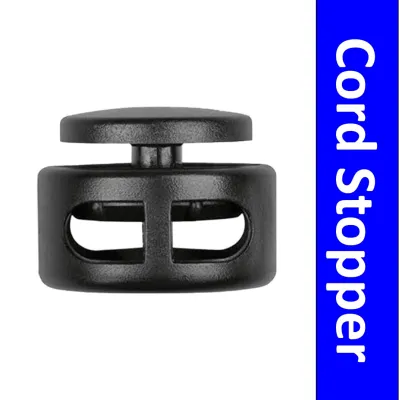
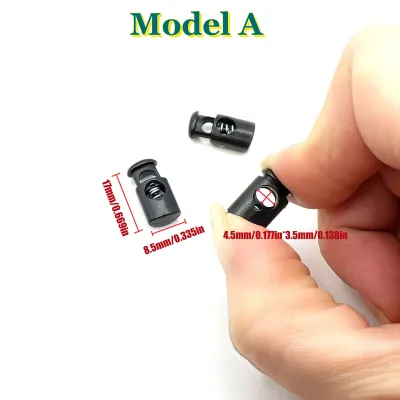
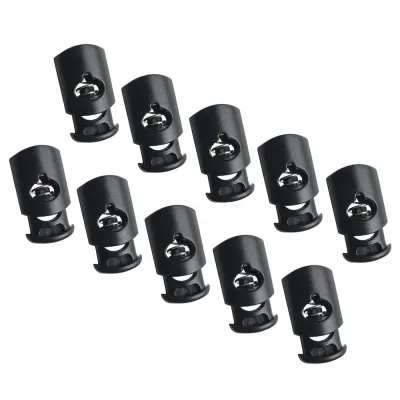
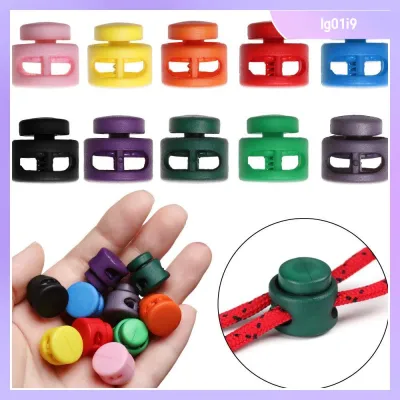
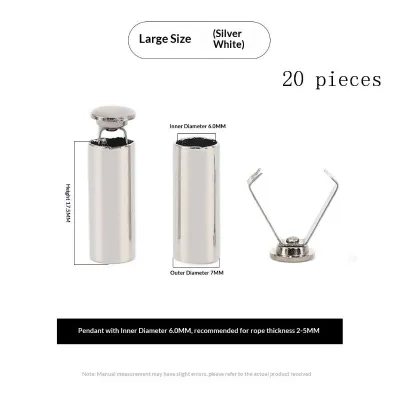
Prices are valid at publication and may change. Please refer to the product page for the latest price.
Finally, consider the intended use and environmental exposure of the finished item. Outdoor gear, activewear, and heavy bags are subjected to constant movement, moisture, and tension, requiring durable plastic or rust-resistant metal stoppers with strong internal springs. Casual wear, pajamas, and decorative pouches focus more on comfort and low-profile aesthetics, where lightweight plastic or simple bead stops are often more appropriate.
Match Cord Stopper Mechanisms to Your Project
The mechanism inside a cord stopper determines how much tension it can hold and how easily it can be adjusted. Spring-loaded toggles are a common choice for high-tension applications, featuring an internal metal or plastic spring that presses a textured plunger against the cord. These are highly effective for securing hoods, waistbands, and gear bags where the cord must remain locked in place under active physical stress.

For lightweight or low-tension designs, barrel, bead, or tube-style stops offer a streamlined alternative. These designs often rely on friction, a simple wedge mechanism, or a manual tie-off rather than a heavy spring, making them significantly less bulky. They work exceptionally well on delicate items like jewelry pouches, lightweight windbreakers, or children’s clothing where a heavy spring-loaded toggle would feel obtrusive.
Specialized designs, such as magnetic or snap-lock options, cater to adaptive clothing and quick-release needs. Magnetic stoppers allow users with limited hand dexterity to secure or release drawstrings with minimal effort, while snap-lock designs click firmly into place for a semi-permanent hold. When selecting these specialized mechanisms, verify that the closure strength matches the physical demands of the project to prevent accidental opening during use.
Verify Sizing, Hole Count, and Compatibility
Before purchasing your hardware, decide whether your design requires a single-hole or a double-hole cord stopper. Single-hole stoppers are ideal when you want to secure a single cord tail or when both ends of a continuous loop are threaded through the same opening. Double-hole stoppers feature two separate channels, keeping the two tails of a drawstring neatly separated and preventing them from twisting or tangling inside the mechanism.
Compare the internal channel diameter of the stopper directly against your measured cord thickness. The channel must be slightly larger than the uncompressed cord to allow for smooth threading, but small enough that the spring mechanism can compress the cord fully to create a secure lock. If the channel is too large, the cord will slip through even when the spring is fully engaged; if it is too small, the cord will jam and resist adjustment.
Additionally, inspect the spring tension and the texture of the internal grip. Smooth plastic channels may struggle to hold slippery synthetic cords, such as round nylon paracord, requiring a stopper with a ribbed or textured internal plunger. For delicate or loosely braided cords, ensure the internal grip does not have sharp plastic flashing or aggressive teeth that could snag, fray, or wear down the fibers over repeated adjustments.
Plan for Fabric Reinforcement and Installation
A cord stopper exerts localized pressure on the fabric casing where the cord exits, making reinforcement essential to prevent tearing. For lightweight, stretchy, or loosely woven fabrics, apply a small square of fusible interfacing to the backside of the fabric before creating the exit point. Installing metal grommets, brass eyelets, or stitching a reinforced buttonhole around the exit point distributes the tension evenly and prevents the fabric from fraying over time.
Carefully plan the width of your drawstring casing and the placement of the exit points. The casing must be wide enough to allow the cord to slide freely without bunching, but snug enough to keep the cord aligned with the exit hole. Ensure the exit point is positioned far enough from seams to allow the cord stopper to sit flat against the fabric when fully tightened, preventing awkward twisting or puckering.
When assembling the drawstring system, use a safety pin or a specialized bodkin to thread the cord through the casing and the stopper. Once threaded, test the tension by sliding the stopper back and forth along the cord to ensure smooth operation. Always secure the raw ends of the cord with a clean overhand knot, a heat-sealed edge for synthetic materials, or a decorative cord end cap to prevent the cord from slipping back through the stopper or casing.
Frequently Asked Questions (FAQ)
Can I use a standard cord stopper on elastic cords?
Yes, but elastic cords require specific considerations because they compress significantly under tension. A standard cord stopper with a smooth internal channel may allow an elastic cord to slip when pulled, as the cord thins out under tension. To prevent this, choose a stopper with a strong internal spring and a textured or ribbed grip channel that can pinch the elastic firmly even when it is stretched thin.
How do I prevent the cord stopper from slipping during use?
If a cord stopper slips, first check if the cord diameter is too small for the stopper’s internal channel. If the sizing is correct, the slip is likely caused by a weak internal spring or a slippery cord texture, such as smooth polyester or nylon. You can resolve this by upgrading to a heavy-duty spring-loaded toggle, replacing the cord with a textured cotton or braided option, or tying a temporary slipknot directly behind the stopper for added security during high-stress activities.
Community discussion
Share your experience or ask a question. Comments are reviewed before publication.