
Finding the perfect courier bag size requires a simple calculation: you must measure your product’s maximum length, width, and thickness, then add a safety margin for seams, protective wrapping, and the adhesive flap. Selecting the right dimensions ensures your items remain secure during transit while keeping your shipping costs as low as possible. By matching your inventory to the correct packaging, you can protect your goods from damage and avoid paying unnecessary volumetric weight surcharges.
Why Courier Bag Sizing Matters for E-Commerce Shipping
Shipping costs are heavily influenced by the physical space a package occupies, not just its actual weight. Logistics providers use a calculation known as dimensional weight to determine shipping fees. If you pack a small, lightweight item in an oversized courier bag, you may end up paying a premium rate based on the volume of the bag rather than the actual weight of the product.
Wasted packaging materials also erode your profit margins over time. Every extra centimeter of plastic or paper represents unnecessary overhead, especially when scaled across hundreds or thousands of monthly shipments. Furthermore, excess void space inside a bag allows items to slide around, increasing the risk of friction damage or punctures during sorting and transit.
Products mentioned in this guide
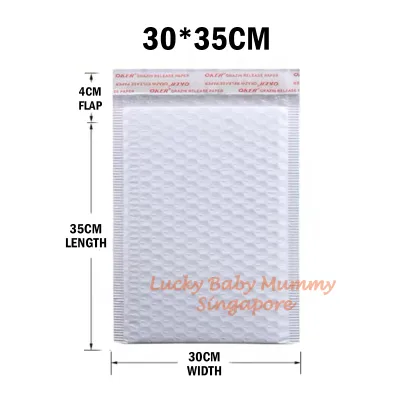
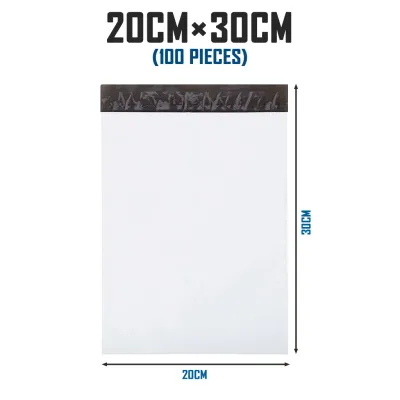
Prices are valid at publication and may change. Please refer to the product page for the latest price.
The unboxing experience plays a vital role in customer satisfaction and brand perception. A crumpled, oversized bag with a tiny item rattling inside looks unprofessional and signals a lack of care. Conversely, a bag stretched to its absolute limit looks messy and is highly susceptible to bursting open before it reaches the customer’s doorstep.
How to Measure Your Products for Shipping Bags
To determine the minimum bag dimensions you need, start by measuring your product at its absolute widest, longest, and thickest points. Do not rely on flat dimensions alone; a product’s depth or thickness will pull the sides of a flat courier bag inward, significantly reducing the available width and length. Use a firm ruler or measuring tape to capture these three dimensions accurately.

Once you have the raw measurements, you can use a standard formula to calculate the minimum flat-lay dimensions required for your courier bag. To find the minimum bag width, add the product’s width to its thickness, then add an extra margin of at least 20 millimeters to account for the side seams. For the minimum bag length, add the product’s length to its thickness, then add another 50 millimeters to accommodate the fold-over adhesive sealing flap.
For example, if you are shipping a rectangular item that is 200 millimeters long, 150 millimeters wide, and 30 millimeters thick, your calculations would look like this:
- Minimum Bag Width = 150 mm (width) + 30 mm (thickness) + 20 mm (margin) = 200 mm
- Minimum Bag Length = 200 mm (length) + 30 mm (thickness) + 50 mm (flap allowance) = 280 mm
Using this formula ensures that the bag can wrap comfortably around the item’s volume without putting excessive tension on the heat-sealed edges.
Matching Bag Sizes to Common Product Categories
Different types of inventory require different packaging strategies based on their physical characteristics. Categorizing your products by their flexibility and rigidity is the most efficient way to streamline your packaging selection process. This classification helps you decide whether a standard lightweight poly mailer is sufficient or if you need a specialized, heavy-duty shipping bag.
Flat and Flexible Items (Apparel, Documents, Stationery)
Soft goods like t-shirts, hoodies, and socks, as well as flat paper products like notebooks and documents, are highly compatible with standard courier bags. Because these items can bend, fold, or compress easily, they naturally conform to the shape of the packaging. This flexibility means you can choose a bag size that is relatively close to the folded dimensions of the product.
When packing apparel, always fold the item neatly to a uniform thickness before measuring. Ensure the bag is wide enough to let the folded garment slide in smoothly without requiring force. Forcing a bulky fabric item into a tight bag can stretch the plastic, weakening the material and making it easier to puncture during handling.
Rigid or Semi-Rigid Items (Books, Cosmetics, Small Electronics)
Items that cannot be compressed, such as hardcover books, boxed cosmetics, or small electronic devices, require strict dimensional limits. Because these products have fixed, hard edges, they do not conform to the bag’s shape. Instead, they push directly against the seams of the packaging, which increases the risk of tearing.
For rigid items, you must choose a courier bag that offers ample clearance, or opt for a bag with expandable side gussets. If the item has sharp corners, standard thin plastic bags may puncture easily; in these cases, look for heavy-duty co-extruded polyethylene bags or padded bubble mailers. If the item is exceptionally heavy or fragile, it is often safer to step up to a rigid corrugated cardboard box rather than relying solely on a flexible bag.
Accounting for Protective Packaging and Void Fill
Many products cannot be shipped safely without an extra layer of protection. If you wrap your items in bubble wrap, foam sheets, or tissue paper, you must factor this added volume into your bag measurements. A layer of standard bubble wrap can easily add 10 to 20 millimeters to both the width and thickness of your product.
Failing to account for this extra padding leads to overstuffing. When a bag is stuffed too tightly, the internal pressure puts constant stress on the heat-sealed side seams and the adhesive closure strip. During transit, packages are stacked and sorted; any external pressure on an overstuffed bag can cause the seams to burst instantly, exposing or losing your products.
If your product requires multiple layers of bubble wrap or heavy void fill to survive transit, you may have reached the threshold where a courier bag is no longer the appropriate packaging medium. Fragile items like glassware, ceramics, or delicate electronics should generally be packed in a rigid box with sufficient cushioning, rather than a flexible mailer.
Common Sizing Mistakes and How to Avoid Them
One of the most frequent mistakes in e-commerce fulfillment is using a courier bag that is too tight. While it might seem like a good way to save money on packaging, tight bags are highly vulnerable to seam failure. If you have to struggle to pull the adhesive flap over the opening, the bag is too small, and the adhesive bond may fail under tension.
Conversely, using an oversized bag is equally problematic. When a small item is placed in a large bag, the excess material folds over itself, creating an untidy package. The item will slide around freely inside, which can damage delicate surfaces. Additionally, major logistics providers in Singapore and globally calculate shipping fees based on the outer dimensions of the package, meaning oversized bags directly increase your shipping costs.
Another common oversight is ignoring the length of the adhesive flap itself. The flap is designed to fold over and seal against the body of the bag, but if the bag is too full, the flap will not align correctly with the adhesive receiving area. This results in an insecure closure that can easily peel open, exposing your contents to dust, rain, or tampering during delivery.
Frequently Asked Questions (FAQ)
Can I use the same courier bag size for all my products?
Standardizing on a single bag size simplifies your packaging inventory and speeds up the packing process, but it is rarely cost-effective if you sell products of varying sizes. Using a single large bag for small items leads to wasted material and higher volumetric shipping fees. A more balanced approach is to select two or three standard bag sizes—such as small, medium, and large—to accommodate your entire product range efficiently.
How do I know if a shipping bag is strong enough for my product?
To evaluate a courier bag’s strength, check the manufacturer’s specifications for material thickness, which is typically measured in microns or mils. For lightweight items like apparel, a thickness of 50 to 60 microns is usually sufficient. For heavier or sharp-edged items, look for bags with a thickness of 75 microns or more, and verify the maximum weight capacity listed on the product specification sheet.
Community discussion
Share your experience or ask a question. Comments are reviewed before publication.