
To choose the right cardboard box size, you must measure the length, width, and height of your items, add a clearance allowance of 5 to 7 centimeters on all sides for protective packaging, and match the total weight to the structural capacity of the box. Selecting the correct dimensions prevents items from shifting during transit while avoiding unnecessary dimensional weight surcharges from shipping couriers. Taking the time to calculate these dimensions accurately ensures your goods arrive safely and cost-effectively.
In a tropical climate like Singapore, where high humidity can weaken paper fibers, selecting the correct box size and material is even more critical. Excess empty space allows humid air to accumulate inside, which softens the cardboard and increases the risk of collapse when stacked. By matching your items to the precise box dimensions, you maintain structural integrity and protect your belongings from both physical impacts and environmental moisture.
Assess Your Items Before Choosing a Box
Before browsing box sizes, group your items by their physical traits to establish a safe packing plan. Mixing heavy, dense objects with fragile items in a single container is a recipe for damage. For example, heavy books or metal tools should be separated from delicate ceramic tableware, glassware, or electronic components. Grouping items by weight and fragility allows you to determine how many boxes you need and what strength level each box must possess.
Products mentioned in this guide
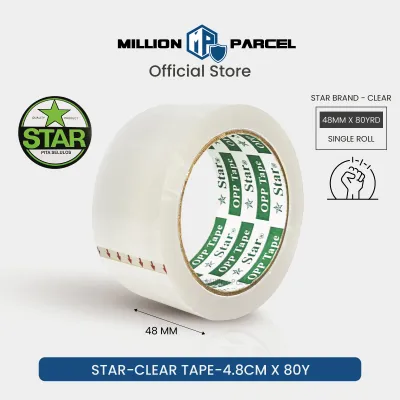
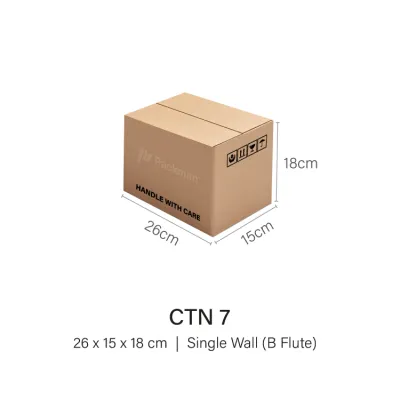
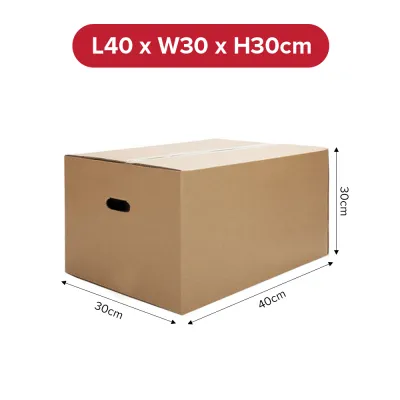
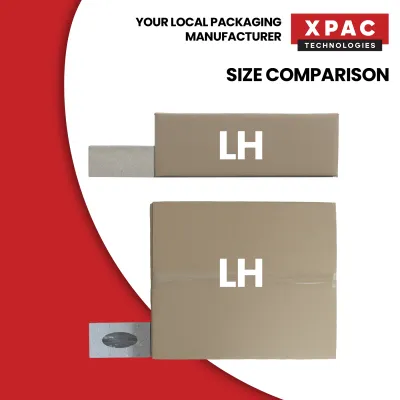
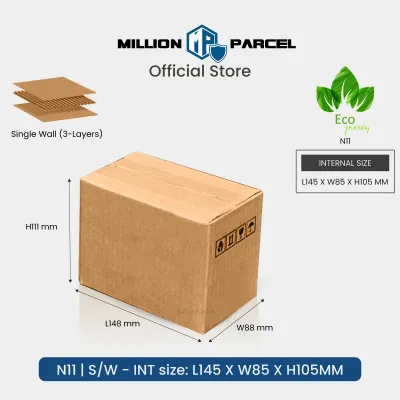
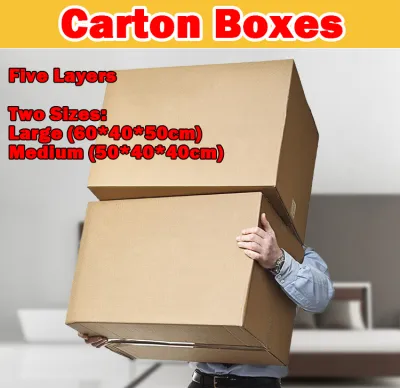
Prices are valid at publication and may change. Please refer to the product page for the latest price.
Estimate or weigh your items to determine the total load before selecting your packaging. Knowing the total weight helps you decide whether you need a standard single-wall carton or a heavy-duty double-wall box. It is helpful to use a simple luggage scale or kitchen scale to get an accurate measurement, ensuring you do not exceed the manufacturer’s recommended weight limit printed on the box.
Decide which items require individual boxing versus those that can be safely grouped together in a single container. High-value electronics, fragile heirlooms, or highly polished surfaces should be wrapped and packed in their own dedicated boxes first. These smaller, individual boxes can then be nested inside a larger shipping carton with sufficient padding between them. Grouping everything into one massive box might seem convenient, but it increases the risk of internal collisions and makes the package extremely difficult to carry.
Evaluate the shape of your items to understand how they will affect the required internal footprint. Regular, rectangular items like books, board games, or folded textiles stack neatly and maximize the available internal space of a standard box. Irregularly shaped items, such as desk lamps, bicycle helmets, or decorative sculptures, leave awkward, empty gaps. These gaps require significant amounts of void fill to prevent movement, meaning you will need a larger box than the item’s basic dimensions might suggest.
How to Measure and Calculate the Ideal Box Dimensions
Measuring your items correctly requires a reliable tape measure, a flat surface, and a systematic approach. Arrange the items exactly as they will sit inside the box, grouping them close together to minimize gaps. Measure the longest point from left to right (length), the front-to-back distance (width), and the bottom-to-top distance (height). Always round up to the nearest half-centimeter to ensure you do not underestimate the required space.

Account for the protective packaging material that must surround your items to prevent transit damage. Fragile items typically require a minimum of 5 to 7 centimeters of cushioning on all six sides, including the top and bottom. For non-fragile items like clothing, plastic goods, or soft furnishings, a smaller clearance of 1 to 2 centimeters is usually sufficient to prevent the box from bulging. Choosing the right cushioning, such as bubble wrap, foam inserts, or crumpled kraft paper, is just as important as choosing the box itself.
Understand the critical difference between internal and external box dimensions before making a purchase. Manufacturers publish external dimensions to help logistics providers calculate shipping space on trucks and planes, but these measurements include the thickness of the cardboard walls and folded flaps. The internal dimensions are always smaller, especially with heavy-duty double-wall or triple-wall corrugated boxes. Always verify the internal dimensions with your supplier to ensure your items will actually fit inside.
Use a straightforward formula to calculate the minimum internal box size you need for your shipment:
- Minimum Internal Length = Item Length + (Cushioning Allowance x 2)
- Minimum Internal Width = Item Width + (Cushioning Allowance x 2)
- Minimum Internal Height = Item Height + (Cushioning Allowance x 2)
Applying this formula ensures you have enough room for both the product and the protective wrapping without forcing the cardboard to stretch, tear, or bulge during transit.
The Risks of Choosing the Wrong Cardboard Box Size
Using an oversized box leads to several structural and financial issues during shipping and storage. When a box has too much empty space, the items inside slide around, increasing the risk of breakage even if they are wrapped in bubble wrap. Furthermore, empty boxes lack internal support, making them highly susceptible to collapsing when stacked under heavier parcels in a delivery vehicle or warehouse.
Excess space also requires an unnecessary amount of void fill, such as packing peanuts, air pillows, or crumpled paper. This waste not only increases your packaging material costs but also inflates the dimensional weight (DIM weight) of your shipment. Many local couriers calculate shipping fees based on the box’s volume rather than its actual weight, meaning an oversized box directly increases your delivery expenses.
Conversely, choosing a box that is too small poses immediate physical risks to your items and the packaging itself. When you force items into a tight space, the cardboard bulges outward, putting immense stress on the taped seams and corners. This lack of clearance leaves zero room for cushioning, meaning any external impact on the box will be directly transferred to your item, resulting in cracks, dents, or punctures.
If you are forced to use a box that is slightly larger than ideal, you can make practical adjustments to secure the load. Pack the empty spaces tightly with dense crumpled paper or biodegradable packing peanuts to eliminate movement entirely. You can also use cardboard edge protectors or corner guards inside the box to reinforce the vertical corners, which prevents the box from collapsing when stacked under heavier packages.
Matching Box Strength and Flute Type to Your Items
Cardboard box size and structural strength are deeply linked, and choosing the right size also means selecting the appropriate wall thickness. Single-wall corrugated boxes, which feature one layer of wavy fluting sandwiched between two flat linerboards, are suitable for lightweight items up to 10 kilograms. For heavier loads, moving house, or international shipping, double-wall corrugated boxes provide the necessary puncture resistance and stacking strength.
The thickness and density of the wavy middle layer, known as the flute profile, determine the box’s performance and internal space. B-flute cardboard is relatively thin (around 3 millimeters), offering excellent puncture resistance and a smooth surface, making it ideal for retail packaging and small items. C-flute cardboard is thicker (around 4 millimeters), providing better cushioning and vertical stacking strength for general shipping. BC-flute combines both types into a heavy-duty double-wall structure for heavy appliances or industrial goods.
Look for a Box Maker’s Certificate (BMC) printed on the bottom flap of high-quality shipping cartons to verify their capacity. This circular stamp displays key performance metrics, such as the Edge Crush Test (ECT) rating or the Bursting Test rating. A higher ECT rating (such as 32 ECT for single-wall or 48 ECT for double-wall) indicates that the box can withstand significant vertical pressure, which is crucial for stacking during transit.
Remember that as a box’s surface area increases, its walls become more flexible and prone to bending. A large box requires thicker cardboard or internal reinforcement to maintain its shape under load compared to a small box of the same material. Always match the structural rating of the box to both the weight of the contents and the physical dimensions of the carton to ensure safe transport.
Standard Cardboard Box Sizes and When to Use Them
Standard cardboard boxes are categorized into small, medium, large, and specialty sizes to simplify the packing process. Utilizing these standard dimensions is highly cost-effective, as they are readily available from local packaging suppliers and fit perfectly onto standard shipping pallets.
Small boxes (typically around 30 x 20 x 20 centimeters) are best reserved for heavy, dense objects. Packing books, hand tools, or small electronic components into a small box keeps the overall weight manageable for lifting and prevents the bottom of the box from tearing.
Medium boxes (approximately 45 x 45 x 40 centimeters) serve as the workhorses of shipping and moving. They are highly versatile and ideal for packing mixed household items, shoes, kitchen utensils, and toys. Their balanced dimensions make them easy to carry while providing enough space for adequate bubble wrap protection.
Large and extra-large boxes (measuring 60 x 60 x 60 centimeters or larger) are designed strictly for lightweight, bulky items. Use these massive cartons for pillows, winter coats, bedding, or large plush toys. Never fill a large box with heavy items like books, as the box will become structurally unstable, extremely difficult to lift, and highly likely to break open.
Specialty boxes offer tailored protection for items with unique dimensions. Wardrobe boxes feature a metal hanging bar for clothing, allowing you to transfer garments directly from the closet without folding. Flat mailers protect documents and books from bending, while long telescope boxes adjust in length to fit narrow items like golf clubs, posters, or umbrellas.
Frequently Asked Questions (FAQ)
How much extra space should I leave inside a cardboard box for fragile items?
For fragile items like glassware, ceramics, or delicate electronics, you should leave a minimum clearance of 5 to 7 centimeters (about 2 to 3 inches) on all sides of the box. This space must be filled completely with shock-absorbing materials like bubble wrap, foam inserts, or dense paper to prevent the item from shifting and to cushion it against external impacts.
Can I cut down a cardboard box that is too large?
Yes, you can modify a box by cutting down its corners to the desired height. Use a utility knife and a metal ruler to score a horizontal line along the inside walls, then cut the four vertical corners down to that line. Fold the new flaps along the scored line to create a custom-fit box, ensuring you wear protective gloves and work on a stable surface to avoid injury.
Does the size of the cardboard box affect shipping costs?
Yes, most logistics providers and courier services use dimensional weight (DIM weight) to calculate shipping fees. DIM weight is calculated by multiplying the box’s length, width, and height and dividing by a standard courier factor. If your box is unnecessarily large, you will be charged based on its volume rather than its actual weight, leading to higher shipping costs.
Community discussion
Share your experience or ask a question. Comments are reviewed before publication.