
Finding yourself with a loose or missing button on your favorite pair of pants is a common frustration. Whether you are repairing a beloved pair of jeans, upgrading the hardware on formal trousers, or tailoring casual chinos, selecting the right button is crucial for both functionality and style. The correct choice ensures your pants stay securely fastened, lie flat against your body, and withstand the wear and tear of daily movement and frequent laundering.
Understanding the Main Types of Pant Buttons
Flat buttons, also known as sew-through buttons, are the most common fasteners found on lightweight to medium-weight trousers. They typically feature either two or four holes drilled directly through the center. Four-hole configurations are generally preferred for pants because they allow for a cross-stitch pattern that distributes tension more evenly across the fabric, reducing the risk of the thread snapping under pressure.
Shank buttons present a completely smooth front face because their attachment point is a small loop, or shank, protruding from the back. This design is highly functional for thicker fabrics. The shank acts as a built-in spacer, allowing the buttoned fabric to sit comfortably beneath the button head without pulling, puckering, or straining the waistband.
Products mentioned in this guide
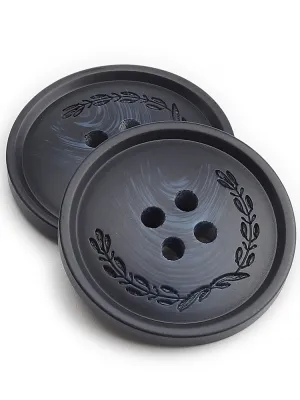
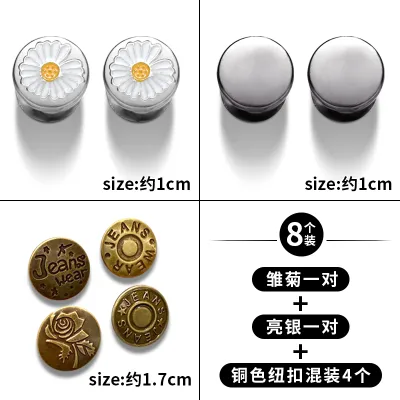
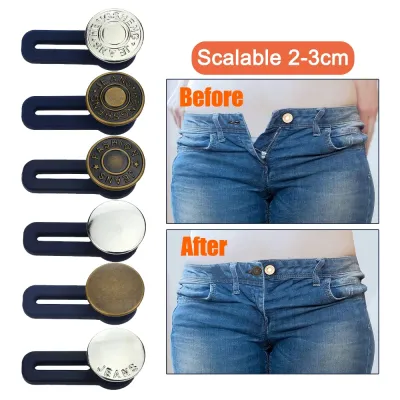
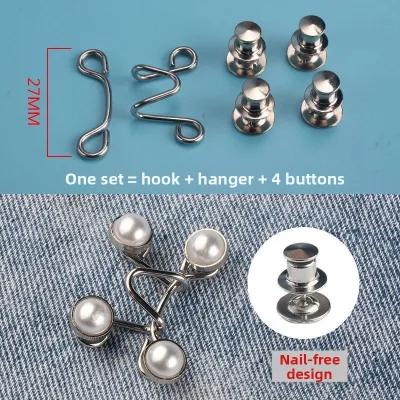
Prices are valid at publication and may change. Please refer to the product page for the latest price.
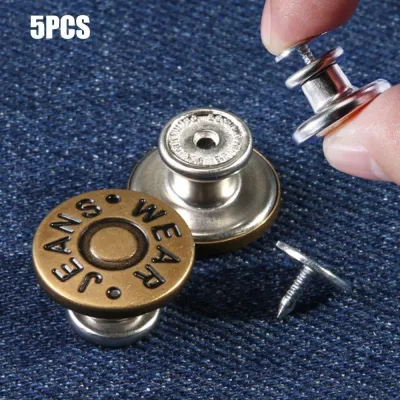
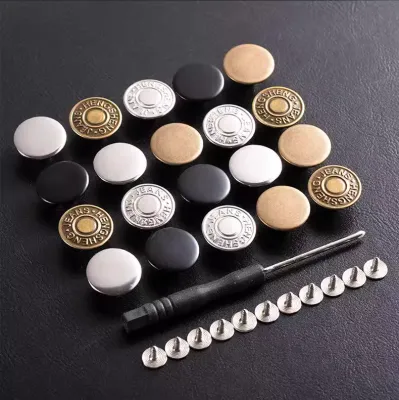
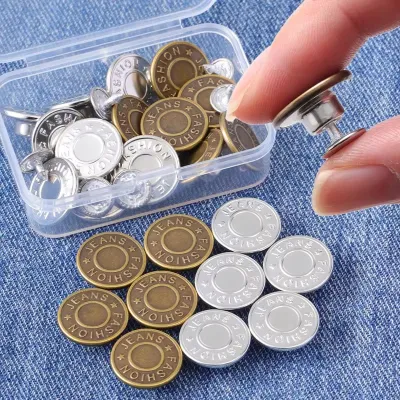
Jeans buttons, often called tack buttons, are two-part metal fasteners engineered specifically for heavy-duty denim. Unlike sew-on buttons, they do not use thread. Instead, a sharp metal tack is pushed through the back of the fabric and secured permanently into the hollow post of the button head. This mechanical lock is incredibly strong and designed to withstand the immense lateral tension of a tight denim waistband.
Snap fasteners, or press studs, consist of interlocking male and female metal or plastic components that click together. While less common as the primary waistband closure on formal trousers, they are frequently used for hidden closures, pocket flaps on cargo pants, or quick-release waistbands on activewear and travel trousers.
Matching Buttons to Specific Pant Styles
Jeans and heavy denim garments demand tack buttons. Denim is a dense, tightly woven fabric that is often layered multiple times at the waistband seams. Sewing a traditional flat button onto a denim waistband with standard thread is rarely successful; the sharp edges of the thick fabric layers and the high tension of daily wear will quickly saw through the thread. A metal tack button bypasses this issue entirely by clamping the fabric layers securely between two metal plates.

Dress trousers and suit pants require a refined, low-profile finish. For these garments, flat buttons or very low-profile shank buttons are the standard. They allow the waistband to lie completely flat, preventing any unsightly bulges under a belt or a tailored suit jacket. Many high-end trousers feature a hidden tab closure on the inside waistband, which utilizes a flat button to secure the under-lap, keeping the exterior silhouette perfectly smooth.
Casual pants, such as chinos, corduroys, and cargo pants, offer more flexibility. Chinos typically look best with flat resin or plastic buttons that match or subtly contrast with the fabric color. Cargo pants, which lean into a utilitarian aesthetic, often utilize durable flat buttons sewn with heavy-duty thread, or metal snap fasteners on pocket flaps to keep belongings secure.
The placement of the closure also dictates the button type and size. The main waistband closure bears the brunt of the physical stress when you sit, bend, or move, requiring a larger, more robust button. In contrast, fly closures are hidden behind a protective fabric placket and experience far less direct tension. Consequently, fly buttons are smaller and flatter to ensure they do not create a bulky ridge along the front of the pants.
Sizing and Material Considerations for Pant Buttons
When purchasing replacement buttons, understanding standard sizing is essential. Button sizes are often measured in “Lignes” (denoted by ‘L’), a traditional unit where 40L equals 1 inch (approximately 25.4 millimeters). For most adult pants, waistband buttons typically range from 24L (about 15mm) to 30L (about 19mm). Fly buttons are smaller, usually falling between 18L (about 11.5mm) and 22L (about 14mm).
Material selection directly impacts both the durability of the button and how you care for the garment. Metal buttons, such as brass, copper, or stainless steel, are incredibly durable but must be rust-resistant, particularly in Singapore’s hot and humid climate where garments are washed frequently. Natural materials like horn or corozo (derived from tagua nuts) offer a beautiful, unique grain pattern ideal for high-end dress trousers, though they may require gentler laundering. Resin and high-grade plastic buttons are highly practical, offering excellent resistance to the high heat of steam irons and the chemical exposure of dry cleaning.
Before finalizing your purchase, always verify the size of the existing buttonhole. A replacement button must pass through the buttonhole smoothly without requiring excessive force, which would wear out the stitching over time. Conversely, if the button is too small, it will repeatedly slip out of the buttonhole during movement. A good rule of thumb is that the button diameter should be slightly smaller than the length of the buttonhole slit, taking into account the thickness of the button itself.
Evaluating Installation Requirements Before Purchasing
Attaching flat or shank buttons is a straightforward task that requires only basic hand-sewing skills, a hand needle, and appropriate thread. For pants, standard sewing thread is often too weak; instead, opt for heavy-duty polyester topstitching thread or buttonhole twist. To increase the lifespan of the repair, you can run the thread through a block of beeswax before sewing, which coats the fibers and reduces friction against the fabric edges.
Installing jeans buttons requires a completely different set of tools. Because these are mechanical fasteners, you cannot sew them on. You will need a hammer, a solid, flat surface (such as a metal anvil, a heavy wooden block, or a concrete floor protected by a scrap piece of wood), and ideally a specialized setting tool to keep the tack aligned. If you do not own these tools, purchasing a simple, all-in-one jeans button replacement kit (often costing around S$5 to S$10) that includes a disposable setting tool is highly recommended.
In some cases, the fabric around a lost button may be severely torn or frayed, especially on well-worn denim or delicate trouser fabrics. Simply attaching a new button to damaged fabric will result in it pulling through again almost immediately. If the waistband is structurally compromised, you will need to patch and reinforce the area with a small piece of interfacing or scrap fabric before installing the new button. If you are dealing with expensive suit trousers or lack the tools for heavy-duty repairs, consulting a professional tailor in Singapore is a wise choice to ensure a seamless, durable finish.
Frequently Asked Questions (FAQ)
Can I replace a metal jeans button with a regular sew-on button?
While it is technically possible to sew a regular button onto jeans as an emergency measure, it is rarely a viable long-term solution. The primary risk is that the sharp, heavy edges of denim waistband seams will quickly wear down and cut through standard sewing thread under the high tension of daily wear. Additionally, a standard flat button sits flush against the fabric, which does not accommodate the bulk of a double-layered denim waistband, causing the fabric to pucker awkwardly. If you must use a sew-on button, choose a heavy-duty metal or plastic shank button and sew it with thick, waxed upholstery thread to create a temporary spacer until you can install a proper tack button.
How do I measure the correct button size for an existing buttonhole?
To find the perfect button size when the original button is missing, start by measuring the length of the buttonhole slit with a precise ruler. Lay the waistband flat and measure the opening from one stitched end to the other. As a general guideline, the ideal button diameter should be approximately 2mm to 3mm smaller than the flat length of the buttonhole slit. However, you must also consider the thickness of the button; a very thick dome or shank button will require a slightly larger opening than an ultra-thin flat button. You can test the fit by sliding a coin or a spare button of a known diameter through the slit to observe how smoothly it passes without stretching the threads.
Community discussion
Share your experience or ask a question. Comments are reviewed before publication.