
Choosing the right bubble wrap is the difference between an item arriving intact or in pieces. To protect your belongings during a relocation or shipping transit, you must match the bubble diameter to the item’s shape and fragility, and the plastic thickness (measured in mils) to the item’s weight and sharpness. Selecting the wrong combination can lead to popped bubbles, punctured plastic, or inadequate cushioning.
Understanding Bubble Wrap Specifications: Diameter vs. Thickness
To make an informed decision, it is essential to understand that bubble wrap is defined by two distinct and independent specifications: bubble diameter and plastic thickness. Many people mistakenly assume that larger bubbles are made of stronger, thicker plastic, but this is a misconception. A large bubble can be made of very thin, easily popped plastic, while a small bubble can be constructed from a heavy-duty, puncture-resistant film.
Bubble diameter refers to the physical size of the air pockets, typically ranging from 3/16 inch (about 4.8 mm) to 1 inch (about 25.4 mm) or more. This dimension determines the cushioning depth and shock absorption capacity. Larger bubbles contain more air, creating a thicker physical barrier that absorbs high-impact shocks during transit. They are designed to keep heavy or bulky items from bottoming out against the outer box walls when dropped or shaken.
Products mentioned in this guide
![91m/20m/10m BubbLest™ [FREE PENKNIFE] Bubble Packaging Material Direct Singapore Manufacturer | Clingwrap | Plasticwrap | Cling Wrap | Plastic Wrap | Bubble Roll |](https://img.lazcdn.com/g/p/118908581c7285d2410f3d4422311ca0.png_400x400q80.png_.webp)
Prices are valid at publication and may change. Please refer to the product page for the latest price.
Plastic thickness, on the other hand, is measured in mils (one mil is equal to one-thousandth of an inch). This specification determines the tensile strength, puncture resistance, and weight-bearing capacity of the wrap. A higher mil rating means the plastic film is tougher and less likely to tear when stretched over sharp corners or compressed under heavy loads. Understanding this distinction allows you to select a wrap that addresses the specific vulnerabilities of your items, whether they are fragile and light or heavy and sharp.
Matching Bubble Diameter to Your Items
Selecting the correct bubble diameter depends primarily on the physical size, weight, and surface geometry of the object you are packing. Using the wrong size can either leave delicate items under-protected or make the package unnecessarily bulky and difficult to seal.

Small Bubbles (Typically 3/16 to 1/4 Inch)
Small bubble wrap, featuring air pockets with a diameter of 3/16 inch to 1/4 inch, is the most versatile option for lightweight and highly delicate items. These small air pockets are ideal for wrapping items with intricate details, sharp curves, or complex shapes, such as glassware, small ceramic figurines, porcelain teacups, and cosmetic bottles.
Because the bubbles are small and closely spaced, the plastic film is highly flexible. This flexibility allows you to wrap the material tightly around the contours of an object, ensuring complete surface contact. A snug wrap prevents individual items from shifting or rubbing against each other inside the box, which is particularly important for delicate items packed in multiples. Additionally, small bubble wrap provides excellent surface scratch protection without adding excessive bulk, making it easy to fit wrapped items into standard-sized shipping boxes.
However, small bubbles have distinct performance limitations. Because the air pockets are shallow, they offer minimal cushioning depth. If a heavy object wrapped in small bubble wrap is dropped, the force of the impact can easily compress the tiny bubbles completely, causing the item to strike the hard outer packaging. Therefore, small bubbles should be reserved for lighter items or used as an inner protective layer combined with larger cushioning materials.
Medium to Large Bubbles (Typically 1/2 to 1 Inch)
When dealing with larger, heavier, or less intricately shaped items, stepping up to medium (1/2 inch) or large (1 inch) bubble wrap is necessary. These larger air pockets provide the deep cushioning required to absorb significant kinetic energy during rough handling, sorting, or transit.
The primary application for medium and large bubble wrap is protecting heavier household goods, such as small appliances, electronics, large framed artwork, and bulky kitchenware. Beyond direct wrapping, large bubble wrap is highly effective as a void-fill material. When shipping items in oversized boxes, placing sheets of large bubble wrap in the empty spaces prevents the contents from sliding around, which is a leading cause of damage during transit.
Despite their superior shock absorption, large bubbles are not a universal solution and can be counterproductive for small, highly fragile items. Because the air pockets are large, the wrap is stiff and cannot conform closely to small or detailed surfaces. This lack of contact leaves delicate edges, handles, or protrusions completely unsupported and vulnerable to snapping. For these items, large bubbles fail to provide the continuous, uniform pressure needed to keep them secure.
Selecting the Right Thickness (Mil) for Protection
While bubble diameter dictates the cushioning depth, the thickness of the plastic film—measured in mils—determines how well the wrap resists popping, tearing, and puncturing under pressure. Matching the mil thickness to your item’s weight and physical characteristics is crucial for ensuring the wrap remains intact throughout its journey.
Bubble wrap is generally categorized into three thickness tiers:
- Light-Duty (approx. 1.0 to 1.2 mils): This is the standard, economical option found in most retail stationery shops. It is designed for lightweight, non-sharp items like books, plush toys, and plastic goods. It provides basic scratch protection and light cushioning but can pop easily under heavy loads.
- Medium-Duty (approx. 1.5 to 2.0 mils): Suitable for everyday household moves and standard shipping of moderately heavy items. This thickness offers a balanced blend of flexibility and puncture resistance, making it ideal for ceramics, glass bottles, and small electronics.
- Heavy-Duty (2.5 mils and above): Engineered for dense, heavy, or sharp-edged objects. Heavy-duty wrap is essential for tools, metal parts, heavy machinery components, and long-distance freight where packages are stacked and subjected to prolonged vibration.
Using a higher mil thickness prevents the air pockets from bursting when subjected to the weight of heavy items. When a heavy object is stacked under other boxes, a thin plastic film will slowly leak air or pop under the sustained pressure, rendering the cushioning useless. Furthermore, items with sharp corners, such as metal frames or industrial parts, will easily slice through light-duty plastic. A thick, heavy-duty mil rating acts as a tough barrier that resists punctures, keeping the air trapped inside the bubbles where it belongs.
When purchasing bubble wrap, it is important to check the manufacturer’s technical specifications on the packaging or product sheet. Visual inspection or a simple touch test cannot accurately distinguish between a 1.2-mil and a 1.5-mil film, yet this difference significantly impacts performance. Keep in mind the practical trade-offs: thicker bubble wrap is more expensive, adds slightly more weight to your shipment, and requires significantly more storage space. Therefore, reserve high-mil wraps for items that genuinely present a puncture or high-weight risk.
Specialized Bubble Wrap for Specific Needs
Standard clear bubble wrap is suitable for most household items, but certain specialized goods require unique materials to prevent damage that standard plastic cannot protect against.
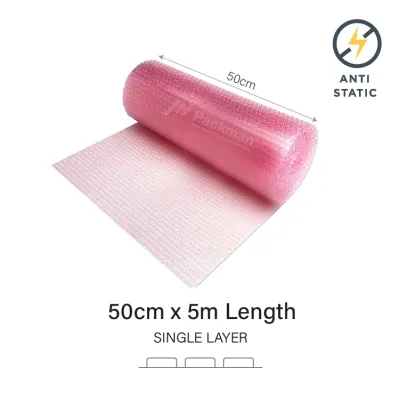
Anti-Static Bubble Wrap When packing or shipping sensitive electronic components, standard plastic bubble wrap poses a significant risk. The friction generated by plastic rubbing against itself or other surfaces during transit easily generates static electricity. This electrostatic discharge (ESD) can instantly destroy internal circuits, microchips, and motherboards without leaving any visible external damage. To prevent this, you should use anti-static bubble wrap. This material is treated with an antistatic agent that prevents the buildup of static charges. It is universally tinted pink for easy identification, allowing warehouse workers and packers to quickly verify that sensitive electronics are properly protected.
Surface Protection Considerations Another common mistake is wrapping polished wood, leather, painted surfaces, or delicate finishes directly in standard plastic bubble wrap. Over time, especially in warm or humid climates like Singapore, the plastic can react chemically with the wood varnishes or paint solvents. This reaction can leave permanent, unsightly circular imprints on the surface of the furniture or artwork. Additionally, trapped moisture can cause wood to warp or finishes to cloud. To protect these delicate surfaces, always apply a soft, breathable barrier layer—such as unprinted packing paper, acid-free tissue, or thin polyethylene foam—directly onto the item before wrapping it in bubble wrap. This ensures the plastic never makes direct contact with the sensitive finish.
Quick Reference Guide for Common Items
To simplify your packing process, use the table below to quickly identify the recommended bubble wrap specifications for common household and shipping items.
| Item Category | Recommended Bubble Size | Recommended Thickness | Special Notes |
|---|---|---|---|
| Glassware & Dishes | Small (3/16 to 1/4 Inch) | Medium-Duty (1.5 – 2.0 mil) | Wrap each piece individually; stack plates vertically in the box. |
| Books & Textbooks | Medium (1/2 Inch) | Light-Duty (1.0 – 1.2 mil) | Focus on wrapping the corners; do not overpack boxes to keep weight manageable. |
| Heavy Tools & Metal Parts | Large (1/2 to 1 Inch) | Heavy-Duty (2.5 mil+) | Use heavy-duty plastic to prevent sharp metal edges from puncturing the bubbles. |
| Laptops & Electronics | Small or Medium | Medium-Duty (1.5 – 2.0 mil) | Must use pink anti-static wrap; add a foam or paper barrier for polished surfaces. |
Frequently Asked Questions (FAQ)
Does the color of the bubble wrap affect its protective quality?
For standard packaging needs, the color of the bubble wrap does not affect its performance. Clear, green, blue, or red bubble wraps offer identical cushioning and puncture resistance, provided they share the same bubble diameter and mil thickness. These colors are typically used for branding, aesthetic preferences, or inventory sorting in warehouses. The only functional color exception is pink bubble wrap, which specifically designates anti-static properties essential for protecting electronic components.
Should I use perforated or unperforated bubble wrap?
The choice between perforated and unperforated bubble wrap depends entirely on your packing workflow, as perforation has no impact on the protective quality of the plastic. Perforated rolls feature pre-cut tear lines, typically every 12 inches, allowing you to tear off sheets quickly without tools. This is highly efficient for packing uniform, small-to-medium items in high volumes. Unperforated rolls require scissors or a utility knife to cut, but they offer complete flexibility. They are ideal for wrapping large, irregularly shaped items or creating custom-sized cushioning pads, ensuring you only use the exact amount of material needed without waste.
Community discussion
Share your experience or ask a question. Comments are reviewed before publication.