
To find the right bubble wrap envelope size for your item, you must measure the item’s length, width, and thickness, then compare these dimensions to the envelope’s internal usable space rather than its listed external dimensions. A common mistake is buying an envelope that matches the item’s flat dimensions, only to find the internal bubble lining and the item’s thickness prevent it from fitting. By calculating the required clearance and rounding up to the nearest standard size, you can ensure your items arrive safely without stretching or tearing the packaging.
Understanding Outer vs. Inner Dimensions
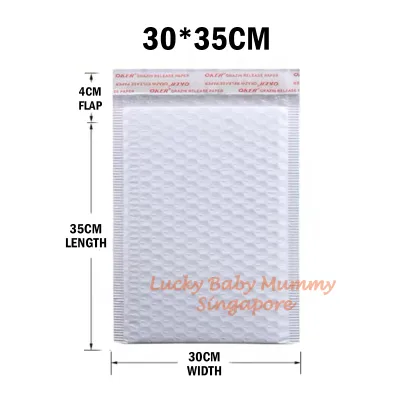
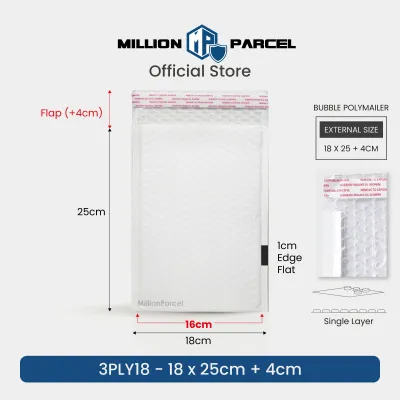
When browsing shipping supplies, the dimensions printed on the packaging or listed on ecommerce platforms are almost always the outer dimensions. These measurements represent the exterior edges of the envelope, from seam to seam, including the flat borders. They do not represent the actual space available for your item.
The internal usable space is smaller due to several manufacturing factors. The side seams and bottom seals consume several millimeters on each edge, while the thick bubble lining laminated to the inside walls physically reduces the interior volume. Finally, the top opening requires a folding flap that reduces the usable length.
Products mentioned in this guide
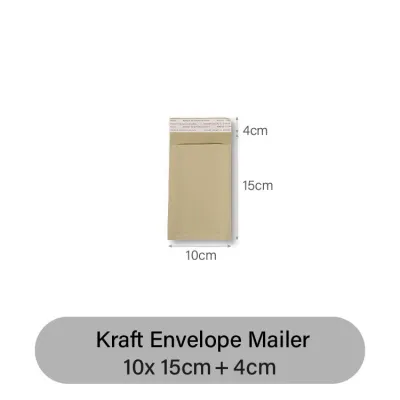
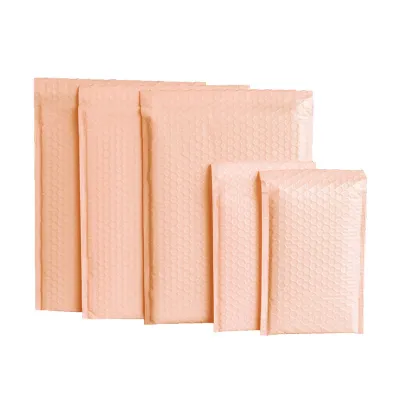
Prices are valid at publication and may change. Please refer to the product page for the latest price.
Before purchasing envelopes in bulk, always look for the manufacturer’s specified ‘inner dimensions’ or ‘usable dimensions.’ If these are not clearly labeled, order a small sample pack first. Measuring a physical sample yourself is the most reliable way to verify that your inventory will fit comfortably inside the padded lining.
How to Measure Your Item Accurately
Determining the correct envelope size begins with precise physical measurements of the item you plan to ship. Use a standard ruler or measuring tape to capture three critical dimensions: length, width, and thickness. Always measure at the absolute widest, longest, and thickest points of the object to avoid tight fits.

For rigid, flat items like books or small electronics, measurement is straightforward. Place the item flat on a table and measure the maximum length and width, then measure the vertical height to find the thickness. Even a slight curve or raised button on an electronic device must be included in this measurement.
Flexible or irregularly shaped items, such as folded apparel or bundled cosmetics, require a different approach. These items can shift, compress, or expand during handling. When measuring soft goods, avoid pressing them completely flat; instead, measure them in their natural, relaxed state to account for the maximum volume they occupy.
Adding a small physical buffer of about five to ten millimeters to your final measurements is highly recommended. This extra margin accounts for minor manufacturing variances in the envelopes and prevents the seams from splitting if the item shifts during transit.
Calculating the Required Envelope Size
Once you have the exact dimensions of your item, you can calculate the minimum internal dimensions your bubble wrap envelope must have. The calculation must account for how the item’s thickness pulls the front and back walls of the envelope together, reducing the available width and length.
To find the minimum required internal width of the envelope, add the item’s width to its thickness, then add a small clearance buffer. For example, if your item is 150 millimeters wide and 20 millimeters thick, the envelope’s internal width must be at least 170 millimeters, plus a few millimeters of wiggle room to prevent tearing.
To find the minimum required internal length, apply the same logic: add the item’s length to its thickness. The envelope’s internal length must accommodate this total comfortably below the opening line. Remember that the self-adhesive strip sits on a folding flap, which must fold over completely to seal without tension.
If your calculations place your item right on the boundary between two envelope sizes, always round up to the next available standard size. A slightly loose fit is easily managed by folding over the excess envelope material, whereas a tight fit risks bursting the seams or popping the internal bubbles during transport.
Matching Your Item to Standard Envelope Sizes
Standard bubble wrap envelopes are generally grouped into broad size categories, ranging from small pouches to large mailers. Small sizes are ideal for flat accessories or individual cosmetic items. Medium sizes typically accommodate paperback books or standard documents, while large sizes are designed for clothing, multiple items, or larger flat goods.
However, you should never rely solely on generic labels like ‘A4,’ ‘A5,’ or arbitrary size numbers, as these designations vary significantly between different manufacturers. An ‘A5’ mailer from one supplier might have different seam allowances than one from another. Always cross-reference these generic names with the actual internal millimeter measurements.
There are also limits to what a padded envelope can safely carry. If your item is exceptionally thick, has sharp corners, or is heavy, a bubble wrap envelope may not offer sufficient structural support. In these cases, abandon padded mailers in favor of rigid corrugated boxes, which provide better crush resistance and allow you to use custom void fill.
Frequently Asked Questions (FAQ)
Can I use a bubble wrap envelope for heavy or highly fragile items?
Bubble wrap envelopes are designed primarily for lightweight, semi-durable, or non-crushable items that only require surface scratch protection and minor impact cushioning. They do not provide structural rigidity, meaning they cannot protect fragile items from being crushed under heavier packages during transit.
If you are shipping heavy items, the weight can cause the seams of a padded envelope to burst under impact. For highly fragile goods like glassware or delicate electronics, it is best to use a sturdy corrugated box with loose-fill packaging materials to ensure safe delivery.
How do I seal a bubble wrap envelope securely without tearing it?
To seal a bubble wrap envelope securely, first ensure that the adhesive area and the mating surface on the body of the envelope are completely clean, dry, and free of dust. Peel off the protective backing strip and fold the flap down firmly, pressing from the center outward to eliminate air bubbles and ensure full contact.
If you are shipping heavier items or want extra security against moisture, you can reinforce the sealed flap with standard packaging tape. Apply the tape across the seam of the flap, ensuring it adheres to the outer paper or plastic film of the envelope rather than the internal bubble lining.
Community discussion
Share your experience or ask a question. Comments are reviewed before publication.