
Choosing the right air bubble wrap requires matching the bubble size, plastic thickness, and roll width to the weight, fragility, and surface finish of the items you are packing. Using the wrong specifications can lead to damaged goods, inflated shipping costs, and unnecessary material waste. Whether you are preparing for a residential relocation, running an e-commerce business, or shipping high-value items internationally, understanding these technical variables ensures your cargo arrives intact.
In Singapore’s bustling logistics landscape, packages endure significant handling across sorting facilities and delivery networks. Selecting the appropriate protective packaging is not just about wrapping items tightly; it is about engineering a buffer that absorbs shocks, resists punctures, and withstands tropical humidity. By analyzing the physical properties of your items, you can easily determine the exact grade of bubble wrap required for optimal protection.
Quick Match: Which Air Bubble Wrap Fits Your Items?
Matching your packaging material to the specific fragility and weight of an item prevents both under-protecting and over-packaging. Lightweight, delicate items require different cushioning mechanics than heavy, industrial components. Before purchasing bulk packaging supplies, evaluating your inventory against a standardized framework saves time and reduces product return rates.
Products mentioned in this guide
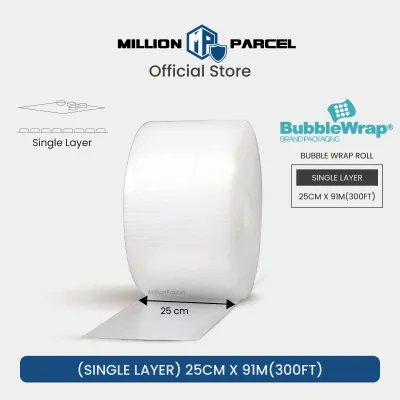
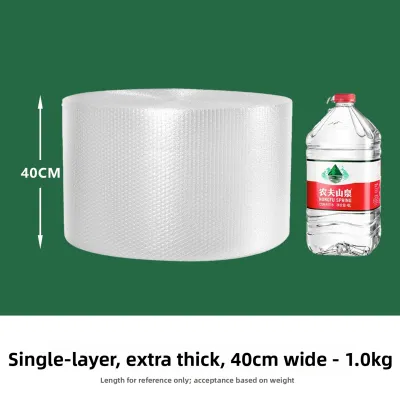
Prices are valid at publication and may change. Please refer to the product page for the latest price.
The table below provides a direct reference guide matching common item categories to their ideal bubble specifications and wrapping techniques:
| Item Category | Recommended Bubble Size | Recommended Thickness/Ply | Wrapping Technique |
|---|---|---|---|
| Glassware, Ceramics & Porcelain | Small (3/16" or 1/4") | Standard Single-Layer | 2 to 3 layers, fully taped |
| Consumer Electronics & Parts | Small (3/16" or 1/4") | Anti-Static Standard | 2 layers, sealed edges |
| Heavy Furniture & Appliances | Large (1/2" or 1") | Heavy-Duty Multi-Layer | Corner wrapping, 3+ layers |
| Books, Documents & Media | Small (3/16") | Light Single-Layer | 1 to 2 layers, flat wrap |
| Framed Artwork & Mirrors | Large (1/2") | Heavy-Duty Double-Layer | Edge protectors, 3 layers |
| Cosmetics & Small Perfume Bottles | Small (3/16") | Standard Single-Layer | 2 layers, secure end-caps |
While this table serves as a highly reliable baseline, always check the manufacturer’s packaging guidelines for highly sensitive, calibrated, or exceptionally expensive equipment before finalizing your material choice. Specialized instruments may require custom molded foam or specific vibration-dampening materials that go beyond standard bubble wrap capabilities.
Decoding Bubble Sizes: Small vs. Large Bubbles
The diameter and height of the air pockets determine how much impact energy the wrap can absorb. Using the incorrect bubble size often results in the bubbles bottoming out under pressure, transferring the shock directly to the wrapped item.

Small Bubbles (e.g., 3/16-inch or 1/4-inch)
Small air bubbles, typically measuring 3/16-inch (approx. 4.8mm) or 1/4-inch (approx. 6.4mm) in diameter, are designed primarily for surface protection and scratch prevention. Because the bubbles are small and closely spaced, they conform tightly to intricate shapes and prevent items from rubbing against each other or the outer shipping box.
These small pockets of air are highly recommended for delicate, lightweight items such as wine glasses, porcelain figurines, cosmetics, and small electronic accessories. They provide a flexible barrier that prevents surface abrasions without adding bulk or excess weight to your shipping carton.
Additionally, small bubble wrap is ideal for filling tight voids inside shipping boxes. When packed firmly into empty corners, it prevents items from shifting during transit, which is one of the most common causes of shipping damage.
Large Bubbles (e.g., 1/2-inch or 1-inch)
Large air bubbles, usually measuring 1/2-inch (approx. 12.7mm) or 1-inch (approx. 25.4mm) in diameter, offer superior shock absorption and deep cushioning. The larger volume of air inside each pocket acts as a heavy-duty spring, absorbing high-impact forces that occur when a package is dropped or stacked under heavy loads.
This size is highly recommended for heavy, bulky, or irregularly shaped items such as furniture edges, automotive parts, large home appliances, and heavy industrial machinery. The generous air cushion prevents the weight of the item from popping the bubbles during long transits.
Large bubbles are also exceptionally effective at filling large, empty spaces in oversized shipping cartons. Using large bubble wrap as void fill in big boxes reduces the overall weight of the package compared to paper fill, helping to keep shipping costs manageable.
Thickness and Ply: Single-Layer vs. Multi-Layer Protection
Beyond bubble diameter, the thickness of the plastic film itself dictates the durability and puncture resistance of the wrap. Plastic thickness is typically measured in mils (one-thousandth of an inch) or microns, and selecting the right grade prevents the wrap from popping prematurely under stress.
Standard single-layer bubble wrap consists of a single sheet of shaped plastic bonded to a flat backing sheet. This grade is highly economical and perfectly suited for lightweight items, surface scratch prevention, and short-distance local moves, such as moving between HDB flats in Singapore. It provides basic protection but can deflate over time if subjected to constant pressure or sharp edges.
Multi-layer or Grade A (heavy-duty) bubble wrap features an extra layer of nylon or co-extruded barrier film laminated over the bubbles. This barrier layer prevents air from slowly diffusing through the plastic, allowing the bubbles to retain their inflation for months. This grade is engineered for high-impact resistance and is highly recommended for fragile items undergoing long-distance shipping, sea freight, or international air transit.
Before purchasing bulk rolls, verify the ply count and material grade on product labels or supplier specifications. High-quality rolls will explicitly state the presence of a barrier layer or specify a heavy-duty mil rating. If you are packing items with sharp metal edges or heavy glass corners, opting for a thicker, heavy-duty grade prevents the packaging from puncturing during handling.
Roll Width and Length: Calculating Coverage and Minimizing Waste
Choosing the correct roll dimensions ensures you can pack your items efficiently without excessive cutting, taping, or material waste. Buying rolls that are too narrow forces you to piece multiple sheets together, which weakens the overall protective structure and wastes tape.
Common roll widths are tailored to specific packing tasks:
- 12-inch (approx. 30cm) rolls: Ideal for packing small boxes, individual glassware, books, and small household ornaments.
- 20-inch to 24-inch (approx. 50cm to 60cm) rolls: Excellent for medium-sized electronics, small paintings, and kitchen appliances.
- 48-inch (approx. 120cm) rolls: Best for wrapping large furniture, oversized artwork, mattresses, and palletized commercial shipments.
To estimate the length of bubble wrap needed for a specific item, you can use a simple mental calculation framework. First, determine the circumference of the item by wrapping a flexible measuring tape around its widest point. Multiply this measurement by the desired number of wrap layers—usually 2 to 3 layers for adequate protection. Finally, add an extra 10% to 15% to the total length to account for overlapping at the corners and secure taping.
When choosing packaging materials, weigh the trade-offs of buying bulk rolls versus pre-cut sheets or smaller consumer rolls. Bulk rolls offer the lowest cost per meter but require significant storage space in homes or warehouses. If you live in a compact apartment or operate a small home business, pre-cut sheets or perforated rolls that tear easily at 12-inch intervals can save valuable storage space and packing time.
Specialty Air Bubble Wrap for Specific Packing Needs
Standard clear bubble wrap is highly versatile, but certain sensitive items require specialized variants to prevent damage caused by static electricity, adhesive residue, or environmental factors.
Anti-Static Bubble Wrap
Anti-static bubble wrap is easily recognizable by its distinct pink color. This specialized material is treated with an anti-static additive that prevents the generation of electrostatic discharge (ESD) caused by friction during movement.
Standard plastic bubble wrap easily generates static electricity, which can instantly ruin sensitive microchips and circuit boards. Using pink anti-static wrap is mandatory for shipping bare circuit boards, computer components, graphics cards, RAM, and other delicate electronic devices.
Adhesive and Cohesive Bubble Wrap
Adhesive and cohesive bubble wraps are designed to simplify the packing process by eliminating the need for packing tape.
Adhesive bubble wrap features a light sticky backing that adheres directly to the surface of the item. While convenient, it should be used with caution, as the adhesive can leave a tacky residue on delicate surfaces, polished metals, or painted finishes, especially when exposed to heat during transit.
Cohesive bubble wrap, on the other hand, is engineered to stick only to itself and not to the item being wrapped. This makes cohesive wrap the ideal choice for protecting polished wood, painted surfaces, leather, and high-end collectibles where tape residue is completely unacceptable.
Eco-Friendly and Recycled Options
For businesses and consumers looking to reduce their environmental footprint, sustainable packaging alternatives have become increasingly accessible.
Green-tinted bubble wrap made from post-consumer recycled plastics offers similar cushioning performance to virgin plastic while reducing plastic waste. Another popular alternative is paper-based honeycomb cushioning, which expands to create a protective, shock-absorbing layer using renewable paper fibers.
When choosing eco-friendly options, compare their cushioning performance and moisture resistance against traditional plastics, especially for humid climates like Singapore’s or for long-term storage in non-air-conditioned warehouses. Paper-based alternatives can absorb moisture from the air, which may weaken their structural integrity over time if they are not kept dry.
Frequently Asked Questions (FAQ)
Should the bubbles face inward or outward when wrapping?
The bubble side should always face inward, directly against the surface of the item you are wrapping. This orientation allows the individual air pockets to conform to the shape of the item, providing the most effective shock absorption and preventing the item from sliding inside the wrap. Having the flat plastic side facing outward also makes it much easier to apply packing tape securely and write labels or stick shipping markers directly onto the flat surface.
Can I reuse popped or deflated bubble wrap?
You should not reuse bubble wrap that has popped or significantly deflated as the primary cushioning layer for fragile items. Once the air chambers are compromised, the material loses its ability to absorb shocks, leaving your items vulnerable to impact damage. However, you can repurpose deflated bubble wrap as secondary void fill to prevent items from sliding inside a box, or use it to wrap non-fragile, soft items like clothing, linens, or books.
Is bubble wrap enough to protect items during international shipping?
While bubble wrap provides excellent surface and impact protection, it should not be the sole protective measure for international shipping. International transits involve multiple automated sorting belts, customs inspections, and temperature fluctuations, requiring a multi-layered packaging strategy. Always combine your bubble-wrapped items with a sturdy, double-walled corrugated box, fill all remaining empty spaces with high-quality void fill, and use rigid edge protectors or corner guards to reinforce the carton against crushing.
Community discussion
Share your experience or ask a question. Comments are reviewed before publication.