
Quick Answer: Matching Your Journaling Style to a Diary Brand
Finding the perfect diary for 2026 requires matching your daily writing habits with the right paper specifications and structural layouts. Rather than choosing a brand based solely on its social media popularity, the most successful choice aligns with your specific pen preferences, layout needs, and portability requirements. For instance, bullet journal enthusiasts thrive with dotted, lay-flat books, while creative scrapbookers require heavy-weight paper that resists warping. Minimalists and professional planners benefit from structured, pre-printed layouts that organize schedules with minimal setup. Before purchasing, verifying physical specifications like paper weight (measured in grams per square meter, or gsm) and binding style is far more reliable than relying on brand reputation alone.
Identify Your Core Journaling Style and Needs
To select your ideal 2026 diary, start by analyzing your writing volume and frequency. If you write multiple pages daily, a dedicated page-per-day layout offers the necessary space, whereas a weekly layout is better suited for brief summaries and task tracking. For those whose writing frequency fluctuates, an undated journal prevents the discouragement of empty pages.

Next, evaluate your writing instruments. Fountain pens, gel pens, and heavy markers demand specific paper characteristics to prevent feathering and bleed-through. Smooth, coated papers slow down ink absorption, which enhances line crispness but increases drying time—a critical factor to consider in Singapore’s humid climate, where moisture can prolong drying. Conversely, uncoated papers absorb ink quickly but are more prone to feathering.
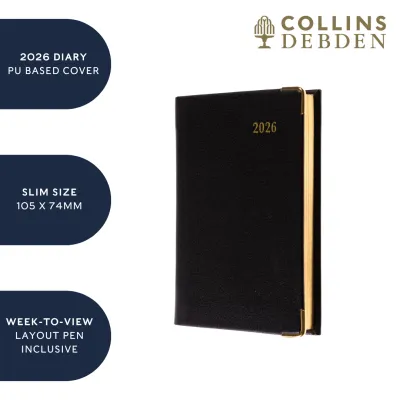
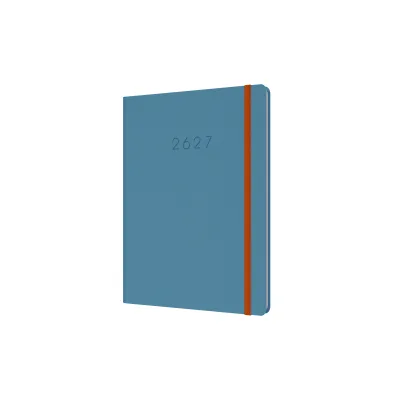
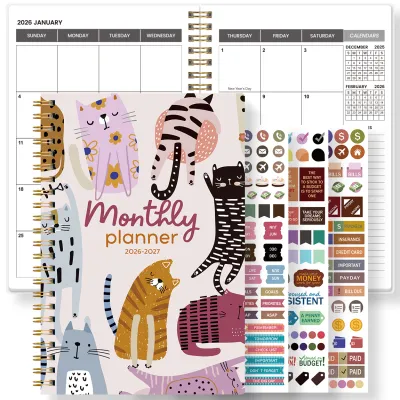
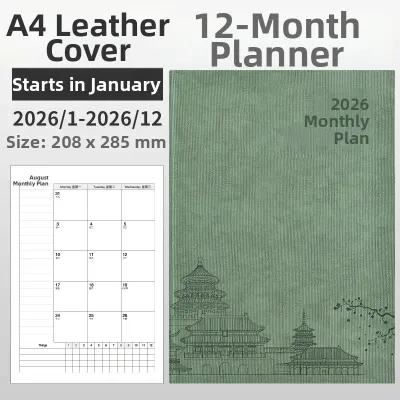
Products mentioned in this guide

Prices are valid at publication and may change. Please refer to the product page for the latest price.
Finally, consider where your diary will live. If you carry your planner daily in a bag, a compact A6 or B6 size with a durable, water-resistant synthetic or hardcover exterior is ideal. If your diary remains on a desk, a larger A5 or desk-format planner with a soft, lay-flat cover provides a more comfortable, expansive writing surface.
Choosing a Diary Brand for Bullet Journaling and Custom Layouts
Bullet journaling relies on flexibility, making dotted or blank pages the standard choice. When evaluating brands for this style, look for subtle dot grids—typically spaced 5mm apart—printed in a light grey or soft bronze ink. High-contrast, dark grids can distract from your custom layouts and hand-drawn trackers, so look for brands that emphasize low-visibility ruling.
The binding method is the most critical physical feature for custom layouts. A true lay-flat binding, often achieved through Smyth-sewn or thread-bound construction, is essential. This allows the diary to open completely flat on a desk without requiring you to hold the pages down, ensuring you can write comfortably across the center gutter. Avoid glued bindings that resist staying open, as they tend to crack or snap over time under heavy use.
Be aware that paper specifications can change from year to year. Even established brands occasionally update their paper stock or source materials for their 2026 editions. Before committing to a brand you have used in the past, check the product description for changes in paper weight or manufacturing origin. A shift from a heavy 120 gsm paper to a lighter 80 gsm paper can drastically alter how your favorite pens perform on the page.
Selecting a Diary Brand for Daily Logging and Minimalist Planning
For those who use their diary primarily for straightforward text entry, daily reflections, and simple to-do lists, structured lined formats are highly efficient. Look for brands that offer consistent line spacing that matches your handwriting size. Standard ruling typically ranges from narrow 5mm or 6mm lines to wider 7mm or 8mm formats. Subtle margins and clean headers help keep your writing aligned without cluttering the page.
The choice between a hardcover and a softcover diary significantly impacts your daily writing experience. Hardcover diaries provide a built-in writing surface, making it easy to jot down notes while holding the book on your lap or while standing. Softcover diaries are lighter and more flexible, conforming easily to the shape of a packed bag, though they require a flat table or desk for comfortable writing.
When comparing general brand categories, European-style diaries often feature classic cream-colored paper with sturdy, traditional hardcovers and elastic closures. In contrast, Japanese-style minimalist planners frequently utilize ultra-thin, highly engineered paper that keeps a 400-page daily diary incredibly compact and lightweight. Both styles have distinct advantages; your choice should depend on whether you prioritize a lightweight carry or a robust, self-supporting cover.
Finding the Right Diary Brand for Creative Journaling and Scrapbooking
Creative journaling, scrapbooking, and mixed-media planning require a diary built to withstand physical modification. If you plan to use watercolors, heavy felt-tip markers, calligraphy inks, or thick layers of adhesive, standard planner paper will buckle, warp, or bleed. For these techniques, prioritize brands that specify a paper weight of at least 120 gsm, with 160 gsm being the ideal standard for wet media and heavy ink coverage.
The physical expansion of the diary is another crucial factor. As you add stickers, photos, ephemera, and tape, your diary will naturally swell in thickness. Traditional thread-bound diaries can develop a “gator jaw” effect, where the book cannot close properly, putting strain on the spine. To accommodate this growth, look for brands that offer disc-bound or spiral-bound systems. These bindings allow the pages to rotate freely and expand outward without damaging the structural integrity of the book.
Always verify the manufacturer’s specific media compatibility claims rather than assuming a thick paper can handle all art supplies. Some heavy papers are highly absorbent and will feather fountain pen ink, while others have a slick coating that causes water-based markers to bead up and smear. Reading the technical specifications for paper finish—such as hot-pressed, cold-pressed, or coated—will save you from frustrating smudges and ruined layouts.
Picking a Diary Brand for Professional and Time-Blocking Planners
Professionals, students, and busy coordinators require diaries designed for precise scheduling and task management. For these users, vertical weekly layouts with hourly time-blocking increments are highly effective. Look for formats that break the day down from early morning to late evening (for example, 7:00 to 22:00) in 30-minute or hourly intervals. This visual structure makes it easy to spot open time slots and manage overlapping commitments.
Beyond the calendar pages, professional diaries should include integrated productivity tools. Look for brands that feature dedicated project tracking pages, monthly goal-setting spreads, and robust indexing systems. Practical physical extras also enhance daily efficiency: dual ribbon markers allow you to jump instantly between your monthly overview and the current day, while built-in pen loops and expandable back pockets keep essential documents and writing tools close at hand.
Consider the trade-offs between a fully pre-printed, structured planner and a modular system. Pre-printed planners offer a cohesive, ready-to-use setup but force you to adapt to their specific layout. Modular systems, such as refillable leather covers that hold multiple slim notebook inserts, allow you to mix and match a weekly calendar insert with a blank grid insert and a folder pocket. This modularity lets you customize your professional toolset and carry over your durable cover year after year, simply replacing the dated paper inserts for 2026.
What to Check Before Buying a 2026 Diary Online or In-Store
Before finalizing your 2026 diary purchase, run through a practical checklist to ensure the product matches your expectations. First, verify the exact start and end dates of the calendar pages. Some diaries are designed on an academic calendar (running from July to June) or a fiscal calendar (starting in April), which can leave you without a planner for the first half of 2026 if you intended to buy a standard calendar-year diary (January to December).
Second, do not rely solely on product photos when shopping online. Images can easily distort the scale, paper color, and texture of a diary. Always read the written specifications to confirm the exact dimensions (such as A5 or B6), the paper weight (gsm), and the binding type. If you are shopping in a physical store, run your fingers over the paper to check for smoothness and gently test how flat the book lies when opened to the middle.
Finally, review the retailer’s return policy, particularly when purchasing from online marketplaces. Stationery items are highly tactile, and you may find that your favorite pen bleeds on the paper or that the line spacing is too narrow for your handwriting once you see it in person. Ensure the seller allows returns of unused, unopened diaries so you can exchange the item if the physical specifications do not align with your journaling style.
Frequently Asked Questions (FAQ)
Does a higher price always mean better paper quality for fountain pens?
No, a premium price tag does not guarantee that a diary’s paper is compatible with fountain pens. High prices—such as spending upwards of S$40 on a premium planner—often reflect expensive cover materials like genuine leather, intricate binding techniques, brand licensing, or imported shipping costs. Fountain pen compatibility depends entirely on paper chemistry, sizing (coatings), and fiber density. To ensure your ink won’t bleed or feather, look for technical specifications indicating coated, ink-resistant paper rather than relying on the retail price.
Can I use a standard notebook instead of a dated 2026 diary?
Yes, using a standard, undated notebook is an excellent alternative, especially if your journaling habits are irregular. Undated notebooks allow you to write as much or as little as you want without leaving blank, wasted pages during busy weeks. However, pre-dated 2026 diaries offer the convenience of built-in calendar overviews, weekly structures, and daily tracking prompts, which can help build a consistent, daily writing habit.
Community discussion
Share your experience or ask a question. Comments are reviewed before publication.