
When preparing items for transit or storage in Singapore, securing your cargo with the right protective packaging is essential to prevent damage, moisture ingress, and shifting. While many businesses and e-commerce sellers search for the best “plastic wrap” brands for shipping, it is crucial to understand that industrial shipping requires a specialized material known as stretch film (or stretch wrap). This material is fundamentally different from household kitchen cling wrap.
To secure parcels or palletized goods effectively, you must look beyond generic household brands and focus on local industrial packaging suppliers that provide high-performance Linear Low-Density Polyethylene (LLDPE) films. By evaluating key physical specifications—such as micron thickness, net film weight, and manufacturing style—you can source highly reliable wrapping materials from trusted Singaporean distributors that will withstand the rigors of local and international logistics.
Clarifying the Material: Why Shipping Requires Stretch Film, Not Cling Film
To ensure your packages arrive intact, you must first distinguish between the various types of plastic films available on the market. In a shipping and logistics context, “plastic wrap” refers specifically to industrial stretch wrap or stretch film. This material is engineered from Linear Low-Density Polyethylene (LLDPE) and is designed to be stretched tightly around items. Its primary mechanical strength lies in its elastic recovery, often referred to as its “memory.” When the film is pulled and wrapped around a cargo load, it naturally tries to shrink back to its original size, creating a constant, tight compressive force that binds the items securely together. This elastic recovery is what prevents palletized boxes from shifting during sudden stops or sharp turns in transit.
Products mentioned in this guide
![🏅[CHEAPEST] Stretch Film/ Shrink Wrap / Cling Wrap /Pallet wrapping /Moving Supplies/pallet Wrap/Pallet wrapping](https://img.lazcdn.com/g/p/c69357eb04f4e35ac9ee2d124f108fda.jpg_400x400q80.jpg_.webp)
Prices are valid at publication and may change. Please refer to the product page for the latest price.
In contrast, standard household kitchen cling film is typically made from Polyvinyl Chloride (PVC) or Low-Density Polyethylene (LDPE) and is formulated primarily for food preservation. Kitchen wrap is incredibly thin, lacks tensile strength, and has very low puncture resistance. It relies on static cling or light surface tack to adhere to smooth containers, but it cannot withstand the mechanical stresses of transit. It is designed to be easily torn by hand, which is the exact opposite of what you want when securing heavy shipping boxes.
Attempting to use kitchen cling film for shipping presents severe operational risks. During transit across Singapore’s logistics networks—whether handled by local couriers or loaded into shipping containers—parcels are subjected to vibration, drops, and shifting forces. Kitchen wrap will quickly tear under the weight of shifting boxes, exposing your items to the elements and causing individual packages to separate. Industrial stretch film, however, provides a robust barrier against dust, moisture, and physical abrasion, ensuring that even heavy or irregularly shaped loads remain unified and protected.
Key Specifications to Evaluate When Comparing Packaging Brands
When comparing different plastic wrap brands and suppliers in Singapore, relying solely on brand names can be misleading. Instead, you should evaluate the objective technical specifications listed on the product data sheets. Understanding these metrics allows you to compare products accurately and select the optimal film for your specific shipping needs.

Thickness (Microns)
- 12 to 15 Microns (Light-Duty): Best suited for lightweight, uniform boxes, small parcel wrapping, and loads without sharp corners. These films are highly flexible but can be prone to tearing if pulled over sharp cardboard edges.
- 17 to 20 Microns (Medium-Duty): The industry standard for general warehouse shipping. It offers an excellent balance of puncture resistance and elasticity for standard pallet loads and mixed-size shipping cartons. It is thick enough to handle minor abrasions without failing.
- 23 to 25+ Microns (Heavy-Duty): Necessary for securing extremely heavy goods, machinery parts, or pallets with sharp, protruding metal or wooden edges that would easily puncture thinner films. These heavy-duty films provide maximum holding force.
Stretch Yield and Memory Stretch yield refers to the percentage a film can be elongated during application before it breaks. High-quality industrial films often feature a stretch yield of 150% to over 300%. A higher stretch yield means you can wrap more items with a single roll, significantly reducing your packaging costs. Additionally, evaluate whether the film is “pre-stretched.” Pre-stretched films are mechanically elongated during manufacturing, meaning they require less physical effort to apply by hand while still maintaining high holding force (memory) once wrapped around the items. This is particularly beneficial for manual warehouse packing where staff wrap dozens of pallets daily.
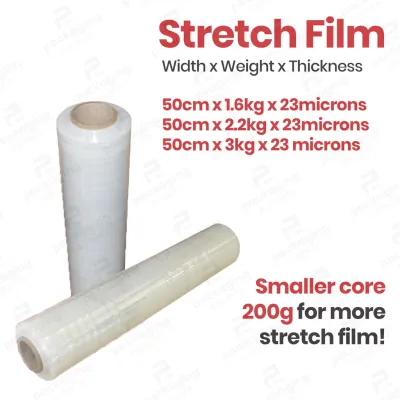
Core Weight vs. Net Film Weight One of the most common pitfalls when buying plastic wrap is purchasing based on total roll weight without checking the core weight. Stretch film is wound around a heavy cardboard tube (the core). Some low-cost suppliers sell rolls advertised as “3kg rolls” but use a 1.5kg cardboard core, leaving you with only 1.5kg of actual plastic film. To ensure transparent pricing, always ask the supplier for the net film weight (the total weight of the roll minus the weight of the cardboard core). High-quality brands will clearly state both weights. For example, a premium 3kg roll might feature a lightweight 300g core, giving you 2.7kg of usable film, which represents far better value than a cheaper roll with a heavy core.
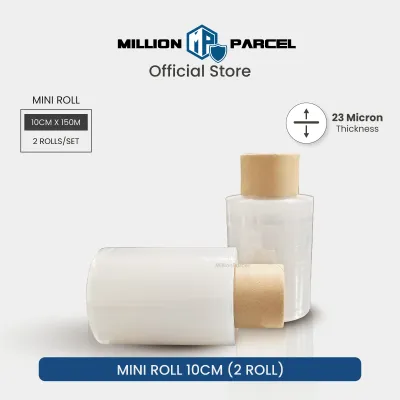
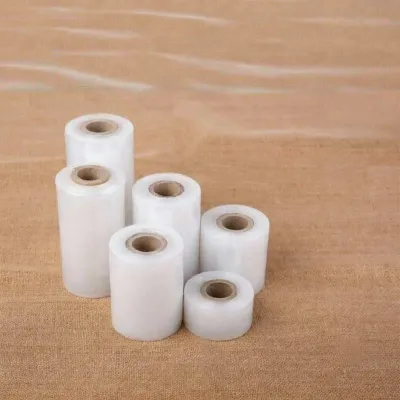
Width and Roll Length Match the roll width to your packaging application. Standard hand-wrap rolls are typically 500mm wide, which is ideal for wrapping large boxes and pallets. For smaller parcels, individual product boxes, or bundling long items like pipes or rods, smaller rolls (often called “baby rolls” or mini wraps) ranging from 100mm to 250mm wide are much easier to handle and reduce material waste.
How to Identify Reliable Plastic Wrap Brands and Suppliers in Singapore
Sourcing high-quality plastic wrap in Singapore requires navigating a mix of local industrial distributors, B2B wholesalers, and online marketplaces. Because many industrial films are sold unbranded or under local distributor labels, you must know how to verify supplier credibility and product quality.
Sourcing Channels For high-volume or commercial shipping needs, sourcing directly from established industrial packaging distributors is highly recommended. Many of these suppliers operate out of major industrial hubs in Singapore, such as Tuas, Jurong, Ubi, Kaki Bukit, and Geylang. Purchasing from local distributors allows you to secure wholesale pricing, access detailed technical data sheets, and establish reliable supply chains. For smaller businesses or home-based e-commerce sellers, verified business storefronts on local online marketplaces offer convenient delivery, though you must still scrutinize the product specifications carefully.
Evaluating Product Listings When browsing supplier listings, look for professional, transparent product descriptions. A reliable supplier will provide a comprehensive specification table detailing the exact material (typically LLDPE), roll width, total length, total weight, and core weight. Avoid listings that use vague terms like “heavy-duty plastic wrap” without providing numerical micron ratings or net weights. Professional listings will also mention if the film is made using premium resins like metallocene LLDPE (mLLDPE), which offers superior puncture resistance and stretchability compared to standard LLDPE.
The Importance of Sampling Before committing to a bulk purchase of stretch film, always request a sample roll or purchase a single roll for testing. You can perform simple, observable trials in your workspace to verify the film’s quality:
- The Puncture Test: Wrap a sample box with sharp corners and press your finger or a blunt object against the stretched film to observe its resistance to tearing. High-quality film should stretch significantly before puncturing.
- Cling Quality Check: Press two layers of the wrapped film together. High-quality stretch film should cling firmly to itself without requiring adhesive tape, yet unwind smoothly from the roll without tearing prematurely.
- Tear Propagation: Nick the edge of a stretched section of film with a utility knife. A high-quality film will resist immediate, catastrophic tearing across the entire width, maintaining its structural integrity around the package.
Red Flags to Avoid Be cautious of unusually low-priced rolls. Extremely cheap stretch film is often manufactured using a high percentage of low-grade recycled plastic. While recycled content is environmentally friendly, poor-quality recycled resins can result in a film that has a strong chemical odor, low tensile strength, poor cling properties, and a tendency to snap constantly during manual application. This leads to wasted material, increased labor time, and ultimately higher costs. Additionally, avoid suppliers who refuse to disclose the weight of the cardboard core, as this is a common tactic to obscure the true cost per meter of the film.
Matching the Film Type to Your Specific Shipping Scenarios
Not all shipping situations require the same type of stretch film. To optimize your packaging process, you should match the film’s manufacturing method and physical characteristics to your specific cargo and shipping volume.
Hand Wrap vs. Machine Wrap
- Hand Wrap: Designed for manual application, these rolls typically weigh between 1.8kg and 4kg, making them light enough for warehouse staff to hold and apply comfortably. They are ideal for businesses with low-to-medium shipping volumes or those wrapping irregularly shaped pallets that require manual adjustment. They often feature extended cores that act as handles for easier application.
- Machine Wrap: Designed for use with automated stretch wrapping machines. These rolls are much larger and heavier, often weighing 12kg to 16kg, and feature high-yield stretch capabilities (often up to 300%). If your business packages dozens of pallets daily, investing in a wrapping machine and machine-grade film will dramatically increase efficiency, ensure consistent wrapping tension, and reduce long-term material costs.
Cast vs. Blown Stretch Film The physical properties of stretch wrap are heavily influenced by the manufacturing process:
- Cast Stretch Film: Produced by feeding molten polymer through a flat die and over chilled rollers. Cast film is highly transparent, making it easy to read barcodes and shipping labels underneath the wrap. It unwinds extremely quietly, which is beneficial in busy, enclosed packing areas. However, it generally offers lower puncture resistance than blown film and stretches primarily in one direction.
- Blown Stretch Film: Created by blowing molten polymer into a vertical bubble that is cooled by air. Blown film is incredibly tough, with superior puncture and tear resistance, making it the ideal choice for securing heavy, sharp-edged, or highly irregular loads. The trade-offs are that blown film is slightly hazy (making labels harder to read), is more expensive to produce, and makes a loud squealing noise when unwound from the roll.
Specialty Variants Depending on your cargo, you may need specialty stretch films:
- Opaque (Black) Stretch Film: Excellent for high-value shipments, as it conceals the contents of the pallet or package, deterring theft. It also provides basic UV protection for items sensitive to sunlight during temporary outdoor staging.
- Anti-Static Stretch Film: Formulated with specialized additives that prevent static discharge, making it essential for wrapping sensitive electronic components, printed circuit boards, or volatile chemicals in industrial settings.
Storing Stretch Wrap in Singapore's Climate to Maintain Performance
Singapore’s tropical climate—characterized by high ambient temperatures (often averaging 30°C to 32°C) and relative humidity levels that frequently exceed 80%—presents unique challenges for storing industrial packaging materials. Proper storage is critical to prevent the physical degradation of your stretch film before it is even applied.
Temperature and Humidity Control Stretch film contains specialized additives called tackifiers (such as polyisobutylene) which give the film its self-clinging properties. When exposed to excessive heat, these tackifiers can migrate to the surface prematurely, causing the layers of the roll to fuse together—a phenomenon known as “blocking.” Once blocking occurs, the roll becomes incredibly difficult to unwind and will tear constantly during use, rendering the entire roll useless. To prevent this, store your stretch wrap rolls in a cool, dry, and well-ventilated warehouse space. Avoid storing rolls near direct heat sources, exterior metal walls, or under direct sunlight.
Physical Handling and Orientation Always store your stretch wrap rolls vertically (upright on their flat ends) rather than horizontally on their sides. Storing rolls horizontally can cause “flat spots” to develop on the roll due to the constant pressure of its own weight, which leads to uneven tension when unwinding. Furthermore, horizontal storage increases the risk of edge damage. Even a tiny nick on the edge of a stretch wrap roll can cause the film to tear repeatedly at that exact spot when you attempt to pull and stretch it. Ensure the cardboard cores are kept dry, as moisture absorption from Singapore’s high humidity can soften the core, leading to collapse or “telescoping” (where the inner layers of film slide out of alignment).
Stock Rotation (FIFO) Implement a strict First-In, First-Out (FIFO) inventory system for your packaging supplies. Even when stored under optimal conditions, the cling additives in stretch film will slowly degrade over time, and the film can lose its elasticity. Aim to use your stock within 6 to 12 months of purchase to ensure the film retains its maximum elasticity, puncture resistance, and cling performance.
Frequently Asked Questions (FAQ)
Can I use kitchen cling film for wrapping shipping boxes?
No, kitchen cling film is not suitable for securing shipping boxes. It is made from different polymers (such as PVC or LDPE) that lack the tensile strength, thickness, and elastic recovery required to withstand the physical stresses of transit. Kitchen wrap will easily puncture, tear, or unravel under load, failing to protect your cargo. Always use industrial LLDPE stretch film for packaging and shipping applications.
How many microns of stretch wrap do I need for heavy boxes?
For heavy boxes or pallets weighing over 500kg, or those containing items with sharp, protruding edges, you should use a heavy-duty stretch film with a thickness of 23 to 25 microns. For standard, uniform cardboard boxes of moderate weight, a medium-duty film of 17 to 20 microns is generally sufficient and more cost-effective.
Is pre-stretched plastic wrap better for manual packing?
Yes, pre-stretched film is highly advantageous for manual hand-wrapping operations. Because the film has already been mechanically stretched near its limit during manufacturing, the packer does not need to apply significant physical force to tension the wrap. This reduces fatigue and physical strain on warehouse staff, ensures consistent wrapping tension, and reduces overall material consumption, making it an ergonomic and economical choice for manual packing stations.
Community discussion
Share your experience or ask a question. Comments are reviewed before publication.