
Choosing the right large tape dispenser for a student in Singapore involves balancing stability, safety, and compatibility with standard school materials. Whether completing primary school art projects, preparing extensive secondary school study notes, or organizing materials for co-curricular activities (CCAs), a reliable dispenser prevents the frustration of tangled tape and slipping bases. The ideal choice remains firmly in place during one-handed operation, fits standard tape refills easily found in local bookshops, and features a secure, effective cutting edge.
For students, a tape dispenser is more than just a utility; it is a tool that directly impacts study efficiency and project quality. A dispenser that slides across the desk or fails to cut cleanly can disrupt a student’s focus and lead to wasted materials. By understanding the key physical and functional requirements of these tools, parents and students can make an informed decision that lasts throughout the academic year.
Core Selection Criteria for Student Tape Dispensers
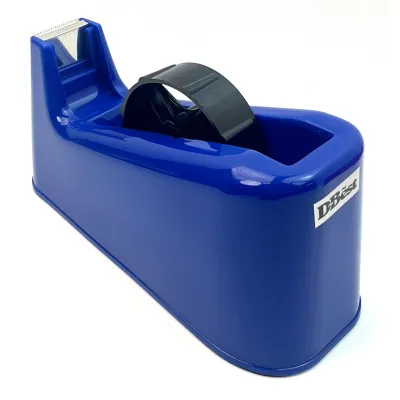
When selecting a large tape dispenser, the primary consideration is its physical stability. A dispenser that requires two hands to operate—one to hold the base and one to pull the tape—defeats the purpose of a desktop tool. For students who often multi-task, such as holding a poster board in place while securing it with tape, one-handed operation is essential. This stability is achieved through base weight. Look for dispensers filled with heavy materials like sand, cement, or iron cores, typically weighing between 1 kg and 1.5 kg. This weight provides the necessary resistance against the pulling force of standard adhesive tapes.
Products mentioned in this guide
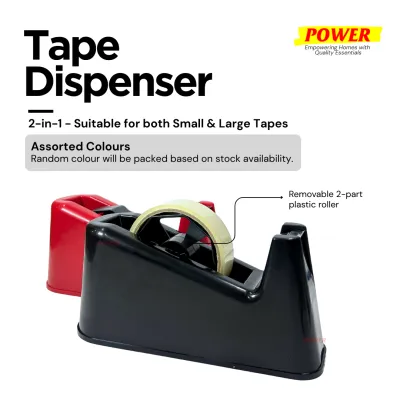
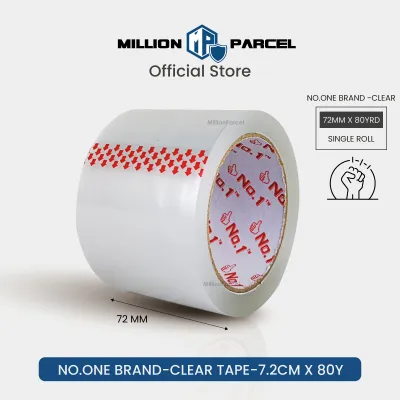
![New Version] PROSUN Tape Cutter / Tape Dispenser / Packaging tools / Heavy Duty Tape Cutter](https://img.lazcdn.com/g/p/f7c2f9f2eff4e98d79fbcc8c1c57c3d1.png_400x400q80.png_.webp)
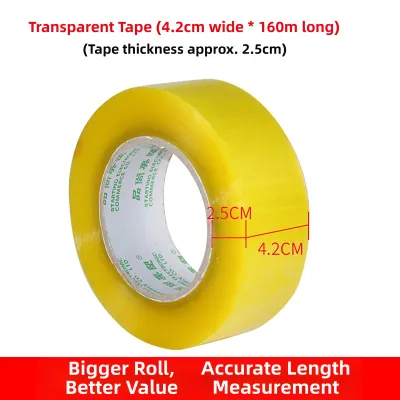
Prices are valid at publication and may change. Please refer to the product page for the latest price.
The physics of tape dispensing rely on the tension between the tape roll and the spindle. If the spindle is too loose, the tape may unravel too quickly, leading to tangles. If it is too tight, the pulling force required increases, which can cause even a weighted dispenser to slide forward. A well-designed dispenser balances this tension, allowing the tape to roll smoothly with a gentle pull while remaining anchored to the desk.
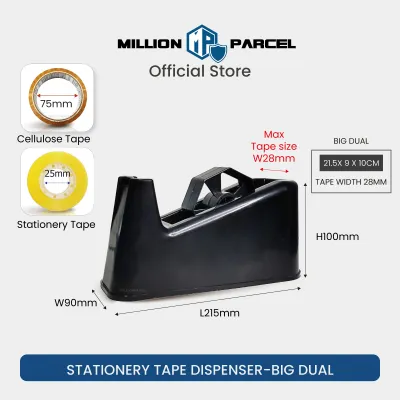
Tape width compatibility is another critical factor. School projects often require different tape sizes, ranging from narrow 12mm clear tapes for sealing envelopes to wider 24mm tapes for heavy-duty mounting or packing. A versatile large dispenser should accommodate these standard widths. Many high-quality models feature a dual-core design or a wider spindle that allows multiple small rolls or one large roll to be mounted. Before purchasing, check the spindle width to ensure it matches the tape rolls you plan to buy.
Ergonomics and grip design are particularly important for younger primary school students. The physical action of pulling and tearing tape can be challenging for smaller hands. A dispenser with a contoured body or a defined grip area helps students stabilize the unit if they need to adjust its position on the desk. The angle of the cutting blade also plays a role; a slightly tilted blade reduces the wrist strain required to sever the tape cleanly.
To verify the smoothness of a dispenser before committing to a purchase, perform an observable trial if possible. Pull a short strip of tape slowly to check if the spindle rotates smoothly without catching. Then, pull the tape downward against the blade at a slight angle. The tape should sever cleanly without stretching or twisting. If the tape stretches significantly before cutting, the blade teeth may be too dull or the spindle resistance may be too high.
Evaluating Durability and Build Quality
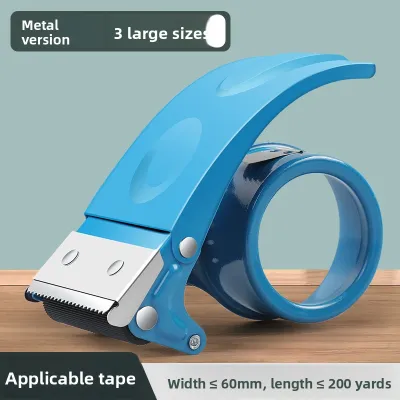
A student’s study environment can be demanding, with stationery tools frequently subjected to accidental drops, heavy pressure, and daily wear. Evaluating the durability and build quality of a tape dispenser ensures it can withstand these conditions over several academic years. The body material is the first line of defense. High-impact ABS plastic and metal are the primary choices for durable dispensers. ABS plastic is resilient against impact, making it less likely to crack if knocked off a desk. Metal dispensers offer superior weight and longevity but require careful handling to avoid denting or scratching desk surfaces.

The cutting blade mechanism is the most critical safety and performance component. It must be securely mounted to the body, preferably with screws rather than simple plastic clips, to prevent it from coming loose during use. Look for stainless steel blades to resist rust, which is a common issue in Singapore’s humid climate. The teeth should be sharp enough to cut tape with minimal force but recessed or guarded to minimize the risk of accidental finger cuts.
Untreated carbon steel blades can rust quickly in high humidity, leading to dull teeth that tear rather than cut the tape. This not only ruins the tape but also increases the risk of injury as students apply more force to cut it. Choosing a dispenser with a rust-resistant blade ensures consistent performance and safety over time.
A heavy dispenser can still slide if the bottom lacks proper traction. High-quality models feature a full-coverage rubber or foam pad on the base. This pad serves a dual purpose: it grips the desk surface to prevent sliding and protects wooden or laminate study tables from scratches. Over time, these pads can gather dust and lose traction. Look for base materials like silicone rubber, which can be easily wiped clean with a damp cloth to restore their original grip, unlike cheap foam pads that tend to dry out and crumble.
When inspecting a dispenser, pay close attention to the spindle assembly. The spindle should fit snugly into its slots without excessive side-to-side play. A loose spindle can cause the tape roll to wobble, leading to uneven cuts and potential tape jams. If the dispenser uses a dual-core adapter, ensure the adapter pieces lock together securely so they do not separate during use.
Matching the Dispenser to the Study Environment
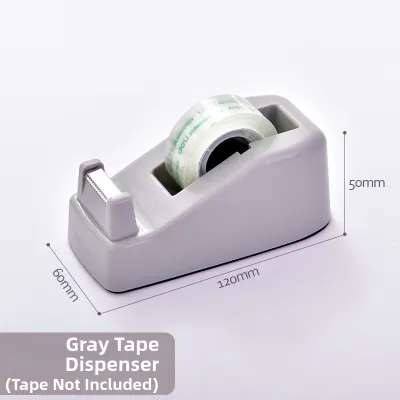
The ideal tape dispenser depends heavily on where it will be used. In Singapore, student study areas in HDB flats or apartments often have limited desk space. A massive, bulky dispenser might take up too much valuable real estate needed for textbooks, laptops, and writing pads. For these compact setups, look for a dispenser with a vertical or streamlined footprint. This design maximizes vertical space while maintaining the necessary weight base.
Many students use multi-functional desks that double as computer setups for home-based learning (HBL). In these scenarios, a tape dispenser with a small footprint but high weight is ideal. It can be tucked away in a corner or drawer when not in use, yet remains stable enough for quick, one-handed tasks when brought out.
Classroom environments demand a different set of priorities. Here, tools are shared among classmates, moved frequently, and subjected to rougher handling. A heavy-duty, highly visible dispenser is ideal for these settings. A heavier weight prevents the dispenser from being easily knocked off group tables. Choosing a bright or distinct color can also help students identify their own stationery and prevent it from being misplaced in a busy classroom.
Safety is another major consideration in shared spaces. While a heavy dispenser is desirable for stability, one that is excessively heavy (such as those over 2 kg) can pose a safety hazard if dropped on a student’s foot. A weight range of 1 kg to 1.2 kg is often the sweet spot for classroom environments, providing excellent stability without being overly dangerous to handle.
Noise levels are another consideration, especially in quiet study areas like school libraries, community center study rooms, or shared home spaces. Some tape backings screech loudly when pulled from the roll. While this is largely a function of the tape itself, the dispenser’s spindle design can either muffle or amplify this vibration. A snug-fitting spindle with smooth rotation helps minimize the high-pitched noise of pulling tape, allowing students to work without distracting others.
Portability is a final factor to consider if the dispenser needs to travel between home and school. While large tape dispensers are primarily designed for desktop use, some models feature integrated carrying handles or lighter weight profiles that still offer reasonable stability when placed on a flat surface. If portability is a priority, look for a model that balances weight with a compact shape that fits easily into a school bag.
Tape Compatibility and Refill Checks
Ensuring your dispenser is compatible with standard tape refills is crucial for long-term usability. Large tape dispensers typically support rolls with a 3-inch (76mm) core, whereas small hand-held dispensers use a 1-inch (25mm) core. Some versatile desktop models include a dual-core adapter, allowing students to use both sizes. Always verify the maximum outer diameter of the tape roll the dispenser can hold. If a roll is too large, it will rub against the bottom of the dispenser well, preventing smooth rotation and causing the tape to stretch or snap.
Different projects require different tapes, from standard clear cellulose tape to matte write-on tape, washi tape, or heavy-duty packaging tape. Cellulose tape is easy to tear but can yellow and become brittle in tropical climates. Polypropylene tape is stronger and more moisture-resistant but requires a sharper blade to cut cleanly without stretching. If a student frequently uses reinforced or thick tapes for art portfolios or project displays, ensure the dispenser’s blade is rated for heavy-duty materials to prevent tearing or bending the teeth.
A complicated refill process leads to frustration and wasted tape. Look for dispensers with a simple drop-in spindle mechanism. The spindle should lift out easily without requiring tools, yet slot securely back into place without wobbling. Avoid models with complex threading paths. A straightforward path from the roll directly over the cutting blade is easiest for students of all ages to manage independently.
When purchasing refills, it is also wise to check the shelf life and storage requirements of the tape. In humid environments, some adhesives can degrade quickly, becoming gooey or losing their stickiness. Storing spare tape rolls in a cool, dry drawer and choosing high-quality, moisture-resistant tape brands will ensure smooth dispensing and reliable adhesion when the tape is applied to paper or cardboard.
Budgeting for a tape dispenser and its refills is also a practical consideration. While a high-quality, weighted dispenser might cost between S$10 and S$25, it is a one-time investment that can last for years. In contrast, cheap, unweighted dispensers often need replacement due to cracked bodies or dull blades, leading to higher long-term costs. Investing in a durable dispenser and buying tape refills in bulk is often the most cost-effective approach for student households.
Frequently Asked Questions (FAQ)
How do I clean a sticky tape dispenser blade?
Over time, adhesive residue builds up on the cutting blade, making it difficult to get a clean tear. To clean it safely, first stabilize the dispenser on a flat surface. Dampen a soft microfiber cloth with a small amount of isopropyl alcohol or a mild soapy water solution. Gently wipe the blade in an outward direction, away from the sharp teeth, to avoid cutting your fingers. Never use abrasive scrubbing pads or harsh solvents like acetone, which can degrade plastic bodies or strip protective coatings from metal blades. If the blade teeth are bent, rusted, or permanently dull, it is time to replace the dispenser to ensure safe and efficient use.
Can a large tape dispenser be used for double-sided tape?
Standard large tape dispensers are generally not suitable for double-sided tape. Double-sided tape typically requires a specialized dispenser that can peel away and wind up the protective paper backing as the tape is pulled. If you attempt to use standard double-sided tape in a regular dispenser, the exposed adhesive will stick to the spindle, the body, and the cutting blade, causing immediate jams and leaving a sticky residue. Always check the product label or manufacturer manual for explicit compatibility with double-sided tape. For double-sided applications, it is best to use dedicated double-sided tape runners or specialized dispensers designed with a backing-take-up mechanism.
Community discussion
Share your experience or ask a question. Comments are reviewed before publication.