
Selecting the perfect A4 happy birthday card in Singapore requires balancing physical presence, paper durability, and design relevance. An A4 card, measuring 210 mm by 297 mm, makes a bold statement and offers ample space for collective signatures or long-form personal messages. To make the right choice, you must evaluate the card’s paper weight, surface finish, and structural integrity, ensuring it survives both transit and display.
Why Choose an A4 Format for Birthday Greetings
Standard greeting cards, typically in A5 or A6 sizes, are well-suited for brief, personal notes from a single sender. However, they quickly become crowded when multiple people want to share their well-wishes. An A4 card provides four times the surface area of a standard A6 card, offering a generous canvas that makes a significant visual impact.
This oversized format is particularly beneficial for milestone celebrations, such as a 21st, 50th, or 60th birthday, where the card itself serves as a memorable keepsake. The substantial size allows the card to be easily displayed on a reception table, office desk, or home mantelpiece without being overshadowed by other gifts.
Products mentioned in this guide

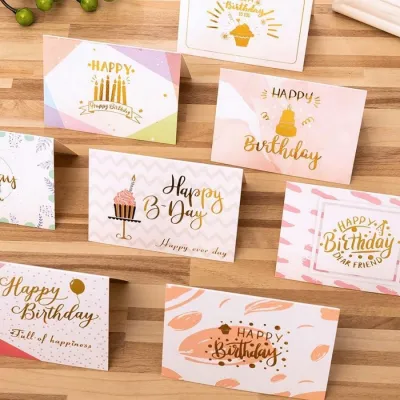
Prices are valid at publication and may change. Please refer to the product page for the latest price.
In Singapore’s collaborative office environments, school classrooms, or large family gatherings, a standard card often results in cramped, illegible handwriting as people struggle to find space. An A4 card allows dozens of colleagues or family members to write comfortable, distinct messages, add small sketches, or include personalized jokes without overlapping.
Furthermore, because A4 is a standard document size, these cards are exceptionally easy to frame. After the celebration, the recipient can place the card in a standard retail frame, turning a simple birthday greeting into a piece of personalized wall art.
Despite these advantages, the larger footprint requires careful logistical planning. An A4 card cannot be easily slipped into a standard pocket or small gift bag, meaning you must source a matching envelope and consider rigid packaging to prevent creasing during hand delivery or mailing.
How to Evaluate Paper Quality and Print Finish
The structural integrity of an A4 card depends heavily on its paper weight, which is measured in grams per square meter (GSM). Standard printer paper is typically 80 GSM, which is too flimsy to stand upright. For a premium feel, look for cardstock between 250 GSM and 350 GSM, which provides enough stiffness to prevent the card from bowing or sagging under its own weight.

The surface finish of the cardstock dictates both its visual appeal and its writing compatibility. Matte finishes offer a classic, non-reflective look that is highly receptive to most pen types, including fountain pens and gel pens, without risking immediate smudges.
Glossy finishes make printed colors and photographic designs appear vibrant and sharp. However, glossy surfaces are highly prone to fingerprint smudges and require specialized quick-drying markers or ballpoint pens, as standard water-based inks will pool and smear on the coated surface.
Textured papers, such as linen, hammered, or felt-pressed cardstock, add a tactile dimension that immediately conveys luxury. While beautiful to touch, highly textured surfaces can cause slight line jitter when writing with fine-tip pens, so they are best paired with medium-point ballpoint or felt-tip pens.
High-quality cardstock must also resist ink feathering, where ink spreads along the paper fibers, and bleed-through, where ink penetrates to the reverse side of the page. Uncoated, highly absorbent papers are particularly prone to these issues, whereas balanced, high-grade cardstock keeps ink lines sharp and clean.
Finally, examine the manufacturing precision of the card. A professional card is pre-scored along the fold line before folding, which prevents the paper fibers from cracking and creating unsightly white creases along the spine. The edges should be perfectly flush and clean, with no fraying, and the printed colors should be consistent across the entire surface.
Selecting the Right Design and Tone for the Recipient
A4 birthday cards are available in a wide array of design styles, each suited to different relationships and personalities. Minimalist designs rely on generous white space, clean lines, and elegant typography, making them highly versatile options that work well for almost any recipient.
Humorous designs often feature bold illustrations, witty puns, or playful caricatures. While these are excellent for close friends and peers, they require careful boundary-setting to ensure the humor aligns with the recipient’s personality and does not cause unintended offense.
Floral, botanical, and watercolor designs offer a softer, classic aesthetic that is widely appreciated for family members or mentors. Typographic designs, which focus on stylized lettering and metallic foil accents as the primary visual element, provide a modern, celebratory feel that suits milestone birthdays.
When selecting a card, match the visual style to your relationship with the recipient. For a corporate setting, a supervisor, or a client, a minimalist or elegant typographic design maintains professional boundaries while showing genuine appreciation. For close friends or family members, a highly personalized or humorous theme is more appropriate, reflecting shared memories.
In Singapore’s diverse, multicultural society, color and imagery carry subtle cultural meanings. Bright, celebratory colors like red and gold are traditionally associated with prosperity and joy, making them excellent choices for older family members or traditional celebrations.
Conversely, overly somber colors or specific symbols associated with mourning should be avoided. When choosing a card for a diverse group of colleagues, neutral, cheerful themes like botanical illustrations or elegant metallic foil lettering ensure broad appeal and respect.
Where to Source A4 Birthday Cards in Singapore
Physical retail stores and specialty stationery boutiques in Singapore’s major shopping districts offer the advantage of tactile inspection. Visiting a physical store allows you to feel the paper weight, check the fold quality, and verify the true colors under natural lighting before making a purchase.
Online marketplaces and independent artist websites provide an extensive variety of unique, customizable, or niche designs that physical stores cannot match. This is particularly useful if you are looking for a highly specific theme, a personalized print-on-demand option, or a card tailored to a niche hobby.
When purchasing online, pay close attention to shipping times and packaging methods. Because of Singapore’s high humidity, paper products can absorb moisture during transit if they are not sealed properly, leading to warping or soft edges.
Ensure the seller uses moisture-resistant plastic sleeves and rigid cardboard mailers to prevent bending and warping in transit. This is especially important for A4 cards, as their larger surface area makes them more vulnerable to bending during delivery.
Before finalizing an online purchase, check customer reviews specifically for packaging quality and print accuracy. Look for real-user photos to verify that the physical product matches the digital mockup, and review the seller’s return policy in case the card arrives damaged.
Final Inspection and Personalization Checklist
Once the card is in hand, inspect it thoroughly under good lighting. Check for any printing alignment errors, ink smudges, or bent corners that may have occurred during shipping or handling.
Before writing your main message, perform a quick pen test. Use a tiny, inconspicuous corner on the back of the card or an included scrap piece of the same paper to see how your chosen pen behaves, noting the drying time to prevent accidental smudging.
If the card is intended for a group signature, plan the layout beforehand. Lightly draw faint pencil guidelines or place small sticky notes to designate sections for different departments or individuals, ensuring a balanced, neat presentation.
Ensure you have a matching A4 envelope. If you plan to mail the card via local postal services, place the card inside a rigid, non-bendable outer mailer to protect the large surface area from being folded or crushed by sorting machines.
Frequently Asked Questions (FAQ)
Do oversized birthday cards require special postage?
Yes, oversized cards like the A4 format generally fall outside standard local letter dimensions. In Singapore, postal services categorize mail by size and weight, meaning an A4 envelope is classified as a large letter or package, which requires higher postage than a standard small envelope. Always check the latest weight and dimension tiers of the local postal service before mailing to ensure correct postage is applied.
Can I use fountain pens or markers on standard cardstock?
It depends entirely on the paper’s coating and thickness. Uncoated, thick cardstock (above 250 GSM) handles fountain pen ink reasonably well, though some feathering may occur. Coated or glossy cardstock will cause fountain pen ink to pool and smudge because the ink cannot penetrate the surface. For glossy cards, use quick-drying permanent markers or specialized ballpoint pens. For matte cards, standard gel pens or fine-liners are usually safe, but always allow extra drying time.
Are eco-friendly or recycled A4 cards widely available?
Yes, eco-friendly options are increasingly common. Look for cards featuring recognized forestry certification labels or explicit recycled paper indicators on the packaging. Recycled cardstock often has a charming, slightly textured finish with natural color variations and tiny organic flecks, which adds a rustic, premium character to the birthday greeting.

Community discussion
Share your experience or ask a question. Comments are reviewed before publication.