
Selecting your first embroidery hoop in Singapore is a crucial step that directly impacts your stitching experience. A reliable hoop keeps your fabric drum-tight, preventing puckered stitches and hand fatigue as you learn the ropes. While many beginners are tempted to grab the cheapest option available online, investing a little time into understanding hoop materials, tension mechanisms, and quality indicators will save you hours of frustration. In Singapore’s humid climate, material choice becomes even more critical, as moisture can affect how wood and fabric interact.
Rather than searching for a single “best” brand name, focus on identifying the physical characteristics of high-quality hoops. Reputable manufacturers produce hoops with consistent wood density, smooth finishes, and robust hardware. By learning how to evaluate these features, you can confidently source reliable tools from local craft hubs or online specialty stores.
Key Features to Look for in Beginner-Friendly Embroidery Hoops
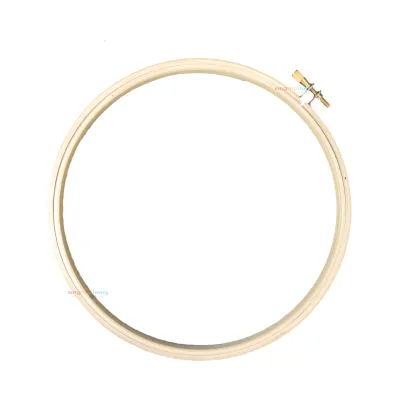
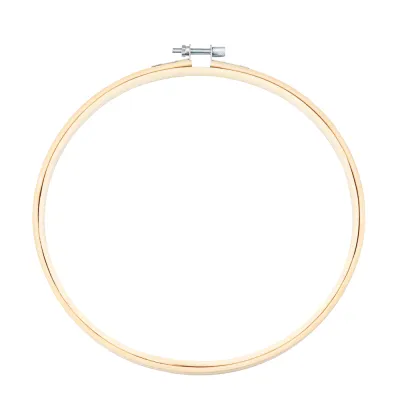
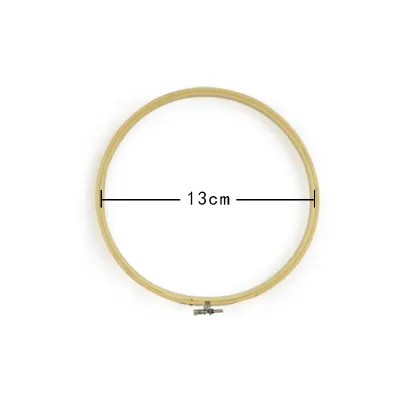
The material of your embroidery hoop affects its weight, grip, and durability. Bamboo hoops are highly common and budget-friendly, often costing between S$2 and S$4. However, bamboo is naturally fibrous and can sometimes have minor splinters along the inner rim that snag delicate embroidery floss.
Products mentioned in this guide
![[Local SG Seller] Wooden Embroidery Hoop](https://img.lazcdn.com/g/p/67f2a030b45002fb6fb52b567f2d04cc.jpg_400x400q80.jpg_.webp)
![[SG Stock] Bamboo Embroidery Hoop for Needlepoint Cross Stitching Tufting DIY Works](https://img.lazcdn.com/g/p/c94c21cb27e14fbfe6c41093a25992d8.jpg_400x400q80.jpg_.webp)
![[SG FREE ] Wooden Cross Stitch Machine Bamboo Hoop Ring Embroidery Sewing](https://img.lazcdn.com/g/p/e59c1125138293413b6db31f5b7d73ce.jpg_400x400q80.jpg_.webp)
Prices are valid at publication and may change. Please refer to the product page for the latest price.
Beechwood hoops are widely considered the gold standard for wooden hoops. Beechwood is a dense, fine-grained hardwood that is highly resistant to warping under Singapore’s high relative humidity. These hoops are sanded to a smooth finish and hold tension exceptionally well, typically retailing between S$5 and S$12 depending on the size.
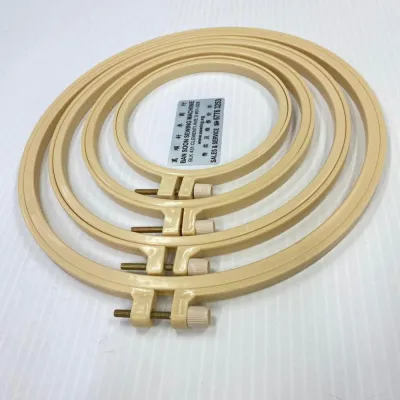
Plastic hoops offer an excellent alternative for beginners who prioritize ease of use. Many high-quality plastic hoops feature a molded lip-and-groove system. The inner ring has a raised ridge that fits into a corresponding groove on the outer ring, locking the fabric securely in place. This mechanical grip prevents fabric slippage without requiring extreme tightening.
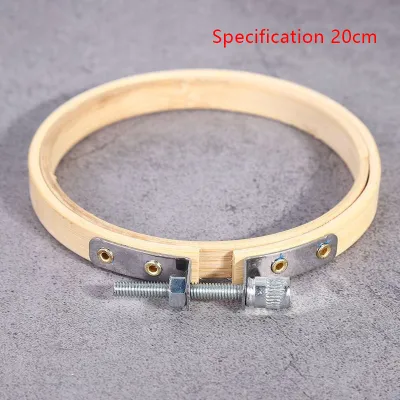
The tension mechanism is another critical component to examine. Traditional hoops use a metal screw at the top to tighten the outer ring around the inner ring. Look for hardware made of solid brass or heavy-duty steel with a slotted head. Cheap alloy screws can easily strip their threads or bend when tightened repeatedly.
Finally, pay attention to the lip depth and edge smoothness. The depth of the hoop’s edge determines how much fabric surface area is gripped. A deeper lip of around 1 cm provides a more secure hold for medium-weight fabrics. The edges of both rings must be perfectly smooth to prevent shearing your embroidery threads or leaving permanent snags in your fabric.
How to Match Hoop Sizes and Shapes to Your First Projects
For absolute beginners, a hoop diameter between 5 inches (approx. 12.7 cm) and 7 inches (approx. 17.8 cm) is highly recommended. A 6-inch hoop is often considered the universal sweet spot. It is small enough to hold comfortably in one hand while stitching with the other, yet large enough to accommodate a wide variety of starter patterns.

Smaller hoops ranging from 3 to 4 inches are excellent for tiny motifs or detailed monogramming. However, they offer very limited working space, requiring you to reposition your fabric frequently if your design expands. Larger hoops of 8 inches and above can be unwieldy, heavy, and difficult to keep consistently taut across the entire surface.
Round hoops are the most versatile and widely used because they distribute tension evenly across the fabric in all directions. Oval hoops are ideal for elongated designs, such as vertical floral sprays, and double beautifully as frames for your finished pieces. Square or rectangular frames, often referred to as Q-snaps, use plastic clamps to hold fabric along the sides and are highly suited for cross-stitch.
Before purchasing, consider the weight of the fabric you plan to use. Standard cotton calico and linen work beautifully in almost any quality hoop. However, if you plan to embroider on thicker materials like denim jackets or canvas tote bags, you will need a hoop with a slightly wider gap and a robust screw mechanism that can accommodate the extra bulk.
Evaluating Brand Reliability and Availability in Singapore
Singapore has a vibrant community of crafters, and high-quality embroidery supplies can be found in several key locations. Physical haberdashery and craft stores in central areas, such as Chinatown’s People’s Park Centre or major shopping malls, offer the advantage of letting you feel the hoops before buying.
For convenience, local specialized e-commerce stores and online craft marketplaces provide a wide selection of imported brands. When shopping online, look for sellers that specialize in needlework supplies rather than general household goods. Specialty sellers are more likely to stock properly stored, high-quality inventory that has not been exposed to damp warehouse conditions.
When browsing online listings, ignore generic five-star ratings and look closely at written reviews. Search for specific keywords like “tension,” “splinters,” “warped,” or “screw.” Reliable brands will have consistent praise for holding fabric tight over long stitching sessions without requiring constant re-tightening.
Cheap, unbranded hoops mass-produced from low-grade wood often exhibit several red flags. Look out for hoops where the inner and outer rings do not form a perfect circle, leaving visible gaps even when nested. The wood should not feel rough or dry to the touch, and the metal hardware should not feel flimsy or loose in its bracket.
Practical Tests to Verify Hoop Quality Before and After Purchase
Performing a few simple physical checks can help you verify the quality of a hoop, whether you are inspecting it in a local shop or opening a delivery at home. First, perform the flat surface test. Place both the inner and outer rings separately on a completely flat surface, such as a glass table or countertop. Press down gently on different edges of the ring; if it rocks or lifts, the hoop is warped and will not hold tension evenly.
Next, conduct the light gap test. Nest the empty inner and outer rings together and tighten the screw slightly. Hold the hoop up to a light source and look through the seam where the two rings meet. If you see significant patches of light shining through, the rings are not perfectly concentric, which will allow your fabric to slip during stitching.
Test the screw mechanism by turning the tightening screw all the way in and then all the way out. The movement should be smooth and consistent, without any catching, grinding, or wobbling. Inspect the bracket where the screw meets the wood; it should be securely anchored and not show signs of splitting the wood.
Finally, perform a drum test with a scrap piece of medium-weight cotton fabric. Place the fabric over the inner ring, push the outer ring down, and tighten the screw. Gently pull the excess fabric around the edges until it is taut, then tighten the screw fully. Tap the center of the fabric; it should produce a clear, drum-like sound. If the sound is dull or the fabric feels loose after a few minutes, the hoop is failing to retain tension.
Common Beginner Mistakes When Buying and Using Embroidery Hoops
Beginners often think that buying a large hoop is more economical because it can fit any design size. However, using a large hoop for a small embroidery motif makes it incredibly difficult to maintain even tension. It also forces you to stretch your hand awkwardly to reach the center of the design, leading to rapid hand fatigue and cramping.
Another common mistake is ignoring the need for hoop binding when working with slippery fabrics. Materials like silk, satin, or thin synthetic blends have very little natural friction, causing them to slide out of wooden hoops easily. Wrapping the inner ring tightly with cotton twill tape or bias tape creates a soft, high-friction surface that grips slippery fabrics securely.
Over-tightening the hardware is a frequent pitfall that can damage your tools and materials. It is tempting to use pliers or extreme physical force to turn the screw as tight as possible. This can strip the metal threads, crack the outer wooden ring, or permanently bruise the fabric fibers, leaving unsightly rings that cannot be ironed out.
Frequently Asked Questions (FAQ)
Do I need to buy expensive branded hoops as a beginner?
No, you do not need to buy the most expensive premium hoops when you are just starting out. Budget-friendly options, such as basic plastic hoops or well-sanded bamboo hoops costing under S$5, are perfectly adequate for practicing basic stitches. However, investing in a mid-range beechwood hoop is highly recommended once you begin working on detailed projects, as the superior tension retention will make your stitching experience much smoother and more enjoyable.
Can I use the same embroidery hoop for different fabric types?
Yes, you can use the same hoop for different fabric types, but you may need to make minor adjustments. Lightweight cotton and linen can be hooped directly without extra steps. For slippery fabrics like silk, you should bind the inner ring of your hoop with cotton twill tape to prevent slippage. For very thick fabrics like denim or canvas, ensure your hoop has a robust metal screw that can accommodate the thickness without straining the outer ring.
How do I fix an embroidery hoop that keeps slipping?
If your fabric keeps slipping, the most effective solution is to bind the inner ring of your hoop. Wrap a 100% cotton twill tape or bias tape tightly around the inner ring, overlapping the edges slightly, and secure the ends with a few small stitches or fabric glue. This adds bulk and friction, allowing the hoop to grip the fabric tightly. Additionally, check the hoop for warping or loose screws that may be preventing even pressure.
Community discussion
Share your experience or ask a question. Comments are reviewed before publication.