
Choosing the right plastic bag groceries require for safe transport is essential to prevent spills, protect fresh food, and reduce material waste. While grabbing any bag off a roll might seem convenient, matching the bag’s dimensions and thickness to your specific items ensures everything from heavy canned goods to delicate produce arrives intact. By understanding how flat measurements translate to three-dimensional space, you can easily select the perfect fit.
Quick Guide to Sizing a Plastic Bag for Groceries
Matching the correct bag to your inventory depends on three main variables: the item’s total volume, its physical shape, and its weight. A bag that is too small will fail to seal or rip under pressure, while an oversized bag wastes material and leads to clumsy handling.
To get sizing right, you must look at both the flat dimensions (width and length) and the material thickness, which is measured in mils (thousandths of an inch). This guide breaks down these specifications and provides straightforward formulas so you can select the ideal packaging for everything from delicate leafy greens to heavy, bone-in meats.
Products mentioned in this guide
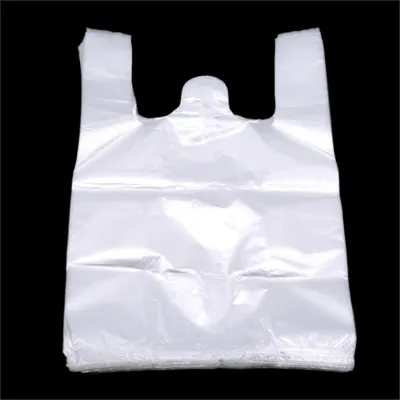
![[Hock Kee Plastic Enterprise] Plastic Bag (Similar to Ntuc Size)- 30Pcs](https://img.lazcdn.com/g/p/ade8b9e4191a3dc35416c7562826923d.jpg_400x400q80.jpg_.webp)
![[Hock Kee Plastic Enterprise] Plastic Bag Yellow (Similar to Ntuc Size) - 30Pcs](https://img.lazcdn.com/g/p/041fd34c6708f52a271f04eedba04470.jpg_400x400q80.jpg_.webp)
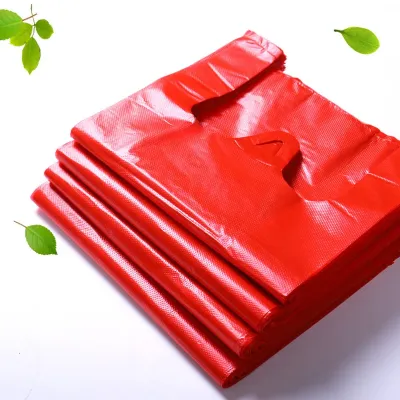
![[Bundle of 10] Plastic Bag BBQ Bag Plastic Bag Groceries Bag - L](https://img.lazcdn.com/g/ff/kf/Sbf65519856514671b24e048aae4d736aF.jpg_400x400q80.jpg_.webp)
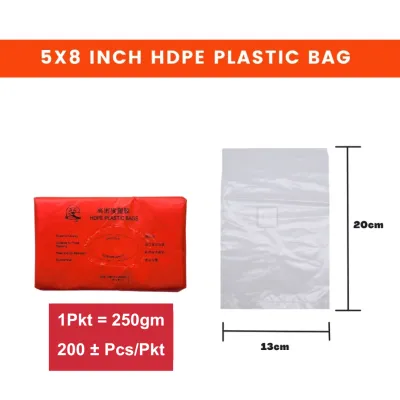
Prices are valid at publication and may change. Please refer to the product page for the latest price.
Decoding Plastic Bag Specifications
Before calculating the dimensions you need, it is essential to understand how manufacturers label plastic bags. Retail packaging measurements can be confusing because a flat bag behaves differently once you place a three-dimensional object inside.

- Width and Length: When a bag is laid flat, its measured width represents the flat opening. However, once you insert an item, the bag must expand to wrap around the item's depth. This means the usable width of a filled bag is always smaller than its flat, empty width.
- Gusset (Side or Bottom Folds): A gusset is an extra fold of material tucked into the sides or bottom of the bag. When opened, these folds expand to accommodate bulky, boxy, or cylindrical items without requiring a wider flat bag. Bottom gussets allow bags to stand upright on counters or pantry shelves, while side gussets are excellent for boxy cartons.
- Thickness (Mil): Plastic thickness is measured in mils, where one mil equals one-thousandth of an inch. Thickness directly dictates puncture resistance, moisture barrier properties, and weight capacity. A higher mil rating does not change the physical size of the bag, but it significantly increases its structural limits and load-bearing capacity.
- Lip and Seal Area: If you plan to close your bags using heat sealers, twist ties, or tape, you must account for the top flap or "lip." The seal area reduces the usable internal length of the bag, meaning you must buy a slightly longer bag than the item's actual length to ensure a proper closure.
Recommended Dimensions and Specs by Grocery Type
Different categories of food require specific material properties and dimensions to preserve freshness and ensure safe transit.
Fresh Produce (Fruits and Vegetables)
Fresh fruits and vegetables require packaging that manages moisture and protects delicate structures.
- Sizing and Fit: Choose a loose fit to prevent crushing fragile items like berries, tomatoes, or leafy greens.
- Ventilation: Perforated or highly breathable flat bags are ideal because they prevent condensation buildup, which can accelerate rot in Singapore's humid climate.
- Thickness: Since produce is generally lightweight and lacks sharp edges, a lower thickness of 1 to 1.5 mil is usually sufficient, keeping material costs low.
Dry Goods and Bulk Grains
Dense, pourable items like rice, beans, flour, or local spices require stable, secure packaging that prevents spills and blocks out humidity.
- Sizing and Fit: Bags with bottom gussets are highly recommended because they allow the package to stand upright, making them easier to fill, store, and display.
- Volume Estimation: Estimate the volume based on the weight and density of the specific dry good, as a kilogram of flour occupies far more space than a kilogram of dense red beans.
- Thickness: A standard thickness of 1.5 to 2 mil is typically sufficient to contain the weight, but a reliable heat seal is crucial to keep moisture and pests out.
Frozen Foods and Raw Meats
Frozen items and raw meats present unique challenges, including sharp ice crystals, bone fragments, and the risk of freezer burn.
- Sizing and Fit: Choose sizes that allow for tight wrapping or vacuum sealing to remove as much excess air as possible, which is critical for preventing freezer burn.
- Thickness: Use heavy-duty bags with a thickness of 2 to 4 mil or higher. This thickness provides a strong moisture barrier and resists punctures from sharp bone fragments or frozen edges.
Heavy or Irregularly Shaped Items
Items like whole pumpkins, pineapples, or root vegetables with protrusions can easily tear standard packaging.
- Sizing and Fit: Add extra inches to both the width and length calculations to accommodate irregular contours and prevent the plastic from stretching to its breaking point.
- Thickness and Construction: Prioritize higher mil ratings (2.5 mil and above) and verify that the bags feature reinforced seams or are made from high-strength polymer blends to handle shifting, heavy loads safely.
How to Measure and Calculate the Perfect Fit
To avoid guessing, you can use simple mathematical formulas to determine the exact bag dimensions required for your items. Grab a flexible measuring tape and apply the following calculations based on the shape of your grocery item:
- Flat or Rectangular Items: Use the formula Bag Width = Item Width + Item Height + 1.5 inches to provide enough wiggle room to slide the item in easily. For the length, use Bag Length = Item Length + Item Height + 2.5 inches to allow space for sealing or tying.
- Cylindrical or Round Items: Use the formula Bag Width = (Item Circumference / 2) + 1 inch. For the length, use Bag Length = Item Length + 3 inches for sealing space.
- Verification Check: Before placing a bulk order for your business or home kitchen, always test your calculated dimensions using a flexible measuring tape on a sample item. If you are in between sizes, choose the larger size to avoid structural strain on the seams.
Balancing Protection and Material Waste
Optimizing your bag selection is not just about finding a container that fits; it is also about balancing financial costs, environmental impact, and product safety.
- The Risks of Oversizing: Buying bags that are too large leads to excess plastic waste, higher shipping volumes, and awkward handling. It also increases your packaging costs unnecessarily.
- The Risks of Undersizing: Selecting bags that are too small or too thin leads to seam ruptures, spilled goods, and ruined groceries, which ultimately cost more in replacements and customer dissatisfaction.
- A Smart Inventory Strategy: Instead of purchasing a highly specific, single-use bag for every unique item in your inventory, aim to keep a streamlined selection of 3 to 4 versatile sizes. By stocking these core sizes in a couple of different mil thicknesses (such as a light 1.2 mil for produce and a heavy 3 mil for meats), you can efficiently pack almost any grocery combination while minimizing material waste.
Community discussion
Share your experience or ask a question. Comments are reviewed before publication.