
Quick Answer: Core Criteria for Classroom Math Posters
The best magnetic math posters for primary school classrooms must balance three core pillars: strict alignment with the local mathematics syllabus, robust physical durability to withstand daily handling, and high visual clarity that prevents cognitive overload. In a busy primary school classroom, a teaching aid must be immediately legible from the back row and secure enough to remain flat on the whiteboard without sliding.
Teachers should prioritize full-sheet magnetic backings over weak corner magnets, choose matte or anti-glare lamination to combat harsh overhead fluorescent lighting, and select modular or static designs that match the specific learning stage of their students. By focusing on these practical specifications rather than generic decorative charts, educators can secure highly effective tools that actively support daily lesson delivery.
Essential Selection Criteria for Primary Math Posters
Selecting the right magnetic math posters requires a systematic evaluation of product specifications against the physical constraints of the classroom and the learning needs of the students. High-quality educational aids should serve as functional extensions of the lesson plan rather than passive wall decorations.
Products mentioned in this guide
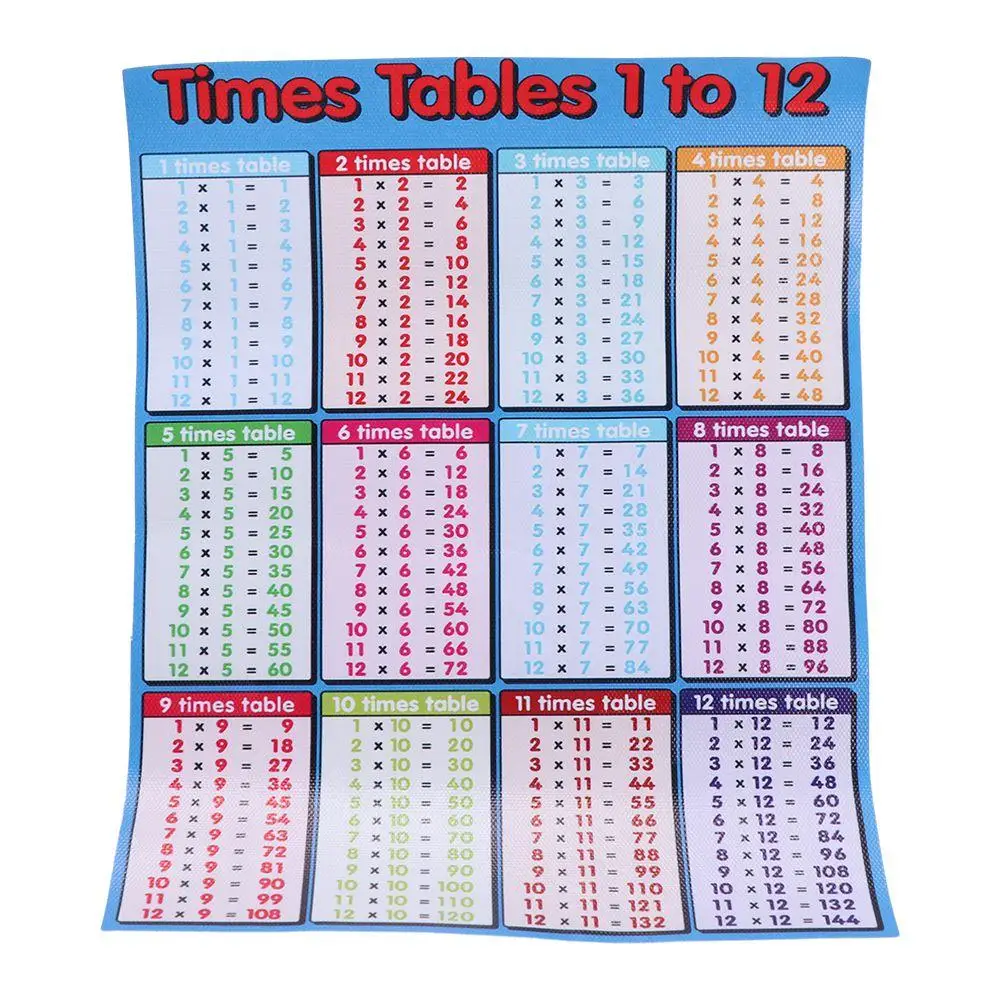
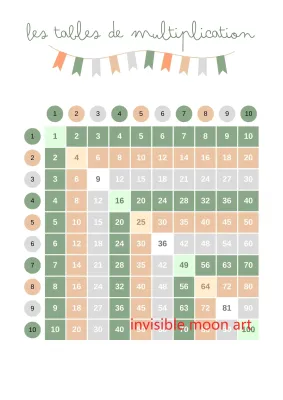
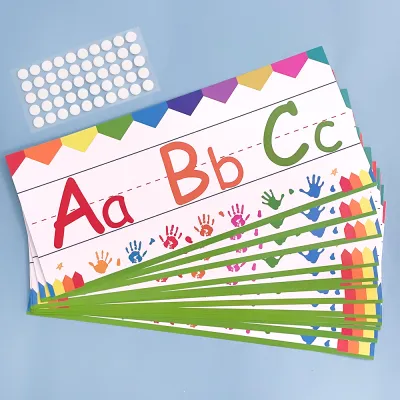
Prices are valid at publication and may change. Please refer to the product page for the latest price.

Curriculum Alignment and Cognitive Load
When selecting a math poster, the primary consideration is how well the visual content aligns with the structured progression of the primary mathematics syllabus. In Singapore, the mathematics curriculum emphasizes a concrete-pictorial-abstract approach. Therefore, a poster should not merely display abstract formulas; it must feature clear pictorial representations, such as bar models, place value discs, or ten-frames, that bridge the gap between physical manipulatives and abstract numbers.
Furthermore, cognitive load is a critical factor in student comprehension. Many commercial posters suffer from cluttered designs, featuring excessive decorative illustrations, unnecessary cartoon characters, or a chaotic mix of bright colors. These elements distract young learners from the core mathematical concept being taught.
Educators should look for posters that utilize a clean, minimalist layout with high-contrast color coding to distinguish different mathematical elements—such as separating tens and ones in a place value chart. The typography must also be exceptionally clear, utilizing sans-serif fonts that are easily readable from a distance, ensuring that students seated at the back of the classroom can follow the lesson without straining their eyes.
Magnetic Backing and Material Durability
The physical construction of a magnetic poster determines its longevity and safety in a high-traffic classroom environment. Teachers should carefully examine the type of magnetic backing used. Many lower-cost options utilize small spot magnets glued to the corners of a standard paper poster. These models are highly prone to peeling, sagging in the middle, or curling at the edges, which not only looks untidy but also makes writing around them difficult.
Instead, opt for posters featuring a full-surface flexible magnetic sheet backing. This ensures the entire poster adheres flatly and securely to the magnetic whiteboard, preventing accidental dislodgement when a teacher or student brushes past.
Material durability is equally vital, especially in tropical climates where humidity can cause paper products to warp or delaminate. The front surface of the poster should feature a high-quality, heavy-duty lamination. It is highly recommended to choose a matte or anti-glare finish rather than a high-gloss surface. High-gloss lamination reflects overhead classroom lights, creating blind spots for students sitting at certain angles.
Additionally, check that the edges of the poster are fully sealed. Unsealed edges allow moisture and oils from fingers to penetrate the paper core, leading to premature peeling and unsightly staining over semesters of use.
Sizing and Visibility for Classroom Layouts
Classroom whiteboards are premium real estate, often shared between written notes, projection screens, and various teaching aids. Before purchasing any magnetic math poster, teachers must measure their available whiteboard space to ensure the poster fits comfortably without blocking interactive writing areas. A poster that is too large will dominate the board, leaving little room for step-by-step problem solving, while a poster that is too small will fail to engage the class.
To determine the ideal dimensions, consider the maximum viewing distance in a standard classroom, which can often exceed six to eight meters. For a poster to be legible from the back row, the primary text and numbers should have a minimum height of at least five to eight centimeters. Graphic elements, such as fraction circles or geometric shapes, must be scaled proportionally.
When multiple visual aids are used concurrently—such as displaying both a fraction wall and a percentage chart—modular or smaller, highly focused posters are preferable to a single massive chart. This modularity allows teachers to arrange the visual aids dynamically to match the flow of the lesson.
Categorizing Math Posters by Learning Stage
Different primary school levels require distinct visual and structural approaches to mathematics. Grouping posters by learning stage ensures that the cognitive demands of the visual aids match the developmental readiness of the students.
Foundational Number Sense and Operations
For lower primary students, the focus is heavily on building foundational number sense, basic arithmetic, and place value. Posters designed for this stage must emphasize concrete and pictorial representations. Essential tools include interactive hundred charts, number lines, and place value matrices that utilize clear visual groupings.
When evaluating these posters, look for designs that clearly group numbers in blocks of ten or five, which helps young children develop subitizing skills—the ability to instantly recognize the number of objects in a small group without counting them individually. Because these foundational posters are referenced daily and often touched by students during interactive activities, they must feature exceptionally robust lamination and rounded corners to prevent cuts or fraying.
The visual design should be simple, using bright but distinct colors to differentiate place values (such as yellow for ones, green for tens, and blue for hundreds) to reinforce the concept of regrouping.
Advanced Concepts: Fractions, Geometry, and Data
As students progress to upper primary levels, the mathematical concepts become more abstract and spatially demanding. Visual aids for this stage—covering fractions, decimals, percentages, geometry, and data analysis—require absolute geometric and proportional accuracy.
For instance, a fraction poster displaying fraction bars or pie charts must be mathematically precise; a bar representing one-third must be exactly one-third the length of the whole bar. Any visual inaccuracy can lead to deep-seated misconceptions in students. Similarly, geometry posters showing shape nets, angle properties, or coordinate grids must feature clean, precise lines and accurate angle representations.
Data handling charts, such as line graphs or pie charts, must include clearly defined axes, precise grid lines, and legible legends. Because these topics involve complex visual data, the posters should avoid decorative clutter entirely, focusing instead on clean, technical layouts that mirror the diagrams students will encounter in their examinations.
Interactive and Modular Magnetic Sets
While static reference posters are excellent for passive reinforcement, interactive and modular magnetic sets actively engage students in the learning process. These sets typically consist of a main magnetic base plate and multiple movable magnetic pieces, such as individual fraction tiles, algebraic symbols, or geometric shapes that can be rearranged on the whiteboard.
However, modular sets introduce specific practical challenges that teachers must evaluate. The primary risk is the loss of small, individual magnetic pieces, which can quickly render an expensive set incomplete. Teachers should look for sets that include a dedicated, labeled storage board or a durable storage pouch to keep pieces organized.
Furthermore, the magnetic strength of the individual manipulatives must be verified; they must be strong enough to stick firmly over the top of the main poster or whiteboard without sliding down, yet easy enough for small hands to remove and reposition without scratching the board surface.
Building Your Product Shortlist and Purchasing Checklist
When sourcing magnetic math posters for a school or department, a structured purchasing checklist ensures that public or school funds are spent wisely on high-quality, long-lasting materials. Rather than purchasing impulsively from generic online marketplaces, school buyers should seek out established educational stationery suppliers and specialized school vendors.
Before committing to a bulk purchase, use the following checklist to evaluate potential suppliers and products:
- Syllabus Compatibility: Verify that the terminology, symbols, and visual models used on the posters align precisely with the local mathematics curriculum. For example, ensure that currency representations display local denominations (such as S$ coins and notes) rather than foreign currencies.
- Supplier Credentials: Choose vendors that specialize in educational supplies and offer clear product warranties. Reliable suppliers should be able to provide detailed material specifications, including the thickness of the magnetic backing and the type of lamination used.
- Sample Testing: Whenever possible, request a physical sample of the poster or a smaller test piece. Test the magnetic pull on your classroom's specific whiteboard surface, as some older whiteboards have weaker magnetic properties. Check the print quality under classroom lighting to ensure there is no distracting glare.
- Bulk Pricing and Replacement Policies: Inquire about bulk discounts for school-wide purchases. Additionally, check if the supplier offers individual replacement pieces for modular sets, which is crucial for maintaining the usability of interactive kits over several years.
- Delivery and Academic Calendar Alignment: Confirm the delivery lead times with the supplier. Ensure that the order is placed well in advance of the new academic year or term to allow ample time for installation and lesson planning.
Installation, Care, and Whiteboard Compatibility
Proper installation and maintenance are essential to maximize the lifespan of both your magnetic math posters and the classroom whiteboards they adhere to. Before applying a new magnetic poster, it is critical to prepare the whiteboard surface. Wipe the board down with a specialized whiteboard cleaner to remove any dry-erase marker residue, dust, or grease. A clean surface ensures maximum magnetic contact and prevents trapped particles from scratching the board.
When cleaning the posters themselves, avoid using harsh chemical solvents, alcohol-based cleaners, or abrasive scrubbing pads. These substances can strip away the protective anti-glare lamination, leading to faded print and a shiny, reflective surface that is difficult for students to read. Instead, use a soft, damp microfiber cloth with a mild soap solution to gently wipe away dust or accidental marker stains.
If a dry-erase marker is accidentally used on a non-writable poster surface, scribbling over the mark with a fresh dry-erase marker and immediately wiping it off with a soft cloth can often lift the stain without damaging the underlying print.
Proper storage is equally important when the posters are not in use. Never fold magnetic posters, as this creates permanent creases that break the magnetic backing and cause the poster to lift from the whiteboard. Instead, store them completely flat in a shallow drawer or roll them loosely with the printed side facing outward. Rolling them with the print facing out ensures that when unrolled, the edges curl toward the whiteboard, aiding in flat adhesion rather than peeling away from the surface.
Finally, periodically inspect the whiteboard for signs of wear. Avoid dragging heavy magnetic items across the board surface, as trapped grit underneath can leave deep scratches that permanently ruin the whiteboard’s writing finish.
Frequently Asked Questions (FAQ)
Can magnetic posters damage standard classroom whiteboards?
Yes, magnetic posters can potentially damage whiteboards if not handled correctly. The primary cause of damage is not the magnet itself, but rather the grit, dust, or metal filings that can become trapped between the magnetic backing and the whiteboard surface. When a heavy poster is dragged across the board to reposition it, these trapped particles act as an abrasive, scratching the delicate porcelain or painted steel coating of the whiteboard.
To prevent this, always lift the poster completely off the board to reposition it rather than sliding it. Additionally, regularly wipe down both the whiteboard and the magnetic backing of the poster with a clean, dry microfiber cloth to remove any accumulated debris.
How do I clean laminated magnetic posters without fading the print?
To clean laminated magnetic posters safely, always use non-abrasive materials and gentle cleaning agents. A soft microfiber cloth slightly dampened with water is usually sufficient for daily dust removal. For tougher stains or finger oils, a highly diluted solution of mild dishwashing liquid can be used. Avoid using window cleaners, multi-purpose sprays, or alcohol wipes, as the harsh solvents in these products can dissolve the anti-glare coating over time, causing the print to fade or become highly reflective.
If a student or teacher accidentally writes on the poster with a whiteboard marker, test a small, inconspicuous corner first before attempting to clean it. If the lamination is dry-erase compatible, wipe it off immediately; if not, gently apply a small amount of isopropyl alcohol on a cotton pad, wiping carefully without saturating the edges of the poster.
Community discussion
Share your experience or ask a question. Comments are reviewed before publication.