
Choosing the right label sticker for school supplies depends on matching the sticker’s material, size, and adhesive strength to your child’s current grade level and daily school activities. Primary school students require highly durable, waterproof, and visually distinct labels to prevent frequent loss of water bottles, stationery, and uniforms. Secondary school students benefit from minimalist, residue-free, and discreet labels designed for textbooks, folders, and personal electronics like scientific calculators. By selecting labels tailored to these specific academic stages, you can ensure school gear remains organized and identifiable throughout the school year.
Core Specifications to Check Before Ordering Label Stickers
Before purchasing any label sticker, parents must evaluate several physical and adhesive specifications to ensure they match the intended school supplies. Size is the first critical factor. A comprehensive labeling strategy requires a mix of sizes: large labels (approximately 40mm to 60mm in width) for lunchboxes and water bottles, medium labels (around 30mm by 15mm) for notebooks and folders, and ultra-narrow mini labels (often 20mm by 5mm) to wrap around slim items like pens, pencils, and paintbrushes.
Adhesive performance must be matched to the surface material of the item. Permanent adhesives work best on high-use plastics, metals, and glass, ensuring the label does not peel during daily handling or washing. Removable or low-tack adhesives are preferable for rented textbooks, library books, or expensive electronic devices where you want to avoid permanent marking or surface damage.
Products mentioned in this guide
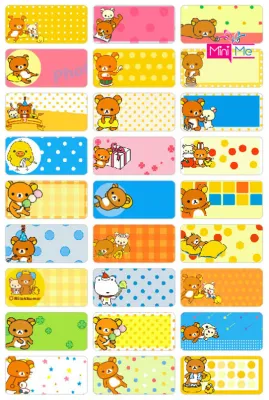
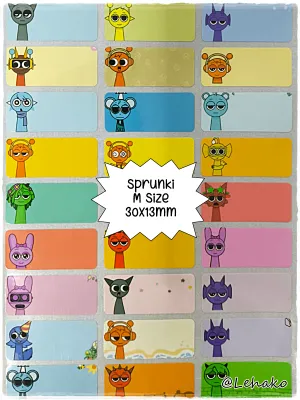
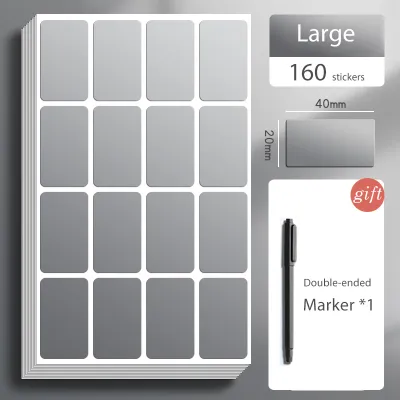
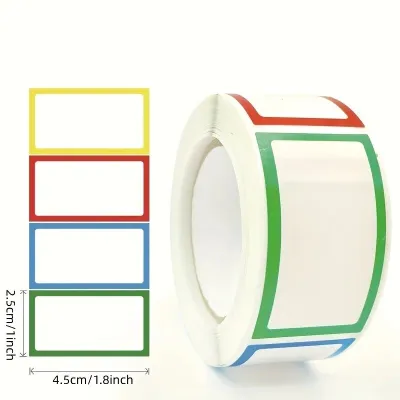
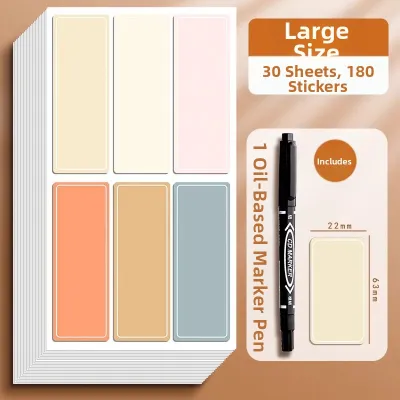
Prices are valid at publication and may change. Please refer to the product page for the latest price.
Customization options also play a vital role in usability. For younger children who are still developing reading skills, look for label designs that allow high-contrast, bold fonts alongside a simple, recognizable icon, such as an animal or geometric shape. This visual cue helps pre-readers identify their belongings instantly. For older students, clean, minimalist fonts with high color contrast (such as black text on a white or clear background) ensure legibility without appearing overly childish.
While a basic set of custom labels might cost around S$10 to S$20, verifying the material quality beforehand prevents the need for mid-term replacements.
Ideal Label Sticker Types for Primary School Students
Primary school environments are highly active, and items frequently go missing in classrooms, playgrounds, and school buses. For younger children, label stickers must be exceptionally durable, highly visible, and easy to recognize at a glance to prevent mix-ups during busy school days.

Large and Durable Labels for Daily Carry Items
Daily carry items like water bottles, food containers, and school bags are subjected to constant friction, moisture, and frequent washing. When selecting label stickers for these items, verify that the manufacturer specifies waterproof and scratch-resistant properties, typically achieved through a laminated vinyl construction. Look for labels with bright, distinct background colors and personalized icons. These visual elements allow younger primary students to spot their own lunchbox or bottle from a distance, even if they cannot yet read their name clearly. Ensure the adhesive is rated to withstand daily hand-washing and exposure to condensation without peeling at the corners.
Mini Labels for High-Loss Small Stationery
Small stationery items like pencils, color pencils, erasers, and rulers are the most frequently lost items in primary school. Standard-sized labels are too wide for these items, making narrow mini labels or wrap-around flag labels essential. These stickers must feature an exceptionally strong adhesive to resist the constant friction of being slid in and out of pencil cases, as well as the inevitable handling and occasional chewing by young children. When applying labels to round or hexagonal pencils, choose flexible vinyl materials that can wrap completely around the barrel and overlap onto themselves, which significantly reduces the risk of the edges lifting over time.
Washable Clothing Labels for Uniforms
School uniforms, physical education (PE) kits, hats, and jackets are easily misplaced during activities. To keep these items identified, parents can choose between iron-on labels, stick-on clothing tags, or sewn-in woven labels. In warm, high-humidity climates like Singapore, uniforms undergo frequent, heavy washing cycles to remove sweat and dirt. Therefore, any clothing label must be verified for high-temperature wash resistance. Iron-on labels fuse directly with the fabric fibers, making them highly durable if applied correctly with sufficient heat. Alternatively, specialized stick-on clothing labels can be applied directly to the polyester care tags of garments, offering a quick, no-iron solution that relies on high-strength, laundry-safe adhesive.
Ideal Label Sticker Types for Secondary School Students
As students transition to secondary school, their aesthetic preferences shift toward more mature, subtle designs. The labels used during this stage should focus on sleek organization, clear identification, and compatibility with specialized academic gear and personal electronics.
Discreet and Clear Labels for Electronics
Secondary school students frequently carry high-value electronics, including scientific calculators, tablets, laptops, and wireless headphones. For these devices, choose discreet, clear, or matte-finish vinyl label stickers that blend seamlessly with the device’s surface. It is crucial to select labels designed for residue-free removal. This ensures that when the label is eventually peeled off, it leaves no sticky film behind, preserving the device’s surface finish, protecting manufacturer warranties, and maintaining resale or trade-in value. Avoid placing labels directly over ventilation grilles, ports, or screen areas to prevent device malfunction.
Standard Labels for Textbooks and Folders
With an increased number of subjects, secondary students must manage multiple heavy textbooks, lecture pads, and ring folders. Medium-sized rectangular labels with clean, minimalist typography are ideal for organizing these materials by subject or name. Because textbooks and folders are frequently shoved into tightly packed backpacks or school lockers, the labels must possess excellent edge-peel resistance. Look for stickers with rounded corners, as sharp square corners are far more susceptible to catching on fabrics or other books and peeling back over time.
Material and Durability Verification Checklist
To ensure you are purchasing high-quality label stickers that will last the entire school year, use this verification checklist before finalizing your order:
- Waterproof and Temperature Specifications: Check the manufacturer's product care instructions to verify if the labels are rated as waterproof and dishwasher-safe. This is particularly important for drinkware and lunchboxes that undergo daily hot-water washing or sterilization.
- UV-Resistant Ink Claims: Verify if the printing process uses UV-resistant inks. Labels on water bottles, school bags, and PE gear are frequently exposed to direct sunlight during outdoor recess, physical education classes, and daily commutes. Standard inks can fade rapidly under intense sunlight, rendering the text illegible within a few months.
- Backing Paper and Peeling Features: Examine the product description for details on the backing paper. High-quality labels often feature a split-back liner or a flexible backing sheet that allows for easy peeling. This prevents the corners of the stickers from creasing or tearing during the application process, ensuring a clean, flat bond with the target surface.
- Material Composition: Confirm that the base material is vinyl, polyester, or a specialized synthetic compound rather than standard paper. Synthetic materials offer the necessary tensile strength to resist tearing when stretched or subjected to friction.
How to Apply and Remove Labels Without Damaging Supplies
Proper application is just as important as selecting the right label material. To achieve maximum adhesion, begin by thoroughly preparing the surface of the school supply. Clean the area with a small amount of rubbing alcohol or mild soapy water to remove any dirt, oils, or manufacturing residues. Ensure the surface is completely dry before proceeding, as even microscopic moisture droplets can prevent the adhesive from bonding fully.
When applying the label, peel it carefully from the backing sheet, holding it by the edges to avoid transferring oils from your fingers to the adhesive side. Align the label over the desired area, then press down firmly starting from the center and smoothing outward toward the edges. This technique pushes out any trapped air bubbles, which can otherwise expand and cause the label to lift. Pay extra attention to the edges and corners, pressing them down firmly for several seconds to activate the pressure-sensitive adhesive.
When it is time to remove or replace a label, do so carefully to avoid damaging the underlying item. For stubborn vinyl labels, apply mild heat using a hairdryer on a low setting for a few seconds to soften the adhesive. Gently peel the label back from one corner at a shallow angle. If sticky residue remains, use a mild adhesive remover or a drop of cooking oil on a soft cloth to gently lift the residue. Always test a small, inconspicuous area first, and if you encounter resistance on delicate surfaces like electronic screens or coated book covers, stop and consult the item manufacturer’s care guidelines to prevent permanent surface damage.
Frequently Asked Questions (FAQ)
Can I use regular paper stickers instead of vinyl label stickers for school supplies?
Regular paper stickers are generally not recommended for daily school supplies because they degrade rapidly when exposed to moisture, spills, and friction. Paper absorbs water, causing the ink to bleed and the sticker to tear or disintegrate during washing or rainy commutes. However, paper stickers can be an acceptable, cost-effective choice for temporary, indoor-only applications. For example, they work well on short-term project folders, interior notebook dividers, or homework files that remain protected inside a backpack and are not subjected to heavy wear or washing.
How do I safely remove sticky residue left behind by old labels?
To safely remove sticky residue without damaging your child’s school supplies, start with the gentlest method. Rubbing a small amount of vegetable oil, olive oil, or soapy water onto the residue with a microfiber cloth can often lift the adhesive mechanically. For sturdier plastic or metal items, rubbing alcohol can dissolve the sticky bond effectively. However, exercise extreme caution with sensitive surfaces. Avoid using harsh chemical solvents or abrasive scrubbing pads on soft plastics, electronic screens, and coated textbooks, as these can cause clouding, scratching, or stripping of protective coatings. If the residue is on a delicate device, consult the manufacturer’s cleaning instructions before applying any liquid.
Community discussion
Share your experience or ask a question. Comments are reviewed before publication.