
Memorization relies heavily on active recall, a technique where you actively stimulate your memory for a piece of information. While digital flashcard apps are highly accessible, physical cue cards offer tactile engagement that enhances cognitive retention. However, a poorly chosen card can disrupt your study flow. To find the most effective cue cards, you must evaluate physical attributes like paper weight, surface finish, dimensions, ruling styles, and organizational features. Selecting the right combination ensures your cards survive daily handling, fit your study environment, and remain legible under various lighting conditions.
Paper Weight and Finish: Preventing Bleed-Through and Smudging
Paper weight is measured in GSM (grams per square meter) and directly determines the thickness and opacity of your cards. Standard printer paper typically ranges from 70 to 80 GSM, which is far too flimsy for flashcards. Basic index cards often sit around 150 GSM, while premium, heavy-duty cardstock ranges from 200 to 300 GSM. Higher GSM values offer excellent opacity, preventing wet inks from gel pens, highlighters, or fine liners from bleeding through to the opposite side. If you plan to write a question on the front and an answer on the back, high opacity is non-negotiable to prevent spoiling the answer prematurely.
The surface finish also dictates your writing experience. Coated, ultra-smooth cards reduce friction, allowing ballpoint pens and gel pens to glide effortlessly. However, these glossy surfaces slow down ink drying times, which can lead to frustrating smudges, especially for left-handed writers. Uncoated, slightly textured matte papers absorb ink almost instantly, minimizing smudging. The trade-off is that very wet inks might experience feathering, where the ink spreads along the paper fibers. Because ink formulas and pen tips behave differently on various surfaces, always perform an observable trial. Test your favorite study pen on a single card before buying a bulk pack, checking for drying speed, bleed-through, and line crispness.
Products mentioned in this guide
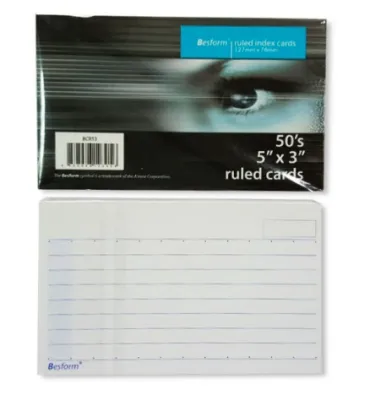
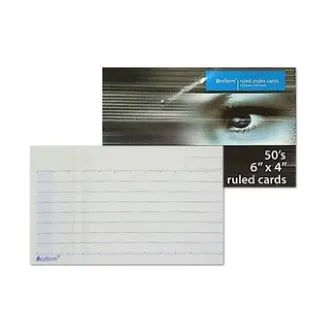
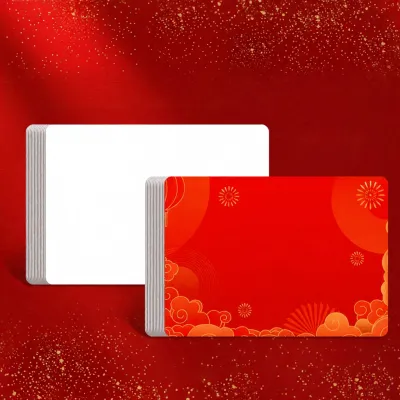
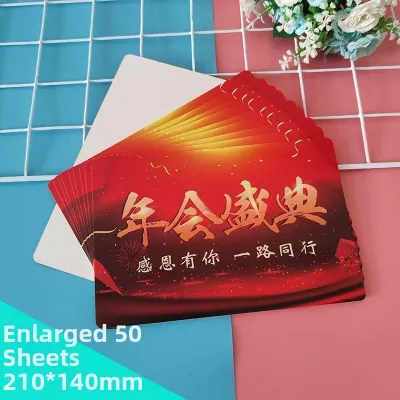
Prices are valid at publication and may change. Please refer to the product page for the latest price.
Card Dimensions: Balancing Portability with Writing Space
Dimensions dictate how much information you can fit and how you interact with your cards. The most common standard size is 3×5 inches (approximately 76×127 mm, similar to A7). This size is highly portable, fitting comfortably in a pocket, pencil case, or small pouch. It is easy to hold and shuffle with one hand, which is ideal if you study during your daily commute on the MRT or bus in Singapore’s transit system.

Larger sizes, such as 4×6 inches (approximately 102×152 mm, similar to A6) or even 5×8 inches, provide substantial writing space. These are excellent for complex subjects like chemistry, engineering, or mathematics, where you need room to draw molecular structures, write out multi-step equations, or sketch detailed anatomical diagrams.
However, larger cards can inadvertently hinder your memorization strategy. Effective active recall relies on the “one concept” rule: each card should contain only one distinct question and answer. Smaller 3×5 cards naturally enforce this discipline, forcing you to distill complex ideas into concise, bite-sized summaries. Larger cards often tempt you to crowd the space with excessive notes, turning a quick-review flashcard into a dense, overwhelming study sheet. Consider your primary study location; if you work mostly at a spacious desk, larger cards are manageable, but for on-the-go review, smaller cards are vastly superior.
Ruling Styles: Matching the Layout to Your Study Subject
The interior layout of a cue card should match the nature of the subject you are studying. Standard lined (ruled) cards are the most common and are ideal for text-heavy subjects, such as learning foreign language vocabulary, historical dates, or legal definitions. The horizontal lines provide structure, keeping your handwriting neat and consistent across dozens of cards.
For STEM subjects, grid or dot-grid patterns are far more functional. These subtle patterns provide vertical and horizontal alignment guides without the visual clutter of solid lines. They make it easy to plot graphs, draw geometric shapes, or design flowcharts.
Blank cards offer complete creative freedom. They are the preferred choice for visual learners who use large, bold lettering, color-coded sketches, or non-linear mind maps to anchor their memory. Without lines to constrain your layout, you can utilize white space effectively to make key terms stand out. When selecting a style, focus on reducing cognitive friction; choose the ruling that allows you to translate your study material onto the paper with the least amount of effort.
Organizational Features: Binding, Sorting, and Storage
Managing a large deck of cue cards requires smart physical design features. Pre-punched holes paired with metal binder rings are incredibly useful for keeping your study sets organized. They allow you to flip through cards quickly without the risk of dropping and scattering them, which is a common hazard when studying in public spaces. Ensure the punched holes are clean and, if possible, reinforced to prevent the cardstock from tearing after repeated flipping.
Color-coding is another powerful organizational tool. Purchasing multi-colored packs or cards with distinct colored borders allows you to categorize your study materials at a glance. You can assign different colors to different subjects, chapters, or difficulty levels. For instance, in a spaced repetition system, you might use red cards for concepts you struggle with, yellow for moderate recall, and green for mastered topics.
Given Singapore’s high humidity, paper products are prone to absorbing moisture from the air, which can cause them to warp or soften over time. Storing your cards in a rigid plastic or wooden index card box, or using a protective zippered pouch, keeps them flat, dry, and protected from edge wear when tossed inside a backpack. Avoid prioritizing purely decorative edges or novelty shapes, as they do not contribute to learning efficiency and can make shuffling difficult.
Frequently Asked Questions (FAQ)
Can I just cut regular printer paper instead of buying dedicated cue cards?
While cutting standard A4 printer paper is a low-cost alternative, it is not ideal for long-term study. Standard printer paper typically ranges from 70 to 80 GSM, making it highly susceptible to ink bleed-through and shadowing. The thin sheets lack the structural rigidity required for easy shuffling and are prone to bending, tearing, and warping when exposed to finger oils or humidity. Dedicated cue cards are engineered from heavier cardstock designed to withstand constant handling and physical review.
Should I write on both sides of the cue card?
Yes, but only if you use them for prompt-and-response active recall. The standard practice is to write the question, term, or prompt on the front side, and the answer, definition, or explanation on the back side. Avoid writing unrelated information on the back, as this defeats the purpose of testing your memory. If you choose to write on both sides, ensure your cards are made of heavyweight paper (at least 200 GSM) to prevent the ink on the back from showing through to the front, which can ruin the challenge of the prompt.
Community discussion
Share your experience or ask a question. Comments are reviewed before publication.