
Using flash cards blank and customized to your specific study needs can transform how quickly you retain complex information. While digital study apps are popular, physical cardstock provides a tactile writing experience that significantly enhances cognitive encoding and memory retention. However, not all cards are created equal; the ideal size, paper weight, and layout depend entirely on the subject you are tackling.
By matching the physical format of your study tools to your specific learning tasks, you can optimize your study sessions, reduce visual clutter, and make active recall far more efficient. Whether you are preparing for high-stakes exams or mastering a new language, selecting the right physical medium is the first step toward academic success.
Quick Guide: Matching Flash Card Formats to Study Subjects
Matching the physical format of your study tools to the cognitive task at hand directly improves active recall efficiency. Different subjects demand distinct layouts to accommodate varying levels of detail, from single-word translations to complex multi-step equations.
Products mentioned in this guide
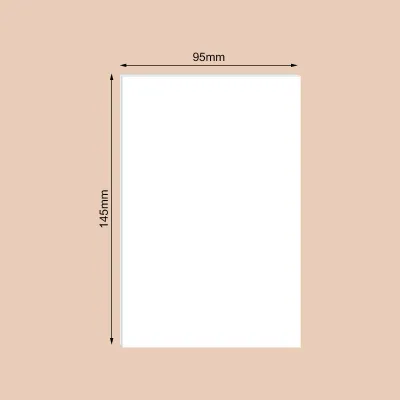
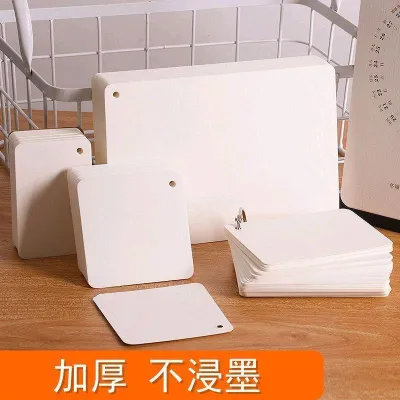
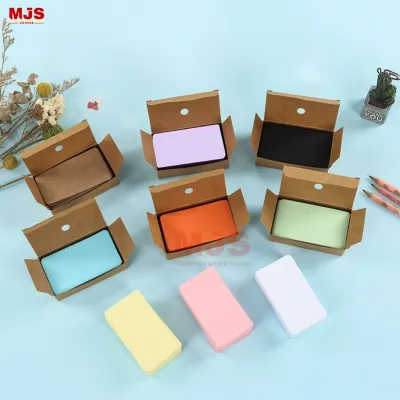
![[SG] Flash Blank Card 100pcs Note Index Card Blank Korean Portable Buckle Binder Notes DIY Stationery Flash Cards](https://img.lazcdn.com/g/p/75bee323a39b3d06bb2f6992f36a92f4.jpg_400x400q80.jpg_.webp)
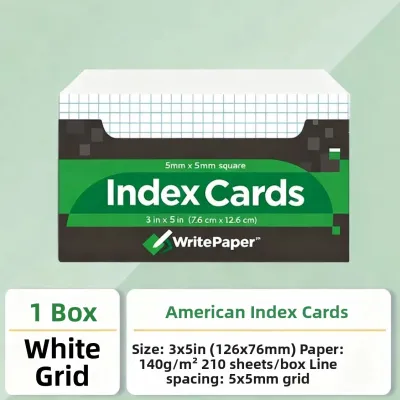
![[SG] 100pcs 350gsm Thick Blank Kraft Flash Card Gift Card for Christmas Birthday Wedding Message Card](https://img.lazcdn.com/g/ff/kf/S3edc0c7b24ed4d9086b3ded2c41132e4V.jpg_400x400q80.jpg_.webp)
Prices are valid at publication and may change. Please refer to the product page for the latest price.
| Study Subject | Recommended Standard Size | Format Preferences | Primary Study Method |
|---|---|---|---|
| Vocabulary & Languages | 3×5 inches (A7 equivalent) | Unlined (for character scripts) or Lined (for alphabetic), double-sided | Rapid recall, high-volume spaced repetition |
| STEM & Diagrams | 4×6 or 5×8 inches (A6/A5) | Unlined, grid, or dot-grid, double-sided | Step-by-step solutions, visual mapping, formula practice |
| History, Law & Concepts | 5×8 inches (A5 equivalent) | Lined/ruled, single or double-sided | Chronological timelines, case briefs, essay outlines |
Selecting a card that aligns with these recommendations ensures you have enough space to write clearly without carrying unnecessary bulk during your daily commute.
Choosing the Right Size and Layout for Flash Cards Blank Formats
The physical dimensions and surface layout of your study cards directly influence how you organize information. Choosing an inappropriate size can lead to cramped, illegible handwriting or wasted space that disrupts your visual focus.

Language Learning and Vocabulary
For high-volume memorization and rapid recall, standard or compact card sizes like 3×5 inches (or A7) are highly recommended. These smaller dimensions are incredibly portable, making them easy to pack into a pencil case or flip through quickly during a train ride on the MRT.
When setting up your vocabulary decks, double-sided cards are essential for active recall. Place the target word or phrase on the front, and the translation, pronunciation guide, and a brief example sentence on the back.
The choice between lined and unlined formats should depend on the script of the language you are studying. Unlined cards are superior for character-based languages like Mandarin, Tamil, or Japanese, where varied stroke heights and intricate radicals require clean, unconstrained space. Conversely, lined formats are ideal for alphabetic languages like English, Malay, or French, helping you keep your definitions and grammatical notes perfectly aligned.
STEM, Math Formulas, and Diagrams
Science, technology, engineering, and mathematics modules require a much larger canvas than vocabulary list building. For these subjects, larger sizes like 4×6 or 5×8 inches (A6 or A5) are necessary to accommodate multi-step math formulas, chemical structures, or detailed biological diagrams.
Using unlined, blank, or dot-grid formats is highly beneficial here. Horizontal lines can interfere with the visual clarity of drawn graphs, geometric shapes, and molecular structures. A dot-grid offers the perfect compromise, providing subtle alignment guides for plotting coordinates without adding visual clutter.
To maximize the active recall value of STEM cards, use the front side exclusively for the initial problem, equation prompt, or unlabeled diagram. Use the reverse side to write out the complete, step-by-step solution. Clearly mark critical transition steps or formulas in a different color to help you identify exactly where your reasoning might falter during practice.
History, Law, and Long-Form Concepts
Subjects that require synthesizing dense qualitative information, such as legal case summaries, historical timelines, or sociological theories, demand jumbo or extra-large cards. A 5×8 inch (A5 equivalent) card provides the ample writing space needed to outline complex arguments without running out of room.
Ruled or lined formats are highly advantageous for these subjects. They provide the structure necessary to write neat, legible paragraphs, bulleted lists, or chronological timelines.
Because these subjects involve heavy text, you must avoid the temptation to write entire textbook pages onto a single card. Instead, use standard abbreviations and bullet points to keep information concise. Highlight key terms or landmark legal rulings to ensure the core concepts stand out immediately when you flip the card over.
Essential Paper and Design Features to Evaluate
Beyond size and layout, the physical construction of your stationery plays a vital role in how long your study materials last and how pleasant they are to use.
Paper Weight and Thickness (GSM)
Paper density is measured in grams per square meter (GSM). To prevent ink bleed-through or ghosting, look for cardstock that is at least 150 GSM, with 200 to 250 GSM being ideal for heavy double-sided use. This is especially important if you prefer using liquid gel pens, highlighters, or fountain pens, which release more wet ink onto the page. Always check the product packaging specifications before purchasing; if the GSM is not listed, perform an observable trial by writing a test word on a single card to verify bleed resistance and drying speed before preparing an entire deck.
Binding and Portability Options
Loose-leaf cards are the classic choice, allowing you to shuffle your deck easily and randomize the order of your questions—a key component of effective spaced repetition. However, if you study on the go, pre-punched cards held together by metal binder rings offer excellent security, preventing your decks from scattering in your bag. The trade-off is that ring-bound cards are more cumbersome to shuffle, so you may need to open the ring periodically to manually reorder your cards.
Corner Cuts and Durability
Cards designed with rounded corners are significantly more durable than traditional square-cut cards. Rounded edges resist dog-earing, glide past each other smoothly during rapid shuffling, and experience less wear and tear when pulled in and out of storage cases or pockets over a long academic term.
Color-Coding Systems
Using colored cardstock or cards with colored borders is an incredibly effective way to organize your study materials. You can assign different colors to represent specific subjects, chapters, or levels of difficulty (for example, red for difficult concepts, yellow for moderate, and green for mastered items). This visual system allows you to manage multi-subject study schedules without needing bulky physical dividers.
Cross-Subject Compatibility and Organization Tips
Managing multiple subjects simultaneously requires a systematic approach to keep your materials organized and your study sessions productive.
Selecting a Verseratile Mid-Sized Card
If you are buying flash cards blank in bulk to cover a variety of academic modules, a 4×6 inch card serves as the ideal middle-ground. This size is large enough to handle basic diagrams and formulas for science classes, yet compact enough to remain highly portable for vocabulary drills. It offers a balanced compromise that prevents you from having to purchase and manage multiple different card sizes.
Effective Storage and Organization Tools
To keep your card decks in pristine condition, avoid throwing them loosely into a backpack where they can easily crumple. Instead, utilize simple storage tools like sturdy rubber bands, plastic index card boxes, or dedicated card pouches. Using colored tab dividers within a storage box allows you to separate completed topics from those requiring active, daily review, keeping your study desk tidy and efficient.
Integrating Physical Cards with Active Recall
Physical cards excel because they leverage the tactile benefit of writing by hand, which has been shown to improve cognitive processing compared to typing on a screen. To get the most out of your physical decks, integrate them into a structured spaced repetition system, such as the Leitner box method. By systematically reviewing difficult cards more frequently than easy ones, you optimize your study time and ensure long-term memory retention.
Frequently Asked Questions (FAQ)
Can I use standard blank index cards instead of dedicated flash cards?
Standard index cards and dedicated flash cards share identical dimensions, but they differ significantly in paper weight and construction. Standard office index cards are typically thinner, often around 100 to 120 GSM, which makes them prone to ink bleed-through and ghosting if you use wet gel pens or markers. Dedicated study flash cards generally feature heavier cardstock, rounded corners, or pre-punched holes optimized for frequent handling, double-sided writing, and long-term durability.
What is the best pen to use on blank flash cards to avoid smudging?
To prevent smudging, pair your cards with quick-drying ballpoint pens or pigment-based, fast-drying gel pens with fine tips (such as 0.5mm or 0.7mm). Avoid slow-drying fountain pens, heavy calligraphy inks, or broad permanent markers unless you have verified that the cardstock is exceptionally thick (above 200 GSM) and has a compatible matte finish. Always allow a few seconds of drying time before stacking your cards to keep your study materials clean and legible.
How should I store my blank flash cards to keep them in good condition?
Store your card decks in a cool, dry place away from direct sunlight and high humidity, which can cause paper warping or yellowing over time. When carrying them in a school bag, use a rigid plastic storage box or wrap them with a thick rubber band secured vertically to prevent the edges from bending. Avoid loose storage, as friction against heavy textbooks will quickly crumple the corners and ruin your hard work.
Community discussion
Share your experience or ask a question. Comments are reviewed before publication.