
Finding the right vintage sewing machine cover requires balancing precise physical dimensions with protective material qualities. Unlike modern, uniform plastic machines, vintage models feature irregular cast-iron shapes, protruding hand cranks, delicate painted decals, and vulnerable mechanical parts. To safeguard these historical tools from dust, scratches, and tropical humidity, a cover must offer a tailored fit, a soft non-abrasive interior, and excellent breathability.
Understanding Your Vintage Machine's Dimensions and Shape
Securing a proper fit begins with accurate physical measurements. Vintage sewing machines were not built to a single modern standard, meaning generic covers often fit poorly, either draping loosely and collecting dust underneath or pulling too tightly against delicate components. To measure your machine accurately, you must identify its maximum outer boundaries rather than just the flat base plate.
To determine the correct length, measure from the outermost edge of the handwheel to the opposite edge of the bed plate. If your machine is equipped with an external motor, a hand crank, or a side-mounted bobbin winder, ensure these parts are included in your measurement. For the width, measure from the front edge of the bed plate to the furthest protruding part at the back, which is frequently the motor housing, light fixture, or tension assembly. To find the height, measure from the bottom of the wooden base or table surface to the highest point, typically the spool pins or the top of the faceplate.
Products mentioned in this guide
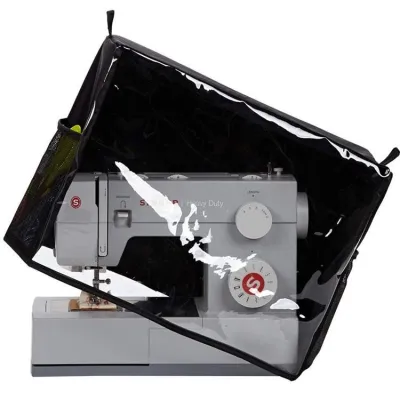
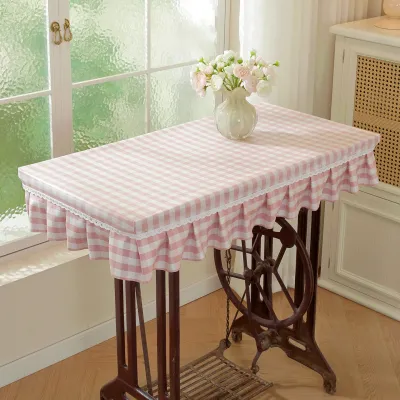
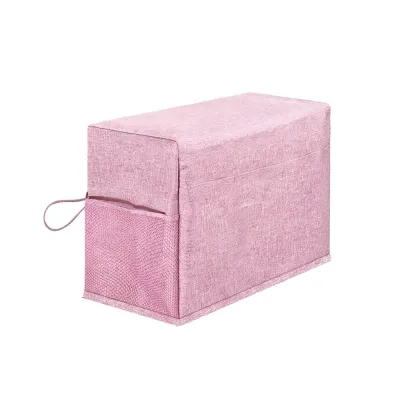
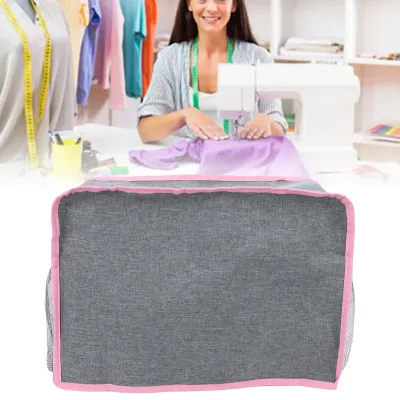
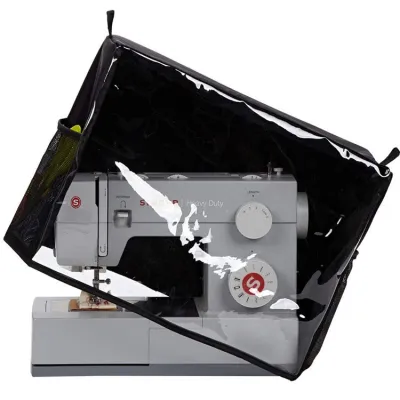
![[Ahagexa] Sewing Machine Cover Protective Cover Pockets Large Capacity Waterproof for Sewing Machine Reusable](https://img.lazcdn.com/g/p/b2594effb730eac1c8666ef050856098.jpg_400x400q80.jpg_.webp)
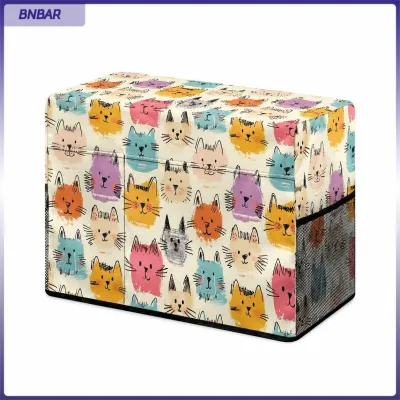
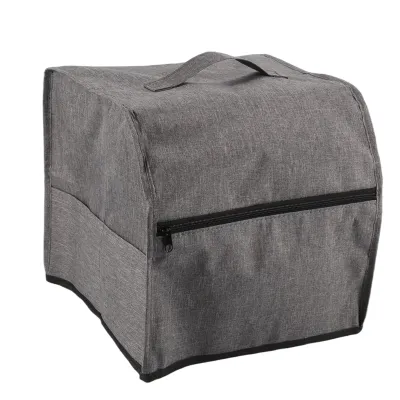
Prices are valid at publication and may change. Please refer to the product page for the latest price.
Vintage machines generally fall into three distinct physical profiles:
- Rectangular profiles: Common in mid-century models, featuring cleaner lines and more predictable boxy shapes.
- Domed profiles: Typical of early 20th-century machines, which often mirror the curved lines of their original wooden bentwood carrying cases.
- Irregular profiles: Hand-crank models or machines with heavy external motors that create asymmetrical protrusions.
You must also account for how the machine is mounted. If your vintage machine sits in a wooden base, a carrying case bottom, or an extension table, the cover must be large enough to drape over the entire assembly. Measuring only the metal head of the machine will result in a cover that sits too high, leaving the lower mechanical gears and wooden base exposed to dust and ambient moisture.
Evaluating Cover Materials for Dust and Moisture Protection
The choice of material directly impacts how well your vintage machine is preserved during long-term storage. The outer shell of the cover serves as the primary barrier against environmental hazards, while the inner lining interacts directly with the machine’s delicate exterior finish.

When evaluating outer materials, look for fabrics that offer a balance of dust resistance and breathability. Heavy cotton duck and canvas are excellent choices because their tight weave blocks dust particles while allowing air to circulate freely. Synthetic polyester blends can offer enhanced durability and water resistance, but they must be checked for breathability to ensure they do not trap stagnant air. Avoid heavy, non-breathable vinyl or plastic covers, as these materials can create a microclimate that traps humidity against the metal body of the machine.
The inner lining is critical for protecting the machine’s aesthetic value. Many vintage machines feature beautiful japanned finishes and intricate gold leaf decals that are highly susceptible to scratching and abrasion. A rough canvas or coarse synthetic backing can gradually wear away these historical details over years of taking the cover on and off. Prioritize covers lined with soft, non-abrasive fabrics such as cotton flannel, microfiber, or cotton sateen to cushion the metal surfaces.
Structural details also play a significant role in overall protection. Look for covers with reinforced, double-stitched seams that prevent dust from seeping through needle holes over time. If the cover features zippers for easy access, ensure there is an inner fabric guard or flap that covers the zipper teeth, preventing them from scratching the machine’s paint during placement or removal. Drawstrings or elasticized bottom hems are highly beneficial, as they allow you to cinch the cover tightly around the base to block drafts from carrying dust upward into the under-carriage gears.
Matching Cover Styles to Machine Types and Storage Setups
The ideal cover style depends heavily on where your vintage sewing machine is kept and how frequently it is used. Matching the cover design to your specific storage setup ensures both practical convenience and optimal protection.
For machines that remain on active display on a sewing table or inside a treadle cabinet, a lightweight slipcover is often the most practical option. Slipcovers can be quickly lifted off when inspiration strikes and easily folded away into a drawer while you work. These covers primarily protect against daily settling dust and light exposure, which can fade vintage wood finishes and dry out mechanical oils over time.
If you store your machine on a closet shelf, in a utility room, or transport it to workshops, a full-enclosure cover is a safer choice. These designs typically feature a bottom panel or a secure wrap-around zipper system that completely seals the machine inside, preventing pests, dirt, and moisture from entering from underneath. When selecting a full-enclosure cover, look for integrated top handles or reinforced cutouts that allow you to access the machine’s original carrying handle without exposing the rest of the unit to the elements.
In humid tropical environments, such as Singapore, storage choices require careful adaptation. High relative humidity can cause rapid rust on bare metal parts and encourage mold growth on wooden bases and carrying cases. In these conditions, fully sealed plastic enclosures should be avoided entirely. Instead, prioritize highly breathable natural fiber covers that allow moisture to evaporate naturally, and consider styles that feature mesh ventilation panels to promote continuous airflow around the machine.
A Conditional Checklist for Selecting Your Cover
To simplify your decision-making process, use this structured checklist to evaluate potential covers against your specific machine and storage environment.
Step 1: Verify Dimensional Clearance
- Measure your machine's maximum length, width, and height.
- Compare these measurements against the interior dimensions specified by the cover manufacturer.
- Ensure there is a clearance of at least 1.5 cm to 2.5 cm on all sides to prevent the cover from putting pressure on delicate spool pins or tension dials.
Step 2: Assess the Storage Environment
- Air-conditioned spaces: A standard cotton or quilted slipcover is sufficient to manage dust.
- Non-air-conditioned or high-humidity spaces: Select highly breathable canvas or cotton duck; avoid solid vinyl or unventilated plastic.
- High-traffic areas: Choose a padded or structured cover to protect against accidental bumps and physical impacts.
Step 3: Evaluate Material and Construction Quality
- Check that the inner lining is made of flannel, microfiber, or another soft, non-abrasive material.
- Verify that any internal zippers are shielded by fabric guards.
- Inspect seam construction to ensure there are no loose threads or wide needle gaps that could let dust pass through.
Step 4: Identify Potential Red Flags
- Unlined rough fabrics: Avoid covers with coarse interior textures that can scratch gold decals.
- Airtight designs: Avoid non-breathable materials in humid regions to prevent moisture retention.
- Poorly finished seams: Avoid covers that shed fibers from their interior seams, as these fibers can mix with sewing machine oil and clog delicate gears.
Maintenance and Care for Your Machine Cover
Maintaining the cleanliness of your sewing machine cover is just as important as protecting the machine itself. Over time, covers accumulate dust, pet hair, and airborne oils that can eventually transfer onto your vintage machine if left unaddressed.
Always consult the manufacturer’s care label before cleaning your cover. Canvas and cotton covers can typically be machine washed on a gentle cycle using mild detergent, while waxed or specially treated fabrics may require spot cleaning with a damp cloth and cold water. Avoid using harsh chemical solvents or bleach, which can degrade the fabric fibers and leave behind residues that might react with your machine’s delicate japanned finish.
It is absolutely critical to ensure the cover is completely dry before placing it back over your sewing machine. Even a tiny amount of residual dampness from washing or spot cleaning can trap moisture against the cast-iron body, leading to rapid rust formation on bare metal parts and mold on wooden bases. Hang the cover in a well-ventilated area and allow it to air dry completely, verifying that the inner lining and seams are dry to the touch before use.
Periodically inspect your cover for signs of wear and tear. Shake the cover out outdoors regularly to remove loose dust particles. Check the inner lining for thinning areas or exposed seams that could begin to abrade the machine’s finish. If you notice any loose threads or fraying edges on the inside of the cover, trim them immediately to prevent them from getting caught in your machine’s tension discs, needle bar, or bobbin assembly.
Frequently Asked Questions (FAQ)
Can I use a modern sewing machine cover for a vintage model?
While you can sometimes use a modern sewing machine cover as a temporary solution, they rarely provide an ideal fit for vintage models. Modern sewing machines are typically designed with boxy, symmetrical plastic frames, whereas vintage machines feature irregular curves, protruding handwheels, external motors, and delicate spool pins. A modern cover may drape awkwardly, putting unwanted pressure on fragile parts like spool pins or leaving large gaps at the bottom that allow dust and pests to enter. Always compare your vintage machine’s exact measurements against the cover’s interior dimensions rather than relying on generic modern sizing.
How do I prevent moisture buildup under the cover in a humid climate?
To prevent moisture buildup in humid climates, avoid using airtight plastic, vinyl, or heavily laminated covers, as these materials trap ambient humidity inside. Instead, choose highly breathable covers made from natural fibers like heavy cotton canvas or duck. To further protect your machine’s metal parts from rust, place high-quality silica gel packets or small hanging desiccants inside the cover, ensuring they do not directly touch any oiled mechanical parts. Additionally, storing your machine in an air-conditioned room or running a dehumidifier in your sewing space will help maintain a safe relative humidity level.
Community discussion
Share your experience or ask a question. Comments are reviewed before publication.