
Finding the right to-do list pad is not just about choosing an attractive layout; it is about matching the paper’s physical properties to your preferred writing instrument. If you use wet-ink tools like gel pens, rollerballs, or felt-tip markers, standard paper can lead to frustrating feathering, ghosting, and bleed-through that ruins the next page. To ensure your daily tasks remain legible and neat, you must look at paper weight, surface treatment, and sizing. By selecting a pad with the appropriate specifications, you can enjoy smooth writing, crisp lines, and fast drying times, even in humid environments like Singapore where ambient moisture can alter how paper absorbs ink.
Why Paper Weight and Finish Matter for Your Daily Tasks
Paper weight is measured in Grams per Square Meter (GSM), which indicates the density and thickness of the sheet. Standard office printer paper typically ranges from 70 GSM to 80 GSM, which is often too thin to handle heavy ink flow without compromising the clean look of the page. For a reliable to-do list pad, aiming for a weight between 90 GSM and 120 GSM provides the necessary thickness to prevent ink from soaking through to the other side. Denser paper fibers create a stronger barrier, significantly reducing the risk of ghosting—where you can see the shadow of your writing on the reverse side—and complete bleed-through, where the ink physically transfers to the sheet underneath.
The surface finish of the paper also dictates how ink behaves when it leaves the pen tip. Uncoated paper has a natural, slightly textured feel because the wood fibers are left exposed. While this texture provides a satisfying tactile feedback for pencils and standard ballpoint pens, it acts like a sponge for liquid inks, drawing the moisture deep into the page. Coated paper, on the other hand, has a thin layer of clay or polymer applied to its surface, which restricts ink absorption and keeps the pigment on top of the page for sharper lines. Lightly sized paper represents a practical middle ground; sizing agents are added during manufacturing to reduce the paper’s porosity, helping it resist liquid penetration without making the surface too slick.
Products mentioned in this guide
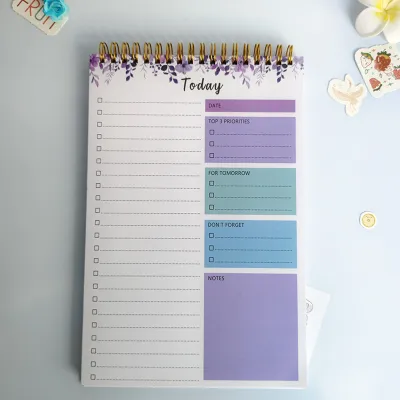
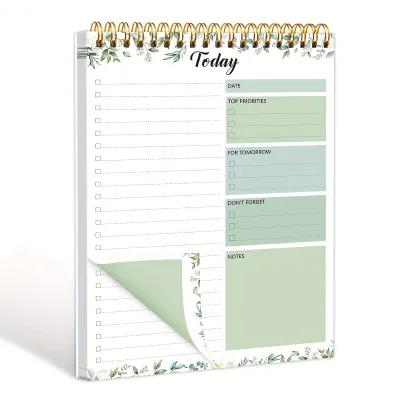
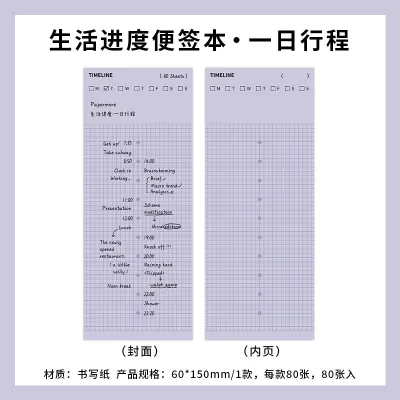
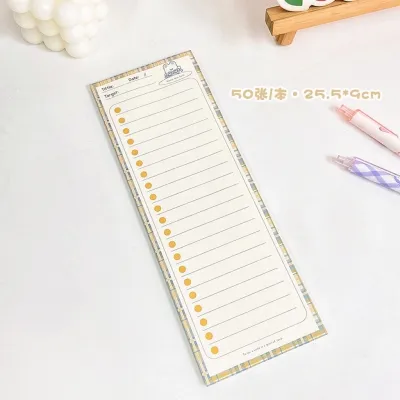
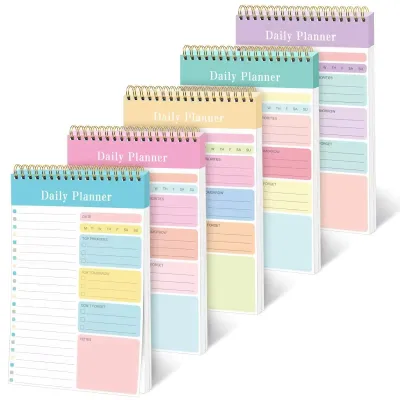
Prices are valid at publication and may change. Please refer to the product page for the latest price.
Sizing is crucial because it directly controls how quickly ink spreads across the page. When you write on unsized paper, the liquid ink travels along the paper fibers via capillary action, causing the edges of your letters to look fuzzy or feathered. Sized paper slows down this absorption, allowing the ink to dry in a controlled, crisp line. However, this also means drying times will be slightly longer, which is an important trade-off to consider if you are left-handed or need to close or tear off your list quickly.
Matching Paper Properties to Your Preferred Writing Instruments
Gel pens and rollerballs
Gel pens use water-based gel inks that are highly pigmented and flow generously, while rollerballs use even more fluid, water-based liquid inks. To handle this wet delivery, look for smooth, lightly sized or satin-finished paper that prevents the ink from feathering outward. Because these inks sit on top of sized paper, you must verify the drying speed. In humid climates, a highly coated paper might keep gel ink wet for several seconds, leading to accidental smudges as your hand moves across the page. A medium-weight, lightly sized paper of around 90 GSM to 100 GSM often offers the best balance of fast drying and crisp line retention.

Markers and highlighters
Markers, especially those with chisel tips or alcohol-based inks, deliver a high volume of liquid to the page, and highlighters can quickly saturate the paper surface. To prevent this heavy flow from bleeding through to the next sheet, prioritize paper with high opacity and a weight of at least 100 GSM to 120 GSM. Check the manufacturer’s labels to see if the paper is specifically rated for marker use. Alcohol-based markers are notorious for bleeding through almost all standard papers, so if you use them for color-coding your tasks, you will need specialized bleed-proof paper that features a barrier coating on the back of each sheet.
Fountain pens and fine liners
Fountain pens and fine liners require paper that can handle water-based inks without feathering or bleeding. Well-sized paper is essential here; it ensures that the fine tips of your liners do not drag or catch on loose fibers, and that fountain pen nibs glide smoothly. If the paper lacks proper sizing, you will observe ink pooling or excessive line spreading, where a fine nib writes like a medium nib. Look for premium, high-density paper (often 90 GSM or higher) that explicitly mentions fountain pen compatibility, and perform a quick test to ensure the ink does not pool or take minutes to dry.
Ballpoint pens
Ballpoint pens use thick, oil-based inks that require physical pressure to transfer onto the page. Because this ink is not highly liquid, standard uncoated paper of 70 GSM to 80 GSM is generally sufficient and will not bleed or feather. However, writing on very rough or thin paper can cause hand fatigue over time, as you have to press harder to maintain a consistent line. Opting for a slightly smoother, 80 GSM to 90 GSM uncoated or lightly sized paper can significantly improve line consistency, reduce skipping, and make your daily planning a much more comfortable physical experience.
Practical Features to Check Beyond Paper Quality
The physical construction of your to-do list pad dictates how you interact with it daily. Top-bound pads, often secured with glue or staples, are excellent for quick tear-offs and keep the binding out of the way of your hand, making them highly suitable for both left- and right-handed writers. Side-bound pads mimic traditional notebooks but can sometimes restrict your hand movement near the margins. Glue-bound pads offer the cleanest look and allow you to peel off sheets effortlessly, but if the adhesive is of low quality, the pad may fall apart prematurely in warm, humid conditions.
If you like to take your daily list with you or pin it to a monitor, clean page removal is essential. Look for pads with micro-perforations near the top binding. Micro-perforations feature tiny, closely spaced holes that allow you to tear the paper cleanly without leaving jagged, messy edges or accidentally ripping the main body of your list. Avoid pads with coarse perforations, as they often tear unevenly and can ruin the top section of your task list.
The layout should match your cognitive style and handwriting size. Blank pads offer total freedom but can lead to crooked writing. Dotted grids provide a subtle guide for both writing and drawing custom checkboxes without cluttering the page. Lined pads are ideal for long-form lists, while structured formats with pre-printed checkboxes, priority sections, and hourly schedules help keep complex days organized. Ensure the line spacing (usually 6mm to 8mm) matches your natural handwriting size so you do not feel cramped.
If you often write on the go, during meetings, or away from a desk, the backing board of the pad is critical. A flimsy backing board requires you to find a hard surface or use a separate clipboard. Look for pads that feature a thick, rigid greyboard or cardboard backing (typically 1.5mm to 2mm thick). This provides a stable, self-supporting writing surface, allowing you to comfortably update your tasks while holding the pad in your lap or standing up.
How to Test and Verify Paper Performance Before Committing
Before purchasing, check the product specifications on the packaging or online listing. Look for clear indicators of paper weight (such as 80 GSM, 100 GSM, or 120 GSM) and terms like “acid-free,” which ensures the paper will not yellow or degrade over time. Some premium brands will explicitly list compatible writing instruments, such as “fountain pen friendly” or “suitable for mixed media.” If these details are missing, treat the pad as standard, general-purpose paper that may not handle wet inks well.
If you are shopping in a physical stationery store, take a moment to feel the paper. Run your fingers across the surface; a very smooth, silky texture often indicates a light coating or sizing that will handle gel pens well, while a rough, toothy texture suggests uncoated paper that might absorb ink too quickly. Hold a single sheet up to the light to check its opacity; if you can easily see through it, it is highly likely to exhibit ghosting when you use dark markers or highlighters. Also, flex the pad slightly to test the stiffness of the backing board.
Once you have the pad, perform a simple test on a sample sheet or the very last page before using it for your daily planning. Draw a series of lines using your favorite gel pens, highlighters, and markers. Observe how long the ink takes to dry by gently tapping it with a finger at five-second intervals. Check the edges of the lines under good lighting to see if the ink is spreading or feathering into the paper fibers. Finally, flip the page over to inspect the back for ghosting (shadows of the ink) or actual bleed-through (ink spots penetrating the paper).
If your test reveals significant feathering, or if the ink bleeds through to the next sheet, this is a clear sign that the paper is too porous or too thin for your writing tools. Continuing to use a pad with poor ink compatibility will only lead to messy, illegible lists and wasted pages. In such cases, stop using the pad for wet-ink pens and repurpose it for standard ballpoints or pencils, then look for an alternative pad with a higher GSM rating (at least 100 GSM) or a more robust surface sizing.
Frequently Asked Questions (FAQ)
Can I use standard printer paper pads for heavy gel pens and markers?
Standard printer paper is typically designed for dry toner or high-speed inkjet printing, usually weighing between 70 GSM and 80 GSM with minimal surface sizing. When you use heavy gel pens or liquid markers on this type of paper, the highly absorbent fibers quickly draw in the wet ink, leading to noticeable feathering and severe bleed-through. This not only makes your writing look messy but also ruins the sheets underneath. For a clean, professional-looking to-do list, it is highly recommended to use dedicated stationery pads that feature heavier, sized paper designed specifically to handle liquid inks.
Does the color of the paper affect how ink looks and dries?
Yes, the color and treatment of the paper surface play a significant role in both visual contrast and ink behavior. Bright white paper provides the highest contrast, making dark gel pens and vibrant highlighters stand out clearly, which is excellent for quick scanning of your tasks. Off-white, cream, or ivory papers are gentler on the eyes under bright office lights but can slightly alter the perceived color of your inks. Kraft paper, which is unbleached and often unsized, has a rustic look but is highly absorbent; this lack of heavy sizing means inks will dry faster but are much more prone to spreading and looking muted, making it less suitable for fine-tipped gel pens or detailed color-coding.

Community discussion
Share your experience or ask a question. Comments are reviewed before publication.