
Choosing the right drawing pad for architectural drafting depends on matching the paper’s weight, surface texture, and structural format to your specific drafting tools and workflow stage. Rather than relying on a single universal brand, professional architects and students must evaluate specific technical properties—such as paper density (GSM), surface tooth, and binding style—to ensure clean lines, high erasability, and resistance to ink feathering. Selecting an inappropriate paper can lead to bleeding ink, torn sheets, and smudged dimensions, which can compromise the accuracy of a technical drawing.
In Singapore’s tropical climate, high relative humidity can cause paper fibers to absorb moisture over time. This moisture absorption softens the paper, making it more prone to tearing during erasing and causing ink to feather more easily. Storing your drawing pads in airtight portfolios or climate-controlled rooms is a practical step to maintain paper integrity. By understanding the technical specifications of drafting paper, you can confidently select a drawing pad that preserves the precision of your architectural work.
What Architectural Drafting Demands from a Drawing Pad
Architectural drafting is a discipline of absolute precision, where a single line can represent a structural wall, a boundary, or a utility pathway. Unlike general artistic sketching, which often embraces textured lines and soft shading, technical drafting requires crisp, uniform lines with consistent weights. The drawing pad you select must support these exacting standards, ensuring that fine-point technical pens and hard graphite pencils glide smoothly across the surface without catching or skipping.
Products mentioned in this guide
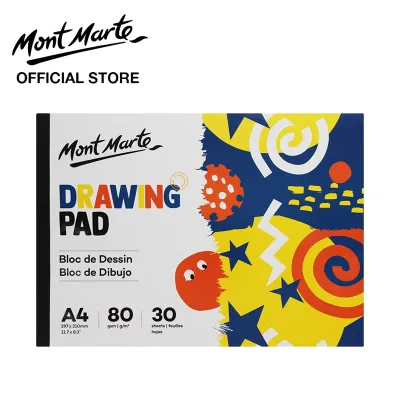
Prices are valid at publication and may change. Please refer to the product page for the latest price.
Durability is another critical factor in architectural work. Throughout the design process, drawings undergo constant modification, requiring you to erase, redraw, and overlay elements repeatedly. A standard paper surface will quickly pill, tear, or thin under the friction of a vinyl eraser or drafting electric eraser. A dedicated drafting pad must possess the structural integrity to withstand heavy erasing without losing its surface finish or leaving permanent ghost marks that ruin the clarity of the final layout.
Furthermore, your choice of drawing pad must align with the specific phase of your architectural project. The early conceptual phase relies heavily on rapid ideation, tracing, and overlaying, which demand highly translucent, lightweight papers. In contrast, the final presentation phase requires thick, opaque, and stable media capable of handling heavy ink work, markers, or light color washes. Recognizing these distinct functional requirements prevents the frustration of using a high-quality but mismatched paper type for your current task.
Evaluating Paper Weight, Texture, and Media Compatibility
To select a professional-grade drawing pad, you must understand how to read and interpret the manufacturer’s paper specifications. The most critical metric to check is the paper weight, measured in GSM (grams per square meter). For quick conceptual layouts and tracing overlays, lightweight papers ranging from 50 to 75 GSM are ideal because they offer the necessary transparency. For general drafting, detail work, and everyday sketching, look for medium-weight cartridge papers between 80 and 120 GSM. If your workflow involves heavy ink rendering, markers, or light mixed media, select a heavyweight pad of 130 to 200 GSM to prevent warping and bleed-through.

The surface texture, often referred to as the “tooth” of the paper, directly dictates how your drawing tools interact with the page. Hot-pressed or ultra-smooth surfaces are the gold standard for technical pens and fineliners, as they allow the metal or plastic nibs to glide effortlessly without catching fibers. Cold-pressed or medium-tooth papers provide a slight resistance that is highly beneficial for graphite and colored pencils, helping the medium adhere to the page. However, excessive tooth should be avoided in technical drafting, as it causes fine lines to appear jagged and inconsistent.
Long-term preservation is another vital consideration for architectural archives and client presentations. Always check the product label to ensure the paper is certified as acid-free and archival. Acid-free paper is chemically treated to maintain a neutral pH, preventing the sheets from yellowing, becoming brittle, or degrading over time. This is especially important in humid environments where chemical degradation can accelerate, potentially ruining hand-drawn blueprints and historical project records.
Choosing the Right Binding and Format for Your Workspace
The physical construction of a drawing pad significantly influences your comfort and efficiency at the drafting table. Spiral-bound (or wire-bound) pads are highly favored for their ability to fold completely flat, turning a full 360 degrees. This flat-laying capability is incredibly useful when working on crowded drafting boards or taking quick measurements on-site. However, ensure the wire coil is sturdy and does not interfere with the straightedge of your T-square or parallel bar during horizontal line work.
Glue-bound or tape-bound pads offer a different set of advantages, primarily the ability to remove pages cleanly without leaving a ragged, perforated edge. This clean removal is essential if you plan to scan your drawings, mount them on presentation boards, or feed them into a wide-format copier. The trade-off is that glue-bound pads must be handled with care; rough folding can cause pages to detach prematurely, potentially scattering your project sheets.
Additionally, consider whether a hardbound or softcover pad best suits your daily routine. Hardbound drawing pads feature a rigid backing cover that acts as a portable drawing board, making them indispensable for site visits, structural surveys, and field sketching. Softcover pads are lighter and more flexible, making them easier to pack into a portfolio bag, but they require a flat, stable desk surface to support precise line work. Always match the pad’s dimensions (such as standard A4, A3, or A2 sizes) to your scanning equipment and the scale rulers you use most frequently.
Matching Paper Properties to Your Primary Drafting Tools
Different architectural mediums require specific paper characteristics to perform optimally. When working primarily with graphite and technical drafting pencils, your main challenge is avoiding smudges and ghosting. Harder lead grades (such as 2H to 4H) require a paper with a subtle, firm tooth to shave off the graphite and hold it in place. If the paper is too smooth, the hard lead will simply indent the surface without leaving a clear mark; if it is too soft, the graphite will smudge easily under your hand or drafting parallel bar.
For those who rely on fineliners and technical refillable ink pens, the paper’s surface sizing is paramount. Sizing is an internal or external starch-like treatment applied during paper manufacturing that controls water absorption. A well-sized, smooth paper prevents the ink from spreading outward into the paper fibers (feathering) and ensures that a 0.18mm pen tip draws an exact 0.18mm line. Without proper sizing, the ink will pool, bleed through to the next page, and wear down your delicate pen tips prematurely.
If your architectural presentations involve color rendering with alcohol-based markers or mixed media, standard drafting paper will not suffice. Alcohol markers are highly fluid and will quickly saturate standard cartridge paper, causing colors to bleed past your ink outlines. For these rendering techniques, look for specialized marker pads that feature a barrier coating on the reverse side of each sheet, or opt for high-density bristol board. These specialized surfaces keep the pigment on the top layer, allowing for smooth blending and vibrant color representation without ruining the sheets underneath.
How to Test and Verify a Drawing Pad Before Committing
Before purchasing drawing pads in bulk for a major project or academic semester, it is highly recommended to perform a few simple, observable tests on a single sample pad. This hands-on verification ensures the paper performs as expected under your specific tools and local environmental conditions.
- The Bleed-Through and Feathering Test: Take your wettest technical pen or a heavy alcohol marker and draw a series of intersecting lines on a corner of the page. Let the ink dry completely. Inspect the edges of the lines under bright light to check for any fuzzy feathering. Flip the page over to see if the ink has ghosted heavily or bled through to the sheet below. A high-quality drafting paper should keep the ink crisp and contained on the drawing surface.
- The Erasing Durability Test: Draw a dark, firm line using an HB or 2H drafting pencil. Use your standard vinyl eraser to clear a section of the line, applying moderate pressure. Examine the paper's surface texture where you erased. If the paper fibers have pilled, frayed, or lost their smooth sheen, the pad will not hold up to the repeated corrections required during complex architectural layouts.
- The Binding and Tear-Out Test: Gently fold a page back and pull it away from the binding. Note whether the page tears cleanly along the perforation or glue line, or if it rips into the drawing area. Additionally, shake the pad gently to ensure the remaining pages stay securely anchored to the spine. A reliable pad should offer effortless page removal without compromising the structural integrity of the rest of the book.
Frequently Asked Questions (FAQ)
Can I use standard sketching pads for technical architectural drafting?
Standard sketching pads are generally not recommended for precise technical architectural drafting. These pads are typically designed for dry artistic media like charcoal, pastels, and soft graphite, meaning they feature a high surface tooth and loose paper fibers. When you attempt to use technical pens on this type of paper, the fine metal nibs can easily catch on the fibers, leading to ink splatters and clogged tips. Furthermore, the high absorbency of standard sketching paper causes technical inks to feather and bleed, making it nearly impossible to maintain the consistent, razor-sharp line weights required for professional architectural plans.
Does the color of the drawing pad paper affect architectural rendering?
Yes, the color of the paper plays a significant role in the visual impact and legibility of your architectural renderings. Bright white paper provides the highest possible contrast, making black ink lines and fine dimensions stand out clearly, which is ideal for technical schematics and construction details. Off-white, cream, or natural white papers are gentler on the eyes, reducing glare and strain during long drafting sessions under bright studio lights. Toned papers, such as grey or tan, are highly effective for conceptual and presentation renderings; they allow you to establish a mid-tone background immediately, using white gel pens or light colored pencils to quickly highlight light sources, glass reflections, and material textures.

Community discussion
Share your experience or ask a question. Comments are reviewed before publication.