
A physical study system using sticky notes leverages active recall and spaced repetition to transform passive reading into active retrieval. By turning small, repositionable slips of paper into self-testing prompts, you can systematically test your memory, track your progress, and organize your revision without digital distractions. This method works exceptionally well on compact study desks where visual organization is key to maintaining focus.
Preparing Your Sticky Note Study Materials
Selecting the right paper and adhesive is critical to building a study system that lasts throughout an entire academic term. In humid climates like Singapore, paper can absorb moisture from the air, causing edges to curl and adhesive to fail prematurely. To prevent your study system from falling apart, perform a simple peel-and-stick test on your study wall or notebook. Press a note down and observe it over 24 hours; if the corners lift or if ink bleeds through to the next sheet when using a gel pen, select a thicker paper weight, such as 80 gsm or higher, or a water-resistant adhesive variant. Additionally, because smoothness, bleed resistance, drying speed, and erasability depend entirely on your specific pen and paper combination, always test your writing instrument on a single sample note first. Check if the ink smudges when touched immediately after writing, and verify that the ink does not bleed through to the adhesive backing.
Color-coding strategies should be based on subject, difficulty, or concept type rather than arbitrary aesthetics. For instance, you can assign specific meanings to each hue: use yellow for core definitions, pink for formulas or equations, and blue for historical dates or case studies. Alternatively, use colors to denote difficulty levels: green for concepts you understand well, orange for those requiring moderate effort, and red for highly challenging topics that need daily review. This visual hierarchy allows you to assess your study workload at a single glance.
Products mentioned in this guide
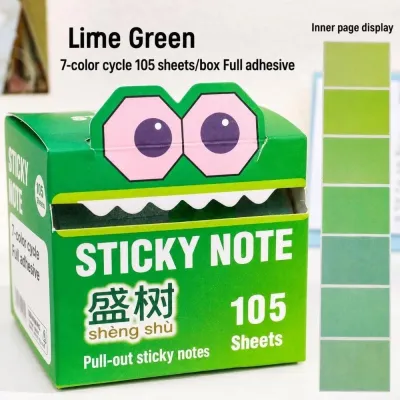
![[Ready Stock] Yellow Blank Sticky Notes | Daily Stationery](https://img.lazcdn.com/g/p/1b0faf332bcbeb1c3871288975d7fdf0.jpg_400x400q80.jpg_.webp)
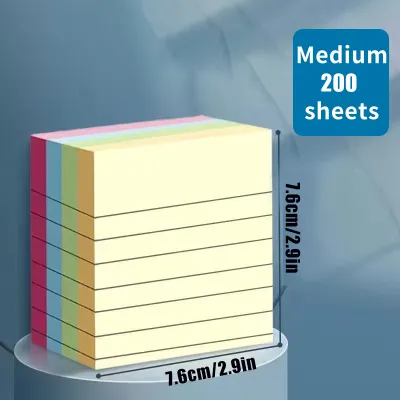
205 Lazada user ratings
🌈Color Variety: great choices but colours were a bit dull 🧲Adhesiveness: yet to try 📏Size Options: two convenient sizes to choose from Porta…Read full reviewShow less
🌈Color Variety: great choices but colours were a bit dull 🧲Adhesiveness: yet to try 📏Size Options: two convenient sizes to choose from Portable and convenient for students, Easy to carry in bag or pocket,
🌈Color Variety: good 🧲Adhesiveness: yet to try 📏Size Options: great … 2 handy sizes to choose from Came neatly packed . Yet to try but looks…Read full reviewShow less
🌈Color Variety: good 🧲Adhesiveness: yet to try 📏Size Options: great … 2 handy sizes to choose from Came neatly packed . Yet to try but looks promising . Fast delivery .
Easy to carry in bag or pocket, 200 sheets per pack, great value, Easy to carry in bag or pocket, value for money .
received as per order. good size for simple notes. will be better if the 4 colours have separate backing piece.
delivery timing is acceptable if not in a rush. Great for classroom and homework. the lines are useful as well
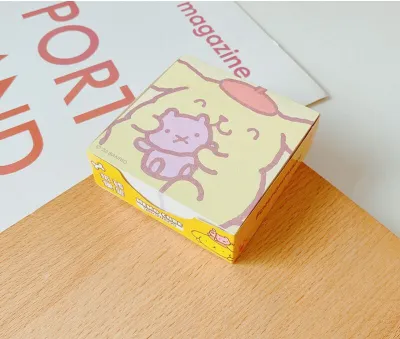
243 Lazada user ratings
Great for time recording, Cute Sanrio characters, Cute Sanrio characters, Cute Sanrio characters, 50 pieces per pack, Perfect for students a…Read full reviewShow less
Great for time recording, Cute Sanrio characters, Cute Sanrio characters, Cute Sanrio characters, 50 pieces per pack, Perfect for students and office use,
Cartoon-themed memo notes, Perfect for students and office use, High-quality paper material, Creative notepad design,
Creative notepad design, Sticky back for easy attachment, Ideal for organizing tasks, Cartoon-themed memo notes,
Nice and affordable . Good buy . Send to mailbox . Fast delivery . My favourite character . Love love
🌈Color Variety:Super nice 🧲Adhesiveness:Super nice 📏Size Options:Super nice
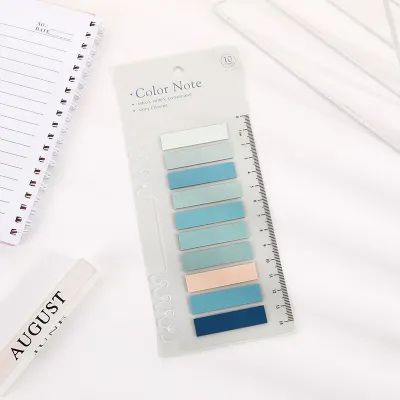
105 Lazada user ratings
📏Size selection: High-quality sticky notes, Beautiful and vibrant colors, Durable and long-lasting, Convenient size for easy marking, Conven…Read full reviewShow less
📏Size selection: High-quality sticky notes, Beautiful and vibrant colors, Durable and long-lasting, Convenient size for easy marking, Convenient size for easy marking, High-quality sticky notes,
🌈Color Variety:Variety of colors to choose from, Great for organizing and marking pages,
Looking good. Great value for money. The colour is nice, thank you.
its nice and good for young kids to practice their writing….
Prices are valid at publication and may change. Please refer to the product page for the latest price.
The golden rule of this system is to atomize your information, ensuring each note contains only one testable concept. If a sticky note contains multiple facts, your brain might recall one but fail to retrieve the others, leading to false confidence. Break down complex processes into individual steps, ensuring each note represents a single, testable unit of information that can be answered in a few words. This makes self-testing faster and prevents cognitive fatigue during long revision sessions.
Step-by-Step Guide to Creating Active Recall Prompts
To force active retrieval, you must structure your prompts so that the answer is completely hidden from view. Write a clear, challenging question or cue on the front of the sticky note. To conceal the answer, fold the bottom third of the note upward to cover the solution, or write the answer on the reverse side so you must physically flip the note to verify your response. Another method is placing a smaller, blank note directly over the answer area as a temporary cover that can be lifted during self-testing.

A good prompt requires active cognitive effort rather than simple visual recognition. Avoid passive prompts like “Read about photosynthesis.” Instead, write “What is the primary electron donor in light-dependent reactions?” This forces your brain to search its memory pathways to retrieve the specific term, strengthening neural connections far more than passive rereading ever could. If a prompt can be answered with a simple “yes” or “no” without mental effort, rewrite it to require a definition, a step in a process, or a comparison.
Keep your notes concise by enforcing a strict limit of ten to fifteen words per prompt. Do not copy sentences directly from your textbook. Instead, translate the information into your own words, focusing on core relationships, cause-and-effect links, or essential definitions. If a concept cannot fit within these limits, it is a sign that you need to break it down further into smaller, atomic notes. This constraint forces you to process the information deeply before you even write it down.
Organizing Your Revision Workflow with Spaced Repetition
To combat the forgetting curve, establish physical zones on a study board, a wall, or inside a dedicated folder. Create four distinct columns or containers labeled “Daily,” “Every 3 Days,” “Weekly,” and “Mastered.” This physical layout serves as your manual spaced repetition schedule, allowing you to visualize your learning progress at a single glance. It keeps your study sessions organized and ensures you spend your time on the material that needs the most attention.
Every study session begins with testing yourself on the notes in the “Daily” zone. If you retrieve the answer correctly and instantly, move that note to the “Every 3 Days” zone. If you fail to recall the answer, return the note to the “Daily” zone immediately. As you successfully recall notes in the outer zones, advance them further; any failure at any stage drops the note back to the daily review pile. This dynamic movement ensures your study time is always optimized for your current level of retention.
To prevent your study space from becoming cluttered and overwhelming, define clear criteria for archiving notes. Once a sticky note has been successfully recalled three consecutive times in the “Weekly” zone, it can be retired. Move these mastered notes to a storage box or paste them into a summary notebook, freeing up valuable physical space on your active review board. This physical archiving process provides a satisfying sense of progress and keeps your active review deck lean.
Integrating Sticky Notes with Textbooks and Notebooks
Sticky notes are excellent tools for adding active recall prompts directly to your textbooks without permanently marking the pages. Place a note along the margin of a page with the prompt sticking out slightly like a tab. This allows you to quiz yourself before you even open the chapter, turning standard reading material into an interactive study guide. It also helps you quickly navigate to difficult sections during your revision sessions.
Before applying notes extensively to expensive textbooks, test the adhesive on a blank back page. Leave it for a few days, then peel it off slowly to check for sticky residue or paper tearing. High-quality textbooks with thin, coated paper are particularly susceptible to damage, so choose low-tack or repositionable notes that release cleanly without lifting the printed ink. This simple check protects your books while maintaining the flexibility of your study system.
As your mastery of a subject grows, your physical study system must evolve. When you consistently recall the information on a sticky note, transition that knowledge into a permanent notebook summary. This process of consolidating multiple atomic notes into a structured, handwritten mind map or summary sheet marks the transition from active memorization to high-level conceptual synthesis. It ensures your long-term study materials are organized and easy to review before major exams.
Troubleshooting Common Sticky Note Study Mistakes
It is easy to fall into the trap of looking at a prompt, immediately flipping it over, and thinking, “I knew that.” This is recognition, not recall, and it leads to poor exam performance. To prevent this, physically cover the answer and write down or speak your response aloud before looking at the solution. Regularly shuffle your sticky notes to prevent your brain from memorizing the answers based on their physical order or location on your desk.
Physical notes can suffer from environmental wear, especially in humid conditions where adhesive can degrade and cause notes to fall off vertical surfaces. To combat this, use a corkboard with pushpins to secure your columns, or keep your active recall notes inside a plastic-pocket folder. If edges begin to curl, flatten them by peeling the note sideways from the pad rather than pulling it upward, which bends the paper fibers and ruins the flat profile.
When your desk is covered in a sea of paper, cognitive fatigue sets in. If you find yourself with over fifty active notes, pause your creation of new prompts and focus entirely on reviewing. Consolidate closely related concepts onto a single, slightly larger note, or archive notes that cover basic facts you have already mastered. Keeping your active review deck lean and highly focused is key to maintaining the momentum of your study system.
Frequently Asked Questions (FAQ)
How many sticky notes should I create per study session?
Aim to create no more than ten to fifteen high-quality sticky notes per study block. Generating too many notes increases your cognitive load and creates an unsustainable review backlog for the following days. Focus your energy on identifying the most critical, difficult-to-remember concepts rather than trying to turn every single textbook sentence into a prompt. A smaller deck of highly targeted, challenging prompts is far more effective than a massive pile of trivial questions that dilute your focus.
Can I reuse sticky notes for different subjects?
Reusing sticky notes is highly dependent on the writing instrument and paper quality. If you use a pencil or erasable gel pen on high-quality, coated paper, you can cleanly erase old prompts and write new ones. However, inspect the paper surface first; if the paper fibers are frayed or if the adhesive has lost its tack from being repositioned multiple times, it is best to discard the note. Reusing a note with weak adhesive risks losing important study prompts when they fall off your review board.
Community discussion
Share your experience or ask a question. Comments are reviewed before publication.