
Selecting the ideal notebook is a highly personal decision, especially when your creative or professional workflow relies on fountain pens and markers. While Moleskine has secured a legendary status in the stationery world for its classic aesthetics, pocket-friendly formats, and historical associations, its standard paper performance remains a frequent topic of discussion among pen enthusiasts. The standard ivory-colored pages are highly optimized for dry media, but wet inks often require a different set of paper characteristics to perform without feathering or bleeding.
To find the right canvas for your thoughts, you must look beyond brand prestige and evaluate how paper is manufactured, treated, and weighted. Whether you are investing S$20 or S$50 in a premium journal, comparing Moleskine’s standard offerings with other premium notebook alternatives reveals distinct differences in ink compatibility, texture, and overall writing experience. By understanding these technical differences, you can make an informed choice that matches your preferred writing instruments.
Understanding Paper Requirements for Fountain Pens and Markers
To evaluate how any notebook handles wet or heavy inks, it is essential to understand the technical metrics of paper manufacturing. The most common specification you will encounter is GSM, or grams per square meter, which measures the weight and density of the paper. While a higher GSM generally indicates a thicker, more opaque sheet that resists ink show-through, weight alone does not guarantee a feather-free writing experience.
Products mentioned in this guide
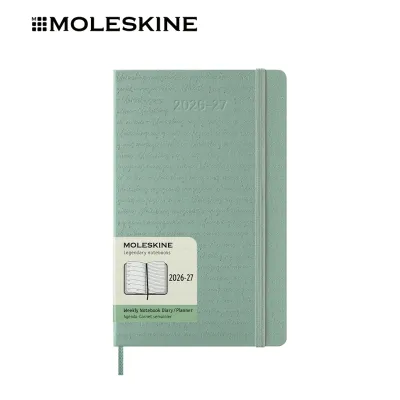
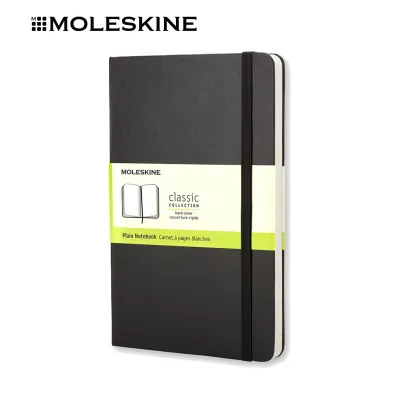
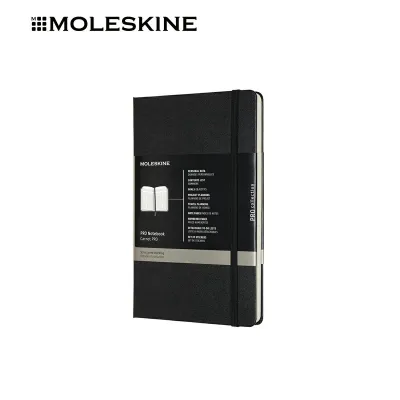
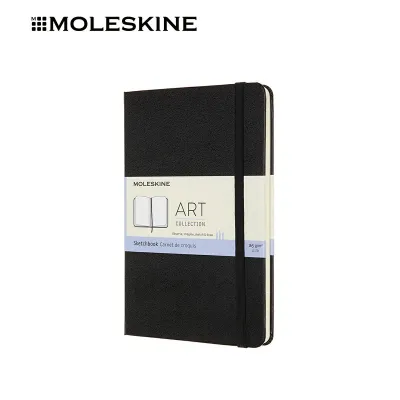
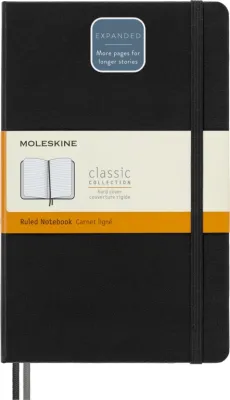
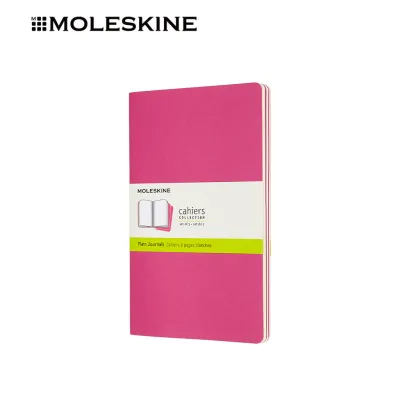
Prices are valid at publication and may change. Please refer to the product page for the latest price.
The critical factor for fountain pen users is “sizing,” which refers to chemical additives applied during manufacturing to control how the paper absorbs moisture. Internal sizing is mixed directly into the paper pulp, while surface sizing is applied to the dried sheet to create a protective barrier. Unsized or lightly sized papers act like blotting paper, pulling water-based fountain pen inks rapidly into the fibers. This causes feathering—where the ink spreads sideways into fuzzy lines—and bleed-through, where the ink penetrates completely to the reverse side of the page.
Markers present a different challenge depending on whether they use water-based or alcohol-based solvents. Water-based markers, such as brush pens, lay down a significant volume of liquid that can warp thin paper or cause fiber pilling if the surface is not sufficiently sized. Alcohol-based markers are highly penetrative and will bleed through almost any standard notebook paper unless it features an exceptionally high GSM or a specialized, impermeable chemical barrier. Understanding these interactions helps you look past marketing claims and focus on the physical properties of the paper.
Evaluating Moleskine Paper Characteristics
Standard Moleskine notebooks typically feature ivory-colored paper with a weight of 70 GSM. This paper is celebrated for its exceptionally smooth, silky finish, which provides a pleasant glide for ballpoint pens, gel pens, and graphite pencils. The lightweight nature of the paper allows Moleskine to pack a high page count into a slim, highly portable profile, making it a favorite for daily journaling, quick note-taking, and urban sketching with dry media.

However, when subjected to wet writing instruments, standard 70 GSM Moleskine paper behaves in predictable ways due to its light surface sizing. Fountain pen inks, particularly those paired with medium or broad nibs, often exhibit noticeable ghosting (also known as show-through), where the writing is clearly visible on the reverse side of the page. In many cases, standard water-based inks will bleed through the paper entirely, limiting you to using only one side of each sheet. Fine-liner pens and gel pens with high flow rates can also experience minor feathering along the edges of your lines.
It is important to note that Moleskine offers specialized exceptions to its standard paper formula. The brand’s Art Collection, which includes sketchbooks, professional portfolios, and watercolor notebooks, utilizes much heavier paper stocks ranging from 120 GSM up to 200 GSM or higher. These editions are specifically engineered to handle wet media, including light washes and heavy ink applications. When shopping, always check the specific product label and manufacturer specifications to ensure you are selecting the correct paper weight for your intended artistic tools.
Comparing Moleskine to Other Premium Notebooks
When comparing standard Moleskine paper to other premium notebook brands, the differences in weight, sizing, and texture become immediately apparent. Many competing premium brands offer standard notebook lines starting at 80 GSM, 100 GSM, or even 120 GSM. These heavier papers naturally provide greater opacity, significantly reducing ghosting and allowing you to utilize both sides of the page even when writing with wet gel pens or fine fountain pens.
The method of paper treatment also varies widely across premium brands. Some manufacturers focus heavily on surface sizing or specialized coatings that keep the ink sitting on top of the paper rather than absorbing into it. This preservation of the ink on the surface enhances properties like shading and sheen in fountain pen inks, though it can result in longer drying times. Other premium brands opt for highly dense, uncoated papers that absorb ink quickly to prevent smudging while relying on tight fiber structures to prevent feathering.
Surface texture, or “tooth,” is another key differentiator. While Moleskine is known for its smooth, low-friction surface, other premium notebooks offer varying degrees of texture. A toothier paper provides tactile feedback, which many writers prefer for pencil or fountain pen control. However, highly textured paper can cause fine marker tips to wear down faster and may make smooth marker blending more difficult.
To help you compare the physical specifications of these premium options, the table below outlines the standard ranges you can expect to find in the market:
| Notebook Category | Typical GSM Range | Common Ruling Options | Standard Binding Types | Primary Design Focus |
|---|---|---|---|---|
| Standard Moleskine | 70 GSM | Ruled, Grid, Dot, Plain | Thread-bound, Hard/Soft Cover | Portability, dry media, smooth writing |
| Mid-Weight Premium | 80 GSM – 90 GSM | Ruled, Grid, Dot, Plain | Thread-bound, Wire-bound | Balanced ink resistance, daily writing |
| Heavy-Weight Premium | 100 GSM – 120 GSM | Ruled, Grid, Dot, Plain | Thread-bound, Hardcover | High opacity, wet inks, minimal ghosting |
| Specialized Art/Sketch | 120 GSM – 200+ GSM | Plain, Light Grid | Thread-bound, Spiral-bound | Mixed media, markers, watercolor washes |
How to Test and Verify Paper Compatibility
Because ink formulations, nib sizes, and writing pressure vary wildly, the most reliable way to determine if a notebook suits your style is to perform a controlled test. Before committing to writing on the main pages of a new notebook, utilize the last few pages—which are often left blank or designated for notes—to conduct a systematic swatch test.
Begin by drawing a series of horizontal lines using your daily writing tools, noting how the ink behaves as it leaves the tip. Next, draw a few solid dots and a small, saturated square to simulate areas where you might pause your pen or layer marker ink. Allow the ink to dry completely, as some wet inks may look perfectly fine initially but slowly creep through the paper fibers over several minutes.
Once dry, examine the page closely. Look at the edges of your lines under good lighting to check for feathering. Then, turn the page over to evaluate the reverse side. Distinguish between ghosting (where you can see the shadow of the writing through the paper) and true bleed-through (where actual ink spots have penetrated the paper surface). Finally, check the subsequent page to ensure no ink has transferred across the sheet boundary. This simple test ensures you will not ruin important journal entries with unexpected ink behavior.
Choosing the Right Notebook for Your Writing Tools
Selecting the right notebook ultimately depends on matching your primary writing instruments to the physical properties of the paper. If your daily writing routine relies on ballpoint pens, standard gel pens, fine-liners, or pencils, a standard Moleskine notebook is an excellent fit. Its lightweight 70 GSM paper keeps the notebook slim and easy to carry, while the smooth surface finish provides a comfortable, low-friction writing experience. It is also a great choice if you specifically opt for their specialized Art Collection editions for heavier media.
Conversely, if your daily drivers are medium-to-broad nib fountain pens, highly saturated inks, or alcohol-based markers, you will likely find better performance with alternative premium brands that offer higher GSM ratings and robust surface sizing. These heavier papers are designed to handle the high volume of liquid without feathering or bleeding through, ensuring that your writing remains crisp and both sides of every page remain fully usable.
Before making a final purchase, always verify the manufacturer’s stated paper specifications, especially if you are buying a notebook for professional, archival, or artistic purposes. Checking the GSM, ruling options, and intended media compatibility on the product packaging will help you avoid compatibility issues and ensure your writing tools perform exactly as intended.
Frequently Asked Questions (FAQ)
Does Moleskine make specific notebooks for fountain pens?
While Moleskine does not market a standard notebook line exclusively for fountain pens, they do offer specialized collections that feature heavier paper. Their Art Collection and specific premium editions utilize paper weights ranging from 120 GSM to 200 GSM, which are significantly more robust than their standard 70 GSM paper. When shopping for fountain pen use, look for these heavier-weight options and check the product description to ensure the paper is rated for wet media.
Can I use alcohol markers on standard Moleskine paper?
Using alcohol-based markers on standard 70 GSM Moleskine paper is not recommended for double-sided writing, as the highly penetrative alcohol solvent will almost certainly bleed through to the reverse side and potentially stain the following page. If you choose to use alcohol markers in a standard notebook, always place a thick plastic or cardstock blotter sheet directly behind the page you are working on to catch any bleed-through. For heavy marker art, look for specialized marker pads with coated, impermeable barriers.
Is higher GSM always better for fountain pens?
Not necessarily. While a higher GSM (such as 100 GSM or 120 GSM) provides excellent opacity and prevents ink from showing through to the other side, the paper’s sizing and surface treatment are the most critical factors in preventing feathering and bleeding. Some lower GSM papers (around 52 GSM to 68 GSM) feature highly specialized sizing that handles wet fountain pen inks beautifully without any feathering, though they may exhibit some ghosting. Conversely, a thick, unsized paper may absorb ink like a sponge, causing severe feathering despite its high weight.
Community discussion
Share your experience or ask a question. Comments are reviewed before publication.