
Choosing between Hobonichi and Moleskine comes down to matching your writing instruments with their paper types and aligning your daily routine with their layout structures. Hobonichi utilizes ultra-thin, specialized paper designed to handle heavy ink without bleeding, paired with highly structured, grid-based daily pages. Moleskine relies on a classic, cream-colored paper that favors dry ink mediums, housed in flexible, minimalist layouts that adapt easily to unstructured writing.
A planner is more than just a calendar; it is an intimate daily companion that captures your thoughts, tasks, and memories. The physical experience of opening your planner, feeling the texture of the paper, and watching your pen glide across the page can either inspire your daily journaling habit or create subtle friction that causes you to abandon it. Therefore, understanding how these two iconic brands approach paper engineering and page design is essential for finding a system that feels natural and sustainable.
By examining the technical aspects of their paper, the functional design of their layouts, and the durability of their physical builds, you can make an informed decision. Rather than searching for a universally perfect planner, the goal is to identify which brand’s design philosophy matches your personal writing style, your preferred pens, and the way your mind organizes information.
Products mentioned in this guide
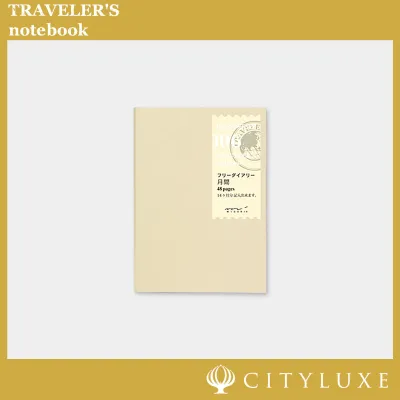
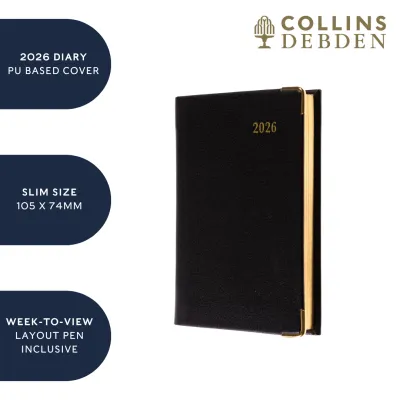
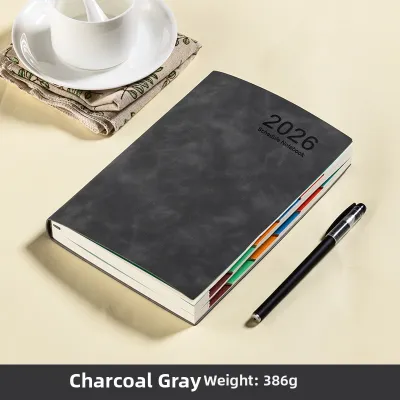
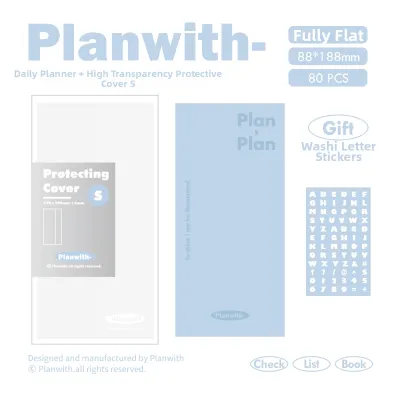
Prices are valid at publication and may change. Please refer to the product page for the latest price.
Core Design Philosophies and Target Users
Hobonichi’s design philosophy is centered on the concept of the “Techo,” a Japanese term for a notebook or planner that serves as a complete “life book.” The brand treats the planner as a flexible canvas for daily living, combining highly structured grid layouts with whimsical details like daily quotes, weather trackers, and phase-of-the-moon icons. This approach encourages users to document not just their schedules, but their feelings, sketches, meals, and memories, turning the planner into a cherished archive at the end of the year.
To support this highly customizable experience, Hobonichi has developed a vast accessory ecosystem. The core planner is typically sold as a simple, softbound book designed to be inserted into a removable cover. These covers are released annually in a wide array of fabrics, patterns, and leather finishes, featuring built-in pen loops, card slots, and external pockets. This modular system allows you to keep your favorite cover for years while simply replacing the paper planner inside each January.
In contrast, Moleskine embraces a philosophy of timeless, understated elegance rooted in European literary tradition. Inspired by the legendary black notebooks used by avant-garde artists and writers in Paris, Moleskine planners are designed to be self-contained, sleek, and highly professional. The brand avoids decorative elements, opting instead for clean lines, minimalist typography, and a quiet aesthetic that fits seamlessly into a boardroom, a university lecture hall, or a quiet cafe.
Moleskine planners do not rely on external covers; they are built with integrated hard or soft covers, complete with their signature elastic closure band and a matching ribbon bookmark. This self-contained design appeals to minimalists who want a durable, grab-and-go notebook that requires no setup or additional accessories. While Hobonichi invites you to decorate and expand your planner, Moleskine encourages you to focus on the pure, unadorned act of writing.
Evaluating Paper Quality and Pen Compatibility
The paper inside your planner is the medium through which your thoughts are recorded, making paper quality the most critical factor in your daily satisfaction. Different paper manufacturing processes yield vastly different results when they interact with ink. Factors such as paper weight, surface coatings, and fiber density determine whether your pen glides smoothly or catches on the surface, and whether the ink stays crisp or bleeds through to the next page.

Paper weight, measured in grams per square meter (gsm), is often the first specification users look at, but it does not tell the whole story. A heavier paper is not automatically better at resisting ink, nor is a thin paper destined to bleed. The presence of surface sizing—a chemical coating applied during manufacturing—plays a massive role in how paper handles liquid. Sizing prevents ink from absorbing too quickly into the paper fibers, keeping the lines sharp and preventing the ink from spreading outward or sinking downward.
Because ink formulas vary wildly between fountain pens, gel pens, ballpoints, and markers, you should always verify compatibility before committing to a full year of journaling. A safe, small-scale testing method is the best way to evaluate paper performance. Turn to the very back of your planner, where there are typically blank pages or index sheets, and write a few test lines using every pen you plan to use. Write with normal pressure, draw a few solid blocks of color, and let the ink dry completely before checking the reverse side of the page for any signs of bleeding or ghosting.
Checking Paper Weight and Ink Resistance
When you examine the specifications of a Hobonichi planner, you will find it uses an exceptionally thin, lightweight paper, typically around 47 gsm to 52 gsm. Despite its tissue-like thinness, this specialized paper is highly calendered and coated, allowing it to handle wet fountain pen inks, watercolors, and heavy gel pens with remarkable resilience. Moleskine planners, on the other hand, generally feature a thicker, cream-colored paper, usually around 70 gsm to 100 gsm, which has a more traditional, fibrous, and absorbent texture.
To evaluate how these papers perform under daily use, you must look for three distinct ink behaviors: bleed-through, ghosting, and feathering. Bleed-through is the most disruptive issue, occurring when liquid ink penetrates completely through the paper fibers and appears as wet spots or stains on the opposite side of the page, making that space unusable. Ghosting, also known as show-through, refers to the shadow of your writing being visible through the thin page, which is common in lightweight papers but does not prevent you from writing on the other side. Feathering occurs when ink spreads horizontally along the paper fibers, turning clean pen strokes into fuzzy, blurred lines.
Because Hobonichi’s paper is highly coated, it excels at preventing bleed-through and feathering, even when subjected to wet fountain pen nibs or multiple layers of ink. However, because the ink sits on top of the coating rather than absorbing immediately, it exhibits a high degree of ghosting due to the paper’s extreme thinness. Moleskine’s more absorbent paper is highly susceptible to bleed-through and feathering when paired with wet fountain pens, liquid ink rollers, or heavy markers. It performs beautifully, however, with dry writing instruments such as ballpoint pens, pencils, and quick-drying gel pens, showing minimal ghosting due to its greater thickness.
Assessing Surface Texture and Writing Feel
The physical sensation of writing is heavily influenced by the “tooth” of the paper. Tooth refers to the microscopic texture of the paper surface; paper with more tooth provides a slight resistance against your pen tip, giving you a tactile sense of control and a satisfying scratchy sound as you write. Extremely smooth paper has almost no tooth, allowing your pen to glide effortlessly across the page with minimal friction, which can reduce hand fatigue during long writing sessions.
You can easily assess surface texture through a simple tactile inspection. Run your fingertips across the page of both planners; you will notice that Hobonichi’s paper feels incredibly slick, cool, and glassy, while Moleskine’s paper has a warmer, softer, and slightly more textured feel. When writing, Hobonichi’s smooth surface allows fine-nibbed pens to write without catching, though some users find that very slick paper makes their handwriting feel slightly less controlled. Moleskine’s textured surface provides a comforting, classic feedback that pairs exceptionally well with the rolling action of a ballpoint pen or the soft graphite of a pencil.
This surface texture also dictates drying times and line consistency. The slick coating on Hobonichi paper keeps ink wet on the surface for several seconds, or even minutes for very wet pens, meaning you must exercise caution or use blotting paper before closing your planner to avoid smudging. The benefit of this slow drying time is that it preserves the crispness of your lines and allows specialized inks to display their unique shading, sheen, and color-separating properties. Moleskine’s absorbent surface pulls ink in almost instantly, resulting in incredibly fast dry times that prevent smudging, though it may cause lines to spread slightly and mute the vibrant colors of fountain pen inks.
Comparing Layout Structures for Journaling
The layout of a planner acts as the structural blueprint for your daily reflections. Before choosing a brand, you must consider how much structure you require to stay organized and whether you prefer a pre-dated format that guides you day-by-day or an undated format that offers complete flexibility.
Pre-dated planners are excellent for building a consistent journaling habit, as they provide a dedicated, dated space for every single day of the year. This structure creates a natural sense of accountability, encouraging you to open your planner daily, even if only to write a single sentence. However, if you have an irregular routine, pre-dated pages can sometimes feel restrictive, leaving you with empty pages that can trigger a sense of guilt or wasted space. Undated planners and flexible notebook formats eliminate this pressure, allowing you to pick up right where you left off, regardless of how much time has passed between entries.
Layout density is another crucial factor that affects both writing space and portability. A planner that crams a monthly calendar, weekly spreads, and full daily pages into a single volume will naturally be thick and heavy, making it more suited for desk use than daily carry. Conversely, a planner that prioritizes a slim profile by offering only weekly or monthly views will be highly portable but may leave you feeling cramped if you enjoy writing long, detailed entries.
Daily vs. Weekly and Monthly Formats
Daily layouts are the gold standard for high-volume writers, creative journalers, and those who use their planner for comprehensive life tracking. Hobonichi’s flagship planners are famous for their one-page-per-day format, which provides ample room for hourly scheduling, detailed journaling, sketching, and pasting ephemera like ticket stubs or photos. These daily pages often feature a subtle 24-hour timeline along the left margin, allowing you to organize your appointments on one side of the page while leaving the rest of the sheet completely free for unstructured writing or creative expression.
Weekly and monthly layouts are designed for those who prefer a high-level overview of their time and tasks. Moleskine offers highly popular weekly notebook layouts, which feature the days of the week on the left page and a ruled page for notes, tasks, and reflections on the right. This format is ideal for task batching, project planning, and minimal daily logging, as it allows you to see your entire week’s commitments at a single glance without the pressure of filling a massive blank page every day.
When choosing between these formats, always check the physical dimensions of the planner to ensure it fits your writing style. An A5-sized daily planner offers a generous canvas but can be heavy to carry in a small bag, while an A6 or pocket-sized planner is incredibly portable but requires small, neat handwriting to avoid running out of space. Consider where you do most of your writing—at a spacious desk or on your lap while commuting—to determine which size and layout combination will be the most comfortable.
Grid, Ruled, and Blank Page Options
The ruling style of your planner pages quietly guides your pen and shapes the visual layout of your journal. Grid ruling, which is the signature style of Hobonichi planners, uses a light, non-intrusive grid (typically spaced between 3.7mm and 4mm). This grid is incredibly versatile; it provides a straight guide for writing horizontally or vertically, makes it easy to align bullet journaling symbols, and serves as a perfect scale for drawing diagrams, charts, or quick sketches without the need for a ruler.
Ruled pages, which are a staple of many Moleskine planners, are designed specifically for traditional, linear writing. The horizontal lines provide a familiar, comforting structure that keeps your handwriting neat and uniform across the page. This layout is ideal for long-form journaling, creative writing, and stream-of-consciousness diary entries, where your primary goal is to fill pages with text rather than mixing writing with sketches or structured tracking systems.
Blank pages offer the ultimate freedom for visual thinkers, artists, and those who find lines and grids restrictive. Without any pre-printed guides, you can write at any angle, create large-scale sketches, design custom mind maps, and paste memorabilia without worrying about matching up with a grid. The challenge of blank pages is that they require more effort to maintain straight lines of text, and the empty white space can sometimes feel intimidating if you do not have a clear plan before your pen touches the paper.
Build, Portability, and Cover Materials
The physical construction of your planner determines how well it will withstand the rigors of daily use over the course of twelve months. One of the most critical construction details to verify is the binding method. A high-quality planner should feature a thread-bound, stitch-bound, or lay-flat binding. This construction ensures that when you open the planner to any page, it lies completely flat on your desk without requiring you to hold the pages down with your hand, allowing you to write comfortably right into the inner margins of the spine.
Cover materials play a major role in both the weight and durability of your planner. Moleskine’s classic hardcovers are constructed from heavy, rigid cardboard wrapped in a textured synthetic material, providing a solid, built-in writing surface that is perfect for journaling on the go when a desk is unavailable. Their softcovers offer a lighter, more flexible alternative that bends easily to fit into crowded bags. Hobonichi’s soft, cardstock-weight covers are designed to be lightweight and flexible, relying on their specialized removable fabric or leather jackets to provide structural protection and rigidity.
Finally, consider the built-in features that enhance daily usability. Moleskine planners are famous for their integrated elastic closure bands, which keep the notebook tightly shut in your bag to prevent pages from getting bent or torn. They also feature a durable, expandable inner pocket in the back cover, which is perfect for storing loose papers, receipts, or sticker sheets. Hobonichi planners, when paired with their official covers, offer unique dual-pen loops that act as a closure mechanism when a single pen is threaded through both loops, alongside multiple ribbon bookmarks and specialized card slots for ultimate organization.
Decision Framework: Which Planner Fits Your Routine?
To make your final decision, evaluate your daily routine, writing tools, and organizational preferences against these conditional scenarios. If your journaling routine involves using fountain pens, wet gel pens, or watercolors, and you thrive on a highly structured daily logging system with a dedicated page for every day, Hobonichi is your ideal choice. Its specialized, ultra-thin paper will handle your wettest inks beautifully without bleeding, and its grid-based daily layouts will provide the perfect balance of structure and creative freedom, provided you are comfortable with longer ink drying times and using a removable cover system.
If you prefer a classic, self-contained aesthetic that requires no additional covers, and your writing routine relies on ballpoint pens, pencils, or quick-drying gel pens, Moleskine is the superior fit. Its thicker, cream-colored paper offers immediate drying times that prevent smudging, making it perfect for quick notes and high-level weekly planning. The durable hardbound or softbound covers, complete with an elastic closure and ribbon bookmarks, provide a sleek, professional, and highly portable package that is ready to travel with you anywhere.
Always verify your choice by performing a quick audit of your current pen collection and assessing your daily carry constraints. If you have a strict limit on the weight of your bag, a slim weekly Moleskine or a compact A6 Hobonichi will serve you better than a thick, heavy A5 daily volume. By carefully matching your writing instruments to the paper specifications and aligning your daily logging volume with the layout structure, you will select a planner that feels like a natural, inspiring extension of your daily life.
Community discussion
Share your experience or ask a question. Comments are reviewed before publication.