
Selecting the right stretch film is a critical decision for logistics, warehousing, and e-commerce operations. The choice between hand stretch film and machine stretch film directly impacts packaging speed, labor costs, material waste, and the physical safety of your goods during transit. While both materials serve the same fundamental purpose—securing loads to pallets—they are engineered differently and suit entirely different operational scales.
Understanding the distinct physical properties and financial implications of each film type prevents common warehouse bottlenecks. Making the wrong choice can lead to damaged shipments, excessive material costs, or unnecessary capital expenditure on machinery. This guide provides a clear framework to help you evaluate your current packaging volume and choose the most efficient stretch wrap solution for your facility.
Quick Answer: How to Choose Between Hand and Machine Stretch Film
Hand stretch film is best for low-volume, irregular, or multi-location wrapping, while machine stretch film is designed for high-volume, uniform palletizing in fixed warehouse setups.
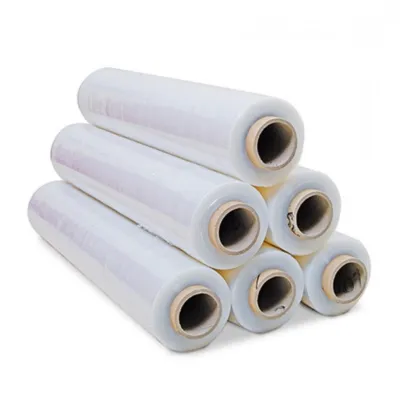
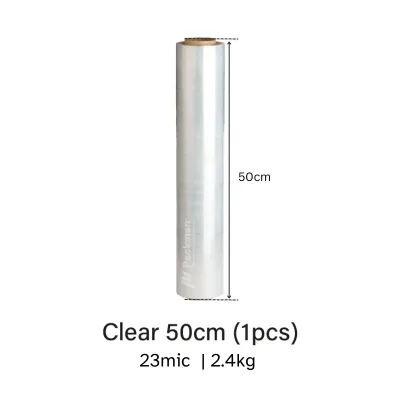
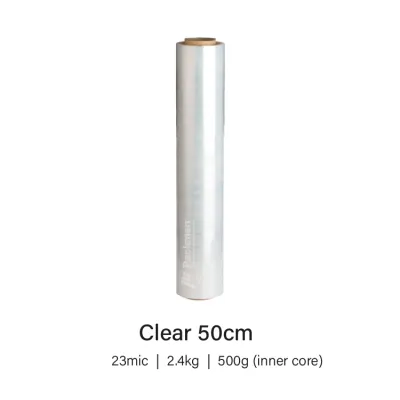
Products mentioned in this guide
![[SG Stock] Stretch Film | Heavy Duty Shrink Wrap Packaging | Pallet Wrap | Cling Wrap | Furniture Wrap | 2.5/3kg](https://img.lazcdn.com/g/p/7c4636ed40f09d680825c6d01a74b8f8.png_400x400q80.png_.webp)
![🏅[CHEAPEST] Stretch Film/ Shrink Wrap / Cling Wrap /Pallet wrapping /Moving Supplies/pallet Wrap/Pallet wrapping](https://img.lazcdn.com/g/p/c69357eb04f4e35ac9ee2d124f108fda.jpg_400x400q80.jpg_.webp)
Prices are valid at publication and may change. Please refer to the product page for the latest price.
To determine which film type fits your business, consider the following decision framework:
- Choose Hand Stretch Film if: You wrap fewer than 10 to 15 pallets per day, handle highly irregular or customized loads, lack a dedicated wrapping station, or require a portable packaging solution that can be used across different areas of your facility.
- Choose Machine Stretch Film if: You wrap high volumes of uniform pallets daily (typically 15 or more), require strict, auditable load containment standards, and want to minimize physical labor strain and material waste.
- Verify first if: You are transitioning from manual to automated wrapping. Ensure your facility has the physical floor space, appropriate power supply, and capital budget for a stretch wrapping machine before committing to bulk orders of machine-grade film.
Core Differences in Application and Film Properties
The most obvious difference between these two packaging materials lies in how they are applied. Hand stretch film is designed for manual application, meaning an operator holds the roll and walks around the pallet to apply the wrap. This process relies entirely on the operator’s physical strength and endurance to create tension. In contrast, machine stretch film is loaded onto automated or semi-automated machinery, such as turntable wrappers, rotary arms, or orbital wrapping systems, which spin the pallet or rotate the film carriage to apply the wrap mechanically.

Because the application methods differ so significantly, the physical properties of the films are engineered to match. Hand stretch film is typically manufactured to be stiffer and thicker at standard gauges. This inherent stiffness allows operators to achieve a secure hold without needing to stretch the film to its absolute limit, which would cause rapid physical fatigue. Hand rolls are also wound tightly to prevent them from telescoping or unraveling when dropped on a concrete warehouse floor.
Machine stretch film is engineered with advanced polymer blends that allow for extreme elongation, commonly referred to as “pre-stretch.” High-quality machine films can stretch between 200% and 300% of their original length before being applied to the load. This stretching process occurs inside the machine’s carriage rollers before the film even touches the pallet. Additionally, machine film possesses superior “memory,” meaning it constantly tries to shrink back to its original size after application, creating a incredibly tight, secure hold that manual wrapping cannot replicate.
These functional differences are reflected in the physical dimensions of the rolls. Hand rolls are designed to be lightweight and highly portable, typically weighing under 5 kg with widths ranging from 400 mm to 500 mm. They feature standard core sizes, usually 50 mm or 76 mm, allowing them to fit easily onto simple manual dispensers. Machine rolls are much larger and heavier, often weighing between 15 kg and 18 kg, with widths of 500 mm or more. These rolls require heavy-duty cores designed to lock securely into automated carriage systems.
Key Comparison Dimensions for Your Packaging Setup
Deciding which film type to purchase requires a close look at your daily operations. Evaluating your setup across several key dimensions ensures you select a film that optimizes both your budget and your workflow.
Assessing Packaging Volume and Daily Throughput
To make an informed decision, start by calculating your average daily pallet output. If your business is in a growth phase or experiences sharp seasonal fluctuations, look at your peak daily volume rather than a yearly average. Low or highly variable volumes generally favor hand stretch film because there is no upfront equipment cost, and you only pay for the film you use.
When throughput becomes consistent and exceeds 15 pallets per day, manual wrapping quickly becomes a bottleneck. A single operator wrapping pallets manually might take several minutes per pallet, whereas a semi-automated machine can wrap a pallet in under a minute. If your daily volume is high, the time saved by transitioning to machine wrapping can be reallocated to other critical warehouse tasks, such as picking or loading.
Evaluating Labor Efficiency and Ergonomics
Manual pallet wrapping is one of the most physically demanding tasks in a warehouse. Operators must walk backward in circles while bending down to wrap the bottom of the pallet and reaching high to secure the top. Over a long shift, this repetitive motion leads to physical fatigue, dizziness, and a higher risk of musculoskeletal injuries, particularly in the lower back and shoulders.
Implementing a machine wrapping system removes this physical toll entirely. The operator’s role shifts from physically wrapping the pallet to simply loading the pallet onto the turntable via a pallet jack or forklift, threading the film, and pressing a start button. This dramatic improvement in ergonomics not only protects worker health but also helps maintain a consistent pace of operation throughout the day, unaffected by human fatigue.
Comparing Material Yield and Cost Per Pallet
While a roll of hand stretch film is significantly cheaper to purchase upfront than a heavy roll of machine film, the upfront price does not reflect the true cost of packaging. Hand film is rarely stretched beyond 10% to 20% of its original length during manual application because human operators cannot apply enough physical force to stretch it further. This means you use more physical film material to secure each pallet.
Machine stretch film leverages the power of pre-stretch carriages to multiply the yield of every roll. If a machine stretches a film by 250%, a single meter of film on the roll becomes 3.5 meters of usable wrap on the pallet. This high yield drastically reduces the weight of plastic used per pallet, leading to a much lower cost per pallet over time. For high-volume operations, the material savings alone can offset the capital cost of a wrapping machine within a few months.
Ensuring Load Stability and Tension Consistency
Load containment is the ultimate measure of stretch film performance. When wrapping by hand, consistency is nearly impossible to maintain. An operator wrapping their first pallet of the morning will apply much tighter tension than they will on their twentieth pallet of the afternoon. This variance leads to inconsistent load stability, increasing the risk of shifting, tipping, or product damage during transit.
Machine wrappers apply precise, programmable tension and overlap patterns to every single pallet. The machine ensures that the top, middle, and bottom of the load receive the exact amount of containment force required. This level of consistency is especially important for fragile, heavy, or highly valuable goods, as it ensures the pallet arrives at its destination in the exact same condition it left your warehouse.
When to Choose Hand Stretch Film: Ideal Scenarios and Specs
Hand stretch film remains the industry standard for a wide variety of businesses due to its simplicity and versatility. It is the ideal choice for small-scale e-commerce fulfillment centers, local moving and storage companies, and decentralized operations where packaging happens across multiple areas rather than a single shipping dock.
If your inventory includes highly irregular, oversized, or fragile items that do not fit on standard pallets, hand wrapping is often the only practical option. It allows the operator to carefully navigate odd angles, add extra padding where needed, and adjust tension on the fly to avoid crushing delicate packaging. It is also highly suited for businesses operating in tight physical spaces, such as urban retail backrooms or small industrial units in Singapore, where there is no room to house a large, stationary wrapping machine.
When purchasing hand stretch film, look for specific technical details to ensure ease of use:
- Roll Weight: Keep the roll weight under 4 kg to 5 kg to minimize operator fatigue during extended use.
- Core Size: Ensure the inner core diameter matches your manual dispensers, with 50 mm and 76 mm being the most common standards.
- Film Type: Choose between cast and blown film based on your specific products. Cast film is clear, quiet to unwind, and excellent for general-purpose wrapping. Blown film is noisier and hazier but offers superior puncture resistance, making it the better choice for securing heavy loads with sharp, protruding metal or wooden edges.
When to Choose Machine Stretch Film: Ideal Scenarios and Specs
Machine stretch film is the backbone of high-volume logistics hubs, large-scale manufacturing plants, and centralized distribution centers. If your facility processes dozens or hundreds of pallets daily, machine film paired with automated equipment is essential to maintaining operational flow and meeting strict shipping deadlines.
This setup is particularly valuable for businesses that must comply with strict, auditable load containment standards required by major retailers or international shipping lines. Because the machine applies a highly predictable and repeatable wrap pattern, you can easily calculate and guarantee the containment force of every pallet that leaves your dock, reducing liability for transit damage.
To get the most out of your machine stretch film, you must match the film’s specifications to your wrapping equipment:
- Pre-Stretch Rating: Verify the pre-stretch capabilities of your machine's carriage. If your machine has a fixed 150% pre-stretch ratio, buying a high-performance film rated for 300% pre-stretch is a waste of money, as the film will never be fully utilized. Conversely, using a low-stretch film on a high-stretch machine will cause constant film breaks and costly operational downtime.
- Roll Dimensions: Check your machine manufacturer's manual for the exact roll width (typically 500 mm) and maximum outer roll diameter that the carriage can accommodate to prevent mechanical jams.
- Core Specifications: Ensure the inner core diameter of the roll matches the mandrel on your machine's film carriage.
How to Verify Film Specifications and Equipment Compatibility
Before placing a bulk order for stretch film, it is crucial to perform a few compatibility checks to ensure the product will perform correctly in your specific environment.
Core Dimensions
Always measure the physical dimensions of your existing dispensers or machine carriages before purchasing. Hand film dispensers often have adjustable collars, but some are fixed to specific core sizes. Machine carriages are highly precise; even a minor discrepancy in the inner core diameter or the overall roll width can prevent the roll from seating properly, leading to slippage or mechanical errors during operation.
Film Thickness (Micron/Gauge)
When evaluating film thickness, remember that thicker is not always better. Historically, heavy loads required very thick films (23 microns or higher). However, modern multi-layer co-extruded machine films can achieve incredible strength at much lower thicknesses (12 to 15 microns) by utilizing advanced polymer formulations and high pre-stretch ratios. Check your machine manufacturer’s recommended micron range to find the optimal balance between thickness and material cost.
Cling Properties
Stretch film relies on inherent cling to stick to itself and secure the load. Film can be manufactured with one-sided cling (inside or outside) or two-sided cling. If your pallets will be packed tightly against one another in shipping containers or delivery trucks, choose a film with one-sided cling (typically inside cling). This prevents adjacent pallets from sticking to each other and tearing the wrap when they are loaded or unloaded.
Safety, Handling, and Storage
To verify the quality and performance of a new stretch film, conduct a simple, observable trial in your facility. Wrap a test pallet containing your typical products and inspect it for the following criteria:
- Puncture Resistance: Check if sharp box corners or pallet edges puncture the film easily during application.
- Cling Verification: Rub your hand over the finished wrap to ensure the tail end sticks firmly to the underlying layer without peeling back.
- Tear Propagation: If a small puncture does occur, observe whether the hole immediately zips open across the entire width of the film or remains localized.
Additionally, pay close attention to storage conditions. Stretch film is sensitive to environmental factors. In warm, humid tropical climates like Singapore, storing stretch film rolls in direct sunlight or in non-temperature-controlled metal containers can degrade the cling additives, causing the film to become brittle or lose its adhesive properties. Always store your rolls vertically in a cool, dry place inside their original packaging until they are ready for use.
Frequently Asked Questions (FAQ)
Can I use hand stretch film on a machine wrapper?
While you might physically be able to mount a hand roll onto certain machine carriages using adapters, doing so is highly discouraged. Hand stretch film is not designed to withstand the high-speed tension and extreme pre-stretch ratios applied by wrapping machines. Attempting to run hand film on a machine will result in frequent film breaks, leading to constant machine downtime, wasted material, and poorly secured pallets that pose a safety risk during transport.
Is machine stretch film always cheaper per pallet?
Machine stretch film is only cheaper per pallet if your wrapping machine is equipped with a functioning pre-stretch carriage that is properly calibrated. The cost savings of machine film come entirely from its ability to stretch up to 300%, turning a short length of raw film into a much longer span of protective wrap. If you use machine film on an older machine without pre-stretch capabilities, or if you attempt to apply it manually, you will use more material, resulting in a higher cost per pallet than if you had used standard hand film.
What is the difference between cast and blown stretch film?
Cast stretch film is manufactured by extruding molten polymer through a flat die onto cooled rollers. This process makes the film highly transparent, quiet to unwind, and easy to stretch, making it the preferred choice for standard, uniform loads where barcode scanning through the film is required. Blown stretch film is made by blowing molten polymer into a large vertical bubble. This slower cooling process gives blown film superior puncture resistance, higher tear strength, and exceptional cling, making it ideal for heavy, irregular, or sharp-edged loads.
Community discussion
Share your experience or ask a question. Comments are reviewed before publication.