
Preparing for a self-managed relocation requires careful planning, especially when securing your belongings for transit. Among the essential tools in your packing kit is the moving wrap, a highly versatile plastic film designed to bind items, secure protective blankets, and keep cabinet doors closed. However, when browsing the aisles of a local hardware store or shopping online, you will face a critical choice: traditional hand stretch wrap or pre-stretched wrap. Selecting the wrong type can lead to unnecessary physical exhaustion, wasted material, or damaged furniture during transit.
Deciding between these two options comes down to understanding how they behave under tension and how much physical effort you are prepared to exert. While traditional hand wrap offers heavy-duty protection, pre-stretched wrap provides an ergonomic alternative that simplifies the wrapping process for solo movers. By evaluating your physical stamina, the scale of your move, and the specific items you need to protect, you can select the suitable film to keep your belongings secure from your old home to your new one.
Core Differences: Manual Tension vs Factory Memory
To make an informed choice, you must understand how these two films generate tension. Traditional hand stretch wrap is shipped in an unstretched state. When applying it, you must physically pull the roll to stretch the plastic, which can expand the film up to double its original length. This manual pulling force activates the polymer’s “elastic memory,” causing the film to contract and create a tight, constricting bind around your furniture.
Products mentioned in this guide
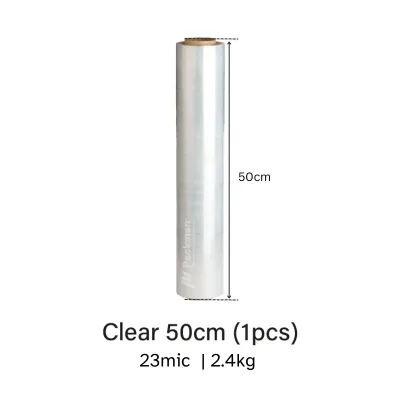
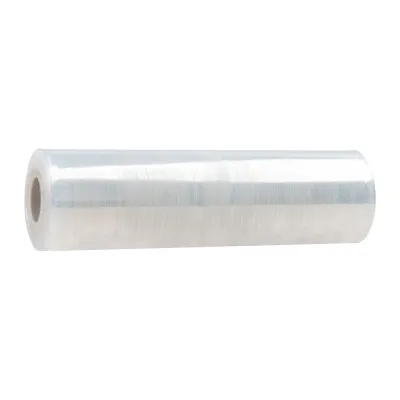
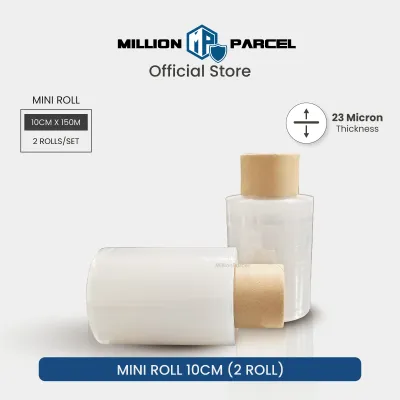
![🏅[CHEAPEST] Stretch Film/ Shrink Wrap / Cling Wrap /Pallet wrapping /Moving Supplies/pallet Wrap/Pallet wrapping](https://img.lazcdn.com/g/p/c69357eb04f4e35ac9ee2d124f108fda.jpg_400x400q80.jpg_.webp)
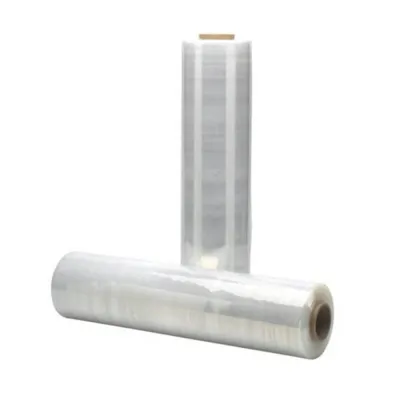
Prices are valid at publication and may change. Please refer to the product page for the latest price.
In contrast, pre-stretched wrap undergoes this stretching process during manufacturing. The film is mechanically tensioned near its breaking point before being wound onto the roll. Because the factory has already done the heavy lifting, you do not need to exert significant physical force during application. When you pull pre-stretched wrap off the roll, it naturally wants to contract slightly, securing your items with minimal pulling effort.
These mechanical differences result in distinct physical profiles. Traditional hand wrap is typically thicker, often ranging from 15 to 23 microns (60 to 90 gauge), providing a dense, puncture-resistant barrier. Pre-stretched wrap is much thinner, usually measuring between 7 to 10 microns (30 to 40 gauge). Despite its thinness, the pre-stretching process aligns the plastic molecules, allowing it to offer comparable holding strength to thicker films without the added bulk or weight.
Physical Effort and Ease of Use Without Equipment
Wrapping an entire household of furniture without professional dispensers is a physically demanding task. If you choose traditional hand stretch wrap, you must prepare for a significant workout. To achieve the tension necessary for a secure bind, you must maintain a tight grip on the roll and pull against its natural resistance as you walk backward around your furniture. This constant pulling force requires substantial wrist, forearm, and core strength, which can quickly lead to fatigue during a long day of packing.

For DIY movers tackling a multi-room apartment, this physical strain can accumulate rapidly. Wrapping large, bulky items like wardrobes, dining tables, and sofas requires you to bend, reach, and circle each piece multiple times. If your grip strength begins to fade, you may struggle to apply enough tension, resulting in a loose wrap that fails to keep drawers shut or protective blankets in place.
Pre-stretched wrap offers a much more user-friendly experience. Because the film is already tensioned, the roll spins easily with minimal resistance, allowing you to walk forward naturally while applying the wrap. Furthermore, because the film is thinner, a standard roll of pre-stretched wrap is significantly lighter than a traditional roll of the same length. This weight reduction greatly decreases shoulder and arm fatigue, making it much easier to wrap high shelves or low furniture legs without straining your body.
There is also a much shorter learning curve associated with pre-stretched wrap. Achieving a tight, secure bind with traditional hand wrap requires practice and consistent physical effort. If you are new to DIY moving, you may find it difficult to maintain even tension, leading to wasted film and loose corners. Pre-stretched wrap, however, lays down flat and clings to itself immediately, allowing even first-time movers to achieve a secure, uniform wrap with very little practice.
True Cost: Roll Price vs Actual Coverage Yield
When budgeting for your move, it is easy to compare wraps solely by their upfront price per roll. However, the true cost of a moving wrap is determined by its actual coverage yield and how efficiently you can use the material. Traditional hand stretch wrap rolls often appear cheaper on a per-roll basis, but this price can be deceptive if you do not factor in the physical effort required to stretch the film to its maximum length.
If you do not have the physical strength to stretch traditional hand wrap fully during application, you will end up using more film than necessary. Unstretched hand wrap remains thick and covers less surface area per meter, meaning you will go through rolls much faster. To get the full value out of a traditional roll, you must consistently stretch it to its optimal limit, which is difficult to sustain over a large-scale move.
Pre-stretched wrap, on the other hand, provides highly predictable coverage. Because the film is already fully extended on the roll, a 300-meter roll will yield almost exactly 300 meters of usable coverage, regardless of how hard you pull. This predictability makes it much easier to estimate exactly how many rolls you will need for your move, reducing the risk of running out of supplies mid-pack or buying excess inventory.
For a standard Singapore apartment move, such as a typical three-room or four-room HDB flat, you might require three to four rolls of traditional hand wrap at S$20 each if used inefficiently. If you opt for pre-stretched wrap at S$25 per roll, you may only need two rolls because every meter is utilized at its full width and length, bringing your total cost to S$50 while saving you significant physical effort.
Grip, Stability, and Surface Protection
A primary role of moving wrap is to secure protective layers, such as moving blankets or bubble wrap, around your furniture. Both traditional and pre-stretched wraps rely on inherent cling properties to stick to themselves without leaving sticky adhesive residue behind. This self-clinging nature makes them excellent for securing drawers, cabinet doors, and loose cables during transit, ensuring that moving parts do not swing open and cause damage.
However, the two types of wrap perform differently when subjected to the sharp corners and rough handling typical of a move. Traditional hand wrap, with its greater thickness, offers higher puncture resistance. If you are wrapping heavy wooden furniture with sharp corners, metal bed frames, or irregular items with protruding parts, the thicker film acts as a robust shield. It is much less likely to tear when scraped against door frames or the interior walls of a moving truck.
Pre-stretched wrap, being thinner, is more susceptible to puncturing on sharp edges. If a sharp corner pierces the thin film, the tear can easily propagate under tension, causing the entire wrapped section to unravel. To prevent this, you must take extra precautions, such as placing cardboard corner protectors over sharp edges before wrapping, or applying multiple overlapping layers of film to build up a thicker protective barrier.
Regardless of which wrap you choose, you must practice safe application and removal to protect sensitive surfaces. While stretch wrap does not contain adhesives, leaving plastic film in direct contact with highly polished wood finishes, lacquer, or leather for extended periods can trap moisture, especially in warm, humid climates. This trapped moisture can cause wood finishes to cloud or leather to mildew. Always verify the manufacturer’s guidelines, and consider using a breathable barrier like moving blankets or packing paper as a base layer before applying the plastic wrap.
Decision Guide: Which Moving Wrap Fits Your DIY Move?
To help you choose the right moving wrap for your upcoming relocation, consider this condition-based decision framework tailored to your specific moving needs and physical capabilities.
Choose traditional hand stretch wrap if:
- You are moving heavy, bulky, or irregularly shaped furniture with sharp wooden or metal corners that require high puncture resistance.
- You have a team of helpers with the physical strength and stamina to pull and tension the film consistently throughout the day.
- You are securing heavy loads on pallets or binding dense, heavy items together where strong constrictive force is required to prevent shifting.
Choose pre-stretched wrap if:
- You are managing the DIY move solo or with limited help, and you want to minimize physical fatigue, wrist strain, and back pain.
- Your move consists primarily of uniform boxes, plastic storage bins, and lightweight furniture without sharp, protruding edges.
- You want a lightweight roll that is easy to handle, maneuver, and apply quickly with a minimal learning curve.
Before you begin wrapping any item, always verify its material compatibility. If you are wrapping delicate antiques, valuable artwork, or highly polished surfaces, check the manufacturer’s care instructions. Test a small, hidden area of the furniture first if you plan to apply the wrap directly, or default to using a protective fabric barrier to eliminate the risk of moisture entrapment or surface reaction.
Practical Wrapping Techniques for DIY Movers
To maximize the effectiveness of your chosen moving wrap and ensure your items remain secure, you must employ proper wrapping techniques. Begin by anchoring the film securely. Do not simply try to press the loose end against a flat surface, as it will likely slip. Instead, loop the end of the wrap around a sturdy leg of a table or chair, or tuck it securely under a drawer handle to create a firm anchor point before you begin wrapping the rest of the item.
Once anchored, use a systematic overlapping pattern to build structural stability. Always work from the bottom of the item upward. As you spiral around the object, ensure that each new layer overlaps the previous one by at least 50 percent. This overlapping technique distributes the tension evenly across the item and creates a cohesive, multi-layered shield that prevents dust, moisture, and dirt from penetrating the wrap during transit.
When you finish wrapping an item, safety is a key priority. Avoid tearing the film with your hands, as this can stretch the edges unevenly and cause the wrap to unravel. Instead, use a safety utility cutter with a guarded blade to slice the film cleanly. Always cut away from the furniture’s surface and your body to prevent accidental scratches to the wood or fabric. Once cut, press the loose end firmly against the wrapped layers; the film’s natural cling will secure it in place without the need for packing tape.
Frequently Asked Questions (FAQ)
Can I reuse moving wrap for multiple relocations?
No, moving wrap is designed strictly for single-use applications. When you apply stretch film, the polymer chains are extended to create tension; once you cut and remove the wrap, these chains lose their elastic memory and cling properties. Attempting to reuse old, crinkled wrap will result in a loose, unstable layer that cannot provide the tension or security needed to protect your furniture. For safety and load stability, always discard used wrap and use fresh rolls for each relocation.
Is moving wrap safe for all types of wood and leather furniture?
Applying plastic moving wrap directly to wood or leather furniture is not recommended, especially for long-term storage or transport in humid conditions. Plastic film is non-breathable and can trap moisture against the surface, which may cause wood finishes to cloud, warp, or blister, and can lead to mold growth on leather. To protect these sensitive materials, always wrap the furniture in breathable moving blankets or packing paper first, and then apply the stretch wrap over the protective layer to secure it.
Community discussion
Share your experience or ask a question. Comments are reviewed before publication.