
Beginners starting their hand sewing journey often face the frustration of unraveling threads, loose knots, and fraying fabric edges. To solve these common issues, a beginner should look for three primary types of hand sewing locking tools: liquid seam sealants, mechanical knotting aids, and thread tension holders. These tools ensure that your stitches remain secure, your fabric edges stay intact, and your hand sewing process is smooth and stress-free. In Singapore’s warm and humid climate, selecting tools that cure properly and do not degrade under moisture is key to long-lasting sewing projects. By understanding the different options available, you can choose the right tools to build your confidence and improve your sewing results.
Identifying the Right Type of Hand Sewing Locking Tool
In hand sewing, a “locking tool” refers to any device, accessory, or chemical agent that secures thread ends, prevents fabric edges from fraying, or maintains tension during the stitching process. For beginners, these tools act as a safety net, compensating for uneven tension or knots that might otherwise slip through the fabric weave. Understanding the different categories helps you select the exact tool needed for your current skill level and project.
Liquid seam sealants, often referred to as fray preventers or fray checks, are liquid adhesives designed to coat the raw edges of woven or knitted fabrics. When applied, they lock the individual threads in place, preventing them from sliding out of the weave. These are highly effective for raw edges, buttonholes, and securing the ends of hand-sewn seams where a physical knot might be too bulky or visible.
Products mentioned in this guide
Prices are valid at publication and may change. Please refer to the product page for the latest price.
Mechanical knotting aids and specialized needle threaders assist in creating secure, consistent starting and ending knots. Tying a neat knot close to the fabric surface can be challenging for beginners. These physical tools guide the thread into a perfect loop and slide the knot down to the exact spot where the thread exits the fabric, ensuring your stitches do not pull through.
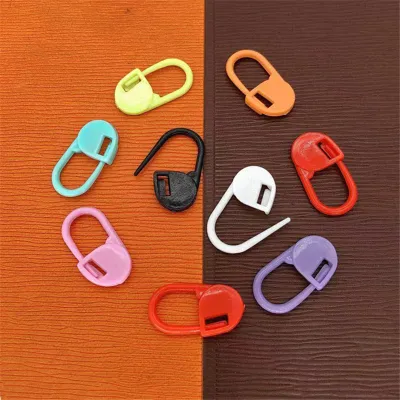
Thread holders, yarn bobbins, or tension clips are used to manage thread flow and secure stitches temporarily during complex hand sewing. When working on intricate embroidery, hand quilting, or applique, keeping the thread at a consistent tension is difficult. Tension clips and thread holders temporarily lock the thread in place, preventing it from slipping back through the fabric while you adjust your grip or prepare the next stitch.
Key Features to Evaluate Before Buying Your First Tool
Fabric compatibility is the most critical factor when choosing a locking tool. Liquid sealants can react differently to natural fibers like cotton, linen, and silk compared to synthetic fibers like polyester, nylon, and acrylic. Some sealants can cause discoloration, staining, or a dark “wet” look on delicate or light-colored fabrics. Beginners should always check product labels to ensure the tool or sealant is safe for their specific fabric type without causing damage.

Drying and setting characteristics are highly influenced by Singapore’s humid climate. High relative humidity can significantly prolong the drying and curing times of liquid sealants. When evaluating products, look for sealants that dry completely clear and remain flexible after curing. If a sealant dries stiff, chalky, or yellow, it can ruin the drape of the fabric and irritate the skin when the garment is worn.
Ergonomics and precision are essential for preventing messy applications and hand fatigue. For liquid sealants, look for bottles equipped with fine-tip applicators or precision nozzles. This allows you to apply a tiny, controlled bead of liquid directly to the thread or fabric edge without oversaturating the material. For mechanical tools like knotting aids or tension clips, look for easy-grip, non-slip designs with textured surfaces or soft-touch handles that fit comfortably in your hand.
Safety and cleanup should not be overlooked, especially since hand-sewn items often come into direct contact with the skin. Verify that any liquid locking tool has a non-toxic formulation and is safe for prolonged body contact. Additionally, check whether the product remains water-soluble before it fully sets. Water-soluble formulas allow you to easily clean up spills, excess application, or messy residue on your hands and tools using just warm water and soap before the product cures.
Matching the Tool to Your Specific Sewing Projects
Lightweight and sheer fabrics, such as chiffon, organza, or lightweight silk, require a delicate touch. Heavy mechanical tools or thick adhesives will weigh down these materials and ruin their appearance. For these fabrics, prioritize highly flexible, clear-drying liquid sealants. The sealant must be applied sparingly to secure raw edges or delicate buttonholes without stiffening the natural drape of the fabric.
Heavyweight fabrics and upholstery, including denim, canvas, upholstery fabrics, or heavy wool, demand more robust solutions. Lightweight sealants may not offer enough holding power to withstand the tension of thick threads. Instead, choose heavy-duty fray preventers or robust mechanical thread locks. These tools can withstand higher tension and help create larger, more secure knots that won’t pull through the wide weave of heavy fabrics.
Quick repairs and temporary holds require solutions that are easy to apply and remove. If you are performing quick clothing repairs, basting a hem, or working on a temporary hold before machine sewing, look for washable, easily removable locking solutions. Temporary tension clips or water-soluble basting glues are perfect for this, as they hold the fabric and thread in place while you work but wash out completely during the first laundry cycle.
How to Safely Test and Apply Your New Tools
Conducting spot tests is the best way to avoid irreversible damage to your projects. Before applying any liquid sealant or mechanical tool to your main fabric, always perform a test on a hidden scrap or seam allowance of the exact same material. Apply a small amount of the sealant or use the tool on a corner, then let it dry completely. Check for adverse reactions such as staining, excessive stiffness, color bleeding, or fabric distortion.
Reading and following manufacturer instructions is crucial for achieving the best results. Pay close attention to the recommended application thickness, required curing time, and any restrictions on ironing over the treated area. Some liquid sealants are heat-sensitive and will melt, scorch, or turn yellow if ironed directly, while others require heat-setting with a dry iron to become wash-fast and permanent.
Proper storage practices will extend the lifespan of your sewing tools and prevent them from degrading. For liquid sealants, always wipe the applicator tip clean with a dry cloth before sealing the cap tightly to prevent the liquid from drying inside the nozzle and clogging it. Store liquids in a cool, dry place away from direct sunlight to prevent premature curing. For mechanical tools, keep them in a dedicated sewing box to protect them from dust and physical damage.
Recognizing when to stop and consult a professional is an important safety step. If you notice that a fabric reacts poorly to a locking agent—such as changing color, puckering, or becoming brittle—stop using the product immediately. Similarly, if a mechanical tool is snagging or fraying your thread, do not force it. In these cases, consult the fabric manufacturer’s care instructions or seek advice from a professional tailor or sewing specialist to find a safer alternative.
Frequently Asked Questions (FAQ)
Can I use standard fabric glue instead of a dedicated fray check?
Standard fabric glue and dedicated fray checks serve different purposes. Standard fabric glue is formulated to bond two pieces of fabric together, resulting in a thicker, more rigid layer. Dedicated fray checks or liquid seam sealants are designed to penetrate the fibers of a single layer of fabric or thread, drying much thinner, clearer, and with greater flexibility. While fabric glue might work in a pinch for thick, hidden hems, it will fail on delicate seams, leaving a stiff, visible residue that can ruin the drape and feel of the garment.
How do I safely remove a liquid locking tool if I apply too much?
If you apply too much liquid sealant, act quickly before it cures. Check the product label for specific solvent or removal requirements; many water-soluble formulas can be thinned or washed out with warm water and a mild detergent while still wet. If the sealant has already cured, some brands can be dissolved using rubbing alcohol or a specific solvent recommended by the manufacturer. Always test these removal methods on a hidden scrap first to ensure they do not discolor or damage the fabric fibers, as some fully cured bonds can become permanent and impossible to remove without tearing the material.
Community discussion
Share your experience or ask a question. Comments are reviewed before publication.