
Finding the right grid notebook in Singapore depends heavily on your choice of writing tools, your note-taking style, and how the paper interacts with our local humid climate. While some writers seek ultra-smooth, coated sheets that let gel pens glide effortlessly, others require thick, absorbent, or heavily sized paper that prevents wet fountain pen inks from feathering or bleeding through. Because paper is highly sensitive to ambient moisture, a notebook that performs beautifully in a dry climate might behave differently in Singapore’s year-round humidity, where exposed paper fibers can absorb moisture and alter ink drying times. Rather than searching for a single universal winner, finding the right grid notebook involves understanding how paper specifications match your daily writing instruments and verifying performance through hands-on testing.
What Defines Paper Quality in Grid Notebooks?
To evaluate grid notebook paper objectively, you must look beyond simple brand reputation and focus on the physical properties of the paper itself. The most common specification you will encounter is paper weight, measured in grams per square meter (GSM). While a higher GSM generally indicates a heavier, thicker sheet of paper that can reduce ghosting—the shadow of writing visible on the reverse side—it is not the sole indicator of how well the paper resists ink penetration.
The chemical treatment applied to the paper during manufacturing, known as sizing, plays an equally critical role in determining ink performance. Sizing controls the paper’s absorbency; highly sized papers resist liquid penetration, keeping the ink on the surface where it can dry slowly and maintain sharp, crisp edges. Conversely, lightly sized or unsized papers absorb ink rapidly, which helps prevent smudging but can lead to feathering, where the ink spreads outward along the paper fibers like tiny spiderwebs.
Products mentioned in this guide
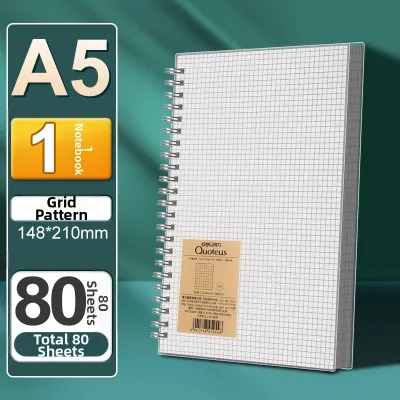
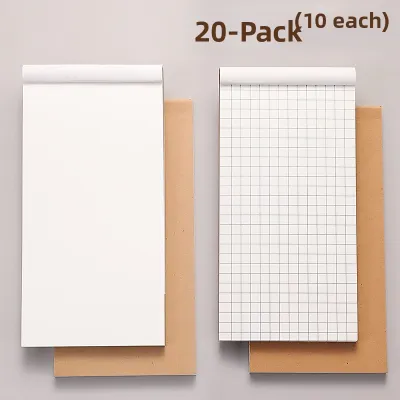
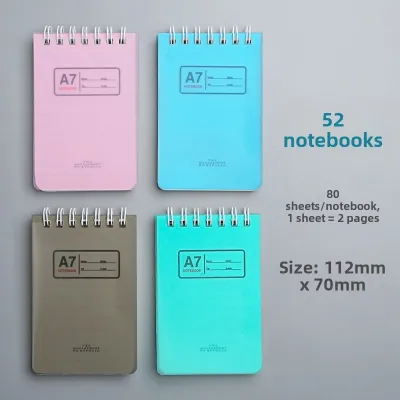
Prices are valid at publication and may change. Please refer to the product page for the latest price.
Surface texture, or tooth, is another key characteristic that dictates the tactile feel of your pen on the page. Some writers prefer a smooth, satin-like finish that minimizes friction, allowing fine-tip gel pens or fountain pens to glide effortlessly across the grid. Others prefer a toothier, slightly rougher texture that provides feedback, which is often favored for pencil sketching or precise drafting where control is paramount.
Finally, the design of the grid itself is a major component of overall paper quality. High-quality grid notebooks feature light gray, pale blue, or dotted-grid patterns printed with low-opacity ink that serves as a subtle guide rather than a visual distraction. The grid spacing—typically ranging from 3mm to 5mm—must be printed consistently across all pages, aligning perfectly at the margins to facilitate neat diagrams, charts, or structured handwriting.
Comparing Grid Notebook Brands Available in Singapore
Singapore’s vibrant stationery scene offers access to a diverse array of international and regional brands, each utilizing distinct paper formulations and manufacturing standards. When browsing local specialty stores, lifestyle boutiques, or online marketplaces, you will frequently encounter Japanese brands like Muji, Kokuyo, and Maruman, alongside European classics like Rhodia. Each of these brands targets different user preferences through their paper weights, materials, and grid layouts.

Muji is widely recognized for its minimalist design and highly accessible grid notebooks, which are popular among students and professionals alike. Muji offers several paper types, including recycled paper options and plantation wood-free paper, typically featuring a standard 5mm grid. Their everyday notebooks generally use paper weights between 70 and 80 GSM. While these notebooks are highly practical for daily notes and quick sketches with standard ballpoint or gel pens, the recycled paper variants can exhibit slight batch-to-batch variations in texture and ink absorption.
Kokuyo is a household name in Japanese stationery, celebrated for its research-driven approach to paper development. Their notebooks, such as the Campus series, often feature specialized paper designed to balance smoothness with moderate ink resistance. Kokuyo offers various grid formats, including standard 5mm grids and dotted-grid hybrids that assist with both writing and drawing. Their paper is engineered to minimize feathering when using standard gel pens, making it a reliable choice for structured academic or professional note-taking.
Maruman is highly regarded for its professional-grade notebooks, particularly the Mnemosyne series, which features exceptionally smooth, high-quality paper. Typically utilizing 80 GSM paper, Maruman notebooks are designed to accommodate a wide range of writing instruments, from fine-tip gel pens to fountain pens. The grid lines are printed in a very light, unobtrusive gray, allowing your writing to stand out clearly. The smooth surface coating provides a luxurious writing experience, though it may require slightly longer drying times for wetter inks.
Rhodia, a historic French brand, is famous for its distinct orange and black covers and its premium 80 GSM or 90 GSM brushed vellum paper. Rhodia’s grid notebooks feature a highly consistent 5mm grid printed in pale violet or gray ink. The paper is heavily sized, offering outstanding resistance to bleed-through and feathering, even when subjected to wet fountain pen inks or broad-tip markers. However, because the paper resists absorption so effectively, ink drying times can be noticeably longer, particularly in Singapore’s humid environment.
When comparing these brands, it is crucial to remember that paper is an organic material sensitive to environmental factors. Actual ink performance can vary depending on the specific pen tip, ink formulation, and even the humidity levels in your workspace. Relying on official manufacturer specifications regarding paper weight and material composition is the best way to narrow down your choices before conducting your own hands-on trials.
How to Match Paper to Your Pens and Markers
Selecting the ideal grid notebook requires matching the paper’s physical characteristics to the specific writing or drawing instruments you use most frequently. Different inks interact uniquely with paper fibers, meaning a notebook that works perfectly for one pen type might perform poorly with another.
If you primarily write with fountain pens, rollerballs, or other wet ink instruments, your main priority is finding paper that prevents feathering and bleed-through. You should look for notebooks featuring heavily sized, high-GSM paper (typically 80 GSM to 100 GSM) or specialized coated papers. These coatings keep the wet ink on the surface of the sheet, preserving the crispness of your lines and allowing unique ink properties, such as shading or sheen, to become visible. Keep in mind that this surface-level drying means you must allow extra time for the ink to dry to avoid accidental smudging.
For those who rely on everyday gel pens, ballpoints, or fine-liners, standard 70 GSM to 80 GSM papers are generally highly compatible. With these dry or quick-drying inks, your primary focus should be on surface smoothness and pen glide. A smooth, uncoated or lightly coated paper reduces friction on the pen tip, preventing skipping and hand fatigue during long writing sessions. Because gel inks dry relatively quickly, they are less prone to smudging on moderately absorbent paper, making these notebooks highly efficient for fast-paced note-taking.
If your work involves creative layouts using alcohol-based markers, heavy highlighters, or watercolor washes, standard notebook paper will rarely suffice. Alcohol markers are designed to saturate paper fibers, which almost always results in significant bleed-through on standard 80 GSM or even 90 GSM sheets. To use these tools successfully, you must seek out specialized art-grade notebooks with bleed-proof paper (often 120 GSM or higher) or utilize a loose plastic or heavy paper blotter sheet placed directly behind your active page to protect the subsequent sheets.
Decision Framework: Choosing the Right Grid Notebook
To simplify your selection process, you can use a conditional decision framework based on your primary writing tools, budget, and aesthetic preferences. This approach ensures you invest in a notebook that aligns with your daily workflow without paying for unnecessary premium features.
Choose minimalist, standard-weight grid notebooks if you prioritize budget-friendly, highly accessible options and primarily write with standard ballpoint pens, fine gel pens, or pencils. Notebooks featuring 70 to 80 GSM recycled or plantation paper are excellent for rapid drafting, daily task lists, and casual bullet journaling, offering a practical balance of utility and value.
Choose premium, heavily sized grid notebooks if you write with wet fountain pens, broad gel pens, or liquid ink rollerballs, and you require absolute precision without any ink feathering. Look for brands that specify high-grade, wood-free, or coated paper of 80 GSM or higher. These notebooks are ideal for detailed archiving, professional journaling, and precise technical drawing where line clarity is essential.
Verify first by purchasing a single notebook or testing a sample sheet if you plan to use highly specialized inks, heavy markers, or mixed media. Because paper performance is highly dependent on the exact combination of pen, ink, and local humidity, a hands-on trial is the only way to guarantee compatibility. Always check the return and exchange policies of your local stationery retailer or online marketplace, as opened and written-on stationery items are typically non-returnable.
Frequently Asked Questions (FAQ)
Does a higher GSM always mean better paper quality for grid notebooks?
No, a higher GSM (Grams per Square Meter) does not automatically guarantee superior paper quality or complete resistance to ink issues. While a higher GSM indicates heavier and often thicker paper, which helps reduce ghosting, it does not account for how the paper surface is treated. If a thick paper lacks proper sizing (the protective coating applied during manufacturing), it will act like a sponge, causing wet inks to feather, spread, and even bleed through the fibers. Conversely, a well-engineered 80 GSM paper with high-quality sizing can handle wet inks much better than an untreated 120 GSM paper.
How can I test a new grid notebook for ink bleed-through before committing?
To safely test a new grid notebook without ruining your pages, turn to the very last page or use a perforated tear-out sheet if the notebook includes one. Draw a series of test lines, grids, and solid blocks using the heaviest, wettest pens and markers in your collection. Allow the ink to dry completely for a few minutes—especially important in Singapore’s humid air—before turning the page. Inspect the reverse side of the sheet under good lighting to evaluate both ghosting (the visibility of the ink through the paper) and actual bleed-through (ink spots physically penetrating the paper fibers).

Community discussion
Share your experience or ask a question. Comments are reviewed before publication.