
Selecting the right whiteboard for your child’s back-to-school stationery checklist is more than just picking the first board you see on an online marketplace. In Singapore, where study spaces in HDB flats or condominiums are often compact and multi-functional, the ideal whiteboard must balance utility with spatial efficiency. A primary school student practicing spelling lists requires a completely different tool than a junior college student mapping out organic chemistry pathways or complex physics equations. By aligning the whiteboard’s size, material, and mounting style with your child’s specific grade level, you can create an active learning station that enhances focus, encourages active recall, and keeps schoolwork organized throughout the academic year.
Understanding Whiteboard Needs by Grade Level
As children progress through the education system, their study habits and cognitive demands undergo a significant shift. In the early years and lower primary levels, learning is highly tactile and visual. Children at this stage use whiteboards primarily for fine motor skill development, such as tracing letters, practicing basic phonics, and writing simple numbers. For these younger learners, the whiteboard acts as a low-stakes canvas where mistakes can be instantly wiped away, reducing the frustration often associated with pencil-and-paper errors. The focus here is on immediate physical interaction, requiring boards that are easy to handle, safe to drop, and highly responsive to quick erasing.
By the time students enter upper primary and secondary school, their academic needs transition toward structured problem-solving and independent study. They begin tackling multi-step math problems, drafting essay outlines, and organizing weekly revision schedules. At this stage, portability becomes secondary to surface area and organization. A student needs enough space to write out a complete algebraic equation without running out of room mid-calculation. The decision dimensions shift toward stable desktop setups or wall-mounted options that can hold magnetic study aids, flashcards, and color-coded schedules.
Products mentioned in this guide
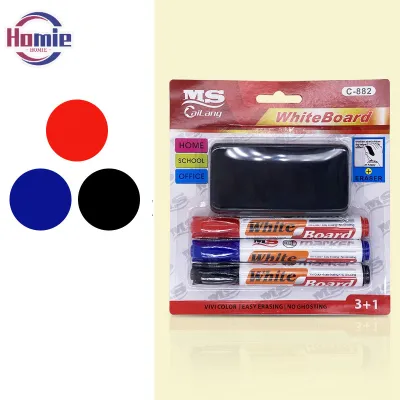
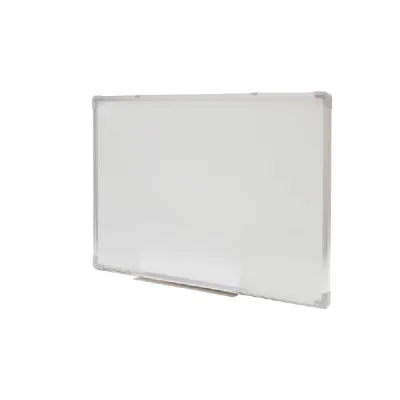
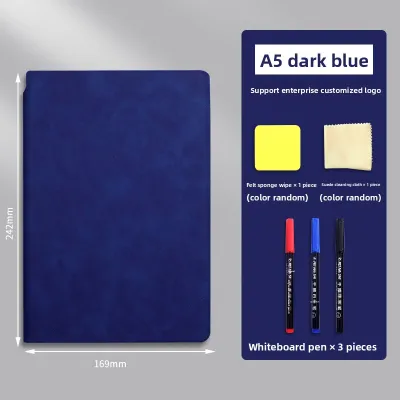
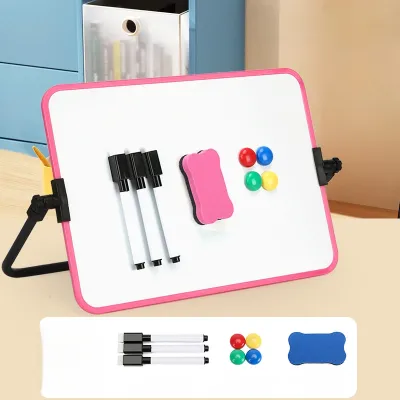
Prices are valid at publication and may change. Please refer to the product page for the latest price.
For pre-university and tertiary students, the whiteboard becomes a critical tool for synthesis and high-level planning. These older students deal with vast amounts of information that must be visualized to be fully understood. Mind-mapping, historical timelines, and complex system diagrams require expansive, high-quality surfaces that can withstand hours of continuous use. Many students at this level utilize the Feynman technique—teaching a concept to an imaginary audience—which is highly facilitated by a large, vertical writing surface that mimics a classroom environment.
When evaluating any whiteboard for a home study environment, parents must balance three core pillars: durability, ease of cleaning, and safety. A board that ghosts—leaving behind faint shadows of previous writing—quickly becomes unusable and frustrating. In Singapore’s humid climate, cheap backing materials can warp over time, causing the writing surface to bubble or peel. Safety is equally paramount, particularly for younger children; look for rounded corners, lightweight frames, and secure mounting mechanisms that prevent accidental falls.
Whiteboard Types for Early Years and Primary Students
Younger learners require highly durable, tactile, and safe writing surfaces that accommodate their energetic study habits and frequent erasing.

Portable and Lap Whiteboards
Portable lap whiteboards are an excellent addition to a primary student’s study toolkit, offering a personal, handheld workspace that can be used anywhere in the home. These compact boards, typically ranging from A4 to A3 in size, are perfect for quick spelling drills, vocabulary practice, and mental sums. Because they are lightweight, a child can comfortably hold them on their lap while sitting on the sofa or at a study desk, making learning feel less rigid and more interactive.
When shopping for a lap board, look for double-sided options—often featuring a plain side for drawing and a lined side for practicing handwriting alignment. However, these portable boards do have limitations. Their limited surface area means they are not suitable for long-form writing or complex diagrams. Additionally, because they are frequently moved around, they are prone to being misplaced along with their markers. To prevent this, prioritize models that feature integrated marker holders, magnetic pen caps, or dedicated slots for erasers, ensuring all writing tools remain securely attached when not in use.
Magnetic and Desktop Whiteboards
Magnetic desktop whiteboards offer a step up in functionality by combining a stable writing surface with interactive magnetic capabilities. The magnetic surface is incredibly valuable for early primary students, as it allows them to use physical learning aids such as magnetic letter tiles, counting chips, and visual reward charts. This integration of tactile objects with written practice helps reinforce abstract concepts, making math and language lessons much more concrete.
Desktop models often come with built-in kickstands or wedge designs that position the board at an ergonomic writing angle, reducing wrist strain during longer study sessions. When selecting a desktop whiteboard, stability is the most critical factor to verify. Lightweight plastic stands can easily slide or tip over when a child applies pressure while writing or erasing. Look for boards with non-slip rubber feet, a sturdy locking hinge mechanism, or a weighted base to ensure the board remains firmly in place on the study table.
Whiteboard Types for Secondary and Pre-University Students
As academic workloads increase and subjects become more complex, older students require larger, more versatile whiteboard formats to support advanced planning and extensive problem-solving.
Foldable and Multi-Panel Whiteboards
For secondary and pre-university students dealing with expansive subjects like economics, physics, or literature, space is at a premium. Foldable and multi-panel whiteboards offer an ingenious solution by providing an extended writing surface that can be folded away when not in use. These designs typically feature a central panel with two folding side wings, effectively doubling or tripling the available workspace without permanently occupying a large footprint on a bedroom wall.
This multi-panel setup is ideal for complex task tracking, where one panel can be dedicated to a weekly study planner, while the main panel is used for active problem-solving. When evaluating these boards, pay close attention to the hinge mechanics. Low-quality plastic hinges can wear out quickly under daily use, leading to misaligned panels. It is also important to check the surface continuity across the seams; high-quality multi-panel boards feature minimal gaps and flush edges, allowing students to draw continuous lines or diagrams across panels without catching the marker tip.
Large Wall-Mounted or Easel Whiteboards
For students who require a dedicated, high-visibility area for mind-mapping and long-term planning, large wall-mounted boards or freestanding easel whiteboards are excellent options. A large wall-mounted board (such as a 90cm x 120cm model) provides an uninterrupted canvas that encourages big-picture thinking, making it easier to visualize complex historical timelines or map out entire syllabus modules.
However, wall-mounted boards require a permanent space commitment and careful installation. Before purchasing, you must verify your wall type—whether it is drywall, brick, or concrete—to ensure you use the correct wall plugs and mounting hardware. If drilling holes in a rented apartment is not an option, a rolling or stationary easel whiteboard is a highly flexible alternative. Easels can be easily moved between the living room for collaborative study sessions and the bedroom for quiet revision. When choosing an easel, ensure it features locking casters for stability and an adjustable height mechanism to accommodate your growing teenager.
Essential Features and Accessories to Verify Before Purchase
To ensure your whiteboard remains a functional and long-lasting study aid, it is essential to look beyond the price tag and verify the technical specifications of the board and its accessories. The most critical factor determining a whiteboard’s lifespan is its surface material.
Standard melamine boards are the most budget-friendly option, consisting of a plastic-coated fiberboard. While suitable for light, occasional use, melamine is highly porous and prone to ghosting—where marker ink penetrates the surface and leaves permanent stains. Over time, the protective coating wears down, making erasing increasingly difficult.
For daily student use, painted steel or porcelain (ceramic) surfaces are highly recommended. Painted steel boards are magnetic, durable, and offer excellent resistance to ghosting, making them a great mid-range choice. Porcelain boards, made by fusing ceramic onto a steel backing, are incredibly hard, non-porous, and virtually scratch-resistant. They offer superior erasability and can last for decades, though they come at a higher price point. For a sleek, modern study space, tempered glass whiteboards represent the premium tier. Glass boards never ghost, are incredibly easy to clean, and look beautiful, but they require specialized, extra-strong rare-earth magnets to hold papers, as standard magnets are not strong enough to penetrate the thick glass.
Because smoothness and erasability depend on the exact combination of your marker’s ink formulation and the board’s surface material, it is highly recommended to perform an observable trial before full use. Test a small corner of the board by writing a few strokes, waiting sixty seconds for the ink to dry completely, and verifying if it wipes away cleanly without leaving a faint shadow or requiring heavy pressure.
Marker compatibility is another vital area to verify. Always choose low-odor, non-toxic dry-erase markers, especially for younger children working in enclosed study rooms. Cheap markers often contain harsh solvents that produce strong fumes and can damage the whiteboard’s surface coating over time.
Finally, budget for essential maintenance accessories to protect your investment. A basic setup should include a high-quality felt eraser, microfiber cleaning cloths, and a specialized whiteboard cleaning spray. Regular cleaning with a dedicated spray removes the microscopic residue left behind by dry-erase markers, preventing build-up and keeping the surface smooth. For magnetic boards, adding a few magnetic clips or a clip-on pen tray will keep markers and erasers organized and within arm’s reach, preventing clutter on the study desk.
Frequently Asked Questions (FAQ)
Can I use regular markers on any whiteboard?
No, you should never use regular permanent markers or standard water-based coloring markers on a whiteboard. Dry-erase markers are formulated with a specific polymer silicone release agent that prevents the pigment from binding to the non-porous surface, allowing it to be wiped away easily. Permanent markers lack this release agent, causing the ink to bond directly with the board’s surface. If a permanent marker is accidentally used, a safe and immediate remediation step is to draw directly over the permanent ink with a fresh dry-erase marker. The solvents in the dry-erase ink will temporarily re-liquefy the permanent pigment, allowing you to wipe both marks away with a clean eraser.
How do I remove stubborn marker stains or ghosting?
To remove stubborn stains or ghosting without damaging the board, start with gentle, non-abrasive methods. Spray the surface with a dedicated whiteboard cleaning spray and wipe it firmly with a clean microfiber cloth. For older, set-in stains, you can apply a small amount of isopropyl alcohol (rubbing alcohol) to a soft cloth and gently rub the area. Avoid using abrasive household cleaners, scouring pads, steel wool, or harsh chemicals like acetone or bleach. These abrasive tools and solvents will strip away the board’s protective top coat, leaving the porous material underneath exposed, which permanently ruins the board’s erasability and causes future marks to stain instantly.
Community discussion
Share your experience or ask a question. Comments are reviewed before publication.