
Choosing the ideal notebook paper for fountain pen writing is not about finding a single, universally superior brand. Instead, it is about understanding how your specific pen, ink, and writing style interact with different paper characteristics. The optimal choice depends heavily on your individual ink flow, nib size, and writing pressure rather than a single brand’s reputation.
To find the perfect match, you must look at specific manufacturer specifications on the product labels—such as grams per square meter (GSM) and sizing treatments—and perform a personal test with your preferred pen and ink combination. While one writer might prefer a highly coated paper that showcases ink sheen, another might prioritize fast drying times for quick note-taking. By understanding what to look for on product packaging, you can make an informed decision that elevates your writing experience.
Key Paper Dimensions to Verify for Fountain Pen Use
Paper Weight and Thickness
When browsing notebooks, the first specification to check on the product label is the paper weight, measured in grams per square meter (GSM). This metric indicates the density and thickness of the paper sheet. Generally, a higher GSM (such as 80 GSM to 100 GSM or more) indicates a thicker page that offers greater physical resistance to ink penetration, which helps prevent ink from bleeding through to the other side.
Products mentioned in this guide
Prices are valid at publication and may change. Please refer to the product page for the latest price.
However, weight alone does not guarantee fountain pen compatibility. Some lightweight papers are highly engineered to resist bleeding despite their thinness, though they will naturally exhibit more ghosting (where the shadow of your writing is visible on the reverse side of the page). If you prefer to write on both sides of a page without visual distraction, verifying a higher GSM on the product label is a reliable starting point.
Surface Smoothness
The tactile sensation of writing—often referred to as feedback or tooth—varies dramatically across different paper types. This characteristic is determined by the manufacturing process, specifically how the paper is pressed and finished. Some papers are highly calendered, meaning they are pressed between heavy rollers to create an ultra-smooth, almost glassy surface that allows the nib to glide with minimal resistance.
While a glassy surface is excellent for fine or extra-fine nibs that might otherwise catch on paper fibers, some writers find it too slippery and prefer a paper with a slight texture, or tooth. This texture provides feedback to your hand, offering more control over your letterforms. When selecting a notebook, look for manufacturer descriptions that specify whether the paper is textured, smooth, or glazed to match your tactile preference.
Ink Handling and Drying Time
The way paper handles liquid ink is largely determined by its sizing, which is a chemical treatment applied during manufacturing to control absorbency. Unsized paper acts like a paper towel, drawing ink rapidly into the fibers, which causes feathering (where the ink spreads outward, creating fuzzy lines) and severe bleed-through. Fountain pen friendly papers are heavily sized to keep the ink on the surface of the page.
While high sizing prevents feathering and allows specialized ink properties like shading and sheen to develop beautifully, it also significantly increases drying times. If you are left-handed or use your notebook for rapid, on-the-go writing, you may want to look for papers that offer a balance of light sizing to speed up drying times, even if it means sacrificing some of the ink’s visual complexity.
Checking Product Labels: Fromthenon, Midori, and Hobonichi
Fromthenon
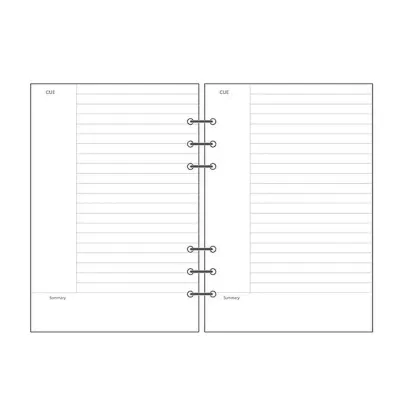
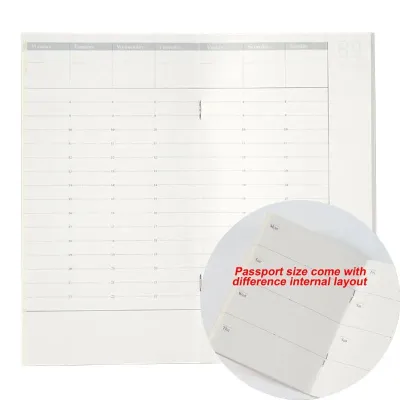
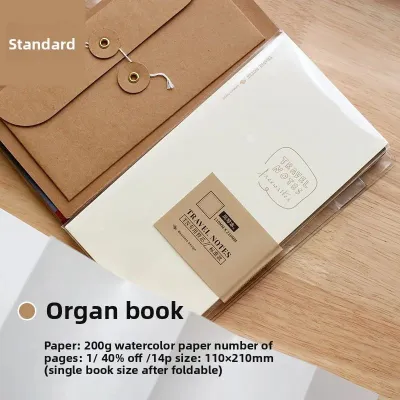
Fromthenon is highly regarded in the modular notebook community, particularly for those who use traveler-style journal systems. When examining Fromthenon packaging or official online product listings, pay close attention to the insert specifications, as they offer a variety of paper types. Look for the exact GSM rating, which often ranges from 80 GSM to 100 GSM, and check if the product description explicitly mentions “wood-free paper” or “fountain pen friendly” coatings.

Because Fromthenon offers inserts with different ruling styles and paper sources, verifying the specific insert type is crucial. Some inserts are designed specifically for sketching or watercolor and may have a rougher texture, while their standard writing inserts are formulated for smoother ink flow. Always verify the paper weight on the individual insert band before purchasing to ensure it matches your writing needs.
Midori
Midori’s MD Paper is a staple in the stationery world, designed specifically to offer a premium writing experience. When checking Midori packaging, look for the distinctive “MD Paper” mark, which guarantees that the notebook contains their proprietary paper blend. Midori’s labels often highlight the paper’s unique balance, noting that it is designed to prevent feathering and bleed-through while retaining a slight, pleasant tooth that provides feedback to the writer.
Additionally, verify whether the notebook is the standard MD Paper or the MD Paper Cotton variant. The cotton version contains a percentage of cotton pulp, which alters the paper’s absorbency and texture. The standard MD Paper is generally preferred for showcasing ink sheen, while the cotton version offers a softer feel and slightly faster drying times, making it essential to check the label carefully depending on your ink preferences.
Hobonichi
Hobonichi notebooks and planners are famous for their use of Tomo River paper, a legendary material in the fountain pen community. When checking Hobonichi product specifications, look for the paper type and weight, which is typically listed around 52 GSM. The label or product manual will often highlight its incredible thinness, which allows a 400-page planner to remain compact and lightweight.
Despite its thinness, Tomo River paper is highly sized, meaning it resists actual ink bleed-through exceptionally well while allowing fountain pen inks to pool and dry slowly, maximizing sheen and shading. However, the product specifications will also note that ghosting is highly likely due to the low paper weight. If you are sensitive to seeing the shadow of your writing on the back of the page, this is a critical specification to verify before committing to a Hobonichi notebook.
Practical Testing: How to Evaluate Your Notebook
The Ink Swatch Test
To perform an ink swatch test, select a blank page at the very back of your notebook to serve as a testing ground. Using your wettest fountain pen and ink combination, draw a series of lines, tight loops, and solid dots. You can also use a cotton swab or a glass dip pen to lay down a heavier pool of ink to test the paper’s limits.
Observe the edges of the lines under a good light source. If the edges remain sharp and crisp, the paper’s sizing is successfully resisting feathering. If the ink begins to spread outward into tiny, spider-web-like branches, the paper fibers are too absorbent for that specific ink and pen combination, indicating that you may need a drier ink or a finer nib for that notebook.
The Ghosting and Bleed Check
Once your test marks have dried completely, turn the page over to inspect the reverse side. It is important to distinguish between ghosting and bleed-through. Ghosting is purely visual; you can see the dark shape of the writing through the paper, but the surface of the reverse side remains clean and dry. This is common and expected with ultra-thin papers like those found in Hobonichi planners.
Bleed-through, however, occurs when the liquid ink physically penetrates through the paper fibers and spots the other side, making it impossible to write on the reverse page. If you see actual spots of ink on the back of the page, the paper is not compatible with the wetness of your pen. If this occurs, you will need to adjust your setup by using a finer nib, a drier ink, or switching to a heavier paper weight.
Drying Time Observation
Drying time is a critical practical consideration, especially if you use your notebook for rapid note-taking or journal in a humid environment. To test this, write a sentence and use a stopwatch to track how long it takes for the ink to dry. Gently tap the ink with a clean finger or a scrap piece of paper at five-second intervals to check for smudging.
In humid climates, such as Singapore, ambient moisture can significantly extend drying times, particularly on highly sized papers like Tomo River. If your test reveals that the ink takes longer than thirty seconds to dry, you may need to use a blotting sheet (a piece of absorbent paper placed between the pages) when closing your notebook to prevent the ink from transferring to the opposite page.
Decision Framework: Matching Paper to Your Writing Style
To make your final selection, match your writing habits and pen preferences to the following guidelines:
- Choose thicker or heavily sized options if: You write with wet, broad, or stub nibs and prioritize a clean reverse side of the page with zero ghosting. Heavier papers, such as Fromthenon's high-GSM inserts or Midori MD notebooks, handle large volumes of liquid ink well and prevent physical bleed-through, making them ideal for double-sided journaling.
- Choose thinner or high-capacity options if: You prefer lightweight, compact notebooks with high page counts, write with fine or extra-fine nibs, and do not mind seeing the shadow of your writing on the back of the page. Thin, highly sized papers like those in Hobonichi planners allow for portable books that still resist actual ink bleeding.
- Verify manufacturer guidelines first if: You plan to use highly saturated inks, shimmer inks with heavy particulate matter, or acidic iron gall inks. Some specialized paper coatings may repel highly saturated inks or cause shimmer particles to rub off easily once dry, requiring specific paper compatibility checks.
Frequently Asked Questions (FAQ)
Does paper storage humidity affect fountain pen ink feathering?
Yes, environmental moisture plays a significant role in paper performance. In humid regions, paper fibers can absorb ambient moisture over time, which gradually degrades the paper’s sizing (the protective coating that controls ink absorption). When the sizing is compromised, the paper becomes more absorbent, leading to increased feathering and bleed-through. To prevent this, store your unused notebooks in a dry drawer, a sealed container, or alongside silica gel packets to maintain their original writing properties.
Can I use shimmer inks on standard fountain pen friendly paper?
You can, but performance varies depending on the paper’s surface treatment. Shimmer inks contain tiny glitter particles that need to sit on top of the paper to catch the light. On highly coated, fountain pen friendly papers, the shimmer will stand out beautifully, but the ink may take much longer to dry and can be prone to smudging even after drying. Always check the manufacturer’s guidelines for both the ink and the paper, and perform a small test swatch to ensure the particles adhere properly without rubbing off.
Community discussion
Share your experience or ask a question. Comments are reviewed before publication.